Plot Explained Spoilers guaranteed!
Plot Explained

Browse by genre

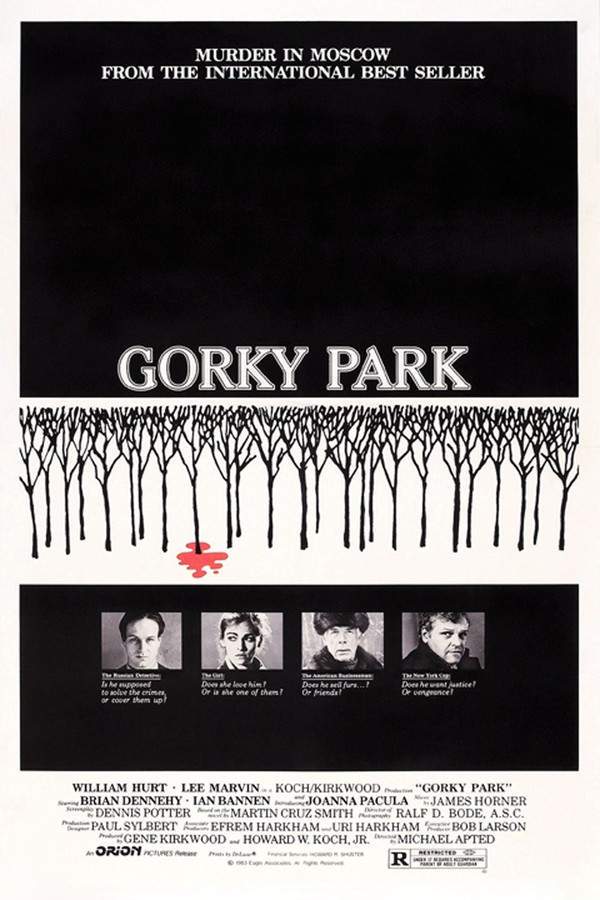
Gorky Park (1983) movie poster

Plot Summary

Gorky Park (1983) Plot Summary Explained

Release, runtime and language
1983 · 128 min · English
Loading streaming availability…
Directed by
Michael Apted
Starring
William Hurt, Brian Dennehy, Lee Marvin, Alexander Knox, Ian Bannen, Rikki Fulton

Soviet detective Arkady Renko investigates a complex triple murder in Moscow’s Gorky Park, uncovering a disturbing network of corruption. His pursuit of the truth brings him into direct conflict with the KGB, who are determined to suppress the investigation. As Renko delves deeper, he receives enigmatic clues from American Jack Osborne, forcing him to confront dangerous alliances and deceptive intentions in a race against time.

On this page (7)
  1. 1 Where to watch
  2. 2 What happens: full plot
  3. 3 Plot questions answered
  4. 4 The book behind the movie
  5. 5 Movie threads
  6. 6 Movies like Gorky Park
  7. 7 Every angle
Loading streaming availability…

Full plot summary · contains spoilers

What Happens in Gorky Park: Full Plot Summary

The whole story of Gorky Park (1983) explained, from the opening scene to the final frame: every key event, every twist and what it all adds up to. Read it as a quick recap before the sequel, to check a scene you missed, or to finally understand what really happened.

In Moscow, USSR, the film opens with a serene and joyful scene of three young individuals gliding gracefully across the frozen pond of Gorky Park, embracing the joys of winter. However, this peace is shattered just three days later when the lifeless bodies of these young people are discovered, brutally shot at close range, with their faces and fingerprints meticulously removed using surgical tools. The investigation falls into the hands of Arkady Renko, portrayed by William Hurt, a diligent officer with the Soviet militsiya, who finds himself grappling with an unnerving sense of paranoia and anxiety as the KGB declines to take control of the case. To aid him in unveiling the mystery, Renko seeks the expertise of Professor Andreev, played by Ian McDiarmid, who endeavors to reconstruct the victims' faces.

As Renko delves deeper into the investigation, he encounters William Kirwill, a dedicated detective from New York, portrayed by Brian Dennehy, who has traveled to the Soviet Union in search of his missing brother, James. Their paths intertwine during a weekend retreat at the dacha of Chief Prosecutor Iamskoy, represented by Ian Bannen, where Renko also meets the charming Jack Osborne, a sable importer, played by Lee Marvin, and his enigmatic girlfriend Irina Asanova, depicted by Joanna Pacula.

Slowly but surely, Renko pieces together the identities of the victims: James Kirwill and two young Russians who were friends of Irina. He uncovers that their tragic fate was linked to the construction of a chest for Osborne, intended for the illicit smuggling of six sables out of the country— a plan that could jeopardize the Soviet monopoly on their lucrative fur. As he converses with Osborne, Renko becomes increasingly suspicious of him, especially amidst their tense yet polite encounters.

The plot thickens when Irina is ambushed by a KGB agent who attempts to administer a lethal dose of drugs. In a dramatic rescue, Renko saves her life, and in the seclusion of his apartment, a tender relationship blossoms between the two. Irina, however, remains resolute in her belief that her friends have survived, clinging to Osborne's assurances that they would be freed in exchange for their labor.

As time unfolds, Renko is forced to confront the grim reality. He brings Irina face to face with Professor Andreev's reconstructed likeness of one of her friends, compelling her to acknowledge the horrific truth of their murders orchestrated by Osborne. In a moment of desperation, she divulges critical details about the conspiracy before fleeing, leaving Renko and Kirwill in pursuit of further answers.

Their investigation leads them back to Andreev's, only to have their hopes extinguished when a KGB agent appears with a box containing the second reconstructed head, drawing them back to Iamskoy's dacha. From a distance, they witness the chilling scene of Osborne and Iamskoy monitoring the destruction of the evidence—a revelation that reveals the identity of the head to be that of Kirwill's brother.

In a tense confrontation in a bathhouse, Iamskoy reveals that Renko's relentless investigation was a machination to coerce Osborne into a higher payoff for the sables. Offers of corrupt partnerships are met with defiance when Renko reveals he has recorded the conversation. Chaos ensues, leading to Iamskoy's unintended demise during a struggle, further entangling Renko in this deadly web of deception.

With Osborne fleeing to Stockholm, Sweden, the KGB permits Renko to follow him under the pretense of overseeing an exchange. Arriving in a bedroom, he discovers Irina, who confesses her betrayal—having aligned herself with Osborne under the guise of a freedom deal for both of them. Renko, feeling the weight of betrayal, retaliates with disgust, asserting that she carries the blood of the innocent on her hands.

The plot culminates in a harrowing showdown on a remote farm. The shocking discovery of Kirwill's grotesquely mutilated body sends Renko into despair as Osborne exclaims the grisly details of the murder. In the standoff that ensues, Renko recognizes an impending doom; neither party is willing to leave the locale alive. As tensions rise, Irina emerges amidst the chaos, and a gripping moment unfolds when she shoots Osborne, followed by Renko, leading to Osborne's demise.

With Irina poised to escape into freedom, Renko faces the heart-wrenching choice of letting her go while releasing the captive sables into the wild. As they flee into the woods, echoing in his mind is Irina's voice, pledging that they shall meet again in the future, leaving a poignant and lingering sense of hope amid the brutal realities they've faced.
Last updated: January 18, 2025 at 14:36

Was this helpful?

Plot questions answered

Gorky Park Plot Explained: Your Questions Answered

The questions people ask most about Gorky Park (1983): what happens in the confusing scenes, why the characters do what they do, the twists, hidden details and what the ending means. Each answer contains spoilers.

Q1

Why does the KGB refuse to take over the Gorky Park murder case?

The KGB refuses to take the case because they are already involved in the conspiracy itself. The murders are connected to Jack Osborne's illegal sable smuggling operation, which involves high-level Soviet officials including Chief Prosecutor Iamskoy. By leaving the investigation to Renko, the KGB can control the flow of information and ensure the truth never surfaces.

Foreshadowing: Earlier scenes show Renko's growing paranoia as he realizes the KGB's unusual lack of interest in such a high-profile case.

  • kgb
  • conspiracy
  • refuses case
  • cover-up
Q2

Why were the victims' faces and fingerprints surgically removed?

The faces and fingerprints were removed to prevent identification of the victims. The three murdered individuals were James Kirwill and two Russian friends of Irina who were helping construct a smuggling chest for Jack Osborne. By removing their identities, Osborne and his co-conspirators hoped the murders would remain unsolved and not lead back to the illegal sable operation.

Foreshadowing: The opening scene shows the victims happily skating before their death, establishing their humanity and making the mutilation more horrifying.

  • identification
  • mutilation
  • forensics
  • victims
Q3

What was Jack Osborne's involvement in the Gorky Park murders?

Jack Osborne ordered the murders of the three victims. They were killed because they knew about his illegal sable smuggling operation. The two Russian friends and James Kirwill had helped build a specially designed chest to smuggle six sables out of the Soviet Union, which threatened the state monopoly on fur. Osborne had them killed and mutilated to silence them permanently.

  • jack osborne
  • murders
  • sables
  • smuggling
  • motive
Q4

Why does Chief Prosecutor Iamskoy want to stop Renko's investigation?

Iamskoy is directly complicit in the conspiracy. He is partnered with Jack Osborne in the sable smuggling operation and receives payments to protect the illegal trade. When Renko gets too close to the truth, Iamskoy manipulates the investigation to force Osborne into paying a higher price for the sables, using Renko's persistence as leverage in their criminal arrangement.

Foreshadowing: During the dacha weekend, Iamskoy's excessive interest in Renko's progress hints at his deeper involvement.

  • iamskoy
  • prosecutor
  • conspiracy
  • corruption
  • smuggling
Q5

What is the connection between the murders and the sable smuggling operation?

The murders are directly linked to Osborne's sable smuggling scheme. The victims were helping construct a hidden compartment in a chest designed to smuggle six sables out of the USSR. This operation threatened the Soviet government's monopoly on sable fur, making it a high-level crime. When the work was complete, Osborne had the three workers murdered to prevent them from testifying or revealing the operation.

  • sables
  • smuggling
  • chest
  • operation
  • fur
Q6

Why does the KGB try to kill Irina Asanova?

The KGB attempts to kill Irina because she becomes a liability to the conspiracy. After Renko saves her from a drug overdose administered by a KGB agent, she begins cooperating with his investigation and providing information about Osborne. Her survival threatens to expose the entire operation, so the KGB moves to eliminate her as they would any loose end.

Foreshadowing: Irina's initial ambivalence about her friends' fate foreshadows her complex position in the conspiracy.

  • kgb
  • irina
  • assassination
  • attempted murder
Q7

Why does Irina Asanova betray Renko and side with Osborne?

Irina betrays Renko because Osborne promised her freedom from the Soviet Union in exchange for her cooperation. She genuinely believed her friends would be released alive after completing the smuggling work. When confronted with the truth of their deaths, Irina is devastated but continues working with Osborne as her only apparent path to escaping Soviet oppression. Her betrayal stems from desperation and misplaced trust in Osborne's promises.

  • irina
  • treason
  • freedom
  • betrayal
  • osborne
Q8

What happens to William Kirwill in the film?

William Kirwill is murdered at the remote farm where Osborne makes his final stand. His body is discovered tied to a tree, brutally mutilated. The murder was ordered by Osborne to prevent Kirwill from exposing the conspiracy and to eliminate the detective who had traveled to the Soviet Union specifically to find his missing brother James, who was one of the original victims.

  • william kirwill
  • death
  • murder
  • brother
  • james
Q9

Why does Renko let Irina escape at the end?

Renko lets Irina escape because he still loves her despite her betrayal. Although she confessed to siding with Osborne and manipulating him, Renko cannot bring himself to arrest her after everything they've shared. He also releases the captive sables into the wild, symbolizing his own liberation from the oppressive system and his final act of humanity in a world filled with betrayal and corruption.

Foreshadowing: Their romantic relationship throughout the film builds toward this painful but compassionate conclusion.

  • renko
  • irina
  • escape
  • freedom
  • release
Q10

What does the ending with the sables represent?

The ending with Renko releasing the captive sables symbolizes liberation and moral redemption. Throughout the film, the sables represent the corrupt Soviet system, trapped, exploited, and smuggled for profit. By freeing them into the wild, Renko rejects the criminal enterprise he has uncovered and chooses compassion over vengeance. The act parallels his decision to let Irina go, suggesting that love and freedom are worth more than justice alone.

  • sables
  • ending
  • symbolism
  • liberation
  • redemption

Movie threads

More Movies Like Gorky Park, by Mood & Story

Curated lists built around what makes Gorky Park tick: the same mood, the same kind of story or the same emotional payoff. Each list explains why these movies belong together.

Moral Compass Under Political Pressure like in Gorky Park

A lone detective confronts systemic corruption in an oppressive state. If you liked the tense investigative drama of Gorky Park, you'll find similar movies here. These films feature dogged detectives and determined individuals fighting against systemic political corruption, often at great personal risk. They are stories of moral courage in the face of overwhelming opposition.

  • tense
  • paranoid
  • grim
  • suspenseful
  • melancholic
  • anxious
  • Tone: tense, grim, melancholic
  • Pacing: steady, methodical
Why these movies?

The story pattern: These stories typically follow a procedural investigation that gradually uncovers layers of institutional deceit. The protagonist faces escalating threats and moral dilemmas, forcing them to question their allegiance to the system they serve. The journey is often solitary, marked by paranoia and the shedding of illusions.

Why they belong together: Movies are grouped here for their shared focus on an individual's ethical struggle within a morally bankrupt political landscape. They share a tense, paranoid atmosphere and a narrative structure where the search for truth is as dangerous as the crime itself.

Cold War Paranoia and Conspiracy Thrillers like Gorky Park

Thrillers set against the backdrop of superpower espionage and deception. Explore more movies like Gorky Park that plunge you into the tense world of Cold War espionage. These similar stories are defined by their anxious, claustrophobic feel, complex conspiracies, and characters trapped in a web of political intrigue and betrayal between East and West.

  • cold war
  • paranoid
  • suspenseful
  • anxious
  • grim
  • tense
  • Tone: tense, bleak, anxious
  • Pacing: steady, suspenseful
Why these movies?

The story pattern: The narrative often involves an ordinary person or agent uncovering a conspiracy that implicates powerful forces on both sides of the ideological divide. The plot is driven by mystery, hidden agendas, and sudden betrayals, creating a sense that no one can be trusted. The setting itself—often gray and oppressive—acts as a character.

Why they belong together: This thread groups movies based on their specific historical context and the unique mood of existential dread it generates. The shared elements are the Cold War setting, themes of espionage and betrayal, and an overall atmosphere of constant surveillance and paranoia.

If you liked this

Movies Like Gorky Park

Similar movies to Gorky Park: the same genre, themes or kind of story. Each one comes with its own plot summary, timeline and ending explained.

Browse all movie summaries

Every angle

Gorky Park (1983) Explained: Plot, Timeline & Characters

Everything about Gorky Park in one place: what happens in the plot summary, the timeline in chronological order, the characters and meaning and a spoiler-free summary. What's After the Movie adds the cast, box office and post-credit scenes.

Coming soon on iOS and Android

The Plot Explained Movie Summary App

Plot summaries, endings explained and timelines on your phone. Catch up on any movie in minutes, save your favorites and never miss a twist again.

Be the first to know when we launch. Your email stays private, always.

Learn more about the app