Plot Explained Spoilers guaranteed!
Plot Explained

Browse by genre

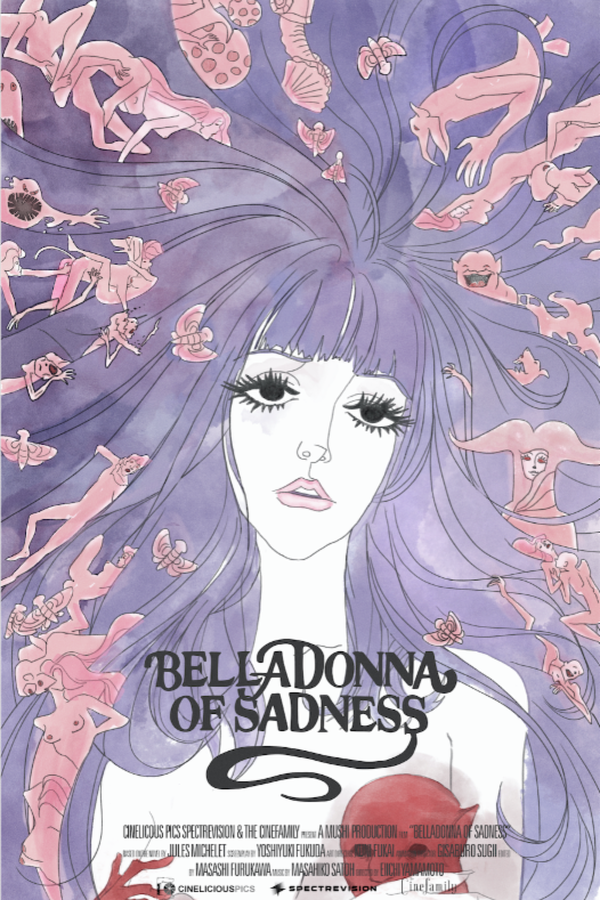
Belladonna of Sadness (1973) movie poster

Characters & Themes

Belladonna of Sadness (1973) Characters, Setting & Themes Explained

Release, runtime and language
1973 · 86 mins · Japanese
Directed by
Eiichi Yamamoto
Starring
Tatsuya Nakadai, Masakane Yonekura, Masaya Takahashi, Takao Ito, Aiko Nagayama, Shigako Shimegi

After a brutal feudal lord forces himself on a bride on her wedding night, he shatters her life and that of her husband. Banished from her village, the woman turns to a pact with the devil, gaining the magical power of the belladonna—a flower that blossoms from tears—to exact a haunting revenge.

On this page (8)
  1. 1 Where to watch
  2. 2 Characters explained (6)
  3. 3 Where & when it takes place
  4. 4 Themes & meaning (4)
  5. 5 Character & meaning questions
  6. 6 Movie threads
  7. 7 Movies like Belladonna of Sadness
  8. 8 Every angle

Where to watch

Where to Watch Belladonna of Sadness (1973)

Where can you watch Belladonna of Sadness? Stream, rent or buy it in the US, including on Google Play Movies and YouTube: current JustWatch availability with up-to-date prices.

Streaming availability powered by JustWatch

6 main characters · contains spoilers

Belladonna of Sadness Characters Explained: Who Is Who

The main characters of Belladonna of Sadness (1973), heroes and villains: what drives them, how they change over the course of the story and what each of them reveals about the film's bigger ideas.

  • Jeanne / Belladonna (Aiko Nagayama)

    A newlywed whose trauma and vulnerability give way to power as she makes a dark pact. She evolves from a victim of abuse into a charismatic figure who wields magical influence over the village, challenging moral norms and testing her loyalties to Jean and God.

    • 👗 Transformation
    • 🔥 Power
    • 🕯️ Witchcraft
  • Jean (Takao Ito)

    Jeanne’s husband, initially weary and ashamed, becomes entangled in the village’s turmoil. His pride and fallibility drive his downfall as he turns to drink and violence, ultimately dying when he tries to confront the baron’s orders.

    • 🪶 Jealousy
    • ⚔️ Conflict
    • 🍷 Alcoholism
  • The Lord / The Baron (Masaya Takahashi)

    The baron controlling the region, whose wars, taxes, and ambition fuel the villagers’ misery. He condemns Jeanne’s influence, orders her burning, and uses fear and authority to bend others to his will.

    • 👑 Authority
    • 🗡️ Tyranny
    • 🧭 Politics
  • The Devil / Spirit (Tatsuya Nakadai)

    A sinister, phallic-headed spirit who manipulates Jeanne into accepting power in exchange for favors. He embodies temptation and moral decay, orchestrating a rise to power that comes at a terrible personal and social cost.

    • 🔥 Temptation
    • 🕷️ Supernatural
    • 🗡️ Power
  • The Witch (Natsuka Yashiro)

    A figure representing the village’s fear of witchcraft, appearing as a voice within the narrative to explain the consequences of Jeanne’s pact. Her presence underscores the moral and religious panic surrounding magical power.

    • 🪄 Witchcraft
    • 🧭 Morality
    • 🕯️ Superstition
  • The Priest (Masakane Yonekura)

    A spiritual authority who warns of the consequences of meddling with dark forces, underscoring the film’s themes of judgment and the price of power.

    • ⛪ Faith
    • ⚖️ Judgment
    • 🗣️ Authority

Last updated: October 04, 2025 at 15:41

Was this helpful?

Setting

Where and When Does Belladonna of Sadness Take Place?

The setting of Belladonna of Sadness (1973): the year and time period, the places and locations, and how they shape the characters, the mood and the tension of the story.

Time period

Middle Ages

Set during the feudal era of medieval France, the world is governed by lords, peasants, and strict social hierarchies. The period is marked by famine pressures, heavy taxation, and religious superstition that influences every decision. Magic and power dynamics emerge as the village's fortunes swing with the baron’s wars and Jeanne's pact with dark forces.

Location

Medieval France, Rural village

The story is set in a small rural village in medieval France, where feudal power looms over daily life. A nearby baron rules the region from his estate, and famine and debt strain the community. The village is defined by its tight-knit but fearful population, who rely on the lord's mercy and the church's judgment.

  • 🏰 Feudal setting
  • 🌾 Rural village
  • ⚖️ Power struggles

Last updated: October 04, 2025 at 15:41

Was this helpful?

4 major themes

Belladonna of Sadness Meaning: Themes & Message Explained

What is Belladonna of Sadness (1973) really about? The emotional, social and philosophical themes the film keeps returning to, its symbolism and the message beneath the surface.

  • Power and Ambition

    The film traces how power can be seized and leveraged through charisma, fear, and manipulation. Jeanne’s ascent from social outsider to ruling force destabilizes the local order and relationships, especially with Jean and the baron. The story shows the costs and temptations of unchecked ambition.

  • Witchcraft and Temptation

    A pact with a demonic spirit grants Jeanne extraordinary abilities, blurring lines between salvation and damnation. The magic empowers her to heal the plague yet corrupts the moral fabric of the village. The narrative probes whether power granted by the supernatural can ever be morally clean.

  • Female Agency vs Patriarchy

    Jeanne’s rise challenges the patriarchal order, making her both feared and envied. The villagers’ condemnation reveals gendered double standards and the social costs of female power. Her choices test loyalty, marriage, and faith, forcing others to confront their own complicity.

  • Disease as Catalyst

    The plague outbreak catalyzes Jeanne’s role as healer and leader, attracting the village’s devotion and fear alike. The cure she offers becomes a tool for political leverage, drawing the baron’s pursuit of control. The plague also functions as a vehicle for social experimentation and later historical upheaval.

Last updated: October 04, 2025 at 15:41

Was this helpful?

Character & theme questions

Belladonna of Sadness Characters & Meaning: Your Questions Answered

The questions people ask about Belladonna of Sadness (1973): who the characters really are, their relationships, what the symbols mean, where it takes place and what the movie is really about. Each answer contains spoilers.

Q1

Where is Belladonna of Sadness set?

The film is set in a small rural village in medieval France during the Middle Ages. The village exists under the shadow of a baron's estate, where feudal power dominates daily life. The setting is characterized by famine, debt, and a tight-knit but fearful population that relies on the lord's mercy and the church's judgment.

  • medieval france
  • rural village
  • feudal setting
  • baron estate
Q2

What time period does the movie take place in?

Belladonna of Sadness is set during the feudal era of medieval France. The period is defined by strict social hierarchies between lords, peasants, and clergy. Everyday life is shaped by famine pressures, heavy taxation, and religious superstition that influences every decision.

  • middle ages
  • feudal era
  • medieval france
  • historical setting
Q3

Who is Jeanne in the film?

Jeanne is the protagonist, a newlywed woman whose initial vulnerability and trauma from assault give way to transformative power. She makes a dark pact with a demonic spirit that grants her magical abilities, allowing her to evolve from a victim into a charismatic figure who wields influence over the village. Her journey challenges moral norms and tests her loyalties to her husband Jean and her faith.

  • jeanne
  • protagonist
  • belladonna
  • witchcraft
  • main character
Q4

Who is the baron in Belladonna of Sadness?

The baron is the feudal lord who controls the region from his estate, serving as the film's primary antagonist. His wars, excessive taxation, and personal cruelty fuel the villagers' misery. He condemns Jeanne's magical influence, orders her burning, and uses fear and authority to maintain control over the village population.

  • baron
  • lord
  • antagonist
  • villain
  • feudal lord
Q5

What does the film say about power and ambition?

The film explores how power can be seized and leveraged through charisma, fear, and manipulation. Jeanne's transformation from social outsider to a ruling force destabilizes the local order and relationships. The story examines the costs and temptations of unchecked ambition, showing how the pursuit of power corrupts both individuals and communities.

  • power
  • ambition
  • corruption
  • control
  • authority
Q6

What role does witchcraft play in the story?

Witchcraft serves as the mechanism through which Jeanne gains agency. A pact with a demonic spirit grants her extraordinary abilities, blurring lines between salvation and damnation. While the magic allows her to heal the plague, it simultaneously corrupts the village's moral fabric. The film probes whether supernatural power can ever be morally clean.

  • witchcraft
  • magic
  • devil pact
  • supernatural power
  • temptation
Q7

How does the film explore female agency versus patriarchy?

Jeanne's rise to power directly challenges the patriarchal order, making her both feared and envied by the village. The villagers' condemnation reveals gendered double standards and the social costs of female power. Her choices test loyalty, marriage, and faith, forcing other characters to confront their own complicity in systems of oppression.

  • female agency
  • patriarchy
  • gender
  • women
  • social control
Q8

What is the significance of the plague in the film?

The plague outbreak serves as a catalyst that transforms Jeanne into a healer and leader, attracting both devotion and fear from the village. The cure she offers becomes a tool for political leverage, drawing the baron's pursuit of control. The plague also functions as a vehicle for social experimentation, connecting the personal narrative to larger historical upheaval.

  • plague
  • disease
  • healing
  • epidemic
  • social change
Q9

What kind of animation is Belladonna of Sadness?

The film is an animated feature created using Ecru, a pioneering process that combined live-action backgrounds with rotoscoped animation. This psychedelic and experimental visual style blends historical realism with surreal fantasy sequences, creating a distinctive aesthetic that complements the film's allegorical storytelling.

  • animation
  • ecru
  • rotoscope
  • psychedelic
  • art style
Q10

What is the overall tone of the film?

Belladonna of Sadness maintains a consistently dark and intense tone throughout, focused on themes of exploitation and corrupt power. The emotional weight is heavy, anchored in relentless suffering and a pervasive sense of injustice. The film combines lingering atmospheric sequences with rapid plot developments to create an unsettling, allegorical experience.

  • dark tone
  • intense
  • psychological
  • emotional
  • atmosphere
Q11

Who is the devil figure in the story?

The devil is a sinister, phallic-headed spirit who manipulates Jeanne into accepting power in exchange for favors. Representing pure temptation and moral decay, he orchestrates Jeanne's rise to power in a way that comes at terrible personal and social costs. He embodies the film's exploration of whether power granted by the supernatural can ever be morally justified.

  • devil
  • spirit
  • demon
  • supernatural entity
  • temptation
Q12

Is Belladonna of Sadness connected to historical events?

While set in medieval France, the film operates as an allegory that connects Jeanne's personal tragedy to the seeds of the French Revolution. Her story reflects broader themes of oppressed people rising against corrupt authority. The mythic framing allows the narrative to comment on historical cycles of exploitation and rebellion beyond its specific feudal setting.

  • french revolution
  • allegory
  • historical
  • metaphor
  • symbolism

Movie threads

More Movies Like Belladonna of Sadness, by Mood & Story

Curated lists built around what makes Belladonna of Sadness tick: the same mood, the same kind of story or the same emotional payoff. Each list explains why these movies belong together.

Surreal revenge stories like Belladonna of Sadness

Visually experimental and harrowing journeys of victims turning to supernatural power. Explore movies like Belladonna of Sadness that blend intense psychedelic animation with profound themes of trauma and vengeance. If you liked the harrowing, surreal visual style and the narrative of a victim's supernatural empowerment, these films offer a similarly challenging and immersive experience.

  • surreal
  • harrowing
  • vengeful
  • psychedelic
  • unsettling
  • oppressive
  • Tone: dark, harrowing, surreal
  • Pacing: variable, atmospheric
Why these movies?

The story pattern: The narrative pattern typically follows a protagonist who endures extreme violation or injustice, often breaking their spirit and reality. Their path to revenge or liberation is not conventional but involves a descent into a dreamlike or hallucinatory state, where they gain otherworldly power, blurring the lines between psychological breakdown and mystical awakening.

Why they belong together: Movies in this thread are grouped by their shared commitment to using avant-garde, non-realistic visuals to express deep psychological pain and the radical transformation that follows. They share a dark, oppressive tone, high emotional intensity, and a focus on the intersection of trauma, feminism, and supernatural forces.
Bleak historical allegories like Belladonna of Sadness

Grim period stories where personal tragedy reflects systemic collapse. Find movies similar to Belladonna of Sadness that use a bleak historical setting to tell a story of profound injustice and its consequences. If you were captivated by the film's allegorical depth, medieval oppression, and its connection of personal trauma to a grim historical legacy, these recommendations will resonate.

  • bleak
  • oppressive
  • melancholic
  • unsettling
  • harrowing
  • vengeful
  • Tone: dark, bleak, oppressive
  • Pacing: variable, deliberate
Why these movies?

The story pattern: Stories in this thread unfold in a meticulously realized but cruel historical world. A central character's devastating experience—often involving sexual violence, witchcraft accusations, or feudal abuse—serves as a microcosm for the corruption and hysteria of the era. The ending is typically bleak for the individual, but hints grimly at a larger, historical reckoning to come.

Why they belong together: These films are united by their use of a historical setting not for adventure, but to explore themes of power, oppression, and collective trauma. They share a dark tone, complex narrative structures that blend realism with allegory, a heavy emotional weight, and a profoundly bleak conclusion that provides a cold, intellectual form of catharsis.

If you liked this

Movies Like Belladonna of Sadness

Similar movies to Belladonna of Sadness: the same genre, themes or kind of story. Each one comes with its own plot summary, timeline and ending explained.

Browse all movie summaries

Every angle

Belladonna of Sadness (1973) Explained: Plot, Timeline & Characters

Everything about Belladonna of Sadness in one place: what happens in the plot summary, the timeline in chronological order, the characters and meaning and a spoiler-free summary. What's After the Movie adds the cast, box office and post-credit scenes.

Coming soon on iOS and Android

The Plot Explained Movie Summary App

Plot summaries, endings explained and timelines on your phone. Catch up on any movie in minutes, save your favorites and never miss a twist again.

Be the first to know when we launch. Your email stays private, always.

Learn more about the app