Plot Explained Spoilers guaranteed!
Plot Explained

Browse by genre

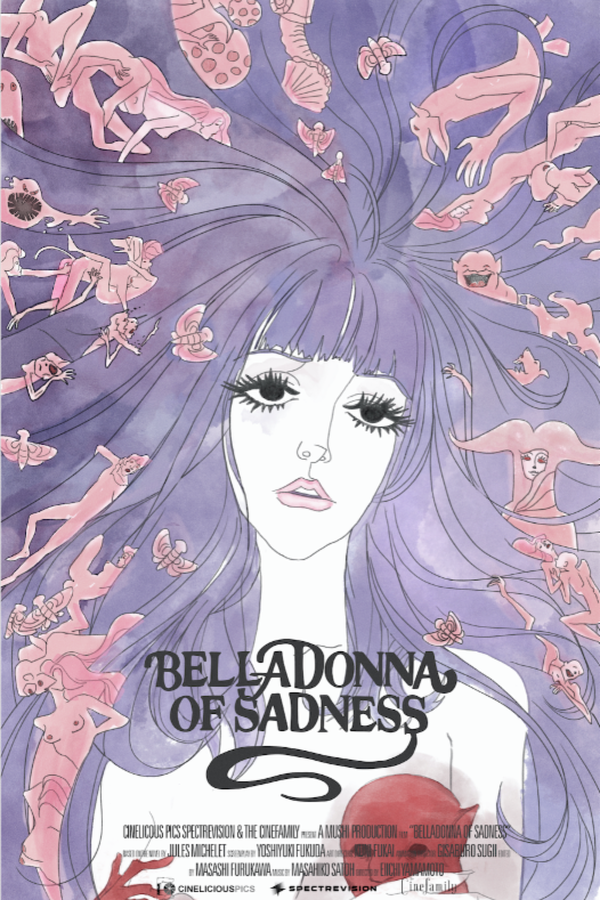
Belladonna of Sadness (1973) (2016) movie poster

Plot Summary

Belladonna of Sadness (1973) (2016) Plot Summary Explained

Release, runtime and language
2016 · 93 min · Japanese
Directed by
Eiichi Yamamoto

A young woman’s life is tragically disrupted on her wedding night, leading to a descent into madness and a thirst for revenge. She makes a pact with the Devil, which transforms her into a captivating and enigmatic figure. The story blends medieval imagery with eroticism, creating a dreamlike and surreal narrative that explores themes of desire, vengeance, and the blurring lines between reality and fantasy. It's a visually striking and provocative adult animated film.

On this page (5)
  1. 1 Where to watch
  2. 2 What happens: full plot
  3. 3 Plot questions answered
  4. 4 Movie threads
  5. 5 Every angle

Where to watch

Where to Watch Belladonna of Sadness (1973) (2016)

Where can you watch Belladonna of Sadness (1973)? Stream, rent or buy it in the US, including on Google Play Movies and YouTube: current JustWatch availability with up-to-date prices.

Streaming availability powered by JustWatch

Full plot summary · contains spoilers

What Happens in Belladonna of Sadness (1973): Full Plot Summary

The whole story of Belladonna of Sadness (1973) (2016) explained, from the opening scene to the final frame: every key event, every twist and what it all adds up to. Read it as a quick recap before the sequel, to check a scene you missed, or to finally understand what really happened.

Jeanne and Jean are a newlywed couple living in a serene rural village in medieval France. Tragically, on Jeanne's wedding night, she endures a horrific gang-rape orchestrated by the local baron and his courtiers. When she returns to her husband Jean, filled with terror, he tries to soothe her fears, suggesting they can forget the past and start anew. However, in a shocking twist, Jean strangles her into unconsciousness, overwhelmed by his own turmoil, before fleeing their home in shame and distress.

That very night, Jeanne starts experiencing eerie visions of a spirit with a phallic head who claims to offer her power. This spirit reveals that it has heard her silent plea for help and assures her that it can grow as large and formidable as she desires. Consequently, while famine grips the village and the baron increases taxes to support his war efforts, the couple's fortunes inexplicably rise. Formerly trapped in the grind of menial labor, Jean is suddenly appointed as the tax collector. Yet his fortunes take a dark turn when the baron brutally cuts off Jean’s hand, punishing him for failing to extract adequate money from the villagers, which plunges Jean into despair and drunkenness.

Jeanne encounters the spirit once again—this time, it has grown in size—and is coerced into a troubling exchange where the spirit rapes her in return for wealth. Despite relinquishing her body to the spirit, Jeanne strongly asserts that her soul still belongs to Jean and God. In a bold move, she borrows a significant sum from a usurer, immersing herself in the trade and ultimately becoming the true authority in the village. When the baron triumphantly returns from war, his wife, consumed by jealousy over the reverence Jeanne commands, accuses her of witchcraft, rallying the townsfolk against her. As chaos ensues, Jeanne desperately attempts to return to her home, only to be refused entry, leading to her brutal assault.

That night, as soldiers close in to apprehend her, Jeanne escapes into the forest. In the wilderness, she forges a pact with the spirit, who unveils himself as the Devil. This deal grants her magical abilities, and upon returning to a village now ravaged by the bubonic plague, Jeanne creates a miraculous cure for the sickness, drawing the villagers to her for assistance. Winning their loyalty, Jeanne leads them in wild rites.

In a twist of fate, a page who has fallen for the baron's wife asks Jeanne for her help to win her love. She provides him with a love potion, which results in the baron's wife succumbing to his advances. Unfortunately, when the baron discovers their affair, he murders both of them. Frustrated by Jeanne's burgeoning power, the baron sends Jean to invite her for a meeting. In an emotional reunion, the couple reconciles, and Jeanne agrees to meet with the baron. However, when he offers her the position of the second-highest noble in exchange for her cure for the plague, Jeanne boldly declines, expressing her ambition to conquer the entire world.

This refusal ignites the baron's fury, resulting in a death sentence for Jeanne, who is to be burned at the stake. Jean valiantly attempts to protect her but is slain by the baron's soldiers, inciting a riot among the villagers. As Jeanne is engulfed in flames, a haunting transformation occurs—the faces of the female villagers morph into Jeanne's likeness, fulfilling a priest's ominous prophecy: if a witch dies clinging to her pride, her soul will endure and infect those around her. Centuries later, the enduring impact of Jeanne's spirit is heralded as a catalyst for the French Revolution.

Last updated: November 08, 2024 at 05:53

Was this helpful?

Plot questions answered

Belladonna of Sadness (1973) Plot Explained: Your Questions Answered

The questions people ask most about Belladonna of Sadness (1973) (2016): what happens in the confusing scenes, why the characters do what they do, the twists, hidden details and what the ending means. Each answer contains spoilers.

Q1

Why does Jean strangle Jeanne after her traumatic assault?

Jean strangles Jeanne in a moment of overwhelming shame and emotional turmoil. Rather than confronting the baron who orchestrated the attack, Jean channels his rage onto his wife, unable to bear the thought of her violated body. He then flees in distress, abandoning her when she needs him most. This act establishes the collapse of their relationship and drives Jeanne toward seeking power elsewhere.

Foreshadowing: Jean's flight sets the stage for Jeanne's isolation and vulnerability, making her susceptible to the spirit's influence.

  • jean
  • strangle
  • assault
  • shame
  • abandonment
Q2

What does the spirit offer Jeanne after her wedding night?

The spirit, appearing with a phallic head, offers Jeanne power in exchange for fulfilling her silent plea for help after her assault. It claims it can grow as large and formidable as she desires. This ambiguous offer becomes the foundation of her dark bargain, granting her material wealth and influence over time, though it comes at a terrible personal cost.

Foreshadowing: The spirit's promise of growth foreshadows Jeanne's increasing power and the escalating consequences of her pact.

  • spirit
  • power
  • bargain
  • phallic
  • offer
Q3

How does Jeanne rise to become the authority in the village?

After the spirit's visitation, Jeanne borrows a large sum from a usurer and invests it in trade. Her business acumen, combined with the wealth gained through her mysterious bargain, allows her to accumulate significant assets. She becomes the true power in the village, overshadowing both the baron and the church, which attracts the jealousy of the baron's wife.

Foreshadowing: The baron and his wife's eventual attack on Jeanne is directly motivated by the threat her economic power poses.

  • merchant
  • trade
  • wealth
  • power
  • village
Q4

Why does Jeanne submit to the spirit's sexual encounter despite her trauma?

Jeanne is coerced into the exchange with the spirit as payment for the wealth and power she desires. Though the spirit rapes her during this encounter, Jeanne maintains that her soul still belongs to Jean and God. This reflects her internal conflict, she uses her body as a transactional tool while clinging to her spiritual integrity and love for her husband.

Foreshadowing: This moment establishes the pattern of Jeanne sacrificing her body for power, mirroring the original assault but with a crucial difference: her agency in the bargain.

  • spirit
  • rape
  • coercion
  • soul
  • bargain
Q5

What happens when Jeanne gives the love potion to the page?

A page in love with the baron's wife asks Jeanne for a love potion. She provides one, which causes the baron's wife to fall for the page. When the baron discovers their affair, he murders both the page and his wife in a rage. This tragic incident demonstrates how Jeanne's magic disrupts the nobility's power structure and fuels the baron's determination to destroy her.

Foreshadowing: The baron's murderous rage sets the stage for his ultimate vendetta against Jeanne.

  • love potion
  • page
  • baron wife
  • affair
  • murder
Q6

Why does Jeanne refuse the baron's offer to become a noble?

When the baron offers Jeanne the position of second-highest noble in exchange for her plague cure, she boldly refuses, declaring her ambition to conquer the entire world rather than accept a subordinate role. This defiant statement reflects how her thirst for power has transformed from survival into domination. Her refusal directly leads to her death sentence.

Foreshadowing: Jeanne's ambition, nurtured by her pact with the Devil, ultimately becomes her fatal flaw.

  • refusal
  • baron
  • noble
  • ambition
  • world conquest
Q7

What occurs during Jeanne's execution by fire?

As Jeanne burns at the stake, a horrifying transformation occurs, the faces of all the female villagers morph into Jeanne's likeness. This fulfills a priest's earlier prophecy that if a witch dies clinging to her pride, her soul will endure and infect those around her. The moment marks her martyrdom and the beginning of her revenge through collective identity.

Foreshadowing: The priest's prophecy earlier in the film directly sets up this supernatural transformation.

  • execution
  • burning
  • transformation
  • faces
  • prophecy
Q8

How does Jeanne's story connect to the French Revolution?

Centuries after her execution, Jeanne's enduring spirit is portrayed as the catalyst for the French Revolution. The film suggests her defiance, martyrdom, and the collective transformation of the women into her likeness represent the birth of revolutionary consciousness in France. Her personal quest for vengeance becomes intertwined with historical revolution.

  • french revolution
  • spirit
  • legacy
  • revolution
  • centuries
Q9

Why does Jean return to Jeanne before her meeting with the baron?

The baron sends Jean to invite Jeanne for a meeting, providing an opportunity for their emotional reunion. Despite years of separation, trauma, and Jeanne's transformation into a powerful figure, they reconcile briefly. This reunion highlights their complicated bond and Jean's lingering feelings for her, though it ultimately leads to his death when he tries to protect her.

Foreshadowing: Their reconciliation makes Jean's later sacrifice more emotionally impactful.

  • jean
  • reunion
  • baron
  • reconcile
  • sacrifice
Q10

Why does the baron's wife accuse Jeanne of witchcraft?

When the baron returns from war, his wife is consumed by jealousy over the reverence and power Jeanne commands in the village. Rather than accepting Jeanne's influence, she rallies the townsfolk against her by accusing her of witchcraft, exploiting the villagers' fear and superstition to destroy a rival for authority.

Foreshadowing: This accusation triggers the chain of events leading to Jeanne's assault and eventual escape.

  • witchcraft
  • jealousy
  • baron wife
  • accusation
  • villagers

Movie threads

More Movies Like Belladonna of Sadness (1973), by Mood & Story

Curated lists built around what makes Belladonna of Sadness (1973) tick: the same mood, the same kind of story or the same emotional payoff. Each list explains why these movies belong together.

Surreal dramas about trauma and power like Belladonna of Sadness (1973)

Films that use dreamlike, symbolic imagery to explore the fallout of trauma and the pursuit of power. If you liked the symbolic and psychedelic visuals of Belladonna of Sadness, explore similar movies that use surrealism to delve into psychological trauma, vengeance, and the desire for control. These films share a dreamlike, often dark tone and a heavy emotional weight.

  • surreal
  • oppressive
  • tragic
  • dreamlike
  • psychologically intense
  • symbolic
  • Tone: dark, surreal, tragic
  • Pacing: variable, introspective
Why these movies?

The story pattern: Narratives in this thread often begin with a profound violation or loss that fractures the protagonist's reality. Their subsequent journey is depicted through a lens of hallucinatory symbolism, as they grapple with their trauma, often seeking empowerment or revenge through otherworldly or supernatural means. The plot is driven by the character's psychological state as much as by external events.

Why they belong together: Movies are grouped here for their shared commitment to using non-realistic, artistic visuals to convey intense psychological experiences. They connect through a dark, oppressive mood, a focus on themes of injustice and empowerment, and a willingness to confront disturbing content through a stylized, symbolic filter.

Movies about tragic pacts and revenge like Belladonna of Sadness (1973)

Stories of characters who trade their humanity for power, leading to a bittersweet reckoning. For viewers who appreciated the dark deal with the devil in Belladonna of Sadness, this list features similar movies about characters making desperate pacts for power. These stories share themes of injustice, vengeance, and the heavy price of empowerment, often ending on a tragic or bittersweet note.

  • tragic
  • vengeful
  • dark pact
  • gothic
  • melancholic
  • oppressive
  • Tone: dark, tragic, vengeful
  • Pacing: steady, building to a climax
Why these movies?

The story pattern: The narrative pattern involves a sympathetic character pushed to the brink by cruelty or oppression. They make a conscious, desperate choice to ally with a dark or supernatural force, gaining immense power at a great personal cost. Their journey of vengeance or revolution is transformative but ultimately leads to their own destruction or a pyrrhic victory, questioning the true meaning of justice.

Why they belong together: These films are connected by the core plot device of a transformative, morally ambiguous pact. They share a dark tone, high emotional intensity, and a thematic focus on the complex interplay between victimhood, power, and the cyclical nature of violence. The endings are rarely purely triumphant.

Every angle

Belladonna of Sadness (1973) (2016) Explained: Plot, Timeline & Characters

Everything about Belladonna of Sadness (1973) in one place: what happens in the plot summary, the timeline in chronological order, the characters and meaning and a spoiler-free summary. What's After the Movie adds the cast, box office and post-credit scenes.

Coming soon on iOS and Android

The Plot Explained Movie Summary App

Plot summaries, endings explained and timelines on your phone. Catch up on any movie in minutes, save your favorites and never miss a twist again.

Be the first to know when we launch. Your email stays private, always.

Learn more about the app