



Plot Explained Spoilers guaranteed!
Plot Explained

Browse by genre

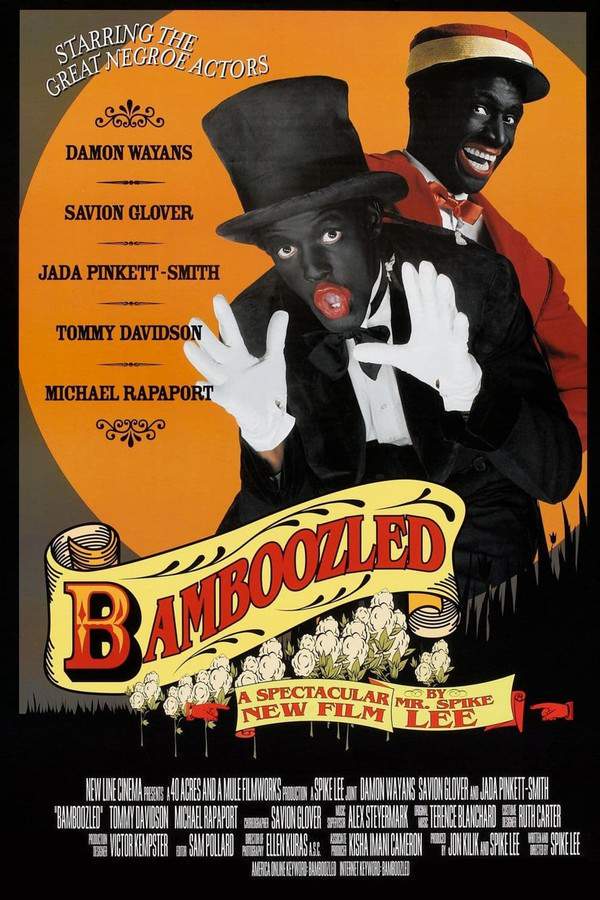
Bamboozled (2000) movie poster

Timeline

Bamboozled (2000) Timeline Explained – Every Event in Order

Release, runtime and language
2000 · 135 min · English
Directed by
Spike Lee
Starring
Jada Pinkett Smith, Savion Glover, Damon Wayans

Pierre Delacroix, a celebrated playwright, struggles to reclaim his artistic vision within the commercial television landscape. Seeking to revitalize his career, he reluctantly agrees to produce a satirical show, but finds himself increasingly compromised by the network's manipulative practices and the relentless pressure to achieve high ratings. His journey exposes the dark side of the industry and the personal cost of ambition.

On this page (6)
  1. 1 Where to watch
  2. 2 Events in order (15)
  3. 3 Timeline questions answered
  4. 4 Movie threads
  5. 5 Movies like Bamboozled
  6. 6 Every angle

Where to watch

Where to Watch Bamboozled (2000)

Where can you watch Bamboozled? Stream, rent or buy it in the US, including on Amazon Video, Apple TV Store and Fandango At Home: current JustWatch availability with up-to-date prices.

Streaming availability powered by JustWatch

15 events in order · contains spoilers

Bamboozled Timeline: Events in Chronological Order

Every key event of Bamboozled (2000) in order, scene by scene, with when and where it takes place. Use it to untangle flashbacks, time jumps and parallel storylines, to refresh your memory before the sequel or to find the exact scene you are thinking of.

  1. Pierre Delacroix's Morning Reflection

    In a bustling New York City apartment, Pierre Delacroix begins his day with a reflective voiceover about the art of satire. He expresses his dismay over how the rise of the Internet and video games has overshadowed the significance of his work as a television writer.

    Where
    New York City
  2. Womack and Manray's Morning Routine

    In a rundown building, Womack wakes his friend Manray for a day of work. Their first destination is the Continental Network System (CNS) building, where Delacroix is struggling to find his place in a challenging industry.

    Where
    Rundown Building
  3. Delacroix Faces Criticism

    Arriving late to a company meeting, Delacroix faces harsh criticism from his boss, Thomas Dunwitty. Dunwitty's comments about the network's poor ratings and his derogatory insinuation about Delacroix's writing ignite feelings of frustration and resentment in him.

    Where
    CNS
  4. Delacroix's Bold Proposal

    The following day, Delacroix shares an audacious proposal with his assistant, Sloan Hopkins. He believes that Manray, known for his tap dancing, can be key to reviving his career through a controversial new show that will explore racial stereotypes.

    Where
    CNS
  5. Meeting with Womack and Manray

    Sloan intervenes when Womack and Manray approach the reception for help. She leads them to Delacroix's office, where they discuss the outrageous concept of a new pilot featuring Manray under the stage name 'Mantan.'

    Where
    CNS
  6. Sloan's Warning to Delacroix

    That evening, Sloan discusses her concerns with her brother, Big Blak Afrika, who urges her to introduce the Mau Maus, his politically charged hip-hop group, to Delacroix. The meeting weighs heavily on her conscience, as she foresees potential backlash against the show's concept.

    Where
    Sloan's Meeting Location
  7. Pitching 'Mantan: The New Millennium Minstrel Show'

    Delacroix presents his controversial show idea to Dunwitty, proposing a series of performances under the guise of comedy. Despite Sloan's objections, they move forward with auditions, intensifying the spectacle of stereotypes.

    Where
    CNS
  8. Growing Popularity and Conflict

    As 'Mantan' gains traction, Delacroix finds himself torn between his intentions and the show's increasing popularity. This shift leads him to defend the project as satire, while Manray's newfound fame starts to corrupt him.

  9. Relationship Tensions Escalate

    Sloan confronts Delacroix about projecting his issues onto her relationship with Manray. Tensions reach a boiling point when Delacroix's jealousy manifests, straining their professional and personal dynamics.

  10. Manray's Disturbing Decision

    During a live show, Manray shocks the audience by abandoning his blackface and introducing a heartfelt speech about his struggles. The audience's mixed reactions lead to an atmosphere of confusion and discomfort.

    Where
    Live Show
  11. Abduction and Chaos

    The Mau Maus, a politically motivated group, abduct Manray during the live broadcast, intending to execute him online. This shocking turn of events creates panic among Delacroix, Sloan, Womack, and Dunwitty.

    Where
    Live Broadcast Location
  12. Tragic Conclusion

    In a turn of events, Manray is killed on air, leading to devastating consequences that leave Delacroix in mourning over his misguided actions. This tragedy marks a significant turning point, prompting him to confront the fallout of his choices.

  13. Sloan's Confrontation

    Sloan confronts Delacroix with a gun, demanding he watch a tape showcasing the derogatory history of black representation in media. The confrontation escalates into a struggle filled with tension and desperation.

  14. Reflection on Misdeeds

    After the tragic accident, Delacroix is left to reflect on his misdeeds. As he nears his demise, he contemplates the consequences of his choices, leaving the audience with a haunting sense of loss.

  15. Manray's Legacy

    In the closing moments, viewers are presented with a poignant shot of Manray in his element, serving as a tragic reminder of his lost potential amidst the chaos. This final image underscores the film's themes of identity, representation, and the impact of media.

Last updated: November 03, 2024 at 22:37

Was this helpful?

Timeline questions answered

Bamboozled Timeline Explained: Your Questions Answered

When does it happen, and why in that order? The questions people ask about the chronology of Bamboozled (2000): time jumps, flashbacks, cause and effect between scenes and the correct order of events, each answered with spoilers.

Q1

Why did Pierre Delacroix create the Mantan show?

Delacroix created the Mantan show as an elaborate scheme to get fired from CNS and break his contract. He believed the network would never greenlight such an overtly racist show, so he could use it as his ticket to freedom. However, he underestimated the network's willingness to prioritize ratings over integrity - when the show became a hit, Delacroix found himself trapped by his own creation, forced to defend something he initially meant to destroy.

Foreshadowing: Delacroix's opening voiceover about satire's diminished relevance hints at his cynical worldview that would lead to this dangerous experiment.

  • delacroix
  • mantan show
  • scheme
  • contract
  • fired
  • ratings
Q2

What happens to Manray at the end of Bamboozled?

Manray is abducted during a live broadcast by the Mau Maus, a politically charged hip-hop group led by Big Blak Afrika (Sloan's brother). They execute him on air in a shocking on-air murder that serves as both a statement against Black degradation and a tragic consequence of the show's exploitation. This violent act represents the ultimate cost of the characters' choices throughout the film.

Foreshadowing: Big Blak Africa's earlier warning to Sloan about the show's potential backlash foreshadows this tragic outcome.

  • manray
  • mau maus
  • killed
  • execution
  • live broadcast
  • abducted
Q3

What is Delacroix's real name and why does it matter?

Delacroix's real name is Peerless Dothan, revealed at the end of the film. This name carries symbolic weight - 'Delacroix' is a French surname that suggests refinement and whiteness, while 'Peerless Dothan' appears to be a Black name. His adoption of the French-sounding name represents his self-alienation from his own Black identity, and his ultimate return to his birth name as he dies signifies a tragic reckoning with his authentic self.

Foreshadowing: The irony of a Harvard-educated Black man writing for a system that undervalues him sets up this identity conflict throughout the film.

  • peerless dothan
  • real name
  • delacroix
  • identity
  • alias
Q4

Why did Manray remove his blackface during the live show?

During the live broadcast, Manray suddenly removed his blackface makeup and delivered a heartfelt speech about his struggles and humanity. This moment represents his sudden awakening to the degradation he had been participating in, as well as his attempt to reclaim his dignity. However, this act of resistance triggered the Mau Maus, who saw his participation in the show as unforgivable betrayal and proceeded to abduct him.

Foreshadowing: Manray's growing ego and distance from Womack throughout the film hints at his internal conflict about his role in the show.

  • manray
  • blackface
  • remove
  • speech
  • live show
  • awakening
Q5

Who are the Mau Mau in the movie?

The Mau Maus are a militant, politically charged hip-hop group led by Big Blak Afrika, who is Sloan's brother. They represent radical Black nationalism and are deeply opposed to the Mantan show's perpetuation of racist stereotypes. The group sees Manray's participation in the minstrel show as a betrayal of Black people, which motivates their extreme response - abducting and executing him on live television as a statement against cultural degradation.

Foreshadowing: Sloan's meeting with her brother where he urges her to introduce him to Delacroix establishes the Mau Maus as a looming threat.

  • mau maus
  • big blak afrika
  • hip-hop group
  • radical
  • kidnapped manray
Q6

Why does Sloan kill Delacroix at the end?

Sloan kills Delacroix after forcing him to watch a tape documenting the history of Black degradation in media - from minstrel shows to modern stereotyping. This visual history of exploitation, combined with Delacroix's complicity in creating the most offensive version of this tradition, drives Sloan to desperate action. The murder represents her attempt to hold Delacroix accountable for the cultural damage he caused, though the act itself is an accident that leaves them both destroyed.

Foreshadowing: Sloan's repeated objections to the show throughout the film and her conflict with Delacroix over his jealousy build toward this explosive confrontation.

  • sloan
  • delacroix
  • killed
  • gun
  • tape
  • history
  • media
Q7

What is the significance of the name 'Mantan'?

Delacroix asks Manray to adopt the stage name 'Mantan' as a direct reference to Mantan Moreland, a famous Black actor from the minstrel era who was typecast in servile, stereotypic roles. By using this name, Delacroix explicitly connects his modern 'satirical' show to the historical tradition of Blackface minstrelsy, making the show's commentary both more pointed and more dangerous. The name choice is meant to underscore the film's critique of how Black representation has been exploited throughout entertainment history.

Foreshadowing: Delacroix's knowledge of media history and his intellectual approach to satire establish his intentional use of provocative references.

  • mantan
  • mantan moreland
  • stage name
  • minstrel
  • blackface
  • reference
Q8

Why does Delacroix start defending the Mantan show?

Despite initially creating the show as a scheme to get fired, Delacroix finds himself trapped when the show becomes a surprise hit. His ego and desire for success cause him to abandon his original intentions - he begins defending the show as legitimate satire rather than admitting it was meant to expose the network's racism. This transformation represents the film's central tragedy: Delacroix becomes exactly what he set out to critique, proving the system can co-opt even its critics.

Foreshadowing: Dunwitty's early criticism about Delacroix writing 'white characters with black faces' planted the seeds of his internal conflict.

  • delacroix
  • defend
  • mantan show
  • satire
  • success
  • compromised
Q9

Why does the movie open with Delacroix talking about the Internet and video games?

The opening voiceover establishes Delacroix's professional crisis - he believes traditional television writing has become obsolete due to the rise of the Internet and video games. This framing positions his desperation to reclaim relevance, which directly motivates his willingness to create the Mantan show. The reference also situates the film in its 2000 timeframe and establishes the theme of how media technology shapes cultural representation.

Foreshadowing: His lament about satire's diminished power foreshadows his failed experiment to use television for meaningful commentary.

  • internet
  • video games
  • television
  • relevance
  • satire
  • opening
Q10

What is the relationship between Sloan and Manray?

Sloan and Manray develop a romantic relationship throughout the film, which becomes a point of tension with Delacroix. Sloan introduces Manray to Delacroix for the show, and they eventually become involved. Delacroix's jealousy over their relationship further compromises his judgment, and he attempts to control their interactions. This personal entanglement makes Sloan's ultimate betrayal - killing Delacroix after watching the history of Black stereotyping - even more devastating.

Foreshadowing: Sloan's initial meeting with Manray when she brings him to Delacroix's office establishes their connection.

  • sloan
  • manray
  • relationship
  • romance
  • delacroix
  • jealousy
Q11

How does Manray change after becoming famous?

Manray transforms from a humble tap dancer seeking work into an arrogant celebrity who treats fellow performers poorly and ignores warnings from his friend Womack about his inflated ego. His success on the Mantan show corrupts him, and he becomes consumed by fame - a transformation that makes his eventual awakening and removal of blackface more poignant, as it represents a brief return to humanity before his tragic death.

Foreshadowing: Early scenes showing Manray's charm and humility make his later corruption more stark by contrast.

  • manray
  • fame
  • corrupted
  • ego
  • arrogance
  • womack
  • tap dancing
Q12

What is the significance of the shifting Black collectibles in Delacroix's office?

Delacroix's office contains various Black collectibles and memorabilia that he obsessively arranges. At one point, he perceives them ominously shifting on their own after receiving a disappointed call from his mother about the show. This supernatural element suggests his guilt manifest - the objects representing the Black identity he has been betraying seem to turn against him, adding to the film's atmosphere of mounting dread and moral reckoning.

Foreshadowing: This moment occurs after his mother's call, directly linking his personal life to his professional betrayal.

  • collectibles
  • office
  • shifting
  • guilt
  • supernatural
  • mother
Q13

What does Dunwitty mean by calling Delacroix an 'oreo'?

When Dunwitty criticizes Delacroix's writing for featuring 'white characters with black faces,' he implies Delacroix is an 'oreo' - a pejorative term for a Black person perceived as acting white or assimilating to white culture, with a Black exterior but 'white' interior. This comment, aimed at Delacroix's Harvard background and perceived detachment from Black experience, is the direct catalyst for Delacroix's scheme to prove the network's racism by creating the most offensive show possible.

Foreshadowing: This moment establishes the racial dynamics that drive the entire plot.

  • dunwitty
  • oreo
  • insult
  • harvard
  • assimilation
  • racism

Movie threads

More Movies Like Bamboozled, by Mood & Story

Curated lists built around what makes Bamboozled tick: the same mood, the same kind of story or the same emotional payoff. Each list explains why these movies belong together.

Uncomfortable dark satires like Bamboozled

Movies that use satire to expose ugly truths, leaving no room for comfort. For viewers who appreciated the sharp critique in Bamboozled, this section highlights movies that use similarly uncomfortable satire to dissect social ills. If you're looking for films like Bamboozled that blend dark humor with heavy themes and leave you with a bitter aftertaste, explore these recommendations.

  • satirical
  • uncomfortable
  • cynical
  • tragic
  • frustrated
  • oppressive
  • Tone: dark, cynical, uncomfortable
  • Pacing: steady, methodical
Why these movies?

The story pattern: Narratives in this thread typically follow a concept or scheme meant to critique a system, but the satire backfires or becomes co-opted, revealing the depth of the problem it sought to mock. The protagonist often starts with a sense of control or cynical detachment, only to be swallowed by the very forces they were commenting on, leading to a tragic or deeply unsettling conclusion.

Why they belong together: These films are grouped by their shared commitment to using dark, uncomfortable satire as a primary narrative mode. They share a tonal balance between cynical humor and profound sadness, a thematic focus on systemic corruption, and a tendency to deliver bleak endings that reinforce their critical message.
Movies about artistic compromise like Bamboozled

Stories of creators whose well-intentioned projects are twisted by commercial forces. If you were fascinated by Bamboozled's portrayal of a playwright losing his integrity to the television industry, this section is for you. Discover similar movies about artists, writers, and performers whose ambitions lead them down a path of moral compromise and tragic consequences within exploitative systems.

  • tense
  • tragic
  • frustrated
  • cynical
  • ambitious
  • corrupting
  • Tone: tense, tragic, critical
  • Pacing: steady, character-driven
Why these movies?

The story pattern: The narrative pattern involves a creative protagonist entering a commercial or institutional system with a vision. As they pursue success, the system's demands force them to make incremental compromises, blurring the lines between their original intent and the corrupted final product. This internal conflict escalates, leading to a crisis of identity, the loss of personal relationships, and often a catastrophic downfall.

Why they belong together: These movies share a core narrative about the conflict between art and commerce, individuality and system. They are united by a heavy emotional weight, complex character studies of ambition, and a tone that balances tragic frustration with a critical look at the industries that consume creativity.

If you liked this

Movies Like Bamboozled

Similar movies to Bamboozled: the same genre, themes or kind of story. Each one comes with its own plot summary, timeline and ending explained.

Browse all movie summaries

Every angle

Bamboozled (2000) Explained: Plot, Timeline & Characters

Everything about Bamboozled in one place: what happens in the plot summary, the timeline in chronological order, the characters and meaning and a spoiler-free summary. What's After the Movie adds the cast, box office and post-credit scenes.

Coming soon on iOS and Android

The Plot Explained Movie Summary App

Plot summaries, endings explained and timelines on your phone. Catch up on any movie in minutes, save your favorites and never miss a twist again.

Be the first to know when we launch. Your email stays private, always.

Learn more about the app