Year: 2000
Runtime: 135 min
Language: English
Director: Spike Lee
Pierre Delacroix, a celebrated playwright, struggles to reclaim his artistic vision within the commercial television landscape. Seeking to revitalize his career, he reluctantly agrees to produce a satirical show, but finds himself increasingly compromised by the network's manipulative practices and the relentless pressure to achieve high ratings. His journey exposes the dark side of the industry and the personal cost of ambition.
Warning: spoilers below!
Haven’t seen Bamboozled yet? This summary contains major spoilers. Bookmark the page, watch the movie, and come back for the full breakdown. If you're ready, scroll on and relive the story!
Read the complete plot breakdown of Bamboozled (2000), including all key story events, major twists, and the ending explained in detail. Discover what really happened—and what it all means.
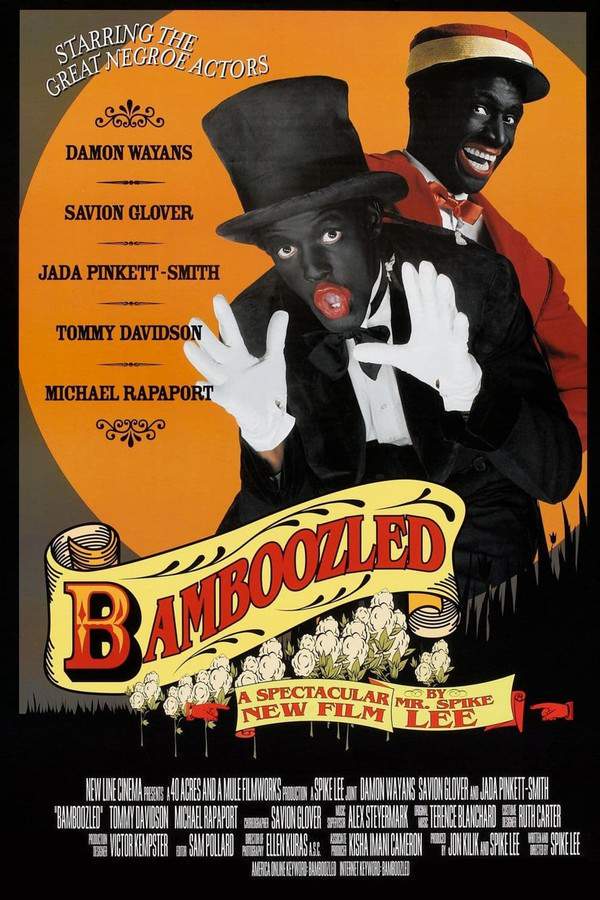
In a bustling New York City apartment, Pierre Delacroix (Damon Wayans) begins his day with a voiceover reflecting on the meaning of satire. He laments how the advent of the Internet, video games, and the like has significantly diminished the popularity of his profession as a television writer. Meanwhile, in a rundown building, Womack (Tommy Davidson) shakes his friend Manray (Savion Glover) awake for a day’s work, which involves visiting the CNS (Continental Network System) building where Delacroix toils. At CNS, Manray charms the staff with his tap dancing in exchange for tips, all while they look for jobs.
Upon arriving at a company meeting late, Delacroix faces reprimand from his boss, Thomas Dunwitty (Michael Rapaport), who critiques the network’s poor ratings and declares they need to produce material that is genuinely funny. In a private moment, Dunwitty harshly comments that Delacroix’s writing seems to feature “white characters with black faces,” insinuating he’s an “oreo” for his prestigious Harvard background and refusal to create a “n----r show.”
The next day, Delacroix discusses with his assistant, Sloan Hopkins (Jada Pinkett Smith), an audacious proposal: he believes Manray is the key to reviving his career. He schemes to produce a highly controversial and offensive TV show to demonstrate the network’s preference for depicting black individuals as buffoons. His intention is to get fired from CNS, liberating himself from the contract. When Womack and Manray seek help at the reception, Sloan intervenes, leading them to Delacroix’s office where he shares his outrageous idea for a pilot. He asks Manray to adopt the stage name “Mantan,” a nod to the black actor Mantan Moreland.
That evening, Sloan meets her brother Big Blak Afrika (Yasiin Bey), who confronts her about her choices and urges her to introduce him and his politically charged hip-hop group, the Mau Maus, to Delacroix. Later, Delacroix presents the dubious concept of “Mantan: The New Millennium Minstrel Show” to Dunwitty, proposing to showcase a variety of stereotypical performances through the guise of comedy. Although Sloan raises her objections regarding potential protests, they proceed to stage auditions that include a series of disconcerting acts.
As the show develops, Delacroix is torn between his original intentions and the show’s growing popularity. Desperate for success, his perspective shifts, leading him to defend the show as satire. This change also impacts Manray, who slowly becomes consumed by fame, treating his fellow performers poorly and disregarding Womack’s warnings about his inflated ego.
Conflict soon arises as Sloan accuses Delacroix of projecting his own issues onto her relationship with Manray. Tension escalates further when Delacroix, in a fit of jealousy, tries to control their interactions. That night, he receives a call from his mother who expresses her disappointment in the show, further deepening his turmoil as he perceives his black-themed collectibles ominously shifting in his office.
During a live show, the audience’s uncomfortable laughter echoes as they respond to racially charged material; people are confused by Manray’s sudden decision to abandon the blackface and deliver a heartfelt speech about his struggles. This ultimately leads to chaos as he is abducted by the Mau Maus, who plan to execute him live online, stirring anxiety among Delacroix, Sloan, Womack, and Dunwitty.
In a tragic culmination, Manray is killed in the broadcast, leaving Delacroix to mourn his actions. Enraged by the show and having lost his way, he lashes out in despair. In the aftermath of the Mau Maus’ celebration, the police intervene violently, leaving one member of the group behind, pleading for an end.
Sloan confronts Delacroix with a gun she acquired from her brother, compelling him to watch a tape that showcases the derogatory history of black representation in media. A struggle ensues, resulting in a tragic accident. As Peerless Dothan (Delacroix’s real name) faces his demise, he reflects on his misdeeds, leaving viewers with a haunting image of his final thoughts. The poignant closing shot reveals Manray in his element, a tragic reminder of lost potential amidst chaos.
Last Updated: November 03, 2024 at 22:37
Discover curated groups of movies connected by mood, themes, and story style. Browse collections built around emotion, atmosphere, and narrative focus to easily find films that match what you feel like watching right now.
Movies that use satire to expose ugly truths, leaving no room for comfort.For viewers who appreciated the sharp critique in Bamboozled, this section highlights movies that use similarly uncomfortable satire to dissect social ills. If you're looking for films like Bamboozled that blend dark humor with heavy themes and leave you with a bitter aftertaste, explore these recommendations.
Narratives in this thread typically follow a concept or scheme meant to critique a system, but the satire backfires or becomes co-opted, revealing the depth of the problem it sought to mock. The protagonist often starts with a sense of control or cynical detachment, only to be swallowed by the very forces they were commenting on, leading to a tragic or deeply unsettling conclusion.
These films are grouped by their shared commitment to using dark, uncomfortable satire as a primary narrative mode. They share a tonal balance between cynical humor and profound sadness, a thematic focus on systemic corruption, and a tendency to deliver bleak endings that reinforce their critical message.
Stories of creators whose well-intentioned projects are twisted by commercial forces.If you were fascinated by Bamboozled's portrayal of a playwright losing his integrity to the television industry, this section is for you. Discover similar movies about artists, writers, and performers whose ambitions lead them down a path of moral compromise and tragic consequences within exploitative systems.
The narrative pattern involves a creative protagonist entering a commercial or institutional system with a vision. As they pursue success, the system's demands force them to make incremental compromises, blurring the lines between their original intent and the corrupted final product. This internal conflict escalates, leading to a crisis of identity, the loss of personal relationships, and often a catastrophic downfall.
These movies share a core narrative about the conflict between art and commerce, individuality and system. They are united by a heavy emotional weight, complex character studies of ambition, and a tone that balances tragic frustration with a critical look at the industries that consume creativity.
Don't stop at just watching — explore Bamboozled in full detail. From the complete plot summary and scene-by-scene timeline to character breakdowns, thematic analysis, and a deep dive into the ending — every page helps you truly understand what Bamboozled is all about. Plus, discover what's next after the movie.
Track the full timeline of Bamboozled with every major event arranged chronologically. Perfect for decoding non-linear storytelling, flashbacks, or parallel narratives with a clear scene-by-scene breakdown.
Discover the characters, locations, and core themes that shape Bamboozled. Get insights into symbolic elements, setting significance, and deeper narrative meaning — ideal for thematic analysis and movie breakdowns.
Get a quick, spoiler-free overview of Bamboozled that covers the main plot points and key details without revealing any major twists or spoilers. Perfect for those who want to know what to expect before diving in.
Visit What's After the Movie to explore more about Bamboozled: box office results, cast and crew info, production details, post-credit scenes, and external links — all in one place for movie fans and researchers.
Discover movies like Bamboozled that share similar genres, themes, and storytelling elements. Whether you’re drawn to the atmosphere, character arcs, or plot structure, these curated recommendations will help you explore more films you’ll love.
Bamboozled (2000) Scene-by-Scene Movie Timeline
Bamboozled (2000) Movie Characters, Themes & Settings
Bamboozled (2000) Spoiler-Free Summary & Key Flow
Movies Like Bamboozled – Similar Titles You’ll Enjoy
Bamako (2007) Film Overview & Timeline
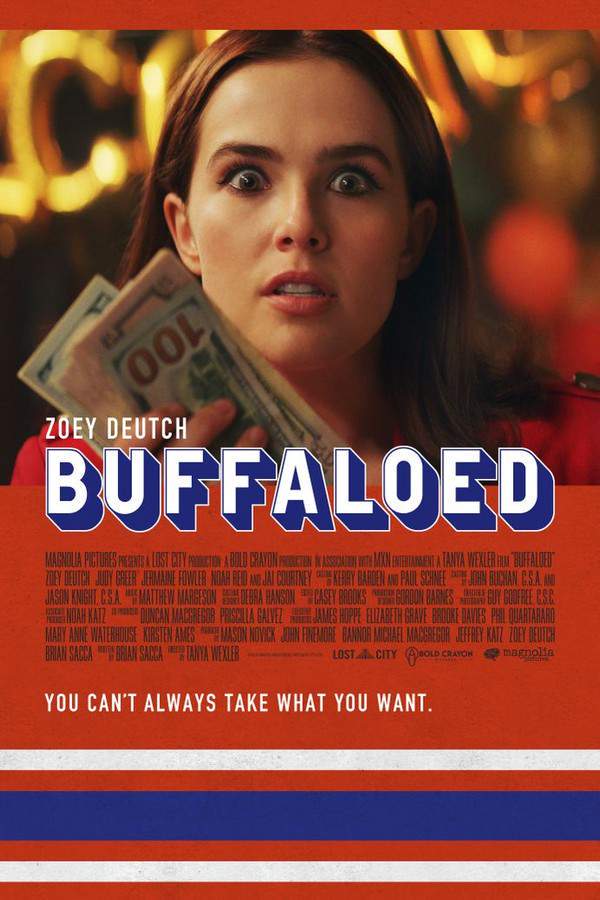
Buffaloed (2020) Detailed Story Recap
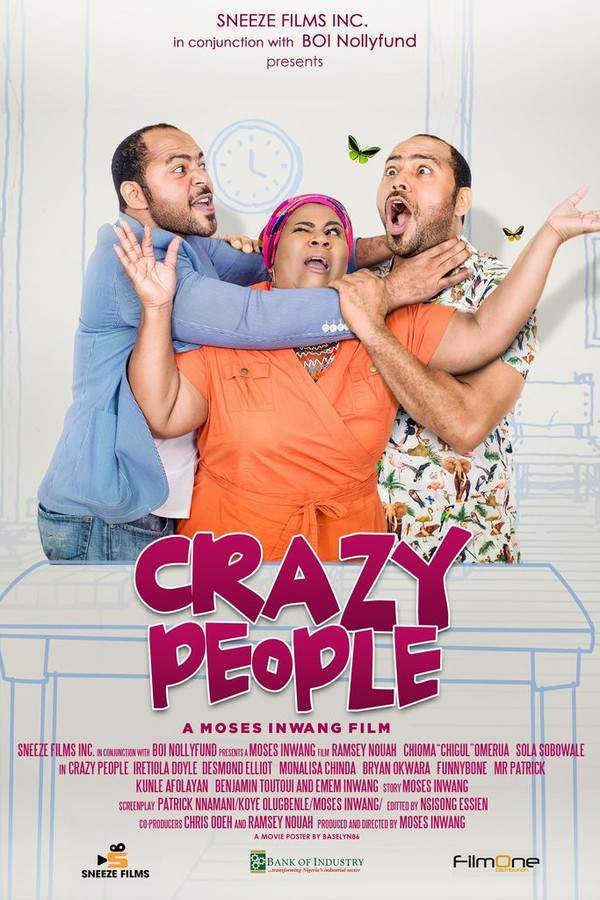
Crazy People (1990) Full Summary & Key Details
Buffaloed (2019) Movie Recap & Themes
Bam Bam and Celeste (2005) Movie Recap & Themes
Banzaï (1983) Detailed Story Recap
Bubbling Over (1934) Spoiler-Packed Plot Recap
Wham-Bam-Slam! (1955) Full Summary & Key Details
B.A.P.S (1997) Movie Recap & Themes
Bambou (2009) Spoiler-Packed Plot Recap
Mambo (1954) Complete Plot Breakdown
Mambo (1954) Full Summary & Key Details
Mambo (1954) Spoiler-Packed Plot Recap
Mambo (1954) Plot Summary & Ending Explained
Mambo (1954) Full Summary & Key Details