Year: 1953
Runtime: 109 mins
Language: English
Director: Sidney Gilliat
Gilbert, originally a barrister who became a comic librettist, and Sullivan, a classically trained composer reluctantly drawn to lighter music, formed a partnership that produced fifteen comic operas between 1871 and 1896. Their collaboration earned widespread public acclaim and remains a celebrated chapter in theatrical history.
Warning: spoilers below!
Haven’t seen The Story of Gilbert and Sullivan yet? This summary contains major spoilers. Bookmark the page, watch the movie, and come back for the full breakdown. If you're ready, scroll on and relive the story!
Trace every key event in The Story of Gilbert and Sullivan (1953) with our detailed, chronological timeline. Perfect for unpacking nonlinear stories, spotting hidden connections, and understanding how each scene builds toward the film’s climax. Whether you're revisiting or decoding for the first time, this timeline gives you the full picture.
Last updated: October 09, 2025 at 11:22
Find frequently asked questions about the The Story of Gilbert and Sullivan (1953) timeline, including chronological order, nonlinear jumps, cause-and-effect links, and scene sequence clarifications. This timeline FAQ helps explain when key events happen, how moments connect, and why the story unfolds in that specific order.
Sullivan genuinely wanted to compose grand operas and serious works like The Prodigal Son cantata, but he found unexpected acclaim and fulfillment in the light comic style of Trial by Jury. The massive popularity of HMS Pinafore and The Pirates of Penzance created a financial pull that made it difficult to walk away, especially as the public demanded more of what made them successful. Though he received a knighthood for his contributions to light music, the tension between his artistic ambitions and the partnership's success remained unresolved throughout his life.
Earlier, Sullivan gains recognition for Trial by Jury but Grace warns him he's wasting his gifts on trivial work.
Grace believed Sullivan was wasting his considerable talents on trivial comic operas when he could be composing serious, respectable musical works. She encouraged him to pursue the cantata based on The Prodigal Son as a path to true artistic legitimacy. When Sullivan chose to continue with the light operas that brought him popular success, Grace left him, warning that he was squandering his gifts on material beneath his abilities.
The tension between artistic elevation and popular appeal appears early, with Sullivan caught between his fiancée's expectations and his discovery of genuine acclaim in comedy.
The quarrel erupted over finances when Gilbert, suffering from gout, audited the partnership's books and confronted Richard D'Oyly Carte about lavish expenditures, including a new carpet for the Savoy Theatre. Gilbert declared he would write no more Savoy operas, refusing to continue contributing to what he saw as wasteful spending. This financial dispute intensified the underlying tension between Gilbert's irascible temperament and Sullivan's insistence on artistic integrity, driving a wedge between the collaborators.
Earlier, Bennett's cantata is set aside while Sullivan works on The Mikado, showing how literary and musical ambitions constantly collide.
Sullivan had composed Ivanhoe as his grand opera, a serious work that he hoped would finally establish him as a composer of weightier music. When the Queen requested a private performance at Windsor Castle, Sullivan likely expected her to choose Ivanhoe. Instead, she chose The Gondoliers, the popular comic opera. This choice unexpectedly reassured Sullivan that his lighter work held genuine significance, even within royal circles, validating the partnership's approach in an unexpected way.
Sullivan had presented Ivanhoe to the Queen, signaling his desire for recognition in serious composition.
The Mikado became one of their most successful and enduring works, premiering during a period when Sullivan was debating whether to focus on serious composition. Bennett had written a libretto for The Golden Legend, suggesting a path toward serious opera, but Sullivan was drawn to Gilbert's new comic plot inspired by a Japanese sword in his study. The Mikado's success reinforced the partnership's formula and distracted from Sullivan's ambitions for grand opera, even as it became one of their most beloved works.
Bennett visits Sullivan to discuss The Golden Legend but discovers The Mikado is being rehearsed instead.
Sullivan received a knighthood as public recognition for his contributions to light music, even though he remained personally conflicted about being associated primarily with comic opera rather than serious composition. Gilbert, despite his crucial role in creating the partnership's success, was not knighted at the same time. The film suggests this was a source of some tension, as Gilbert was finally knighted years after Sullivan's death, marking a delayed recognition of his contributions to the partnership's legacy.
Sullivan's knighthood comes after The Mikado and The Golden Legend debut, cementing his status despite his internal struggles.
Gilbert proposed creating a new comic opera built around a magical lozenge as a central device, suggesting a whimsical plot device typical of his imaginative librettos. Sullivan, however, argued for maintaining focus on weightier musical ambitions rather than diverting energy into another light comic piece. This disagreement exemplifies the ongoing tension between Gilbert's creative enthusiasm for comic opera and Sullivan's desire to pursue more serious musical endeavors.
The tension between Gilbert's comic vision and Sullivan's serious ambitions runs throughout the narrative.
The partnership effectively ended with Sullivan's death during a rehearsal period for a revival of The Yeomen of the Guard. Before that, the quarrel over finances had strained relations, with Gilbert refusing to write more Savoy operas. In their final scene together, the three men, Sullivan, Gilbert, and Carte, meet at a Yeomen rehearsal, each in wheelchairs, planning a symbolic joint curtain call as a gesture of reconciliation. Sullivan dies shortly after, bringing the collaboration to its inevitable conclusion.
The early 20th century scene shows the three men hoping for a revival as the century turns, making the subsequent death poignant.
Richard D'Oyly Carte built the Savoy Theatre specifically to showcase the Gilbert and Sullivan operas, funding it with money earned from the American success of their works, particularly HMS Pinafore which was widely pirated in the United States. The theatre's opening with Iolanthe marked a milestone, Sullivan conducted the premiere while Gilbert, anxious about the reception, left the theatre to wander the streets before returning just in time for a triumphant curtain call. The theatre became synonymous with their partnership's legacy.
American piracy of their works pushed the troupe to tour the U.S., generating profits that funded the new theatre.
The Pirates of Penzance premiered in New York to widespread acclaim, demonstrating that the partnership's appeal extended far beyond Britain. Its American success prompted Richard D'Oyly Carte to build the Savoy Theatre in London, creating a permanent home for their works. The play's popularity helped establish the partnership as an international phenomenon and provided the financial foundation for their continued collaboration.
HMS Pinafore had been widely pirated in America, creating demand that made the American tour and New York premiere possible.
Gilbert's anxiety before the Iolanthe premiere shows his sensitive nature beneath the irascible exterior.
Discover curated groups of movies connected by mood, themes, and story style. Browse collections built around emotion, atmosphere, and narrative focus to easily find films that match what you feel like watching right now.
Stories of brilliant collaborations built on friction and shared ambition.If you liked The Story of Gilbert and Sullivan, explore other movies about celebrated artistic duos. These films delve into the collaborations that produced great art, while navigating the tensions, egos, and personal sacrifices involved in creating a shared legacy.
The narrative in these films typically follows the arc of a partnership from its hopeful beginning through periods of great success, highlighting the internal conflicts and external pressures that test the relationship, often concluding with a bittersweet reflection on what was gained and lost.
These movies are grouped together because they share a central focus on the dynamics of a two-person creative team. They explore similar themes of artistic compromise, the clash between commercial and artistic desires, and the enduring yet complicated legacy that such partnerships leave behind.

Biographical stories where great achievements are shadowed by personal cost.Find movies similar to The Story of Gilbert and Sullivan, which are steady-paced biographical dramas with a bittersweet tone. These films explore famous lives, emphasizing the emotional complexity and poignant costs behind public success and enduring legacies.
Stories in this thread follow a linear, chronological path through a subject's life, juxtaposing their external accomplishments with internal conflicts. The journey is less about unadulterated victory and more about the nuanced, often melancholic, reality of a life lived in the spotlight, culminating in an ending that acknowledges both the glory and the sacrifice.
These films share a specific mood and narrative approach: a steady, reflective pacing, a medium emotional weight, and a consistently bittersweet tone that comes from exploring the gap between public perception and personal fulfillment. They offer a contemplative look at fame and artistry.
Don't stop at just watching - explore The Story of Gilbert and Sullivan in full detail. From the complete plot summary and scene-by-scene timeline to character breakdowns, thematic analysis, and a deep dive into the ending - every page helps you truly understand what The Story of Gilbert and Sullivan is all about. Plus, discover what's next after the movie.
Read a complete plot summary of The Story of Gilbert and Sullivan, including all key story points, character arcs, and turning points. This in-depth recap is ideal for understanding the narrative structure or reviewing what happened in the movie.
Discover the characters, locations, and core themes that shape The Story of Gilbert and Sullivan. Get insights into symbolic elements, setting significance, and deeper narrative meaning - ideal for thematic analysis and movie breakdowns.
Discover movies like The Story of Gilbert and Sullivan that share similar genres, themes, and storytelling elements. Whether you’re drawn to the atmosphere, character arcs, or plot structure, these curated recommendations will help you explore more films you’ll love.
The Story of Gilbert and Sullivan (1953) Plot Summary & Movie Recap
The Story of Gilbert and Sullivan (1953) Scene-by-Scene Movie Timeline
The Story of Gilbert and Sullivan (1953) Spoiler-Free Summary & Key Flow
Movies Like The Story of Gilbert and Sullivan – Similar Titles You’ll Enjoy
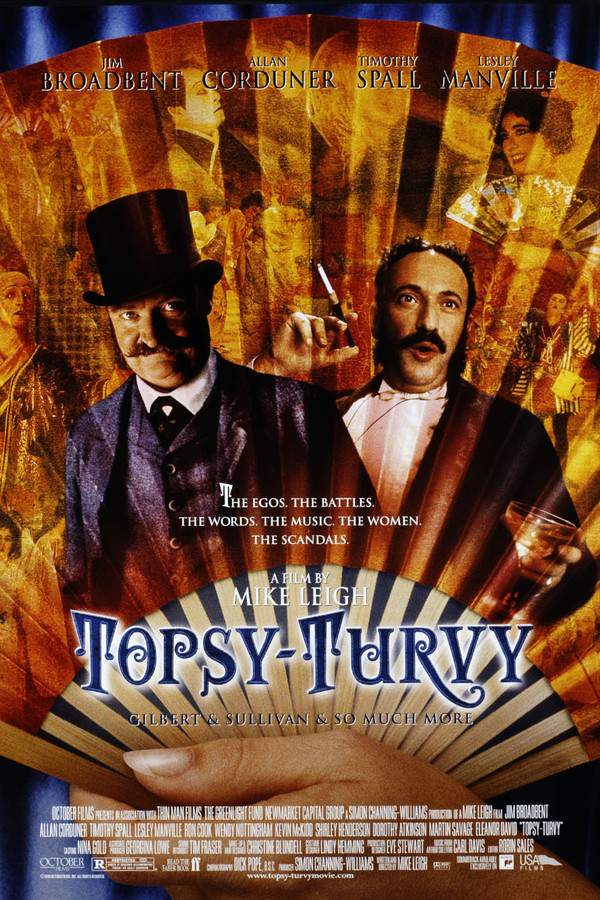
Topsy-Turvy (1999) Film Overview & Timeline
The Pirates of Penzance (1983) Plot Summary & Ending Explained
Ruddigore (1982) Story Summary & Characters
The Mikado (1983) Film Overview & Timeline
The Mikado (1987) Movie Recap & Themes
Know Your Europeans: The United Kingdom (1994) Spoiler-Packed Plot Recap
Ruddigore (1967) Film Overview & Timeline
The Tales of Hoffmann (1951) Story Summary & Characters
The Show of Shows (1929) Story Summary & Characters
The Mikado (1967) Plot Summary & Ending Explained
HMS Pinafore (1997) Movie Recap & Themes
A Night at the Opera (1935) Spoiler-Packed Plot Recap
Operette (1940) Ending Explained & Film Insights
The Mikado (1939) Plot Summary & Ending Explained
Words and Music (1948) Movie Recap & Themes