


Plot Explained Spoilers guaranteed!
Plot Explained

Browse by genre

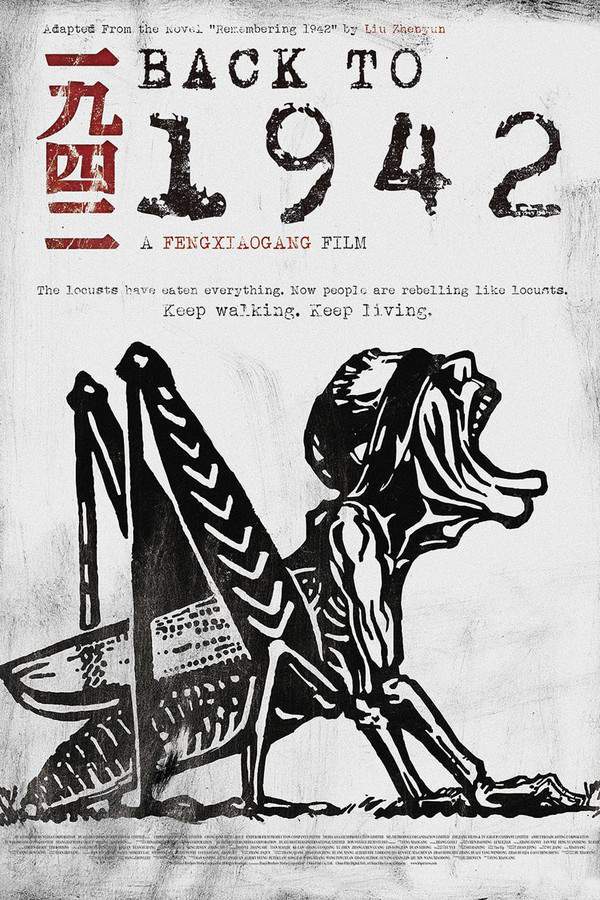
Back to 1942 (2012) movie poster

Timeline

Back to 1942 (2012) Timeline Explained – Every Event in Order

Release, runtime and language
2012 · 145 min · Chinese
JustWatch #27,133 1

During wartime in 1942, a wealthy landowner's comfortable existence is shattered as famine sweeps through the Chinese countryside. He is forced to witness the suffering of those less fortunate and grapple with the impact of the conflict on his community. The crisis compels him to re-evaluate his position and understand the widespread devastation caused by the ongoing war.

On this page (5)
  1. 1 Where to watch
  2. 2 Events in order (14)
  3. 3 Timeline questions answered
  4. 4 Movie threads
  5. 5 Every angle

Where to watch

Where to Watch Back to 1942 (2012)

Where can you watch Back to 1942? Stream, rent or buy it in the US, including on Hi-YAH: current JustWatch availability with up-to-date prices.

Streaming availability powered by JustWatch

14 events in order · contains spoilers

Back to 1942 Timeline: Events in Chronological Order

Every key event of Back to 1942 (2012) in order, scene by scene, with when and where it takes place. Use it to untangle flashbacks, time jumps and parallel storylines, to refresh your memory before the sequel or to find the exact scene you are thinking of.

  1. Winter of 1942 Begins

    The movie opens in the frigid winter of 1942, marking a period of intense struggle during the Second Sino-Japanese War. The harsh conditions serve as a backdrop illustrating the dire circumstances faced by the inhabitants of Henan province.

    When
    Winter 1942
    Where
    Henan province
  2. Master Fan's Dilemma

    Master Fan, a wealthy landlord, holds the responsibility for his family's survival amid the ongoing famine. He must navigate the challenges posed by starvation, while also protecting his villagers from external threats.

    Where
    Master Fan's village
  3. Bandit Invasion

    Tragedy strikes when bandits invade Master Fan's village, leading to chaos and violence. This invasion culminates in the devastating loss of Fan's son, forcing his family to re-evaluate their safety and future.

    Where
    Master Fan's village
  4. Fleeing the Village

    With the safety of his family in jeopardy, Master Fan decides to flee the village. Accompanied by his daughter, wife, daughter-in-law, and loyal servant Shuanzhu, they embark on a perilous journey seeking refuge.

    Where
    Henan province
  5. Joining Forces with Xialu

    As they journey westward, Master Fan and his family encounter fellow villager Xialu and his family. Together, they unite their efforts in the quest for survival amidst the growing dangers they face.

  6. NRA Soldiers Seize Supplies

    The journey becomes more arduous when NRA soldiers seize the little food supplies the fleeing families possess. This act of desperation serves to further highlight the dire situation under which they are struggling to survive.

    Where
    Henan province
  7. Japanese Bombardment

    As the families navigate the harsh landscape, they face relentless bombardments from Japanese aircraft. The constant threat of air raids heightens the tension and fear, complicating their already precarious existence.

    Where
    Henan province
  8. Brother Sim Questions Faith

    Amidst the chaos and suffering, Brother Sim, a preacher of Catholicism, grapples with despair and begins to question the existence of God. His loss of faith reflects the overwhelming impact of starvation on the human spirit during such tumultuous times.

  9. The Journalist's Investigation

    Journalist Theodore H. White arrives in Henan, determined to uncover the real impact of the famine. His investigations reveal a Nationalist Government more inclined toward self-preservation than providing assistance to the starving population.

    Where
    Henan province
  10. Exposé on Government Failures

    White's findings bring to light the government’s callousness, including the controversial contemplation by Chiang Kai-shek to surrender Henan. This exposé ignites debates over the government's responsibility and the distribution of relief supplies.

  11. Corruption in Relief Distribution

    Despite a shift in government policies driven by White's exposé, the distribution of relief supplies reveals corruption and greed. This disappointing reality starkly contrasts with the urgent needs of the suffering populace.

  12. Desperation Leads to Dark Choices

    As Master Fan’s family disintegrates under the weight of calamity, desperation drives him to sell his daughter into prostitution in a bid for survival. This heartbreaking choice underscores the depths to which one may sink in times of dire need.

  13. A Journey Eastward

    With hope dwindling, Fan seeks peace by embarking on an emotional journey towards the east, yearning for a resolution to his suffering close to his homeland. The journey symbolizes a last desperate attempt to reclaim a sense of normalcy.

  14. Encounter with an Orphan

    During his travels, Master Fan encounters a young girl orphaned by the ravages of war. He decides to take her under his wing, adopting her as his granddaughter, which fosters a tender bond amidst the surrounding devastation.

Last updated: November 22, 2024 at 14:44

Was this helpful?

Timeline questions answered

Back to 1942 Timeline Explained: Your Questions Answered

When does it happen, and why in that order? The questions people ask about the chronology of Back to 1942 (2012): time jumps, flashbacks, cause and effect between scenes and the correct order of events, each answered with spoilers.

Q1

Why does Master Fan's family flee their village?

Master Fan is forced to flee his village after bandits invade and kill his son. With his home now dangerous and his family vulnerable, he decides to escape with his wife, daughter, daughter-in-law, and loyal servant Shuanzhu to seek refuge elsewhere in the province.

  • bandits
  • master fan
  • village attack
  • son death
  • flee
Q2

How does Master Fan's son die?

Fan's son is killed during a bandit invasion of the village. The bandits attack with violence and chaos, resulting in the devastating loss of Fan's child and forcing the family to abandon their home.

  • son death
  • bandits
  • master fan
  • village attack
Q3

Why does Brother Sim lose his faith in God?

Brother Sim, a Catholic preacher, begins questioning God's existence as he witnesses the overwhelming despair caused by starvation and suffering. The relentless famine and human tragedy prove too much for his faith to withstand, leading him to grapple with doubt amid the catastrophe.

  • brother sim
  • faith
  • catholicism
  • starvation
  • doubt
  • religion
Q4

What does journalist Theodore H. White discover about the famine?

Theodore White discovers that the Nationalist Government prioritizes self-preservation over helping the starving population. His investigation reveals that Chiang Kai-shek even considered surrendering Henan to the Japanese, exposing the government's callous neglect of its own people.

  • theodore white
  • journalist
  • national government
  • chiang kai-shek
  • expose
  • famine investigation
Q5

Why does Chiang Kai-shek consider surrendering Henan to the Japanese?

Chiang Kai-shek contemplates surrendering Henan as a strategic decision, prioritizing Nationalist Government survival over the welfare of the starving province. This controversial contemplation is part of what White exposes in his investigation.

  • chiang kai-shek
  • surrender
  • henan
  • japanese
  • national government
Q6

Why does Master Fan sell his daughter into prostitution?

Desperation drives Master Fan to this heart-wrenching choice. With his family crumbling under the weight of famine, starvation, and complete loss of hope, he sells his daughter simply to ensure the survival of the remaining family members.

  • master fan
  • daughter
  • prostitution
  • desperation
  • survival
  • sell
Q7

What happens to the relief supplies meant for Henan?

Despite White's exposé causing a policy shift, the relief supplies are plagued by corruption and greed. The distribution system fails the suffering population, with officials prioritizing personal gain over helping the starving villagers.

  • relief supplies
  • corruption
  • henan
  • government
  • distribution
  • greed
Q8

Why do NRA soldiers steal food from the fleeing villagers?

The NRA soldiers seize the villagers' dwindling food supplies out of desperation and chaos. This act highlights the complete breakdown of social order, where even those supposed to protect the people become predators during the famine crisis.

  • nra soldiers
  • food theft
  • stealing
  • famine
  • desperation
  • supplies
Q9

What happens to Xialu and his family after joining Master Fan?

Xialu and his family join Master Fan's group as they journey westward together, uniting their efforts for survival. However, the timeline does not provide specific details about their ultimate fate, as the story primarily focuses on Master Fan's family's deterioration.

  • xialu
  • family
  • join
  • journey
  • survival
Q10

Why does Master Fan adopt the orphan girl at the end?

After losing everything, his home, his son, and forcing his daughter into prostitution, Fan encounters the young girl orphaned by war. Driven by a need for connection and meaning amidst devastation, he takes her in as his granddaughter, forming a tender bond in their shared desperation.

  • orphan
  • adoption
  • granddaughter
  • master fan
  • hope
  • ending
Q11

How do Japanese air raids affect the villagers' journey?

Japanese aircraft bombards the area relentlessly as the families navigate Henan, adding constant threat of death to their already perilous existence. The bombardment complicates their flight and heightens the fear and danger surrounding their survival quest.

  • japanese
  • bombardment
  • air raid
  • bombing
  • villagers
  • danger

Movie threads

More Movies Like Back to 1942, by Mood & Story

Curated lists built around what makes Back to 1942 tick: the same mood, the same kind of story or the same emotional payoff. Each list explains why these movies belong together.

Unflinching Historical Crises Like Back to 1942

Harrowing stories set against real-world tragedies and societal collapse. For viewers seeking movies like Back to 1942 that depict the brutal realities of historical tragedies. This thread gathers films centered on famine, war, and societal breakdown, offering similar stories of human endurance amidst overwhelming devastation.

  • harrowing
  • devastating
  • somber
  • oppressive
  • tragic
  • historical
  • Tone: bleak, somber
  • Pacing: steady, deliberate
Why these movies?

The story pattern: Narratives in this thread are often linear and straightforward, chronicling a downward spiral of loss and desperation as characters witness the disintegration of their world. The journey is less about individual triumph and more about documenting the scale of a catastrophe and its impact on the human spirit.

Why they belong together: These films are grouped by their shared commitment to portraying historical suffering with visceral authenticity. They possess a bleak tone, heavy emotional weight, and a steady, compounding pace of tragedy that creates a profoundly somber and thought-provoking viewing experience.

Descent into Desperation Stories Like Back to 1942

Stories where characters lose everything, including their principles, to survive. If you liked Back to 1942's portrayal of a man losing his wealth, family, and faith, explore similar movies about moral erosion. These films feature characters whose dignified lives unravel, forcing them into increasingly desperate acts just to survive.

  • desperate
  • tragic
  • somber
  • harrowing
  • psychological
  • devastating
  • Tone: bleak, tragic
  • Pacing: steady, unrelenting
Why these movies?

The story pattern: The narrative pattern is one of systematic loss, where status, family, beliefs, and finally basic humanity are eroded by an unrelenting crisis. The plot structure is often a straightforward descent, making the character's tragic fate feel inevitable and amplifying the emotional impact.

Why they belong together: These films share a core theme of moral and spiritual collapse under extreme pressure. They are united by a bleak tone, high emotional intensity, and a steady pacing that methodically builds a sense of inescapable tragedy, leaving viewers with a bittersweet or hollow feeling.

Every angle

Back to 1942 (2012) Explained: Plot, Timeline & Characters

Everything about Back to 1942 in one place: what happens in the plot summary, the timeline in chronological order, the characters and meaning and a spoiler-free summary. What's After the Movie adds the cast, box office and post-credit scenes.

Coming soon on iOS and Android

The Plot Explained Movie Summary App

Plot summaries, endings explained and timelines on your phone. Catch up on any movie in minutes, save your favorites and never miss a twist again.

Be the first to know when we launch. Your email stays private, always.

Learn more about the app