


Year: 2012
Runtime: 145 min
Language: Chinese
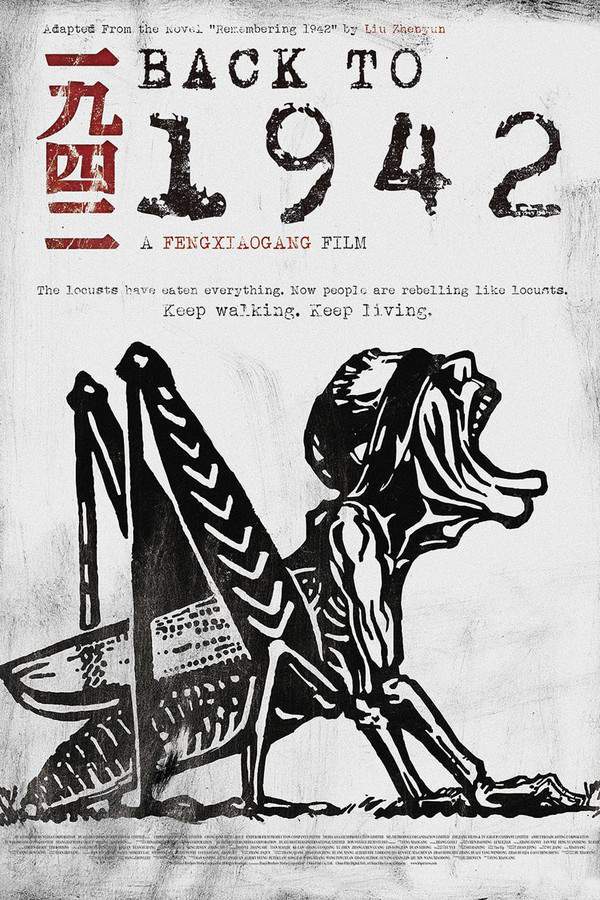
During wartime in 1942, a wealthy landowner's comfortable existence is shattered as famine sweeps through the Chinese countryside. He is forced to witness the suffering of those less fortunate and grapple with the impact of the conflict on his community. The crisis compels him to re-evaluate his position and understand the widespread devastation caused by the ongoing war.
Get a spoiler-free look at Back to 1942 (2012) with a clear plot overview that covers the setting, main characters, and story premise—without revealing key twists or the ending. Perfect for deciding if this film is your next watch.
In the bitter winter of 1942, China’s heartland is choked by a relentless famine that stretches across fields once lush with grain. The Second Sino‑Japanese War hangs like a storm cloud over the countryside, its distant gunfire and occasional aircraft rattling the fragile peace that still clings to the villages. The landscape is painted in muted grays, every breath a reminder of scarcity, and the ordinary rhythm of life is reduced to a quiet battle for survival.
At the centre of this upheaval is Master Fan, a once‑prosperous landlord whose estate has long symbolised stability for his family and tenants alike. With his wife, his daughter, and a young daughter‑in‑law at his side, he must now confront the stark reality that wealth cannot shield him from the hunger gnawing at his people. His longtime servant Shuanzhu moves through the household with a steady calm, serving as both a practical anchor and a subtle moral compass as the family’s world begins to tilt.
Beyond the walls of the manor, the region is a tangled web of hardship: soldiers scramble for dwindling supplies, distant bombings echo over the fields, and the collective sigh of a community teeters between resignation and quiet defiance. Among the observers is Theodore H. White, a journalist drawn to the heart of the crisis, whose notebook seeks to capture the human cost behind the headlines. Meanwhile, Brother Sim, a once‑devout preacher, wrestles with questions of faith that the famine has forced into stark relief. Their presence underscores the larger, conflicted tapestry of a nation under siege, where every choice hints at larger consequences.
Amid this atmosphere of desperation, Master Fan finds his identity and values tested in ways he never imagined. The film weaves a hushed, lingering mood that balances the bleakness of starvation with the faint, stubborn glow of compassion, hinting that even in the darkest winter, unexpected connections may begin to form, offering a fragile thread of hope against an overwhelmingly somber backdrop.
Last Updated: August 10, 2025 at 06:49
Discover curated groups of movies connected by mood, themes, and story style. Browse collections built around emotion, atmosphere, and narrative focus to easily find films that match what you feel like watching right now.
Harrowing stories set against real-world tragedies and societal collapse.For viewers seeking movies like Back to 1942 that depict the brutal realities of historical tragedies. This thread gathers films centered on famine, war, and societal breakdown, offering similar stories of human endurance amidst overwhelming devastation.
Narratives in this thread are often linear and straightforward, chronicling a downward spiral of loss and desperation as characters witness the disintegration of their world. The journey is less about individual triumph and more about documenting the scale of a catastrophe and its impact on the human spirit.
These films are grouped by their shared commitment to portraying historical suffering with visceral authenticity. They possess a bleak tone, heavy emotional weight, and a steady, compounding pace of tragedy that creates a profoundly somber and thought-provoking viewing experience.
Stories where characters lose everything, including their principles, to survive.If you liked Back to 1942's portrayal of a man losing his wealth, family, and faith, explore similar movies about moral erosion. These films feature characters whose dignified lives unravel, forcing them into increasingly desperate acts just to survive.
The narrative pattern is one of systematic loss, where status, family, beliefs, and finally basic humanity are eroded by an unrelenting crisis. The plot structure is often a straightforward descent, making the character's tragic fate feel inevitable and amplifying the emotional impact.
These films share a core theme of moral and spiritual collapse under extreme pressure. They are united by a bleak tone, high emotional intensity, and a steady pacing that methodically builds a sense of inescapable tragedy, leaving viewers with a bittersweet or hollow feeling.
Don't stop at just watching — explore Back to 1942 in full detail. From the complete plot summary and scene-by-scene timeline to character breakdowns, thematic analysis, and a deep dive into the ending — every page helps you truly understand what Back to 1942 is all about. Plus, discover what's next after the movie.
Read a complete plot summary of Back to 1942, including all key story points, character arcs, and turning points. This in-depth recap is ideal for understanding the narrative structure or reviewing what happened in the movie.
Track the full timeline of Back to 1942 with every major event arranged chronologically. Perfect for decoding non-linear storytelling, flashbacks, or parallel narratives with a clear scene-by-scene breakdown.
Discover the characters, locations, and core themes that shape Back to 1942. Get insights into symbolic elements, setting significance, and deeper narrative meaning — ideal for thematic analysis and movie breakdowns.
Visit What's After the Movie to explore more about Back to 1942: box office results, cast and crew info, production details, post-credit scenes, and external links — all in one place for movie fans and researchers.