Plot Explained Spoilers guaranteed!
Plot Explained

Browse by genre

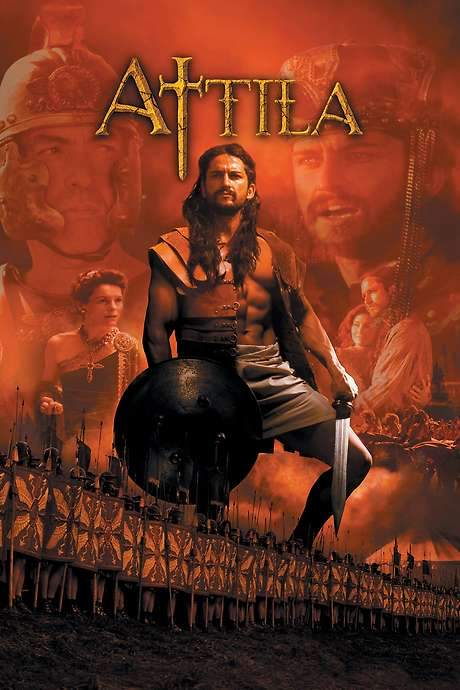
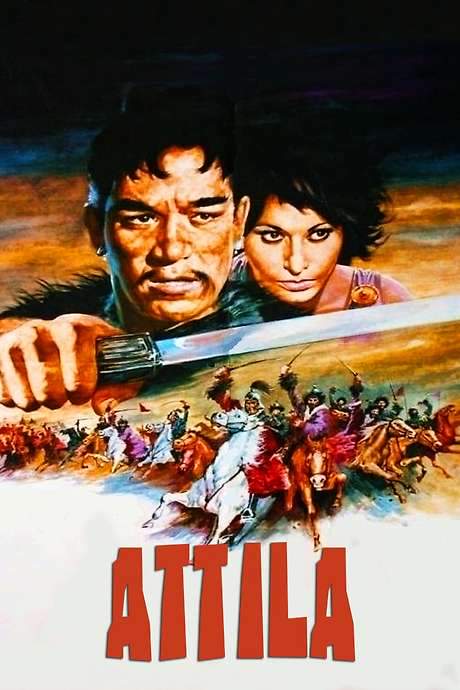
Attila (1954) movie poster

Timeline

Attila (1954) Timeline Explained – Every Event in Order

Release, runtime and language
1954 · 79 mins · Italian
Loading streaming availability…
Directed by
Pietro Francisci
Starring
Anthony Quinn, Irene Papas, Sophia Loren, Dickie Jones, Richard Bakalyan, Tony Amendola

Attila, the feared leader of the Huns—dubbed “the Scourge of God” by the Romans—leads his hordes from the Asian steppes into Italy, clashing head‑on with the proud Roman legions. Their relentless advance sweeps aside every Roman army they meet, ending with the Hun force standing at the very gates of Rome.

On this page (6)
  1. 1 Where to watch
  2. 2 Events in order (14)
  3. 3 Timeline questions answered
  4. 4 Movie threads
  5. 5 Movies like Attila
  6. 6 Every angle
Loading streaming availability…

14 events in order · contains spoilers

Attila Timeline: Events in Chronological Order

Every key event of Attila (1954) in order, scene by scene, with when and where it takes place. Use it to untangle flashbacks, time jumps and parallel storylines, to refresh your memory before the sequel or to find the exact scene you are thinking of.

  1. Hun advance toward Germania

    The Huns, led by Attila and his brother Bleda, advance their hordes toward the western Roman lands. The threat intensifies along the frontiers as the nomadic army prepares for a probable invasion. The scene sets up an imminent collision with Rome.

    When
    450 AD
    Where
    Hunnic plains
  2. Envoys reach the Hun capital with imperial message

    Aetius and his companion Prisco carry a message from Emperor Valentinian III to the Hun king Rua and travel to the Hun capital. They learn that Bleda and Attila are the new co-rulers after Rua's death, shaping a fragile tie between Rome and the Huns. The encounter establishes the political backdrop for later alliance and betrayal.

    When
    450 AD
    Where
    Hun capital
  3. Bleda dies; Attila becomes sole ruler

    Arriving at the Hun court, Attila's grip on power tightens when Bleda is killed during a hunt. Attila's bodyguard fires arrows at Bleda and his own protectors, allowing Attila to declare himself the sole leader of the Huns. Bleda had favored peace, but Attila's ascent signals a conquest-driven path for the tribes.

    When
    450-451 AD
    Where
    Hun hunting camp
  4. Aetius returns to Ravenna; a decaying empire

    Aetius returns to the imperial capital of Ravenna and finds Valentinian III a boyish ruler absorbed in court pleasures. Galla Placidia, Valentinian's mother, acts as de facto ruler, steering the Empire's fragile politics. The looming Hun threat intensifies the sense that Rome is slipping apart.

    When
    450-451 AD
    Where
    Ravenna Imperial Court
  5. Placidia grants Aetius military powers

    Recognizing the crisis, Placidia grants Aetius full military powers to defend the Empire and hold the Hun advance at bay. He begins reorganizing legions and coordinating a counterstrategy. This empowerment marks a turning point in Rome's response to Attila.

    When
    451 AD
    Where
    Ravenna
  6. Honoria seeks coup; Aetius refuses

    Honoria, Valentian's sister, tries to enlist Aetius in a coup to seize power from Valentinian and Placidia. He refuses, bound by loyalty to the Empire and his oath of service. In retaliation, Valentinian and Placidia strip him of rank and temporarily exile him.

    When
    451-452 AD
    Where
    Imperial Court
  7. Honoria escapes to the Hun camp

    Honoria slips away from the Imperial court and travels to the Hun camp to seek favor with Attila. She hopes to influence his plans or gain a throne through alliance with the Huns. The act intensifies the court's instability and the risk of Roman-Hun cooperation.

    When
    451-452 AD
    Where
    Hun camp
  8. First major battle begins with a Hun feint

    The battle opens with a frontal Hun cavalry assault designed to draw Roman legions out of their fortified position. Aetius orders a pursuit, charging his cavalry and infantry into the retreating Huns. The fighting spills into the Hun camp as the two sides clash amid tents and banners.

    When
    452 AD
    Where
    Open plains; Hun camp
  9. Honoria found dead in a nomad cart

    During the confusion of the encounter, Honoria is found hiding in a nomad cart and is killed. Her death closes a volatile political subplot and alters the court's calculus. The event resonates through both camps as the true loyalties of Rome are tested.

    When
    452 AD
    Where
    Hun camp
  10. Aetius slain by arrow; Roman morale collapses

    Aetius is struck in the neck by an enemy arrow and dies, cutting off Rome's top commander at a critical moment. His death saps the Romans' will to fight and leads to disarray on the battlefield. The surviving legions begin to lose cohesion as the Hun pressure intensifies.

    When
    452 AD
    Where
    Roman camp
  11. Romans retreat; Huns burn encampment

    With their leadership decimated, the Romans retreat from the field while Hun forces burn the encampment behind them. The rout ends any immediate Roman resistance to Attila's invasion. The Hun victory consolidates Attila's momentum, though the campaign is far from over.

    When
    452 AD
    Where
    Battlefield
  12. Battlefield moment: Attila's tribute to Bleda

    On the battlefield, Attila is shown with his young son Bleda as the carnage unfolds. A wounded Roman archer fires a final shot that kills Bleda, a blow that deeply unsettles Attila and shatters any lingering zeal for conquest. The moment marks a painful turning point in the Hun campaign.

    When
    452 AD
    Where
    Battlefield
  13. Pope Leo I confronts Attila

    On the road to Rome, Attila encounters a procession led by Pope Leo I who speaks to him from a stream between the two armies. Leo warns that indiscriminate bloodshed will haunt him, echoing a moral rebuke that echoes beyond the battlefield. Attila listens to the pope's plea and weighs his choices.

    When
    452 AD
    Where
    Stream between armies
  14. Attila turns back; Rome spared for now

    Moved by Leo's words, Attila pivots away from Rome and heads back toward the Alps. He abandons the invasion instead of conquering the city, offering Rome a temporary respite. The film closes on the uneasy peace that follows this moral turn.

    When
    452 AD
    Where
    Road to the Alps

Last updated: October 05, 2025 at 12:06

Was this helpful?

Timeline questions answered

Attila Timeline Explained: Your Questions Answered

When does it happen, and why in that order? The questions people ask about the chronology of Attila (1954): time jumps, flashbacks, cause and effect between scenes and the correct order of events, each answered with spoilers.

Q1

Why does Attila decide not to attack Rome after reaching the city?

After his military victories, Attila encounters Pope Leo I on the road to Rome. The Pope speaks to him across a stream, warning that indiscriminate bloodshed will haunt him. This moral encounter triggers a transformation in Attila, he experiences a sudden conscience and chooses to turn his army back toward the Alps, sparing Rome from destruction. The film portrays this as a pivotal moral reckoning that reshapes his destiny.

  • attila
  • pope leo i
  • rome spared
  • attila turns back
  • hun invasion
Q2

Why does Attila kill his brother Bleda?

During a hunt, Attila orders his own bodyguard to fire arrows at Bleda and Bleda's protectors, eliminating his brother in cold blood. This fratricide occurs shortly after Attila and Bleda become co-rulers of the Huns following King Rua's death. Bleda had advocated for a more tempered, peace-oriented approach, while Attila pursued a ruthless conquest-driven path. By eliminating his brother, Attila consolidates sole power and removes the voice of moderation from his leadership.

Foreshadowing: Earlier scenes establish Bleda as a diplomatic counterweight to Attila's aggression, hinting at the inevitable power struggle.

  • attila
  • bleda
  • fratricide
  • hun leadership
  • brother killed
Q3

Why does Aetius refuse to help Honoria with her coup?

Aetius refuses because he remains bound by a solemn oath of loyalty to the Roman Empire, despite being stripped of his rank and exiled. Although Honoria, the sister of Emperor Valentinian III, offers him a chance to seize power through a coup against her own brother and mother Galla Placidia, Aetius chooses loyalty over ambition. His refusal costs him dearly, the imperial court removes his rank, but it also establishes his integrity as a character torn between personal ambition and duty.

Foreshadowing: Aetius's complex history as a hostage among the Huns has shaped him into a man who values oaths and duty above power.

  • aetius
  • honoria
  • coup
  • roman general
  • loyalty
Q4

How does Honoria die in the film?

Honoria escapes from the imperial court in Ravenna and travels to the Hun camp seeking to align with Attila, hoping to gain power through this dangerous alliance. During the chaos of battle, she is discovered hiding in a nomad's cart within the Hun lines and is killed. Her death serves as a brutal reminder of the fragility of life and loyalty during wartime, closing out her volatile political subplot.

Foreshadowing: Her earlier attempts to manipulate Aetius and the court's instability set the stage for her desperate gamble.

  • honoria
  • death in hun camp
  • roman princess
  • killed in battle
Q5

What happens to Aetius in the film?

Aetius, the Roman general who served as a hostage among the Huns in his youth, is killed during the battle against Attila's forces. He is struck by an arrow through the neck, a fatal wound that immediately kills him. His death severely demoralizes the Roman troops, causing their resolve to collapse and accelerating their retreat. As Rome's greatest military leader, his fall represents a critical turning point that dooms the Roman defense.

Foreshadowing: Aetius's early scene as a hostage establishes his unique perspective and the personal stakes he carries in this conflict.

  • aetius death
  • roman general killed
  • arrow through neck
  • battle defeat
Q6

Why do the Romans lose to the Huns despite their defenses?

The Romans lose for several interconnected reasons: their beloved general Aetius is killed mid-battle, removing crucial leadership; the Roman legions are drawn out of their fortified positions by a Hun feint and forced into fighting in unfavorable open terrain; and the Huns demonstrate superior tactical coordination between cavalry assaults and ambush maneuvers. Additionally, internal Roman political chaos, featuring a child-emperor more interested in feasts than governance, undermines coordinated defense efforts.

Foreshadowing: The opening scenes establish Rome's political decay under Valentinian III, foreshadowing military vulnerability.

  • roman defeat
  • hun victory
  • battle lost
  • romans retreat
Q7

What motivates Attila to invade the Roman Empire?

Attila views conquest as a divine mission, believing the Huns are destined to rule. He sees the wealthy Western Roman lands as rightfully belonging to his people after generations of migration across the Asian steppes. His ideology blends religious conviction with territorial ambition, he considers the invasion not merely desirable but fated, a manifestation of the Huns' manifest destiny to reshape the known world.

  • attila motivation
  • conquest
  • divine mission
  • hun invasion
  • roman empire
Q8

What role does Galla Placidia play in the story?

Galla Placidia, mother of the young Emperor Valentinian III, serves as the de facto ruler of the Western Roman Empire while her son remains preoccupied with court pleasures and theatrical displays. She attempts to maintain fragile political loyalties and grant military powers to Aetius to defend against the Hun threat. Her leadership represents Rome's desperation, a crumbling empire relying on one capable general while the imperial court decadently neglects its duties.

  • galla placidia
  • roman empress
  • ravenna court
  • imperial rule
Q9

What does Pope Leo I say to Attila that changes his mind?

Pope Leo I approaches Attila at a stream between the armies and delivers a moral warning that lingers: "You can kill everybody...old people, women, children..." The implied judgment, combined with the Pope's calm authority, plants seeds of conscience in Attila. This encounter triggers the warlord's moral transformation, making him question whether the path of endless conquest offers the lasting glory he imagined. It becomes the catalyst for his unprecedented decision to spare Rome.

Foreshadowing: Earlier scenes of battlefield carnage and the death of Bleda have already begun cracking Attila's ruthless exterior.

  • pope leo i
  • attila encounter
  • moral conversion
  • rome spared
  • attila conscience
Q10

Why does Aetius have a unique relationship with the Huns?

Aetius spent years as a hostage among the Huns during his youth, a common diplomatic practice of the era. This experience gave him intimate knowledge of Hun military tactics, language, and culture, knowledge that proves invaluable when he becomes Rome's primary defense against Attila's invasion. However, this background also creates political vulnerability, as his enemies at court question his loyalty and attempt to use it against him.

  • aetius
  • hunnic hostage
  • roman general
  • knowledge of huns
Q11

Who is Bleda and what does he represent in the story?

Bleda is Attila's brother who co-rules the Huns alongside him after the death of King Rua. Unlike his brother, Bleda advocates for peace and balance with Rome, representing the more moderate faction within Hun leadership. His preference for diplomacy over conquest positions him as a counterweight to Attila's aggressive vision. His death at Attila's orders removes this voice of reason and allows Attila to pursue unchecked expansion, setting the stage for the invasion of Italy.

Foreshadowing: Early scenes establish Bleda as a diplomatic presence advocating restraint, directly contrasting with Attila's hunger for conquest.

  • bleda
  • attila brother
  • hun co-ruler
  • peace advocate
Q12

What kind of ruler is Emperor Valentinian III?

Valentinian III is portrayed as a weak, child-like emperor more interested in feasts, theatrics, and court pleasures than the practical matters of governing an empire at war. In name only, he holds the throne while his mother Galla Placidia actually governs. His negligence and incompetence symbolize the decay of Roman leadership, contributing to the empire's vulnerability against the Hun invasion.

  • valentinian iii
  • weak emperor
  • roman decay
  • ravenna court

Movie threads

More Movies Like Attila, by Mood & Story

Curated lists built around what makes Attila tick: the same mood, the same kind of story or the same emotional payoff. Each list explains why these movies belong together.

Epic stories of empire like in Attila

Grand historical dramas where clashing cultures and crumbling powers forge a dark destiny. For viewers seeking movies like Attila, this section features grand historical dramas and war epics. Discover similar films about the clash of civilizations, crumbling empires, and the morally complex leaders who shape history with ambition and bloodshed.

  • epic
  • sweeping
  • brutal
  • solemn
  • melancholic
  • tense
  • Tone: dark, solemn, morally complex
  • Pacing: steady, sweeping
Why these movies?

The story pattern: Narratives in this thread follow the rise and fall of great powers, often framed through the personal ambitions of iconic leaders. The central conflict is a monumental clash of cultures, driven by political intrigue, warfare, and the inevitable decay of established orders, leading to a somber reflection on power and its costs.

Why they belong together: These movies are grouped by their grand scale, dark tone, and focus on historical transformation. They share a high intensity from war and political maneuvering, a heavy emotional weight from themes of conquest and loss, and a sweeping, melancholic mood.
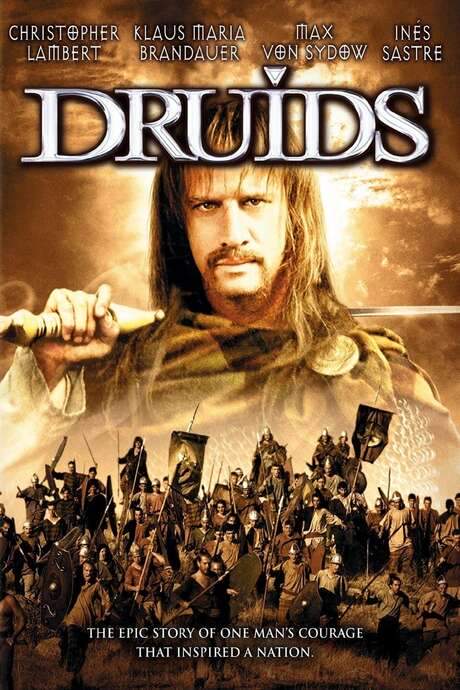
Bitterswart conquest stories like in Attila

Stories where ambition is tempered by loss, leaving a victory that feels like defeat. If you liked the complex ending of Attila, explore these films about the cost of ambition. Find movies similar to Attila where epic journeys of power culminate in bittersweet victories, heavy with moral reckoning and the price of war.

  • bittersweet
  • morally complex
  • melancholic
  • solemn
  • contemplative
  • heavy
  • Tone: dark, bittersweet, melancholic
  • Pacing: steady, deliberate
Why these movies?

The story pattern: The narrative pattern follows a powerful, driven figure on a path of conquest, achieving their goals but at a great personal and ethical cost. The journey culminates not in pure triumph but in a melancholic realization of the destruction left in their wake, creating a resolution that is heavy with contemplation.

Why they belong together: These films share a specific emotional arc: the combination of high-stakes ambition with a sobering, bittersweet conclusion. They are united by a heavy emotional weight, a dark tone, and a focus on the moral price of power, making the victory feel deeply ambiguous.

If you liked this

Movies Like Attila

Similar movies to Attila: the same genre, themes or kind of story. Each one comes with its own plot summary, timeline and ending explained.

Browse all movie summaries

Every angle

Attila (1954) Explained: Plot, Timeline & Characters

Everything about Attila in one place: what happens in the plot summary, the timeline in chronological order, the characters and meaning and a spoiler-free summary. What's After the Movie adds the cast, box office and post-credit scenes.

Coming soon on iOS and Android

The Plot Explained Movie Summary App

Plot summaries, endings explained and timelines on your phone. Catch up on any movie in minutes, save your favorites and never miss a twist again.

Be the first to know when we launch. Your email stays private, always.

Learn more about the app