Plot Explained Spoilers guaranteed!
Plot Explained

Browse by genre

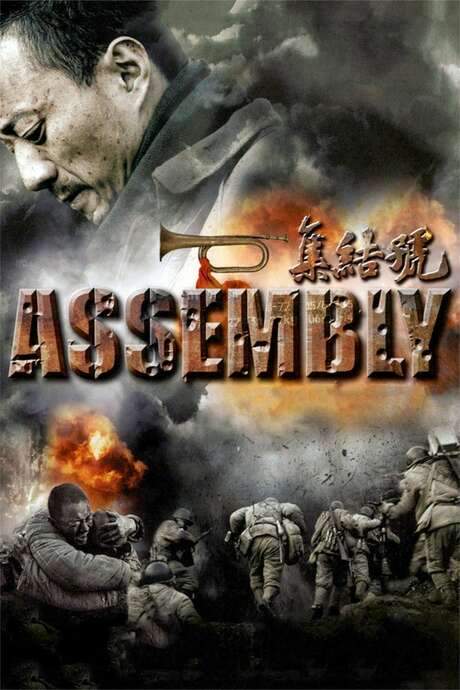
Assembly (2007) movie poster

Timeline

Assembly (2007) Timeline Explained – Every Event in Order

Release, runtime and language
2007 · 123 mins · Chinese
Loading streaming availability…
Directed by
Feng Xiaogang
Starring
Tang Yan, Yuan Wenkang, Ren Quan, Wang Baoqiang, Liao Fan, Deng Chao

A soldier sets out to ensure his fallen comrades are remembered, seeking official recognition for those who died in 1948 during a pivotal moment in China’s civil war, as communist forces clash with the nationalist Kuomintang. The film explores sacrifice, memory and the turmoil of that era.

On this page (6)
  1. 1 Where to watch
  2. 2 Events in order (13)
  3. 3 Timeline questions answered
  4. 4 Movie threads
  5. 5 Movies like Assembly
  6. 6 Every angle
Loading streaming availability…

13 events in order · contains spoilers

Assembly Timeline: Events in Chronological Order

Every key event of Assembly (2007) in order, scene by scene, with when and where it takes place. Use it to untangle flashbacks, time jumps and parallel storylines, to refresh your memory before the sequel or to find the exact scene you are thinking of.

  1. 1948: Gu Zidi and the 9th Company seize a town

    During the 1948 Huaihai Campaign, Captain Gu Zidi leads the 9th Company of the 139th Regiment to seize a town controlled by the NRA. They suffer heavy casualties from intense enemy fire. Gu, enraged by the death of his political commissar, orders the execution of surrendered NRA soldiers, an act that earns him three days in jail.

    When
    1948
    Where
    Huaihai Campaign battlefield, China
  2. Gu is jailed and befriends Wang in prison

    Gu is jailed for three days by Colonel Liu Zeshui after the incident with the surrendered NRA soldiers. While in jail, he befriends Wang Jincun, a foot soldier and former teacher who has been jailed for cowardice.

    When
    1948
    Where
    Military jail (China)
  3. Release and reassignment: 9th Company defends Wen River coal mine

    Upon release, Gu and his surviving men are assigned to defend a coal mine on the Wen River near Tai'an, Shandong, holding their position until a bugle call for assembly. With Liu’s permission, Wang Jincun becomes the 9th Company’s new political commissar, bringing education and leadership to the unit.

    When
    Late 1948
    Where
    Coal mine on the Wen River, near Tai'an, Shandong
  4. Brutal NRA assault and the last stand of the 9th Company

    The 9th Company comes under heavy attack by NRA forces, repelling infantry and armor and destroying two tanks. By the end, only a handful of men remain. Gu, who has been temporarily deafened by an explosion, refuses to believe the bugle call is real and orders the survivors to fight to the death; the unit is wiped out except for Gu, who is knocked unconscious by a tank shell.

    When
    1948
    Where
    Wen River coal mine battleground, Shandong
  5. Gu is found by the PLA and faces identity doubts

    PLA forces recapture the area and find Gu unconscious wearing an NRA uniform he had stolen to survive behind enemy lines. At a military hospital, Gu attempts to prove he is a PLA captain, but a reorganization has erased memories of the 139th Regiment, and other patients treat him as a deserter.

    When
    1948-1949
    Where
    Military hospital, Wen River region
  6. 1950: Gu fights in the Korean War and loses an eye

    In 1950, China enters the Korean War and Gu volunteers to fight as a PVA infantryman. On an artillery-spotting mission, Gu and his team disguise themselves as soldiers of the Republic of Korea Army's 6th Infantry Division to protect their unit commander, Lieutenant Zhao Erdou, after Zhao steps on a landmine. Gu holds the landmine down during the blast and escapes, but loses his right eye in the explosion; the two become close friends and Zhao supports Gu's bid to regain recognition for the 9th Company.

    When
    1950
    Where
    Korean War front lines
  7. Post-war return to Wen River and mine search

    After the war, Gu returns to the Wen River battlefield and tries to locate the old mine. He discovers the mine is still operating and the entrance is buried beneath piles of coal. He also meets Wang Jincun's widow and convinces her to marry Zhao Erdou.

    When
    1950s
    Where
    Wen River battlefield, Tai'an region
  8. Tomb of Liu Zeshui and the truth about the bugle call

    Zhao Erdou finds the tomb of Colonel Liu Zeshui, whose caretaker reveals that the bugle call was never sounded and the 9th Company was sacrificed to buy time for the rest of the regiment. Gu initially erupts in anger but calms himself, accepting the painful truth.

    When
    Post-war
    Where
    Tomb of Colonel Liu Zeshui, Wen River area
  9. Gu camps at the mine to recover the fallen

    Gu camps at the mine and begins digging out the bodies with a shovel, despite resistance from the miners. A surviving former officer of the 139th Regiment comes forward a month later to verify the unit’s deeds, and the PLA issues an official notice to honor the 9th Company.

    When
    1950s
    Where
    Mine site near Wen River
  10. Flashback reveals Wang Jincun’s sacrifice

    A memory reveals that as enemy forces closed in, Gu and Wang buried the other bodies deep inside the mine. When Gu left to fight, a mortally wounded Wang blew up the entrance to prevent capture, sacrificing himself for his comrades.

    When
    1948 (flashback)
    Where
    Wen River mine shaft
  11. Remains found and the memory honored

    Years later, the remains of the other soldiers are found during an irrigation-project excavation, and the PLA erects a monument near the site to honor the 9th Company. Gu is unable to locate the final bodies but accepts the broader tribute.

    When
    late 20th century
    Where
    Wen River site, near mine
  12. Military funeral and Gu’s peace

    The PLA conducts a military funeral with full honors for the fallen 9th Company and erects a monument at the site. Gu finally finds some peace as he comes to terms with the sacrifices of his comrades.

    When
    late 20th century
    Where
    Wen River site
  13. Gu Zidi dies and the story of his origins

    Ending titles reveal Gu died in 1987 at the age of 71. They also recount his origins — abandoned as an infant during famine, found by a shoemaker in a millet field and given the name Gu Zidi, which literally means millet field.

    When
    1987

Last updated: October 09, 2025 at 15:07

Was this helpful?

Timeline questions answered

Assembly Timeline Explained: Your Questions Answered

When does it happen, and why in that order? The questions people ask about the chronology of Assembly (2007): time jumps, flashbacks, cause and effect between scenes and the correct order of events, each answered with spoilers.

Q1

Why was Gu Zidi imprisoned after leading the attack on the town?

Gu Zidi was imprisoned for three days after ordering the execution of surrendered NRA soldiers. Enraged by the death of his political commissar during the battle, he made the decision to kill the enemy combatants who had surrendered, an act that violated military discipline. Colonel Liu Zeshui placed him under arrest for this violation.

  • Gu Zidi imprisonment
  • execution of NRA soldiers
  • Colonel Liu Zeshui
Q2

Who was Wang Jincun and why was he jailed?

Wang Jincun was a foot soldier in the PLA and former teacher who had been jailed for cowardice. Despite being educated and serving as the company's political commissar later, he had previously been convicted for displaying cowardice in battle, demonstrating how courage and culpability wore different faces in war.

  • Wang Jincun
  • former teacher
  • cowardice
  • political commissar
Q3

Why was the bugle call for the 9th Company never sounded?

The bugle call was never sounded because the 9th Company had been deliberately sacrificed to buy time for the rest of the regiment. Colonel Liu Zeshui's subordinate, who survived as the caretaker of Liu's tomb, revealed that the order to regroup was never given, the 9th Company was left to fight and die holding their position at the mine while the regiment withdrew.

Foreshadowing: Gu had initially believed the distant bugle was a real signal for relief, but some soldiers claimed to hear it while others, like Gu who was deafened by explosions, doubted its authenticity.

  • bugle call
  • 9th Company sacrifice
  • Colonel Liu Zeshui
  • regiment withdrawal
Q4

How did Gu Zidi survive the Wen River mine battle?

Gu Zidi survived because he was knocked unconscious by a tank shell during the final assault. The entire 9th Company was wiped out fighting to the last man, but Gu was left unconscious on the battlefield. He later woke up wearing an NRA uniform he had stolen to survive behind enemy lines after secretly bombing an enemy fuel depot.

  • Gu Zidi survival
  • Wen River battle
  • unconscious
  • NRA uniform
Q5

Why was Gu Zidi suspected of being a deserter after the battle?

Gu Zidi was suspected of desertion because he was found unconscious wearing an NRA uniform he had stolen during a covert mission to bomb an enemy fuel depot. Additionally, by the time he woke up, the PLA had undergone reorganization and there was little memory of the 139th Regiment, making it impossible for him to prove his identity as a PLA captain.

  • deserter suspicion
  • NRA uniform
  • PLA reorganization
  • 139th Regiment
Q6

How did Gu Zidi lose his eye during the Korean War?

Gu Zidi lost his eye while serving with the People's Volunteer Army. During an artillery-spotting mission, Lieutenant Zhao Erdou accidentally triggered a hidden anti-personnel mine. Gu threw himself over Zhao to shield him from the blast, holding the mine down to preserve Zhao's life. The explosion destroyed Gu's right eye, but Zhao survived.

  • Korean War
  • Gu Zidi lost eye
  • Zhao Erdou
  • landmine
Q7

What happened to Wang Jincun at the Wen River mine?

Wang Jincun sacrificed himself to prevent the mine from being captured. As enemy forces closed in, Gu and Wang had buried their fallen comrades inside the mine. When Gu left to continue fighting, Wang who was mortally wounded, chose to detonate the mine entrance, blowing it up so the enemy could not access the bodies or the position.

  • Wang Jincun death
  • mine explosion
  • sacrifice
  • 9th Company burial
Q8

Why was the 9th Company left to fight without any support?

The 9th Company was deliberately left to fight and die to buy time for the rest of the regiment. Colonel Liu Zeshui had ordered Gu's unit to hold the coal mine position until a bugle call for regrouping, but that call was never sounded. The 9th Company was a sacrificial detachment, sacrificed so the larger force could withdraw and regroup elsewhere.

  • 9th Company sacrifice
  • abandoned
  • holding position
  • buy time
Q9

What was Gu Zidi's childhood and how did he get his name?

Gu Zidi was an orphan abandoned as an infant during a famine at just three months old. He was discovered by a shoemaker in a millet field, which is how he received his name, 'Gu' means millet and 'Zidi' means child of the field. This origin story is revealed in the closing titles, explaining why his name literally means 'millet field.'

  • Gu Zidi origin
  • orphan
  • millet field
  • name meaning
Q10

Why did Gu Zidi convince Wang Jincun's widow to marry Zhao Erdou?

After returning to the Wen River battlefield, Gu Zidi tracked down Wang Jincun's widow. Gu then arranged for her to marry Zhao Erdou, the lieutenant he had saved during the Korean War. This was Gu's way of weaving a personal resolution into the larger national saga, ensuring that Wang's memory lived on through this union and that Zhao, who had supported Gu's quest for recognition, would be cared for.

  • Wang Jincun widow
  • Zhao Erdou marriage
  • Gu Zidi
  • resolution
Q11

Why was Gu Zidi wearing an NRA uniform after the battle?

Gu Zidi wore an NRA uniform because he had secretly stolen it during a solo mission to bomb an enemy fuel depot behind enemy lines. After being knocked unconscious during the battle and left for dead, he used the enemy uniform as a disguise to try to survive and make his way back to PLA lines, which led to his capture and suspicion of desertion.

  • NRA uniform
  • fuel depot mission
  • disguise
  • survival

Movie threads

More Movies Like Assembly, by Mood & Story

Curated lists built around what makes Assembly tick: the same mood, the same kind of story or the same emotional payoff. Each list explains why these movies belong together.

Intense War Movies like Assembly

War stories that plunge you into the raw, chaotic horror of frontline combat. For viewers who want more movies like Assembly, this collection features gritty, high-intensity war films. If you liked the chaotic battle scenes and raw depiction of combat in Assembly, explore these similar military action stories and historical epics focused on soldiers' struggles.

  • tense
  • chaotic
  • brutal
  • gritty
  • atmospheric
  • historical
  • Tone: dark, tense, grim
  • Pacing: fast, chaotic, variable
Why these movies?

The story pattern: Stories in this thread often follow a unit or individual soldier through a series of harrowing engagements. The narrative is driven by survival, tactics, and the immediate threats of the battlefield, with a focus on authenticity and the sheer chaos of war.

Why they belong together: These movies are grouped together for their shared commitment to high-intensity, realistic combat scenes and a dark, gritty atmosphere. They prioritize the visceral experience of war, creating a consistent vibe of tension, danger, and physical hardship for the viewer.
Movies About Memory and Legacy like Assembly

Stories of survivors grappling with loss and fighting to honor the fallen. This list features films with themes similar to Assembly's focus on remembrance. If you were moved by the protagonist's quest for recognition of his fallen comrades, you'll find other poignant stories about grief, legacy, and the fight against being forgotten after a war or tragedy.

  • somber
  • determined
  • traumatic
  • grief-stricken
  • historical
  • emotional
  • Tone: somber, dark, bittersweet
  • Pacing: variable, reflective, slow burn
Why these movies?

The story pattern: The narrative pattern typically involves a dual timeline, juxtaposing past traumatic events with a present-day struggle for validation or truth. The protagonist's internal conflict with grief and guilt drives the story towards a resolution that is often bittersweet, acknowledging the cost of remembrance.

Why they belong together: These films share a heavy emotional weight centered on themes of grief, memory, and legacy. They combine a dark, somber tone with a variable pace that shifts between intense flashbacks and a slow, deliberate present-day quest, creating a deeply moving and reflective experience.

If you liked this

Movies Like Assembly

Similar movies to Assembly: the same genre, themes or kind of story. Each one comes with its own plot summary, timeline and ending explained.

Browse all movie summaries

Every angle

Assembly (2007) Explained: Plot, Timeline & Characters

Everything about Assembly in one place: what happens in the plot summary, the timeline in chronological order, the characters and meaning and a spoiler-free summary. What's After the Movie adds the cast, box office and post-credit scenes.

Coming soon on iOS and Android

The Plot Explained Movie Summary App

Plot summaries, endings explained and timelines on your phone. Catch up on any movie in minutes, save your favorites and never miss a twist again.

Be the first to know when we launch. Your email stays private, always.

Learn more about the app