Plot Explained Spoilers guaranteed!
Plot Explained

Browse by genre

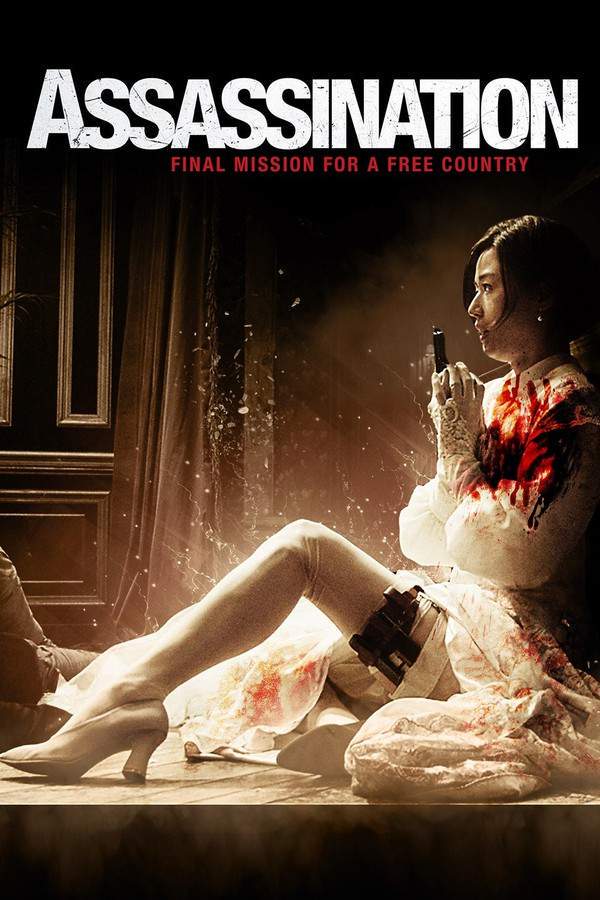
Assassination (2015) movie poster

Ending Explained

Assassination (2015) Ending Explained – Final Scene & Meaning

Release, runtime and language
2015 · 140 min · Korean
Loading streaming availability…
Directed by
Dong-hun Choi

During wartime in China, a group of Korean resistance fighters plans a risky mission to assassinate a high-ranking Japanese officer. The operation involves smuggling a talented sniper to safety while also uncovering a traitor within their own team. The success of the mission and the lives of the fighters are on the line as they face betrayal and danger.

On this page (6)
  1. 1 Where to watch
  2. 2 What happens at the end
  3. 3 Final events in order
  4. 4 Ending questions answered
  5. 5 Movie threads
  6. 6 Every angle
Loading streaming availability…

Ending explained · contains spoilers

What Happens at the End of Assassination?

How Assassination (2015) ends, what the final scene means, which earlier moments set it up and how to read the ending if the film leaves it open. The full ending explained, with every spoiler.

The ending of the 2016 Assassin's Creed movie sees Cal Lynch, having relived his ancestor Aguilar's memories through the Animus, joining a daring rebellion against the Abstergo Foundation to prevent them from using the Apple of Eden for sinister purposes. During this chaos, Cal, along with fellow descendant assassins Shao Jun and Moussa, fights to escape the heavily guarded facility after retrieving the Apple from Columbus's vault, where Aguilar had entrusted it. In the original ending, the assassins are overwhelmed, with Shao Jun and Moussa both killed in the escape, leaving Cal as the sole survivor. However, test audiences disliked this bleak outcome, so the filmmakers decided to re-edit the scene. The final version shows Cal, Shao Jun, and Moussa fighting side by side, successfully escaping with the Apple.

Once outside, Cal confronts Alan Rikkin, the Templar scientist and antagonist, who is about to make a speech declaring the discovery of the Apple. Sofia, Rikkin’s daughter and a believer in her father’s vision of peace, initially opposes Cal’s actions but ultimately does not interfere as Cal kills Rikkin, ensuring the Assassins secure the Apple. In doing so, Cal rejects Rikkin’s plan to use the Apple to control humanity’s free will, choosing instead to preserve it for the greater good. The film concludes with the trio—Cal, Shao Jun, and Moussa—united in their effort to protect the artifact and resist the Templar threat, emphasizing that hope and resistance continue despite the dark forces at play. This ending highlights the resilience of the Assassins and leaves the story open for future adventures, contrasting with the darker, unreleased version where only Cal escapes alive.

Last updated: June 25, 2025 at 09:00

Was this helpful?

The last 4 events

How Assassination Ends: The Final Events in Order

The last events of Assassination (2015) in chronological order, the run-up to the ending explained above. The complete timeline has all 15 events, scene by scene.

Open the full timeline
  1. Final Showdown

    Amidst the chaos, Lily transforms into a determined fighter as she confronts Nick, ultimately using his own weapons against the mob. After an intense battle, she rescues Sarah and Em, showcasing her courage and resilience.

    Where
    Nick's house
  2. Lily's Call to Action

    After regrouping, Lily records a video addressing the town, encouraging others to stand up against their tormentors. This act of defiance sparks a movement among the victims, joining forces against the mob rule taking over Salem.

    Where
    Unknown location
  3. Consequences of the Hacks

    Lily’s younger brother Donny is caught and faces serious charges for his role in the hacking incidents. When questioned by their parents, he nonchalantly responds that he did it 'for the lulz', showing a disturbing disconnect from reality.

    Where
    Home
  4. Salem's Aftermath

    The film concludes with a surreal image of Salem's High marching band performing through the ruins of their town. Miley Cyrus' 'We Can't Stop' plays in the background, contrasting the upbeat music with the devastation left behind.

    Where
    Ruined Town

Ending questions answered

Assassination Ending: Your Questions Answered

The questions people ask most about the ending of Assassination (2015): what the final scene means, how the twist works, what happens to each character and how to read the ending. Each answer contains spoilers.

Q1

Why did Cal kill Alan Rikkin instead of letting him speak?

Cal killed Alan Rikkin to prevent the Templars from using the Apple of Eden to control humanity's free will. Rikkin was about to make a public speech declaring the discovery of the Apple, which would have allowed the Abstergo Foundation to seize control of the artifact and implement their plan for global domination. By killing Rikkin, Cal chose to preserve the Apple and protect free will for the greater good.

Foreshadowing: Earlier in the film, the Assassins establish that the Apple contains the power to influence human will, making it a weapon too dangerous for either side to control.

  • cal lynch
  • alan rikkin
  • apple of eden
  • templars
  • assassins
  • killing
Q2

Why did Sofia Rikkin let Cal kill her father?

Sofia Rikkin, despite being Alan Rikkin's daughter, ultimately chose not to interfere because she believed in her father's vision of peace but disagreed with his methods. Throughout the film, she was shown as a believer in creating peace through controlling humanity's free will. However, when faced with the reality of her father's imminent death, she could not actively support the Templar agenda by stopping Cal, leading her to stand aside and let the assassination occur.

Foreshadowing: Sofia's internal conflict between her loyalty to her father and her own beliefs was established earlier when she questioned the Templar methods.

  • sofia rikkin
  • alan rikkin
  • father
  • conflict
  • choice
Q3

How does the theatrical ending differ from the original version?

The original ending of Assassin's Creed was significantly darker, Shao Jun and Moussa were both killed during the escape attempt, leaving Cal as the sole survivor. Test audiences disliked this bleak outcome, so the filmmakers re-edited the final version to show all three characters, Cal, Shao Jun, and Moussa, successfully escaping together with the Apple. This change provides a more hopeful conclusion and sets up potential future sequels.

Foreshadowing: The darker original ending was foreshadowed by the consistently brutal tone established throughout the film.

  • original ending
  • theatrical ending
  • shao jun
  • moussa
  • escape
  • test audience
Q4

What happens to the Apple of Eden at the end?

The Apple of Eden is retrieved by Cal Lynch from Columbus's vault, where Aguilar had entrusted it centuries ago. After defeating the Templars and killing Alan Rikkin, Cal and his fellow assassins escape with the Apple, ensuring it remains in the hands of the Assassins rather than falling under Templar control. The Apple thus becomes a symbol of preserved free will and a powerful asset for the resistance against the Templar threat.

Foreshadowing: The Apple was hidden in Columbus's vault, where Aguilar had protected it from Templar hands for generations.

  • apple of eden
  • artifact
  • columbus vault
  • assassins
  • templars
Q5

What does the ending mean for the future of the Assassins?

The ending depicts a victory for the Assassins, as they successfully prevent the Templars from using the Apple of Eden for sinister purposes. Cal, Shao Jun, and Moussa escape together, united in their mission to protect the artifact and resist the Templar threat. The conclusion emphasizes that hope and resistance continue despite dark forces, and leaves the story open for future adventures, with the Assassins now holding a powerful tool in their ongoing fight.

Foreshadowing: The film's narrative arc builds toward this triumphant moment of Assassin unity against their common enemy.

  • assassins
  • future
  • resistance
  • templars
  • sequel
  • hope
Q6

Why was Alan Rikkin about to make a public announcement?

Alan Rikkin was about to make a speech declaring the discovery of the Apple of Eden. As the Templar scientist and antagonist, he intended to use this moment to announce the Templars' possession of the powerful artifact, which would have allowed them to execute their plan to control humanity's free will on a global scale. Cal's intervention prevented this announcement and the subsequent Templar takeover.

Foreshadowing: The Templars had been searching for the Apple throughout the film, knowing its immense power.

  • alan rikkin
  • speech
  • announcement
  • templars
  • apple
  • control
Q7

Why did Cal join the rebellion against Abstergo?

Cal Lynch joined the rebellion because, after reliving his ancestor Aguilar's memories through the Animus, he became aligned with the Assassin's Creed values of preserving free will. He understood that the Abstergo Foundation, led by the Templars, planned to use the Apple of Eden for sinister purposes, to control humanity's free will. This realization transformed Cal from a descendant observing history to an active participant in the ongoing Assassin-Templar conflict.

Foreshadowing: Cal's journey through the Animus and his connection to Aguilar's memories fundamentally changed his perspective on the Assassin-Templar war.

  • cal lynch
  • abstergo
  • rebellion
  • animus
  • aguilar
  • free will
Q8

Why was the Apple hidden in Columbus's vault?

The Apple of Eden was hidden in Christopher Columbus's vault, where Aguilar had entrusted it centuries earlier. This location was chosen to protect the powerful artifact from falling into Templar hands. Columbus, during his historical era, was either an Ally of the Assassins or someone who could be trusted to safeguard such a precious artifact. The vault served as a secure location that remained hidden from the Templars until Cal and the Assassins rediscovered it.

Foreshadowing: The film establishes that Aguilar protected the Apple during his lifetime, passing down this responsibility through his bloodline.

  • columbus
  • vault
  • apple
  • hidden
  • aguilar
  • ancestor

Movie threads

More Movies Like Assassination, by Mood & Story

Curated lists built around what makes Assassination tick: the same mood, the same kind of story or the same emotional payoff. Each list explains why these movies belong together.

Tense wartime resistance missions like in Assassination

Gripping tales of covert plans and dangerous betrayals behind enemy lines. If you enjoyed the high-tension sabotage plot of Assassination, you'll find similar movies here. These films feature undercover operatives, dangerous plans against powerful oppressors, and the ever-present risk of betrayal, capturing the desperate bravery of wartime resistance fighters.

  • tense
  • anxious
  • desperate
  • clandestine
  • patriotic
  • chaotic
  • Tone: dark, tense
  • Pacing: fast, relentless
Why these movies?

The story pattern: These narratives typically follow a small group of operatives as they prepare for and execute a mission critical to their cause. The plot is driven by external pressure from the enemy and internal pressure from potential moles or conflicting loyalties, often building to a climactic, action-filled operation.

Why they belong together: Movies are grouped here for their shared premise of a high-risk covert operation set against the backdrop of war, their consistently high tension, and their focus on themes of sacrifice, loyalty, and the desperate calculus of rebellion.

Bleak stories of betrayal and survival like in Assassination

Stories where trust is a liability and the enemy may be within. For viewers who appreciated the tense hunt for a traitor in Assassination, this collection features movies with a similar dark vibe. These stories explore the psychological toll of paranoia and the brutal fight for survival when the greatest danger comes from someone close.

  • paranoid
  • bleak
  • oppressive
  • desperate
  • violent
  • cynical
  • Tone: dark, cynical, oppressive
  • Pacing: fast, chaotic
Why these movies?

The story pattern: The narrative pattern involves a close-knit group facing an existential threat, only to discover that one of their own is sabotaging them. The story becomes a tense internal investigation amid external danger, leading to a climax where loyalties are tested and the truth has devastating consequences.

Why they belong together: These films are connected by their dark, cynical tone, their focus on the theme of betrayal within a group under pressure, and their heavy emotional weight derived from the collapse of trust and the desperate struggle to survive.

Every angle

Assassination (2015) Explained: Plot, Ending, Timeline & Characters

Everything about Assassination in one place: what happens in the plot summary, the timeline in chronological order, the characters and meaning, the ending explained and a spoiler-free summary. What's After the Movie adds the cast, box office and post-credit scenes.

Coming soon on iOS and Android

The Plot Explained Movie Summary App

Plot summaries, endings explained and timelines on your phone. Catch up on any movie in minutes, save your favorites and never miss a twist again.

Be the first to know when we launch. Your email stays private, always.

Learn more about the app