Plot Explained Spoilers guaranteed!
Plot Explained

Browse by genre

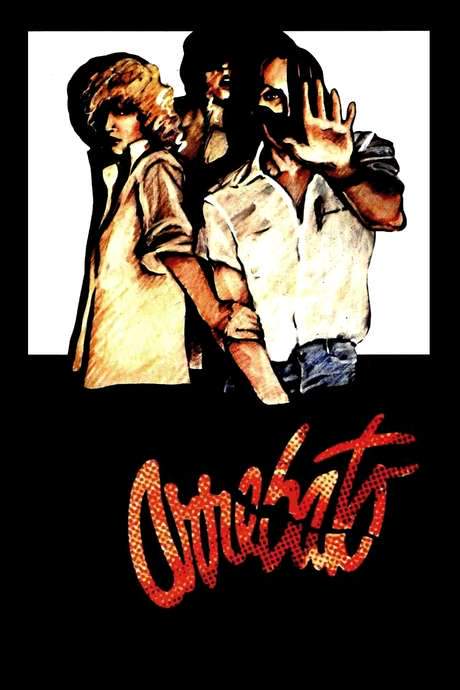
Arrebato (1979) (2021) movie poster

Plot Summary

Arrebato (1979) (2021) Plot Summary Explained

Release, runtime and language
2021 · 105 min · English
Echo score 75
JustWatch #12,736 10
Directed by
Iván Zulueta
Starring
Cecilia Roth, Carmen Giralt, Eusebio Poncela, Helena Fernán-Gómez, Javier Ulacia, Luis Ciges

As a celebrated director struggles to finish his latest film, he grapples with self-doubt and substance abuse, finding himself increasingly disoriented. The reappearance of a former lover and a perplexing package from a past associate further complicate matters, causing reality and fantasy to intertwine. He descends into a surreal world of intense desires and vivid hallucinations, forcing him to examine his artistic methods and the fragile nature of time, space, and personal connections.

On this page (6)
  1. 1 Where to watch
  2. 2 What happens: full plot
  3. 3 Plot questions answered
  4. 4 Movie threads
  5. 5 Movies like Arrebato (1979)
  6. 6 Every angle

Where to watch

Where to Watch Arrebato (1979) (2021)

Where can you watch Arrebato (1979)? Stream, rent or buy it in the US, including on Eternal Family, MUBI and OVID: current JustWatch availability with up-to-date prices.

Streaming availability powered by JustWatch

Full plot summary · contains spoilers

What Happens in Arrebato (1979): Full Plot Summary

The whole story of Arrebato (1979) (2021) explained, from the opening scene to the final frame: every key event, every twist and what it all adds up to. Read it as a quick recap before the sequel, to check a scene you missed, or to finally understand what really happened.

José Sirgado, portrayed by Eusebio Poncela, is a disillusioned director of horror films battling heroin addiction, entrenched in a chaotic relationship with Ana Turner. Out of the blue, he receives a package from Pedro, the cousin of his ex-girlfriend Marta, containing a reel of film, an audio cassette, and the key to his apartment—despite having met Pedro only twice.

As José and Ana delve into the audio cassette, they are taken back through flashbacks of their encounters with Pedro. The first meeting occurred when José, alongside Marta, visited the family home to scout locations for his next film. Pedro, who is obsessed with creating homemade cinema, shares a moment of getting high with José while introducing him to time-lapse photography techniques. Fascinated, José sends Pedro an interval timer designed to enhance his filming process.

Their second meeting unfolds with José and Ana returning to watch Pedro's films together. In this visit, Pedro gifts Ana a nostalgic Betty Boop doll, stirring memories of her childhood. After this visit, José and Ana can't shake their curiosity and decide to watch the enigmatic film reel while listening to the remainder of the cassette. On the tape, Pedro recounts his life after utilizing the interval timer.

He describes a peculiar incident where, after dozing off, his camera mysteriously activates, capturing his sleeping form. Upon developing the footage, he finds a solitary red frame—an anomaly that intrigues him. Gradually, Pedro becomes dependent on this device; if he fails to film himself while sleeping, he grapples with withdrawal symptoms akin to those of heroin addiction. The rejuvenating experience of awakening post-filming leads him to believe that the peculiar occurrences during the red frames have some significant importance.

Curiosity peaks as he enlists Marta to observe him during his sleep, resulting in a haunting moment where the camera independently shifts focus to her, leading to her inexplicable disappearance. As Pedro approaches the end of his film, with only one frame remaining before the footage turns entirely red, he sends everything to José—his film, the audio instructions, and the apartment key—requesting him to come over and develop the final reel.

Upon arriving at Pedro's apartment, José finds it desolate. The final film reveals an alarming sequence of red frames, save for a single shot that captures Pedro’s face. To José’s astonishment, this image appears to animate, with Pedro subtly gesturing toward the bed and urging him to partake in the same intensified experience. The image then blurs, shifting seamlessly into José’s own face, mirroring Pedro’s gesture. Ultimately, the film culminates in an unexpected twist as José succumbs to the allure of experiencing the same transcendent "rapture," retreating into Pedro's bed to embrace the phenomenon that has captivated them both.

Last updated: November 16, 2024 at 15:06

Was this helpful?

Plot questions answered

Arrebato (1979) Plot Explained: Your Questions Answered

The questions people ask most about Arrebato (1979) (2021): what happens in the confusing scenes, why the characters do what they do, the twists, hidden details and what the ending means. Each answer contains spoilers.

Q1

Why does Pedro become obsessed with filming himself sleeping?

Pedro becomes obsessed after discovering that his camera mysteriously activated while he slept, capturing footage of himself. When he developed the film, he found a single red frame that seemed to hold some kind of transcendent quality. The experience of waking up after filming himself produced an intensely rejuvenating feeling, similar to a high, which he describes as a "rapture." This becomes addictive, mirroring José's heroin dependency, he experiences withdrawal symptoms if he fails to film himself while sleeping.

Foreshadowing: José's own heroin addiction earlier establishes the pattern of dependency that Pedro's filming obsession will mirror.

  • pedro
  • interval timer
  • filming
  • sleeping
  • addiction
  • rapture
  • red frame
Q2

What happens to Marta in Arrebato?

Marta disappears during one of Pedro's filming sessions. Pedro asks her to observe him while he films himself sleeping, but when the camera is running, it mysteriously shifts focus from Pedro to Marta, and she vanishes without explanation. Her disappearance remains unexplained within the narrative, representing the dangerous, supernatural nature of the phenomenon Pedro has unleashed.

Foreshadowing: The earlier mysterious red frame hints at something beyond normal reality that can affect those who witness it.

  • marta
  • disappearance
  • pedro
  • filming
  • missing
Q3

What do the red frames represent in Pedro's film?

The red frames appear in the footage Pedro captures of himself sleeping and seem to represent moments of transition into whatever transcendent state the interval timer enables. The first solitary red frame appears accidentally and intrigues Pedro enough to pursue the phenomenon further. As he continues, more red frames appear until eventually the footage becomes entirely red except for one final image of Pedro's face, the last frame before the film goes completely red.

Foreshadowing: The time-lapse photography techniques Pedro learns from José enable this technological phenomenon to occur.

  • red frames
  • film
  • pedro
  • footage
  • transcendence
  • timer
Q4

What is the meaning of the ending of Arrebato?

At the end, after watching the final reel showing Pedro's animated face urging him to experience the same rapture, José succumbs to the temptation. He lies down on Pedro's bed to film himself, mirroring Pedro's ritual. The ending is deliberately ambiguous, José may be experiencing the same transcendent phenomenon, dying, achieving some form of spiritual transcendence, or simply losing himself in an obsessive cycle similar to his heroin addiction. The film leaves his fate unclear, suggesting he has surrendered to an overwhelming force beyond rational understanding.

Foreshadowing: The film has consistently paralleled José's heroin addiction with Pedro's filming addiction, making his final surrender feel inevitable.

  • ending
  • jose
  • rapture
  • transcendence
  • bed
  • ambiguous
Q5

How does the film connect José's heroin addiction to Pedro's filming obsession?

The film draws explicit parallels between José's heroin addiction and Pedro's compulsion to film himself sleeping. Both experiences produce intense, rejuvenating highs that their subjects become dependent on. Both characters experience withdrawal when unable to engage with their respective addictions. The interval timer serves as a technological equivalent to heroin, a tool that enables an escape from reality. This parallel suggests the film is exploring how artists become consumed by their creative processes and the destructive nature of obsession.

Foreshadowing: José's heroin use is established in the opening scenes, setting up the thematic parallel that develops as Pedro's story unfolds.

  • addiction
  • heroin
  • jose
  • pedro
  • obsession
  • filmmaking
  • parallel
Q6

What does the animated face in the final film mean?

When José develops the final reel, he sees a shot of Pedro's face that appears to animate, Pedro subtly gestures toward the bed, inviting José to experience the same rapture he described. Then the image transforms into José's own face, making the same gesture. This surreal moment suggests the film has somehow captured or enabled some form of consciousness transfer or temporal anomaly, where the boundaries between filmmaker and viewer, past and present, become dangerously blurred.

Foreshadowing: The mysterious red frames throughout the film have already established that this footage exists outside normal physical laws.

  • face
  • animation
  • pedro
  • jose
  • film
  • gesture
  • surreal
Q7

Why does Pedro send his film and key to José?

Pedro sends everything to José, the film reel, audio cassette, and apartment key, because he has only one frame of footage left before the film turns entirely red. He cannot complete the film alone and needs someone else to develop the final reel and potentially continue what he started. By sending it to José, who gave him the interval timer that started everything, Pedro is passing on both the burden and the opportunity to experience the phenomenon he has become obsessed with.
Foreshadowing: José's gift of the interval timer to Pedro establishes their connection and José's role in initiating Pedro's obsession.

  • pedro
  • jose
  • package
  • film
  • key
  • apartment
  • instructions
Q8

What is the interval timer and how does it work?

The interval timer is a device José gives Pedro to enhance his filmmaking. It was designed to automatically trigger the camera at set intervals, allowing time-lapse photography without the filmmaker being present. However, Pedro discovers an unintended use: when he falls asleep with the camera running, the timer captures footage of him sleeping. This accidental use leads to the mysterious red frames and the transcendent experience Pedro becomes addicted to.

Foreshadowing: José's interest in time-lapse photography during their first meeting hints at his fascination with capturing time in new ways.

  • interval timer
  • time-lapse
  • camera
  • filming
  • technology
Q9

What is the significance of the Betty Boop doll Ana receives?

During José and Ana's visit to watch Pedro's films, Pedro gives Ana a nostalgic Betty Boop doll that evokes her childhood memories. This gift humanizes Pedro and shows his attempt to connect with others through sentimental objects. The doll also represents the blurred line between reality and fantasy in the film, as childhood innocence becomes entangled with the dark, surreal events that follow.

Foreshadowing: The personal connection established through this gift makes Ana and José more invested in Pedro's story.

  • betty boop
  • doll
  • ana
  • childhood
  • nostalgia
  • memory
Q10

How does Arrebato blend reality and fantasy?

Arrebato deliberately blurs reality and fantasy through its layered structure, flashbacks, audio cassettes, and films-within-films create a non-linear narrative that mirrors José's deteriorating mental state. As José descends deeper into his heroin addiction and becomes consumed by Pedro's story, the boundaries between what is real, what is recorded, and what is imagined become impossible to distinguish. The supernatural elements (the animated face, Marta's disappearance, the red frames) coexist with psychological breakdown, making it unclear whether these events are actually happening or are manifestations of José's unraveling mind.

Foreshadowing: José's heroin-induced disorientation is established early, preparing viewers for a reality that will become increasingly unstable.

  • reality
  • fantasy
  • surreal
  • hallucination
  • blur
  • dream
  • film within film

Movie threads

More Movies Like Arrebato (1979), by Mood & Story

Curated lists built around what makes Arrebato (1979) tick: the same mood, the same kind of story or the same emotional payoff. Each list explains why these movies belong together.

Meta-cinematic stories of artistic obsession like Arrebato (1979)

Films about creators whose work consumes their reality and sanity. If you liked the meta-cinematic tension and artistic self-destruction in Arrebato, explore other movies like it. These films delve into the dangerous relationship between creator and creation, often blurring reality with fiction in a slow-burn, psychologically intense narrative.

  • obsessive
  • meta-cinematic
  • surreal
  • claustrophobic
  • self-destructive
  • psychological
  • Tone: dark, obsessive, surreal
  • Pacing: slow, deliberate, hypnotic
Why these movies?

The story pattern: Stories typically follow an artist or creator at a crisis point. Their artistic process becomes intertwined with personal demons, addiction, or psychological fragility. The narrative structure often becomes non-linear or self-referential, using films-within-films or other meta-devices to mirror the protagonist's mental collapse as their art begins to consume their life.

Why they belong together: These films are grouped by their shared focus on the creative process as a source of psychological horror and surreal transformation. They share a tone of dark obsession, a pacing that builds disorienting tension, and a thematic core that questions the nature of reality and identity through the lens of art.

Slow-burn surreal horror movies like Arrebato (1979)

A creeping, atmospheric horror where reality subtly distorts into nightmare. For viewers who appreciated the slow-building, surreal horror and psychological dread of Arrebato. Discover similar movies where horror is atmospheric and disorienting, focusing on the gradual breakdown of reality and the terrifying beauty of the uncanny.

  • surreal
  • dreamlike
  • disorienting
  • claustrophobic
  • paranoid
  • atmospheric
  • Tone: dark, disorienting, dreamlike
  • Pacing: slow burn, hypnotic
Why these movies?

The story pattern: The narrative progression is less about clear plot points and more about an atmospheric descent. The protagonist's perception of reality becomes unreliable, leading them through a series of increasingly surreal and paranoid experiences. The conflict is internal and atmospheric, with the environment itself becoming a reflection of their psychological disintegration.

Why they belong together: These films are united by a specific approach to horror: it's slow, atmospheric, and rooted in psychological unease rather than overt violence. They share a dreamlike, often melancholic mood, a deliberate pacing that builds hypnotic dread, and a high intensity derived from the fragility of reality itself.

If you liked this

Movies Like Arrebato (1979)

Similar movies to Arrebato (1979): the same genre, themes or kind of story. Each one comes with its own plot summary, timeline and ending explained.

Browse all movie summaries

Every angle

Arrebato (1979) (2021) Explained: Plot, Timeline & Characters

Everything about Arrebato (1979) in one place: what happens in the plot summary, the timeline in chronological order, the characters and meaning and a spoiler-free summary. What's After the Movie adds the cast, box office and post-credit scenes.

Coming soon on iOS and Android

The Plot Explained Movie Summary App

Plot summaries, endings explained and timelines on your phone. Catch up on any movie in minutes, save your favorites and never miss a twist again.

Be the first to know when we launch. Your email stays private, always.

Learn more about the app