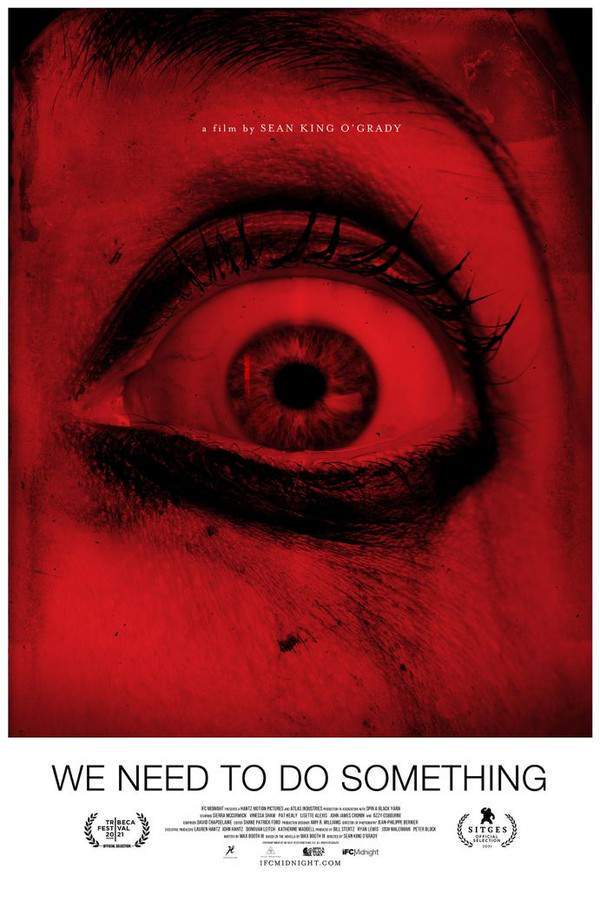
Neville Archambault is a fisherman who wakes up alone and bewildered on his fishing vessel off the coast of Block Island, stumbling into a scene of disarray as the water and the air feel unsettled around him. Reports of strange phenomena begin to surface on the island, and the shoreline becomes speckled with piles of dead fish, aharrowing sign that something deeply abnormal is unfolding beneath the surface of everyday life.
Michaela McManus and her coworker Ryan O'Flanagan travel to Rhode Island to investigate the bizarre wildlife disturbances, bringing along her daughter Matilda Lawler as they brace for explanations that might connect the offshore mystery to land-bound science. The trio searches with careful pace, trying to map the strange events to known ecological patterns, all while the island whispers of something larger at play.
Harry, Chris Sheffield—Tom’s son—begins to notice changes in his father that cut through routine conversations: late-night fishing trips, a growing silence, and a sense that something inexplicable is pulling the man away. In the meantime, Audry and her team press forward, attempting to bridge the gap between a grieving island and the inexplicable phenomena that seem to follow Tom’s absence.
Audry seeks to connect the dots by teaching Emily how to fish and catch frogs, a small attempt at normalcy in the midst of mounting fear. Meanwhile, Tom’s behavior spirals, and one fateful night he sails out into the dark and never returns; the police and locals eventually conclude that he has drowned, a verdict that feels hollow to those who knew him best.
Harry stumbles under the weight of his father’s death, and his mental health deteriorates as his estranged sister Jen, Heidi Niedermeyer, returns from New York for the funeral. A heated confrontation erupts during the gathering, and Harry finds himself drawn into conversations with a conspiracy-minded friend named Dale, Jim Cummings who theorizes that disturbances are not isolated but spreading across the globe.
In the wake of these theories, Harry borrows scuba equipment to reach the area where Tom disappeared, hoping to uncover clues that science cannot explain. He descends into the dark water, but loses consciousness and awakens back on the boat with the vessel’s electronics scrambled and a strange, persistent hum filling the air.
A reckless moment—driven by visions of his father—leads Harry to strike off into the night, nearly colliding with a jogger and then turning his fear outward in a dangerous outburst. Audry, worried for Emily and for Harry, seeks help from a psychologist who speculates that Harry may be experiencing electromagnetic hypersensitivity linked to the Block Island Wind Farm and urges Audry to reach out to a former patient who has dealt with similar symptoms. The clinician’s cautionary warning—someone could be harmed if Harry remains on the island—pushes Audry toward making difficult choices to protect her family.
As Harry’s vision-tinged reality grows more intense, he abducts Emily onto the fishing vessel during a moment of eerie quiet. Audry races to the boat and tries to reason with him, but the stormy atmosphere of the night and the strange forces at sea seem to lift the ship’s cabin and its occupants toward the sky. The vessel trembles, objects rattle, and the scene dissolves into a breathless drift; ultimately, Audry is carried up with the boat as dawn breaks.
The next morning, Emily is found alone in the cabin by local authorities on the island. Audry, meanwhile, is dropped into the ocean alive, treading water as a voiceover from an earlier moment—where she described to Emily the rationale scientists use to study the natural world by taking certain individual fish from their habitat—echoes over the waves, a haunting reminder of the fragile balance between curiosity and consequence.
The film closes with a quiet, unresolved tension: a family torn between grief and awe, a landscape where human logic meets something vast and unseen, and a reminder that the sea still holds secrets that science can only begin to describe.