


Plot Explained Spoilers guaranteed!
Plot Explained

Browse by genre

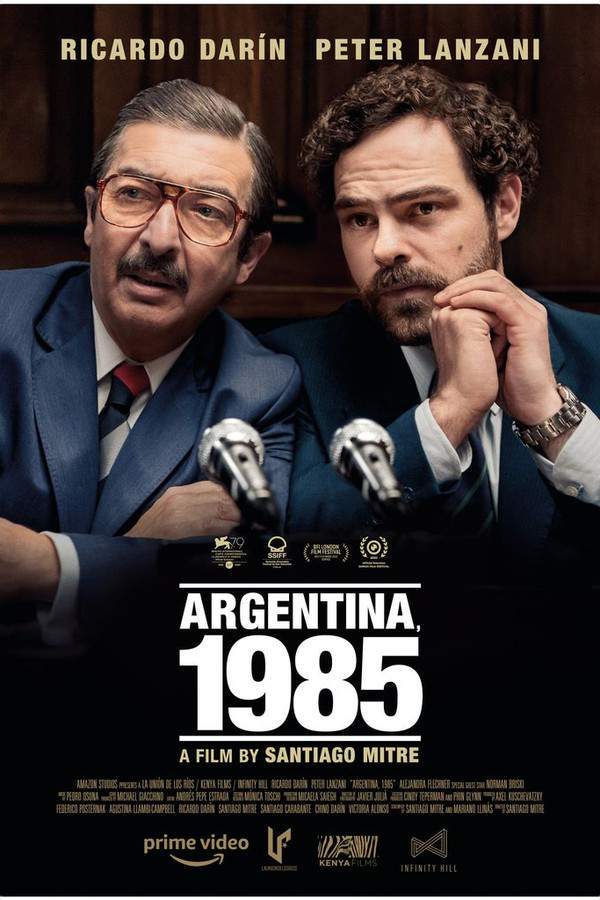
Argentina, 1985 (2022) movie poster

Timeline

Argentina, 1985 (2022) Timeline Explained – Every Event in Order

Release, runtime and language
2022 · 140 min · Spanish
Echo score 78
JustWatch #9,126 18
Directed by
Santiago Mitre
Starring
Ricardo Darín, Norman Briski, Peter Lanzani, Alejandra Flechner, Alejo García Pintos, Carlos Portaluppi
Budget
$20M

In 1985 Argentina, a team of lawyers, led by Julio Strassera and Luis Moreno Ocampo, bravely takes on the recently ousted military regime. Facing immense pressure and threats, they decide to prosecute the perpetrators of human rights abuses during the "Dirty War." With limited resources and under constant surveillance, the lawyers and their team work tirelessly to gather evidence and prepare their case, striving to bring justice to the victims and their families and help the nation confront its painful past.

On this page (6)
  1. 1 Where to watch
  2. 2 Events in order (13)
  3. 3 Timeline questions answered
  4. 4 Movie threads
  5. 5 Movies like Argentina, 1985
  6. 6 Every angle

Where to watch

Where to Watch Argentina, 1985 (2022)

Where can you watch Argentina, 1985? Stream, rent or buy it in the US, including on Amazon Prime Video: current JustWatch availability with up-to-date prices.

Streaming availability powered by JustWatch

13 events in order · contains spoilers

Argentina, 1985 Timeline: Events in Chronological Order

Every key event of Argentina, 1985 (2022) in order, scene by scene, with when and where it takes place. Use it to untangle flashbacks, time jumps and parallel storylines, to refresh your memory before the sequel or to find the exact scene you are thinking of.

  1. Democratic Transition

    In 1985, Argentina emerged from a long period of military dictatorship that had lasted for seven years. This transition marked a new democratic chapter in the nation's history, setting the stage for accountability and justice for past atrocities.

    When
    1985
    Where
    Argentina
  2. Historical Trial Initiation

    Under the leadership of President Raúl Alfonsín, a significant trial was initiated against former military commanders for their crimes against humanity. This move was groundbreaking as it aimed to hold accountable those who had previously escaped justice.

    When
    1985
    Where
    Argentina
  3. Julio César Strassera Appointed

    Public prosecutor Julio César Strassera was selected to present the government's case after military courts refused to act. His appointment marked the beginning of a tumultuous journey to pursue justice against powerful military figures.

    When
    1985
    Where
    Argentina
  4. Strassera's Family Life

    As Strassera took on this monumental task, he balanced his professional responsibilities with family life. He shared his home with his wife Silvia and their two children, daughter Veronica and son Javier, adding emotional stakes to an already dangerous situation.

  5. Mentorship with Ruso

    Strassera sought guidance from mentor Ruso, who helped him recognize the importance of the trial. With growing pressure and risks apparent, Strassera remained torn about the dangers involved in prosecuting powerful former military leaders.

  6. Team Assembly Begins

    The road to forming a prosecution team was fraught with challenges. Strassera faced skepticism but later accepted help from Luis Moreno Ocampo, leading to the recruitment of less experienced lawyers to combat the formidable defense team.

  7. Evidence Compilation

    On February 15, 1985, Strassera and his team submitted an overwhelming volume of evidence, totaling 16 volumes and 4,000 pages. This documentation detailed 709 cases and cited over 800 witnesses, reinforcing their relentless pursuit of justice.

    When
    February 15, 1985
  8. Trial Begins

    The trial commenced on April 22, 1985, creating a charged atmosphere where the pursuit of justice met public interest. On the opening day, tensions escalated as bomb threats were reported against the courtroom, yet Strassera insisted the proceedings go on.

    When
    April 22, 1985
    Where
    Courtroom
  9. Harrowing Testimonies

    Throughout the trial, poignant testimonies from victims of the junta were aired on television, such as that of Adriana Calvo. Her heart-wrenching account of giving birth while in captivity deeply affected viewers, even altering perceptions within Ocampo's family.

  10. Meeting with President

    In a significant moment during the trial, President Raúl Alfonsín praised Strassera for his efforts against the junta’s violations. However, the political climate was tumultuous, and there were growing concerns about potential military backlash.

  11. Climactic Closing Statement

    On September 18, 1985, Strassera delivered an impassioned closing statement that encapsulated the trial's essence. His poignant plea for justice and the powerful declaration 'never again' resonated deeply, captivating all those present in the courtroom.

    When
    September 18, 1985
    Where
    Courtroom
  12. Judgment Day

    After Strassera's stirring closing arguments, the judges deliberated on the case that had captivated the nation. The final verdict saw a mix of life sentences for some leaders while others received lighter penalties, reflecting a nuanced view of justice.

  13. Aftermath and Appeal

    In the aftermath of the trial, Strassera began preparing to appeal the controversial decisions rendered by the court. Although the trial was historic, revealing the capabilities of a civilian court to judge military dictators, he knew that true justice remained elusive.

Last updated: November 08, 2024 at 01:14

Was this helpful?

Timeline questions answered

Argentina, 1985 Timeline Explained: Your Questions Answered

When does it happen, and why in that order? The questions people ask about the chronology of Argentina, 1985 (2022): time jumps, flashbacks, cause and effect between scenes and the correct order of events, each answered with spoilers.

Q1

Why was Julio Strassera chosen as prosecutor for the trial?

Julio Strassera was appointed as public prosecutor because the military courts had refused to act against the former commanders. The civilian government needed someone willing to take on the powerful military figures, and Strassera, despite recognizing the grave danger it posed to him and his family, accepted the responsibility. His selection marked the beginning of a historic effort to hold the dictatorship accountable.

Foreshadowing: Earlier, the military courts' refusal to act signaled the need for a courageous civilian prosecutor.

  • julio strassera
  • prosecutor
  • military trial
  • appointed
Q2

Why did Strassera initially reject Luis Moreno Ocampo?

Strassera initially rejected Ocampo because of his military family background, which made him suspicious. However, Ocampo convinced Strassera that experienced lawyers were too afraid to join the case, suggesting instead that they recruit young and less experienced lawyers who had less to lose. This argument convinced Strassera to accept Ocampo's help.

Foreshadowing: Ocampo's fresh perspective proved valuable in assembling a team that experienced lawyers feared to join.

  • luis moreno ocampo
  • strassera
  • young lawyers
  • prosecution team
Q3

What was the significance of the 16 volumes of evidence submitted?

On February 15, 1985, Strassera's team submitted 16 volumes containing 4,000 pages of evidence covering 709 cases and over 800 witnesses. This massive documentation was crucial because it provided the factual foundation for prosecuting the military commanders. Without this comprehensive evidence, the prosecution would have lacked the substance needed to build credible charges against the dictatorship's leaders.

Foreshadowing: The evidence compilation was the result of the team's relentless work gathering testimony from victims and survivors.

  • evidence
  • 16 volumes
  • 709 cases
  • witnesses
  • trial preparation
Q4

What impact did Adriana Calvo's testimony have on the trial?

Adriana Calvo's testimony about giving birth while in captivity was one of the most harrowing accounts aired during the televised trial. Her emotional story deeply affected viewers and significantly shifted public opinion. Notably, it even changed the perspective of Ocampo's own family regarding their military ties, demonstrating how powerful victim testimonies were in breaking through denial and resistance.

Foreshadowing: The televised testimonies turned the trial into a national reckoning with the past.

  • adriana calvo
  • testimony
  • televised trial
  • impact
Q5

What was the significance of Strassera's 'never again' closing statement?

On September 18, 1985, Strassera delivered his climactic closing statement ending with the powerful phrase 'never again.' This declaration symbolized the nation's commitment to ensuring such atrocities, the disappearances, torture, and human rights abuses of the Dirty War, would never be repeated. It became the emotional centerpiece of the trial and a defining moment in Argentina's pursuit of justice and memory.

Foreshadowing: Strassera was inspired by the courage of victims who had testified throughout the trial.

  • never again
  • closing statement
  • strassera
  • trial climax
Q6

Why did some military leaders receive lighter sentences than others?

The verdict resulted in mixed outcomes, some leaders received life sentences while others got lighter penalties. This reflected the complex political realities of the trial. President Alfonsín had warned Strassera about the risk of provoking a military coup, and there was pressure from the Attorney General to seek leniency. The court balanced between delivering justice and maintaining political stability, resulting in a nuanced verdict that satisfied neither complete justice nor the military establishment.

Foreshadowing: The pressure from the Attorney General reflected broader government concerns about military backlash.

  • verdict
  • life sentences
  • lighter penalties
  • military leaders
Q7

Why was the trial considered historic for Argentina?

The trial was historic because it marked the first time any military dictatorship stood trial in a civilian court. Despite the mixed verdicts, it established a precedent that no regime, regardless of its power, was above accountability. This was a watershed moment for Argentina's democracy and for global human rights, demonstrating that civilian courts could successfully prosecute former military rulers for crimes against humanity.

Foreshadowing: The trial took place just months after Argentina's democratic transition in 1985.

  • historic trial
  • civilian court
  • military dictatorship
  • accountability
  • argentina democracy
Q8

What happened when bomb threats were made during the trial?

On the opening day of the trial, bomb threats were made against the courtroom, creating extreme tension. Despite the danger, Strassera insisted that the proceedings must continue. This moment underscored the high stakes and personal risks everyone involved faced, demonstrating the courage required to pursue justice against a recently ousted but still dangerous military regime.

Foreshadowing: The threats reflected the ongoing power and reach of the military even after the dictatorship ended.

  • bomb threats
  • courtroom
  • trial opening
  • intimidation
Q9

Why did Strassera prepare an appeal after the verdict?

Strassera began preparing an appeal because although the trial was historic and achieved a milestone by convicting some military leaders, justice remained incomplete. The lighter sentences for some perpetrators meant the victims' families did not receive full accountability. Strassera recognized that the fight for complete justice continued beyond the initial verdict, reflecting the bittersweet nature of the trial's outcome.

Foreshadowing: The mixed verdict revealed that even a successful trial could not deliver complete justice.

  • appeal
  • strassera
  • verdict
  • incomplete justice

Movie threads

More Movies Like Argentina, 1985, by Mood & Story

Curated lists built around what makes Argentina, 1985 tick: the same mood, the same kind of story or the same emotional payoff. Each list explains why these movies belong together.

Intense courtroom dramas like Argentina, 1985

Heroic lawyers take on corrupt systems under immense pressure. Find movies like Argentina, 1985 where determined lawyers fight systemic corruption in tense legal dramas. This thread features similar historical legal stories and films about high-stakes prosecutions against powerful institutions, perfect for fans of gripping courtroom procedurals.

  • tense
  • determined
  • somber
  • anxious
  • weighty
  • courageous
  • Tone: tense, determined, somber
  • Pacing: steady, procedural
Why these movies?

The story pattern: These narratives typically follow a linear, procedural structure, building methodically from initial investigation to a climactic trial. The central conflict pits underdog heroes against a formidable, entrenched adversary, with the story driven by the painstaking accumulation of evidence and the psychological toll of the fight.

Why they belong together: Movies are grouped here by their shared focus on a tense, high-stakes legal process, the theme of institutional accountability, and the determined, courageous character arc of those seeking justice against powerful forces.
Movies about confronting historical trauma like Argentina, 1985

A nation confronts its painful past with incomplete but necessary justice. If you liked Argentina, 1985, explore this thread for similar movies about a nation confronting its painful past. These films share a bittersweet tone, heavy emotional weight, and focus on the complex journey of historical reckoning and national healing.

  • somber
  • historical
  • weighty
  • reflective
  • bittersweet
  • courageous
  • Tone: somber, reflective, bittersweet
  • Pacing: steady, methodical
Why these movies?

The story pattern: The narrative journey involves unearthing buried truths and pursuing accountability for historical crimes. The path is arduous, marked by resistance and the emotional weight of victim testimonies. The resolution is typically bittersweet, acknowledging a significant step towards justice while also recognizing the immense, irreversible cost and the incompleteness of any resolution.

Why they belong together: This thread groups films based on their shared theme of historical reckoning, a somber and determined mood, a heavy emotional weight centered on national trauma, and a narrative that leads to a bittersweet, rather than purely triumphant, conclusion.

If you liked this

Movies Like Argentina, 1985

Similar movies to Argentina, 1985: the same genre, themes or kind of story. Each one comes with its own plot summary, timeline and ending explained.

Browse all movie summaries

Every angle

Argentina, 1985 (2022) Explained: Plot, Ending, Timeline & Characters

Everything about Argentina, 1985 in one place: what happens in the plot summary, the timeline in chronological order, the characters and meaning, the ending explained and a spoiler-free summary. What's After the Movie adds the cast, box office and post-credit scenes.

Coming soon on iOS and Android

The Plot Explained Movie Summary App

Plot summaries, endings explained and timelines on your phone. Catch up on any movie in minutes, save your favorites and never miss a twist again.

Be the first to know when we launch. Your email stays private, always.

Learn more about the app