


Plot Explained Spoilers guaranteed!
Plot Explained

Browse by genre

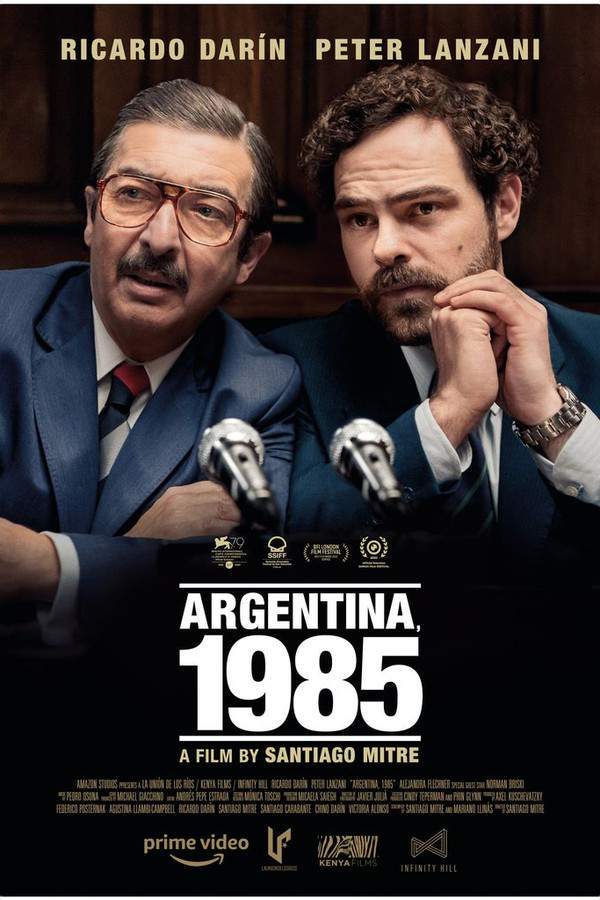
Argentina, 1985 (2022) movie poster

Ending Explained

Argentina, 1985 (2022) Ending Explained – Final Scene & Meaning

Release, runtime and language
2022 · 140 min · Spanish
Echo score 78
JustWatch #9,119 11
Directed by
Santiago Mitre
Starring
Ricardo Darín, Norman Briski, Peter Lanzani, Alejandra Flechner, Alejo García Pintos, Carlos Portaluppi
Budget
$20M

In 1985 Argentina, a team of lawyers, led by Julio Strassera and Luis Moreno Ocampo, bravely takes on the recently ousted military regime. Facing immense pressure and threats, they decide to prosecute the perpetrators of human rights abuses during the "Dirty War." With limited resources and under constant surveillance, the lawyers and their team work tirelessly to gather evidence and prepare their case, striving to bring justice to the victims and their families and help the nation confront its painful past.

On this page (7)
  1. 1 Where to watch
  2. 2 What happens at the end
  3. 3 Final events in order
  4. 4 Ending questions answered
  5. 5 Movie threads
  6. 6 Movies like Argentina, 1985
  7. 7 Every angle

Where to watch

Where to Watch Argentina, 1985 (2022)

Where can you watch Argentina, 1985? Stream, rent or buy it in the US, including on Amazon Prime Video: current JustWatch availability with up-to-date prices.

Streaming availability powered by JustWatch

Ending explained · contains spoilers

What Happens at the End of Argentina, 1985?

How Argentina, 1985 (2022) ends, what the final scene means, which earlier moments set it up and how to read the ending if the film leaves it open. The full ending explained, with every spoiler.

The film concludes with the court passing its verdict on the military commanders responsible for the atrocities committed during Argentina's Dirty War. While some of the key figures, like Jorge Videla and Emilio Massera, are sentenced to life imprisonment, others, such as Leopoldo Galtieri and Basilio Lami Dozo, are acquitted, highlighting the mixed results of justice—perhaps influenced by political pressures and the desire to maintain stability. Despite these mixed outcomes, Julio Strassera, the lead prosecutor, remains committed to pursuing justice. Even after the verdict, he prepares an appeal, driven by a personal sense of duty and the memory of those who suffered under the regime. The film ends on a hopeful note, emphasizing that this trial marked a groundbreaking victory for civil justice in Argentina, as it was the first time that those responsible for a military dictatorship faced legal consequences in a court of law. This historic case laid the groundwork for ongoing efforts to hold perpetrators accountable and to reckon with the atrocities of the past, ensuring that the memory of those who suffered is preserved and justice continues to be pursued. The story closes with a powerful message of resilience and the enduring fight for justice in a fragile democracy.

Last updated: June 25, 2025 at 08:44

Was this helpful?

The last 4 events

How Argentina, 1985 Ends: The Final Events in Order

The last events of Argentina, 1985 (2022) in chronological order, the run-up to the ending explained above. The complete timeline has all 13 events, scene by scene.

Open the full timeline
  1. Meeting with President

    In a significant moment during the trial, President Raúl Alfonsín praised Strassera for his efforts against the junta’s violations. However, the political climate was tumultuous, and there were growing concerns about potential military backlash.

  2. Climactic Closing Statement

    On September 18, 1985, Strassera delivered an impassioned closing statement that encapsulated the trial's essence. His poignant plea for justice and the powerful declaration 'never again' resonated deeply, captivating all those present in the courtroom.

    When
    September 18, 1985
    Where
    Courtroom
  3. Judgment Day

    After Strassera's stirring closing arguments, the judges deliberated on the case that had captivated the nation. The final verdict saw a mix of life sentences for some leaders while others received lighter penalties, reflecting a nuanced view of justice.

  4. Aftermath and Appeal

    In the aftermath of the trial, Strassera began preparing to appeal the controversial decisions rendered by the court. Although the trial was historic, revealing the capabilities of a civilian court to judge military dictators, he knew that true justice remained elusive.

Ending questions answered

Argentina, 1985 Ending: Your Questions Answered

The questions people ask most about the ending of Argentina, 1985 (2022): what the final scene means, how the twist works, what happens to each character and how to read the ending. Each answer contains spoilers.

Q1

Why were some military commanders like Galtieri acquitted in the trial?

Leopoldo Galtieri and Basilio Lami Dozo were acquitted despite their roles in the Dirty War, likely due to political pressures and the delicate balance authorities sought between delivering justice and maintaining social stability. The film highlights that even in a landmark trial, the legal system faced constraints in holding every perpetrator fully accountable, reflecting the complex reality of transitioning from dictatorship to democracy.

  • galtieri acquittal
  • military trial
  • dirty war
  • justice incomplete
Q2

What does the mixed verdict reveal about Argentina's justice system?

The mixed verdict demonstrates both the achievement and limitations of the trial, while it successfully convicted key figures like Jorge Videla and Emilio Massera to life imprisonment, the acquittals show how political considerations can still influence judicial outcomes. This reflects the difficult balance between pursuing justice and maintaining stability in a fragile post-dictatorship society.

  • verdict
  • life sentences
  • political pressure
  • judicial outcome
Q3

Why is the 1985 trial considered groundbreaking in Argentina?

The trial was the first time in history that members of a military dictatorship faced legal consequences in a civilian court for crimes against humanity. This set a precedent for holding authoritarian regimes accountable and became a model for other countries pursuing justice for past atrocities, fundamentally changing Argentina's relationship with its military.

  • first trial
  • military dictatorship
  • precedent
  • civilian court
Q4

What happens to Julio Strassera after the trial verdict?

Julio Strassera remains committed to pursuing justice even after the verdict, preparing appeals for the cases that did not result in convictions. Driven by a personal sense of duty and the memory of those who suffered, he continues the fight rather than accepting the incomplete justice the trial delivered.

  • strassera
  • appeal
  • prosecutor
  • continued fight
Q5

What did the trial mean for Argentina's democracy?

The trial marked a pivotal moment in consolidating Argentina's fragile democracy by proving that military leaders could be held accountable in civilian courts. This victory for civil justice helped prevent future impunity for human rights abuses and strengthened the rule of law in the post-dictatorship era.

  • democracy
  • civilian court
  • accountability
  • rule of law
Q6

How does the film address the victims of the Dirty War in its ending?

The ending emphasizes that the trial preserved the memory of those who suffered under the regime and gave victims' families a sense of justice, however incomplete. The film closes with the message that their suffering was acknowledged publicly and legally, ensuring their stories would not be forgotten.

  • victims
  • families
  • memory
  • testimony
  • suffering
Q7

What does the ending say about confronting past atrocities?

The ending conveys that confronting past atrocities, even imperfectly, is essential for national healing. The trial represents a crucial step in Argentina's process of reckoning with its painful history, showing that justice, though never fully complete, can begin the work of reconciliation and memory preservation.

  • national healing
  • reckoning
  • memory
  • reconciliation
  • past
Q8

Why was it important to prosecute the military dictatorship?

Prosecuting the dictatorship was crucial because it established that no one, including military leaders, is above the law. The trial demonstrated that crimes against humanity would not be ignored, providing closure for victims' families and deterring future abuses by showing that accountability is possible even years after the events.

  • accountability
  • impunity
  • human rights
  • deterrence
  • law
Q9

What happened to Jorge Videla and Emilio Massera at the end?

Jorge Videla and Emilio Massera, the two most prominent military leaders, were sentenced to life imprisonment for their roles in the Dirty War atrocities. Their convictions represented the major victory of the trial, holding the highest-ranking figures directly responsible for the crimes committed.

  • videla
  • massera
  • life imprisonment
  • convictions
  • sentences
Q10

How does the film portray the tension between justice and stability?

The film shows the tension through the mixed verdicts, some leaders convicted while others acquitted, implying that political pressures and concerns about social stability influenced the outcome. This reflects the difficult reality of transitioning from dictatorship where pursuing full justice risked destabilizing the new democracy.

  • political pressure
  • stability
  • transition
  • democracy
  • compromise
Q11

What message does the film convey about resilience in its ending?

The ending delivers a hopeful message of resilience, emphasizing that despite incomplete justice, the trial itself was a monumental achievement that proved the fight for justice could succeed. The film closes with the idea that this historic case laid groundwork for ongoing accountability efforts, showing that progress is possible even in fragile democracies.

  • resilience
  • hope
  • progress
  • ongoing fight
  • perseverance
Q12

Why does Strassera continue fighting after the mixed verdict?

Strassera continues because he views the verdict as incomplete, while some leaders received life sentences, others were acquitted, and he believes more can still be done. His commitment stems from both personal duty and the memory of victims, driving him to pursue appeals rather than accept partial justice as final.

  • appeals
  • unfinished business
  • duty
  • persistence
  • strassera

Movie threads

More Movies Like Argentina, 1985, by Mood & Story

Curated lists built around what makes Argentina, 1985 tick: the same mood, the same kind of story or the same emotional payoff. Each list explains why these movies belong together.

Intense courtroom dramas like Argentina, 1985

Heroic lawyers take on corrupt systems under immense pressure. Find movies like Argentina, 1985 where determined lawyers fight systemic corruption in tense legal dramas. This thread features similar historical legal stories and films about high-stakes prosecutions against powerful institutions, perfect for fans of gripping courtroom procedurals.

  • tense
  • determined
  • somber
  • anxious
  • weighty
  • courageous
  • Tone: tense, determined, somber
  • Pacing: steady, procedural
Why these movies?

The story pattern: These narratives typically follow a linear, procedural structure, building methodically from initial investigation to a climactic trial. The central conflict pits underdog heroes against a formidable, entrenched adversary, with the story driven by the painstaking accumulation of evidence and the psychological toll of the fight.

Why they belong together: Movies are grouped here by their shared focus on a tense, high-stakes legal process, the theme of institutional accountability, and the determined, courageous character arc of those seeking justice against powerful forces.

Movies about confronting historical trauma like Argentina, 1985

A nation confronts its painful past with incomplete but necessary justice. If you liked Argentina, 1985, explore this thread for similar movies about a nation confronting its painful past. These films share a bittersweet tone, heavy emotional weight, and focus on the complex journey of historical reckoning and national healing.

  • somber
  • historical
  • weighty
  • reflective
  • bittersweet
  • courageous
  • Tone: somber, reflective, bittersweet
  • Pacing: steady, methodical
Why these movies?

The story pattern: The narrative journey involves unearthing buried truths and pursuing accountability for historical crimes. The path is arduous, marked by resistance and the emotional weight of victim testimonies. The resolution is typically bittersweet, acknowledging a significant step towards justice while also recognizing the immense, irreversible cost and the incompleteness of any resolution.

Why they belong together: This thread groups films based on their shared theme of historical reckoning, a somber and determined mood, a heavy emotional weight centered on national trauma, and a narrative that leads to a bittersweet, rather than purely triumphant, conclusion.

If you liked this

Movies Like Argentina, 1985

Similar movies to Argentina, 1985: the same genre, themes or kind of story. Each one comes with its own plot summary, timeline and ending explained.

Browse all movie summaries

Every angle

Argentina, 1985 (2022) Explained: Plot, Ending, Timeline & Characters

Everything about Argentina, 1985 in one place: what happens in the plot summary, the timeline in chronological order, the characters and meaning, the ending explained and a spoiler-free summary. What's After the Movie adds the cast, box office and post-credit scenes.

Coming soon on iOS and Android

The Plot Explained Movie Summary App

Plot summaries, endings explained and timelines on your phone. Catch up on any movie in minutes, save your favorites and never miss a twist again.

Be the first to know when we launch. Your email stays private, always.

Learn more about the app