Plot Explained Spoilers guaranteed!
Plot Explained

Browse by genre

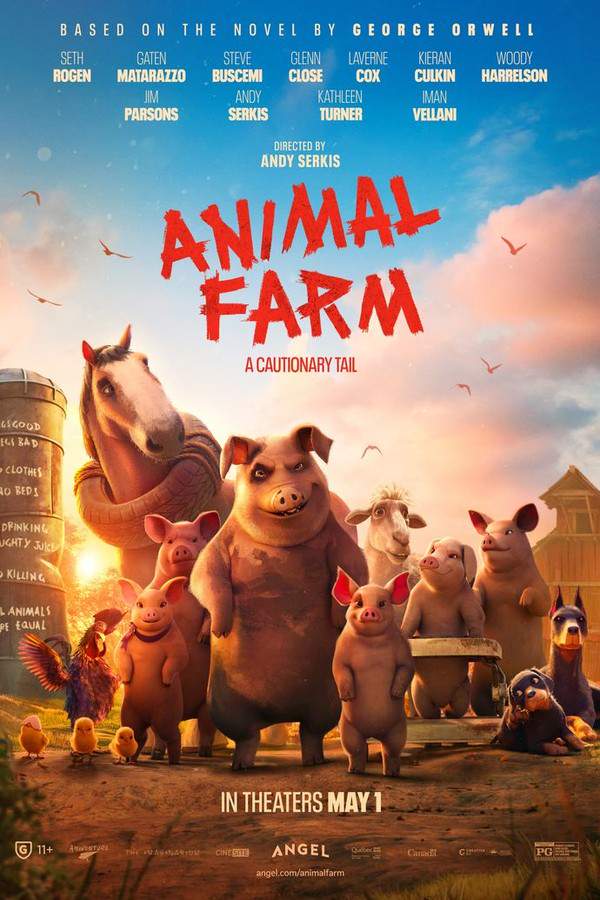
Animal Farm (2025) movie poster

Timeline

Animal Farm (2025) Timeline Explained – Every Event in Order

Release, runtime and language
2025 · 96 mins · English
Loading streaming availability…
Starring
Andy Serkis, Woody Harrelson, Steve Buscemi, Glenn Close, Seth Rogen, Laverne Cox
Budget
$35M

Driven to revolution by a desire for equality, farm animals overthrow their human oppressors and take control. However, their newfound freedom is threatened as a power struggle emerges among the pigs, leading to the rise of the manipulative Napoleon. The animals must then confront a new set of oppressive rules and fight to protect the ideals of their rebellion.

On this page (6)
  1. 1 Where to watch
  2. 2 Events in order (13)
  3. 3 Timeline questions answered
  4. 4 Movie threads
  5. 5 Movies like Animal Farm
  6. 6 Every angle
Loading streaming availability…

13 events in order · contains spoilers

Animal Farm Timeline: Events in Chronological Order

Every key event of Animal Farm (2025) in order, scene by scene, with when and where it takes place. Use it to untangle flashbacks, time jumps and parallel storylines, to refresh your memory before the sequel or to find the exact scene you are thinking of.

  1. Manor Farm repossessed and sold to Pilkington Industries

    The bank repossesses Manor Farm after Farmer Jones fails to keep up mortgage payments. The farm is put up for sale and the new buyer is Pilkington Industries, led by the ruthless Frieda Pilkington who intends to slaughter the livestock. The animals realize their futures may be bleak under human ownership.

    When
    Day of repossession
    Where
    Manor Farm
  2. Animals mistaken as vacation to a laughterhouse

    As they are driven away, the animals initially believe they are being taken on a vacation to a laughterhouse. Snowball quickly discerns their true fate and urges action. The mood shifts from hope to fear as reality sinks in.

    When
    Immediately after capture
    Where
    Manor Farm outskirts
  3. Snowball advocates rebellion and freedom

    Snowball volunteers to lead the animals in resisting their human captors. The animals gather in the barn to discuss a plan for self-rule and organize a surprise move against their owners. Snowball's charisma helps rally the others to the cause.

    When
    Soon after initial realization
    Where
    Barn
  4. Animals overthrow humans and rename to Animal Farm

    The animals drive the humans off the farm and seize control. They rename the property Animal Farm and declare a new, self-governed order based on equality. A code of laws is drafted to prevent the animals from becoming like the humans they overthrew.

    When
    Night of uprising
    Where
    Animal Farm
  5. Snowball implements a code of laws

    Under Snowball's leadership, the animals establish a basic government and draft a code of laws. The laws are meant to codify equality and forbid the tyranny they experienced from humans. The administration struggles with practicalities but is hopeful about self-rule.

    When
    Following rebellion
    Where
    Animal Farm
  6. Napoleon ousts Snowball and takes control

    Napoleon opposes Snowball’s plan to build a watermill, arguing that it will hamper the animals' freedom. In a swift power play, Napoleon forces Snowball into exile and takes control of Animal Farm. The pigs begin to consolidate power and slowly rewrite the governance.

    When
    Soon after rebellion
    Where
    Animal Farm
  7. Bank demands $1,000 monthly payment

    The bank requires Animal Farm to pay $1,000 per month, a condition meant to ensure the farm's failure. The animals initially fear they cannot meet the obligation. They brainstorm alternatives to raise the funds.

    When
    After Snowball's exile
    Where
    Farm Office / Bank
  8. Animals raise funds through a market and shop at Pilkington's mall

    To cover the loan, the animals organize a local market that generates revenue for the farm. They accumulate funds by selling produce and other goods, using the profits to buy things at Pilkington's mall in the human world. The scheme blurs the line between solidarity and complicity with human prosperity.

    When
    Shortly after funding plan
    Where
    Market and Pilkington's mall
  9. Pilkington allies with Napoleon; Squealer rewrites rules

    Pilkington, eager to own the farm, forms an alliance with Napoleon and the pigs, granting them free goods. Squealer helps twist memories and laws to favor the pigs and humans alike. The remaining animals begin to accept a new, unequal order.

    When
    After alliance
    Where
    Animal Farm
  10. Life on the farm grows miserable while pigs enjoy affluence

    The other animals suffer under increasingly harsh conditions as the pigs enjoy luxuries and act more like humans. Food and labor are skewed toward the pig faction, and the code of equality is eroded. The appearance of freedom gives way to a quiet, pervasive oppression.

    When
    Ongoing after alliance
    Where
    Animal Farm
  11. Lucky questions the regime; Puff leaves; plan to sell non-pigs disclosed

    Lucky, Snowball's protégé, begins doubting the regime after Puff's departure raises concerns. Napoleon explains his plan to sell all animals that are not pigs, intensifying fear and control. Benjamin the donkey quietly nudges resistance and doubt.

    When
    Mid-late stage
    Where
    Animal Farm
  12. Lucky and others plan to ridicule Napoleon

    Motivated by anger, Lucky and the other animals devise a plan to ridicule Napoleon as he speaks to Pilkington's company. They aim to expose the regime's hypocrisy and shake its grip on the workers. The act signals a final, desperate bid for rebellion.

    When
    Late-stage
    Where
    Pilkington's company address
  13. Dam breaks; flood; final downfall; Napoleon drowns

    A dam gives way and floods the farm, forcing the animals onto the water tower. Napoleon confronts Lucky but is overwhelmed and drowns, ending his rule. With the tyrant gone, the animals look up at the stars and wonder about their uncertain but hopeful future.

    When
    Climax
    Where
    Water tower / Farm

Last updated: May 19, 2026 at 05:53

Was this helpful?

Timeline questions answered

Animal Farm Timeline Explained: Your Questions Answered

When does it happen, and why in that order? The questions people ask about the chronology of Animal Farm (2025): time jumps, flashbacks, cause and effect between scenes and the correct order of events, each answered with spoilers.

Q1

Why did Napoleon oppose Snowball's watermill plan?

Napoleon opposed the watermill because it wasn't truly about the construction itself, it was about consolidating power. By framing Snowball's initiative as a distraction from freedom, Napoleon convinced many animals that Snowball was a threat to their autonomy. This was a strategic move to undermine Snowball's leadership and position himself as the sole authority, ultimately enabling his coup d'état.

Foreshadowing: Earlier, Napoleon complains about any initiative that doesn't directly serve his growing control over the farm.

  • napoleon
  • snowball
  • watermill
  • power struggle
  • leadership
Q2

How did Napoleon consolidate power after ousting Snowball?

Napoleon took control by force and manipulation. After exiling Snowball, he used his dogs to intimidate the other animals and installed Squealer to rewrite history, convincing the farm that Snowball was always a traitor. The pigs gradually altered the code of laws to grant themselves privileges, while Pilkington's alliance provided material benefits that further corrupted the revolution's ideals.

Foreshadowing: Napoleon's opposition to the watermill was really about challenging Snowball's authority, not the project itself.

  • napoleon
  • snowball
  • exile
  • consolidation
  • pigs
  • squealer
Q3

Why did the animals start trading with humans at Pilkington's mall?

The bank demanded a $1,000 monthly loan payment that Animal Farm couldn't afford without human commerce. The animals opened a market to generate revenue, using profits to shop at Pilkington's mall. This compromised their revolutionary ideals but represented a desperate survival strategy, ironically creating the very complicity with human oppression they had originally fought to escape.

Foreshadowing: The bank's payment demand directly followed Snowball's exile, placing the farm under severe financial pressure.

  • market
  • pilkington
  • money
  • bank
  • payment
  • commerce
Q4

What happened to Snowball after being exiled from Animal Farm?

After Napoleon forced Snowball into exile, Snowball essentially disappeared from the narrative. Squealer systematically erased Snowball's contributions by telling the animals their memories were wrong, convincing them that Snowball had always been a villain. The only character who later questions this version of history is Lucky, Snowball's former protégé.

Foreshadowing: Napoleon's rise directly corresponded with the erasure of Snowball's legacy through Squealer's propaganda.

  • snowball
  • exile
  • lucky
  • propaganda
  • squealer
Q5

Why did Lucky become the one to challenge Napoleon's regime?

Lucky was Snowball's protégé, making him one of the few animals with both the knowledge and motivation to question Napoleon's rule. His doubts grew after witnessing Puff leave the farm under terrible conditions and learning Napoleon's plan to sell non-pig animals. Unlike Benjamin's passive skepticism, Lucky took active resistance, organizing the plan to humiliate Napoleon during the public address.

Foreshadowing: Lucky's connection to Snowball meant he had access to the revolution's original ideals, which made him less susceptible to Squealer's propaganda.

  • lucky
  • napoleon
  • snowball
  • resistance
  • protest
Q6

How did Napoleon die in the flood?

A catastrophic dam break flooded Animal Farm, forcing the animals to retreat to a water tower. During the chaos, Napoleon confronted Lucky, but the combined force of the flood and the collapsing tower overwhelmed him. Napoleon drowned as he was crushed between the rising water and the collapsing structure, a poetic end where the tyrant was consumed by the very disaster he created through his neglect and corruption.

Foreshadowing: The flood represented the inevitable consequences of Napoleon's selfish rule, which had ignored infrastructure and mistreated the animals.

  • napoleon
  • death
  • flood
  • drown
  • dam
  • climax
Q7

Why did the animals feel hopeful but uncertain after Napoleon's death?

The animals were relieved that Napoleon's tyrannical rule had ended, hence the momentary hope. However, they remained uncertain because the farm had no clear successor or stable system, no legitimate leader emerged, and the animals had learned that even a revolution for equality could be corrupted. Looking at the stars represented their fragile hope for a better future while acknowledging the cycle of power struggles may continue.

Foreshadowing: Benjamin's weathered wisdom and quiet commentary throughout suggested that liberation requires constant vigilance against new oppressors.

  • ending
  • hopeful
  • uncertain
  • future
  • freedom
  • napoleon
Q8

Why did Pilkington Industries ally with Napoleon?

Pilkington saw an opportunity to control Animal Farm without conquest. By providing free goods to Napoleon and the pigs, Pilkington created a dependent relationship that let him indirectly exploit the farm's resources. Napoleon welcomed the alliance because it provided luxuries for the pigs while allowing him to maintain the appearance of independence. This partnership essentially recreated the human oppression the animals had originally overthrown.

Foreshadowing: Pilkington's initial goal was to slaughter the livestock, the alliance was simply a more profitable way to achieve domination.

  • pilkington
  • napoleon
  • alliance
  • corruption
  • exploitation
Q9

Why did the pigs become oppressive like the humans they overthrew?

The pigs corrupted the revolution because power corrupted them, no system of governance was established to prevent tyranny. Napoleon and Squealer rewrote the code of laws to grant pigs privileges, while isolating other animals from decision-making. The pigs lived luxuriously while others suffered, proving Squealer's propaganda that equality had always been a lie, exactly the opposite of the revolution's founding ideals.

Foreshadowing: The code of laws drafted under Snowball had no enforcement mechanism against future leaders who might alter them for personal gain.

  • pigs
  • corruption
  • power
  • oppression
  • revolution betrayed
Q10

What was Benjamin's role in the story?

Benjamin served as the quiet observer and voice of cynical wisdom throughout the revolution. As the oldest animal, he had seen enough to know that power always corrupts, yet he offered only subtle guidance rather than active resistance. His weathered presence underscored the tragedy that the animals needed another revolution to learn what Benjamin already understood: freedom requires eternal vigilance.

Foreshadowing: Benjamin's commentary suggested he understood Napoleon's true nature from the beginning but chose not to actively intervene.

  • benjamin
  • donkey
  • wisdom
  • observer
  • passivity
Q11

Why did the bank demand the $1,000 monthly payment?

The bank demanded payment as a deliberate mechanism to force Animal Farm's failure. After repossessing Manor Farm and selling it to Pilkington Industries, the bank likely expected the farm to collapse under the financial burden, creating an opportunity for Pilkington to acquire the property outright. This external pressure forced the animals into compromising their ideals by trading with humans.

Foreshadowing: The payment requirement appeared immediately after Napoleon's consolidation of power, testing the farm's unity.

  • bank
  • payment
  • 1000
  • dollars
  • financial pressure
  • failure

Movie threads

More Movies Like Animal Farm, by Mood & Story

Curated lists built around what makes Animal Farm tick: the same mood, the same kind of story or the same emotional payoff. Each list explains why these movies belong together.

Political Allegories About Failed Revolutions Like Animal Farm

Stories of idealistic rebellions that are corrupted by power from within. If you were captivated by the dark political journey in Animal Farm, explore more movies about revolutions that devolve into tyranny. These stories feature similar themes of power corruption, idealistic betrayal, and the cyclical nature of oppressive regimes.

  • political
  • oppressive
  • satirical
  • tense
  • melancholic
  • rebellious
  • Tone: dark, melancholic, satirical
  • Pacing: steady, methodical
Why these movies?

The story pattern: The narrative follows a clear, tragic trajectory: a group rises up against an oppressive force with hope and idealism, only to have their new society become corrupted by a power struggle. The leaders become the new oppressors, betraying the revolution's core principles and leaving the followers disillusioned.

Why they belong together: These movies are grouped by their shared narrative of a revolution's failure and their heavy, dark tone. They explore the sobering idea that power corrupts absolutely, creating a cohesive viewing experience for those interested in political tragedies and moral collapses.
Dark Satirical Allegories Similar to Animal Farm

Using a fictional world to deliver a sharp and somber critique of society. Find more movies like Animal Farm that use clever satire and allegory to explore heavy themes. These films blend dark humor with serious political commentary, creating a uniquely thoughtful and melancholic viewing experience.

  • satirical
  • allegorical
  • thought-provoking
  • melancholic
  • dark humor
  • political
  • Tone: dark, satirical, melancholic
  • Pacing: steady, deliberate
Why these movies?

The story pattern: The narrative uses a constructed world—be it animated, fantastical, or sci-fi—as a direct parallel to critique real-world issues like authoritarianism, class struggle, or corruption. The story unfolds with a steady, deliberate pace, allowing the satire to land with maximum impact and the tragic consequences to feel earned.

Why they belong together: They are united by their method of using satire and allegory to explore serious, often dark themes. They share a specific tone mix of intellectual dark humor and heavy emotional weight, appealing to viewers who enjoy thoughtful, critical narratives.

If you liked this

Movies Like Animal Farm

Similar movies to Animal Farm: the same genre, themes or kind of story. Each one comes with its own plot summary, timeline and ending explained.

Browse all movie summaries

Every angle

Animal Farm (2025) Explained: Plot, Timeline & Characters

Everything about Animal Farm in one place: what happens in the plot summary, the timeline in chronological order, the characters and meaning and a spoiler-free summary. What's After the Movie adds the cast, box office and post-credit scenes.

Coming soon on iOS and Android

The Plot Explained Movie Summary App

Plot summaries, endings explained and timelines on your phone. Catch up on any movie in minutes, save your favorites and never miss a twist again.

Be the first to know when we launch. Your email stays private, always.

Learn more about the app