Plot Explained Spoilers guaranteed!
Plot Explained

Browse by genre

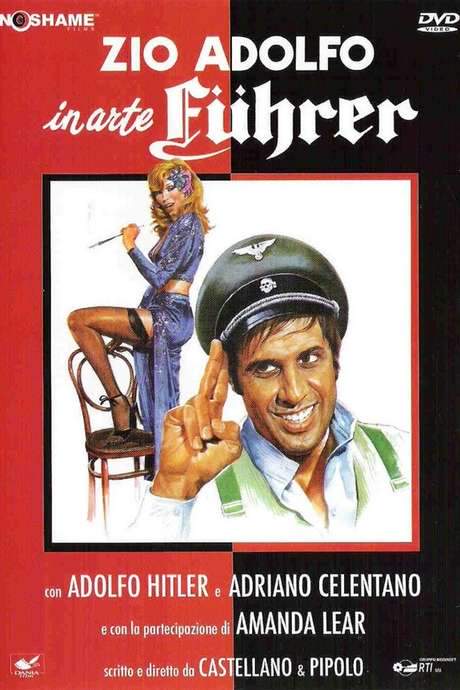
Loggerheads (1978) movie poster

Plot Summary

Loggerheads (1978) Plot Summary Explained

Release, runtime and language
1978 · 94 mins · Italian
Directed by
Franco Castellano, Pipolo
Starring
Claudio Bigagli, Amanda Lear, Adriano Celentano, Graziella Galvani, Sasha D'Arc, Ettore Martini

A comedy styled as a documentary about the rise of Adolf Hitler as well as the story of two brothers, one a magician and Nazi, the other an anarchist anti Nazi…

On this page (5)
  1. 1 What happens: full plot
  2. 2 Plot questions answered
  3. 3 Movie threads
  4. 4 Movies like Loggerheads
  5. 5 Every angle

Full plot summary · contains spoilers

What Happens in Loggerheads: Full Plot Summary

The whole story of Loggerheads (1978) explained, from the opening scene to the final frame: every key event, every twist and what it all adds up to. Read it as a quick recap before the sequel, to check a scene you missed, or to finally understand what really happened.

Last updated: February 18, 2026 at 23:46

Was this helpful?

Plot questions answered

Loggerheads Plot Explained: Your Questions Answered

The questions people ask most about Loggerheads (1978): what happens in the confusing scenes, why the characters do what they do, the twists, hidden details and what the ending means. Each answer contains spoilers.

Q1

Why did Hermann join the SS and become a Nazi?

Hermann aligned himself with the rising Nazi movement during the 1930s. As the film shows, he grew into a Nazi sympathizer and ultimately enlisted in the SS, rising to the rank of colonel. His loyalty to the regime earned him a personal friendship with Hitler, cementing his place within the dangerous political structure of the time.

Foreshadowing: Hermann's ideological trajectory was established early in Weimar Germany, where he and his twin brother Gustav were introduced as stark opposites.

  • hermann
  • ss
  • colonel hitler
  • nazi party
  • ideological brothers
Q2

What was the point of the Russian roulette game between the brothers?

The Russian roulette game was Hermann and Gustav's way of letting fate decide which ideology would prevail. After confronting each other at Gustav's hideout, Hermann challenged Gustav to the deadly game as a final arbiter of their decades-long ideological conflict. The ritual continued for over four decades, becoming a symbol of their endless struggle.

Foreshadowing: The challenge was proposed during their confrontation, where Hermann argued that fate should decide their ideological battle.

  • russian roulette
  • ideological duel
  • fate
  • brothers game
  • futility
Q3

Why did the gun never fire during their Russian roulette game?

The gun was empty the entire time. Four decades after the game began, the elderly Hermann and Gustav finally discovered that the chamber had never contained a bullet, rendering their deadly ritual completely meaningless.

Foreshadowing: The gun stubbornly failed to fire for years, hinting that something was wrong with the weapon.

  • empty gun
  • gun never fired
  • revelation
  • meaningless game
  • twist ending
Q4

Why did Gustav keep attempting to assassinate Hitler?

Gustav was an anarchist who opposed the Nazi regime from its earliest days. He secretly printed and distributed anti-Nazi propaganda, then engineered multiple assassination attempts against Hitler. Despite repeated failures, he persisted with increasingly extravagant plots, driven by his defiant stand against the regime.

Foreshadowing: Gustav's resistance activities began in the 1930s as he moved through underground networks spreading dissent.

  • gustav
  • assassination attempt
  • hitler
  • anti-nazi
  • resistance
Q5

What happened to Hans and Irma after they were separated?

Hans was drafted into the army on his wedding night and separated from Irma. Years later, after the war ended, Hans finally returned home and was reunited with Irma. However, their reunion was short-lived, the moment they embraced, they both stepped on a landmine and were killed together.

Foreshadowing: The film sets up their tragic fate by showing the brutal separation on their wedding night.

  • hans
  • irma
  • landmine
  • wedding night
  • death
  • reunited
Q6

Why did Hermann's magic tricks always kill his assistants?

Hermann was described as a mediocre illusionist whose tricks always ended with the death of his assistant. While the film presents this as dark comedy, it underscores his incompetence and adds to the film's bleak humor about violence and futility.

Foreshadowing: This pattern was established when the brothers were introduced in Weimar Germany.

  • hermann
  • magic tricks
  • illusionist
  • assistants killed
  • magician
Q7

Why is the film's ending considered bitter?

The ending is bittersweet because it combines tragic and darkly humorous elements. Hans and Irma are killed by a landmine just as they reunite after years of separation, a devastating moment. Yet this tragedy is contrasted with the revelation that the brothers' Russian roulette game was pointless since the gun was never loaded, adding a layer of dark irony to their decades-long conflict.

Foreshadowing: The film builds toward this collision of tragedy and absurdity throughout its narrative.

  • bittersweet ending
  • tragic death
  • irony
  • landmine
  • useless game
Q8

How do the twin brothers represent the film's themes?

Hermann and Gustav serve as opposing symbols of ideological extremes during the Nazi era, Hermann representing complicity with fascism, Gustav representing resistance against it. Their decades-long Russian roulette duel illustrates the futility of their conflict, especially when revealed that their deadly game was meaningless. The film uses their parallel narratives to explore how ideology consumed lives on both sides.

Foreshadowing: Their stark contrast was established from the beginning in Weimar Germany, setting the stage for their ideological duel.

  • twin brothers
  • ideology
  • fascism
  • resistance
  • symbolism
  • futility
Q9

What did Hermann do after Germany's defeat and Hitler's death?

After Germany's defeat in 1945 and Hitler's death, Hermann returned to his work as an illusionist. He tried to move beyond the war and live a normal life, but the past continued to haunt him, eventually leading to the resumption of his Russian roulette game with Gustav four decades later.

Foreshadowing: Hermann's return to illusionism was his attempt to escape the shadow of his Nazi past.

  • german defeat
  • 1945
  • hitler death
  • illusionist
  • post-war life
Q10

How does the film balance comedy with its dark subject matter?

The film presents itself as a comedy styled as a documentary about serious topics, Nazism, war, and futile violence. While the subject matter is inherently dark, the comedic presentation, including the absurd premise of the Russian roulette game and Hermann's deadly magic tricks, provides detachment. This balance creates a satirical tone that tempers the heavy emotional weight of the narrative.

Foreshadowing: The meta concept of a comedic documentary about Hitler and ideological conflict foreshadows this tonal balance.

  • dark comedy
  • satire
  • documentary style
  • tone
  • absurdist humor
Q11

Why did Hermann and Gustav continue playing Russian roulette for decades?

The brothers continued their game for over four decades, pausing and resuming it as they went through different phases of their lives. They believed fate was deciding their ideological conflict through the gun. It was only near the end of their lives that they discovered the gun had been empty the entire time, making their decades of risk entirely pointless, highlighting the film's theme of futile violence.

Foreshadowing: The gun stubbornly failing to fire over many years planted seeds of doubt about the game's reality.

  • decades game
  • continued playing
  • futile violence
  • meaningless risk
  • persistence

Movie threads

More Movies Like Loggerheads, by Mood & Story

Curated lists built around what makes Loggerheads tick: the same mood, the same kind of story or the same emotional payoff. Each list explains why these movies belong together.

Absurd Political Satire Movies like Loggerheads

Irony and dark humor meet the grim realities of history. Discover more darkly comic films that blend satire with historical events. If you liked Loggerheads, you'll find similar movies that explore ideological conflicts with a mix of grim humor and tragic outcomes.

  • darkly comic
  • satirical
  • absurd
  • tragicomic
  • ironic
  • fatalistic
  • Tone: dark, ironic, satirical
  • Pacing: steady, chronicling
Why these movies?

The story pattern: These narratives often follow characters caught in ideological conflicts, where personal dramas are set against a backdrop of absurd political realities. The journey typically reveals the futility of grand ambitions and the ironic twists of fate, culminating in endings that are both humorous and grim.

Why they belong together: Movies are grouped together because they share a unique tonal blend of dark comedy and historical/political commentary. They maintain a steady, almost fatalistic pacing and use satire to explore heavy themes without becoming overwhelmingly intense.

Movies about Sibling Rivalry like Loggerheads

Brothers divided by belief, united by a tragic destiny. Explore more films about brothers or sisters torn apart by clashing ideologies. If you enjoyed the conflict in Loggerheads, these movies feature similar deep family divisions set against dramatic historical or political events.

  • sibling rivalry
  • ideological conflict
  • tragic
  • family drama
  • war
  • separation
  • Tone: bittersweet, tragic, conflict-driven
  • Pacing: steady, character-driven
Why these movies?

The story pattern: The plot follows siblings whose lives take dramatically different paths due to opposing worldviews. Their conflict escalates over time, mirroring larger societal divisions, and often leads to a bittersweet or tragic resolution that underscores the personal cost of ideological warfare.

Why they belong together: These films are connected by their focus on the family unit as a microcosm for larger societal conflicts. They share a moderate narrative complexity, a steady pacing that allows the rift to develop, and a heavy emotional weight stemming from the futility of the conflict.

If you liked this

Movies Like Loggerheads

Similar movies to Loggerheads: the same genre, themes or kind of story. Each one comes with its own plot summary, timeline and ending explained.

Browse all movie summaries

Every angle

Loggerheads (1978) Explained: Plot, Timeline & Characters

Everything about Loggerheads in one place: what happens in the plot summary, the timeline in chronological order, the characters and meaning. What's After the Movie adds the cast, box office and post-credit scenes.

Coming soon on iOS and Android

The Plot Explained Movie Summary App

Plot summaries, endings explained and timelines on your phone. Catch up on any movie in minutes, save your favorites and never miss a twist again.

Be the first to know when we launch. Your email stays private, always.

Learn more about the app