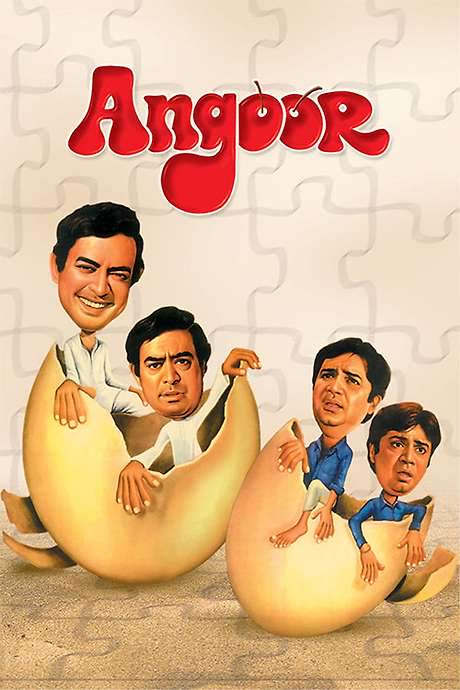
Year: 1982
Runtime: 136 mins
Language: Hindi
Director: Gulzar
Two sets of identical twins are separated after an accident in childhood. Years later their paths cross in the same city, sparking a cascade of mistaken identities, absurd situations and comedic misunderstandings. The story adapts Shakespeare’s The Comedy of Errors for a modern Indian setting.
Warning: spoilers below!
Haven’t seen Angoor yet? This summary contains major spoilers. Bookmark the page, watch the movie, and come back for the full breakdown. If you're ready, scroll on and relive the story!
Explore the full timeline and setting of Angoor (1982). Follow every major event in chronological order and see how the environment shapes the story, characters, and dramatic tension.
Last updated: February 18, 2026 at 23:19
Meet the key characters of Angoor (1982), with detailed profiles, motivations, and roles in the plot. Understand their emotional journeys and what they reveal about the film’s deeper themes.
Last updated: February 18, 2026 at 23:19
Explore the central themes of Angoor (1982), from psychological, social, and emotional dimensions to philosophical messages. Understand what the film is really saying beneath the surface.
Last updated: February 18, 2026 at 23:19
Browse frequently asked questions about Angoor (1982) focused on characters, relationships, themes, symbols, setting, and story context. This movie info FAQ gives spoiler-aware explanations for character arcs, world details, and thematic interpretation so readers can better understand what the film is really about.
Angoor is a Bollywood comedy that adapts Shakespeare's 'The Comedy of Errors' for a modern Indian setting. The story revolves around two sets of identical twins who were separated after an accident in childhood and later reunite in the same city, triggering a chain of mistaken identities, absurd situations, and comedic misunderstandings.
The movie is set in a modern Indian city, with the action primarily taking place in a crowded household where two families live. The domestic setting becomes the stage for the chaotic farce as look-alikes continually walk through the door, creating misunderstandings within the intimate family space.
Angoor is set in contemporary times, reflecting urban Indian life from the early 1980s. The film captures a specific era of Indian cinema with its fashion, vehicles, and city atmosphere, though the story's farcical nature gives it a timeless, universal quality.
The twin comedy theme centers on two pairs of identical twins separated at birth who collide in adulthood, creating a cascade of mistaken identities. The film uses look-alikes, timing, and disguises to generate humor, with family members constantly switching places and misinterpreting signals, ultimately showing how truth and humor coexist.
The family bonds theme explores how relationships hold together despite chaos. Siblings and spouses navigate crowded living spaces and conflicting loyalties as the farce unfolds. The humor arises from the clash between domestic routine and the surreal twists, while affection keeps the families connected through the madness.
The identity and deception theme revolves around the confusion created when two Ashoks and two Bahadurs appear identical. Characters constantly question who is real, leading to misunderstandings and comic investigations. The truth eventually emerges through laughter and situational reversals, with the inspector and other figures adding a light investigative layer.
Ashok Tilak is Sudha's husband, portrayed by Sanjeev Kumar. His life is turned upside down by the arrival of his identical twin. He remains central to the family's stability while contending with the comic impersonations, anchoring the film's sense of normalcy amid the chaos.
Bahadur is the husband of the other twin, played by Deven Verma. Known for his easygoing and mischievous nature, he has a fondness for bhang. His carefree attitude fuels much of the misadventure and humor, deepening the family's interactions as the doubles collide.
Sudha is married to Ashok Tilak and lives with her younger sister Tanu. When the twins arrive, Sudha handles the confusion with warmth, practicality, and family loyalty. Tanu provides a fresh, witty perspective on the escalating farce, adding another layer to the household dynamics.
Angoor is a farcical comedy driven by mistaken identities and absurd situations. The humor comes from rapid-fire confusion, characters constantly misidentifying each other, and the clash between everyday domestic life and surreal circumstances. It's light-hearted, fast-paced entertainment with no dark themes or violence.
Discover curated groups of movies connected by mood, themes, and story style. Browse collections built around emotion, atmosphere, and narrative focus to easily find films that match what you feel like watching right now.
Stories where cases of mistaken identity spiral into hilarious chaos and confusion.If you enjoyed the cascade of confusion in Angoor, you'll love these other movies built on mistaken identity. This list features hilarious films where characters' lives are turned upside down by cases of mistaken identity, leading to fast-paced farcical situations and comedic misunderstandings.
The narrative pattern centers on a single mistaken identity that rapidly multiplies into a web of confusion. Characters find themselves in increasingly absurd situations they cannot control, creating a structured chaos where every attempt to clarify things only deepens the misunderstanding. The journey is one of escalating comedy, resolved neatly when the true identities are finally revealed.
These films are grouped together because they share a core reliance on mistaken identity as the primary engine of comedy. They feature fast pacing, light emotional weight, and a focus on situational humor derived from characters' bewilderment, creating a consistently playful and amusing viewing experience.
Fast-paced, lighthearted stories where misunderstandings create wholesome, amusing chaos.Fans of Angoor's playful and innocent humor will enjoy these movies. This collection features lighthearted comedies with fast pacing and absurd situations, where a series of misunderstandings leads to delightful chaos without any heavy emotional stakes, perfect for a cheerful viewing experience.
The narrative follows a structure of escalating, interconnected errors. Seemingly minor mix-ups or coincidences compound upon each other, creating a complex but ultimately harmless web of confusion. The journey is characterized by a rapid series of amusing events that test the characters' patience but are resolved in a satisfying, happy conclusion that restores order.
These movies are grouped by their shared commitment to light, innocent comedy. They prioritize fast-paced, situational humor over deep character drama, maintaining a cheerful tone and ensuring the viewer is consistently entertained by the absurdity of the characters' predicaments.
Don't stop at just watching - explore Angoor in full detail. From the complete plot summary and scene-by-scene timeline to character breakdowns, thematic analysis, and a deep dive into the ending - every page helps you truly understand what Angoor is all about. Plus, discover what's next after the movie.
Read a complete plot summary of Angoor, including all key story points, character arcs, and turning points. This in-depth recap is ideal for understanding the narrative structure or reviewing what happened in the movie.
Track the full timeline of Angoor with every major event arranged chronologically. Perfect for decoding non-linear storytelling, flashbacks, or parallel narratives with a clear scene-by-scene breakdown.
Discover movies like Angoor that share similar genres, themes, and storytelling elements. Whether you’re drawn to the atmosphere, character arcs, or plot structure, these curated recommendations will help you explore more films you’ll love.
Angoor (1982) Plot Summary & Movie Recap
Angoor (1982) Scene-by-Scene Movie Timeline
Angoor (1982) Spoiler-Free Summary & Key Flow
Movies Like Angoor – Similar Titles You’ll Enjoy
Kangaroo (2007) Detailed Story Recap
Hungama (2003) Plot Summary & Ending Explained
Taxi No. 9211 (2006) Story Summary & Characters
Anwar (2007) Full Movie Breakdown
Otso Otso Pamela-mela Wan (2004) Movie Recap & Themes
Godfather (1991) Ending Explained & Film Insights
The Angrez (2006) Movie Recap & Themes
Bhrantibilas (1963) Film Overview & Timeline
Aankhen (1993) Story Summary & Characters
Loafer (1996) Film Overview & Timeline
Angaar (1992) Spoiler-Packed Plot Recap
Andaz Apna Apna (1994) Story Summary & Characters
Aflatoon (1997) Plot Summary & Ending Explained
Aagey Se Right (2009) Full Summary & Key Details
Amigos (2023) Full Movie Breakdown