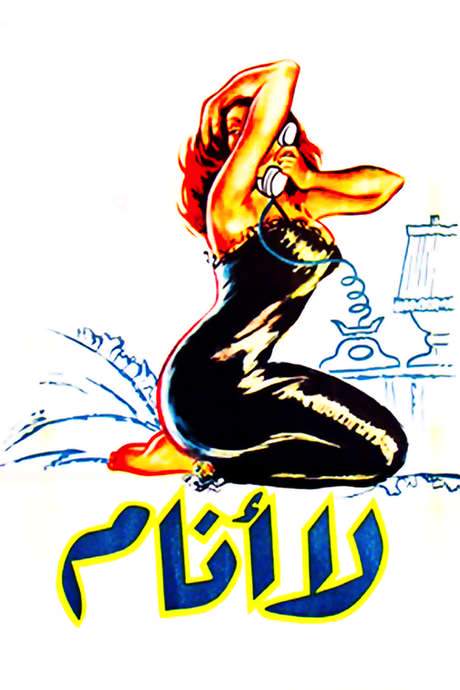
Year: 1961
Runtime: 98 mins
Language: English
Directors: Paul Wendkos, Hubert Cornfield
A self‑proclaimed healer who believes she has been chosen by God to cure the sick is taken under the wing of a slick promoter and his sharp‑tongued wife. Together they tour the rural South, where her faith and their mercenary ambitions collide, forcing her to confront the line between miracles and manipulation.
Get a spoiler-free look at Angel Baby (1961) with a clear plot overview that covers the setting, main characters, and story premise—without revealing key twists or the ending. Perfect for deciding if this film is your next watch.
In the dust‑kissed heart of the rural South, a fervent belief in miracles collides with the hard‑edge hustle of show‑business. Angel Baby is a young woman who, convinced that God has singled her out to heal the sick, steps onto the open‑air revivals that dot small towns like traveling temples. Her raw, earnest faith is both a beacon and a bargaining chip, drawing the attention of a charismatic promoter who sees in her a promise of profit as much as a promise of salvation.
Enter Sam Wilcox, the slick‑talking businessman whose polished smile masks a keen eye for marketable miracles. He brings Sarah Strand—his sharp‑tongued, fiercely ambitious wife—into the partnership, forming a trio that steers Angel Baby’s ministry on a relentless tour of tents, makeshift stages, and eager crowds. The three navigate a world where hymns echo alongside the clink of coin, and where every sermon is a performance measured by the size of the audience and the weight of the donation box.
The film moves with a lyrical, sun‑baked mood, letting the Southern landscape breathe life into the story: weather‑worn churches, fragrant magnolia trees, and the low hum of a community caught between hope and skepticism. Angel Baby’s voice, newly found and trembling with conviction, rises above the chorus of believers and doubters alike, while Sam and Sarah push the boundaries of what faith can bear when it is packaged as spectacle. Their uneasy alliance creates a tension that feels both intimate and universal—a delicate dance between genuine devotion and the allure of fame.
Against this backdrop of revival tents and restless crowds, the narrative asks quiet yet powerful questions: How far will one go when convinced they carry a divine mandate? Where does the line blur between miracle and manipulation? The tone remains reverent and probing, inviting viewers to linger on the flicker of belief that ignites in the South’s cracked sidewalks and open skies.
Last Updated: December 05, 2025 at 09:13
Discover curated groups of movies connected by mood, themes, and story style. Browse collections built around emotion, atmosphere, and narrative focus to easily find films that match what you feel like watching right now.
Stories where sincere belief is tested by temptation and exploitation.For viewers who appreciated the moral complexity of Angel Baby, this section features movies like it that dissect religious hypocrisy and spiritual crises. These similar dramas focus on characters whose genuine faith is co-opted or challenged by worldly ambitions, leading to tense, emotionally heavy conclusions.
These stories typically follow a figure of faith—a healer, preacher, or true believer—whose gift or conviction becomes a commodity. The plot escalates as the tension between authentic belief and the pressure to perform for an audience, often driven by a manipulative partner or promoter, builds toward a breaking point that forces a stark moral choice.
Movies are grouped here because they share a core theme of spiritual manipulation and the ensuing identity crisis. They create a tense, somber mood by focusing on the internal and external conflicts that arise when religion becomes a public spectacle, leading to profoundly personal revelations.
A steady, oppressive build-up where sincerity is crushed by manipulation.If you liked the steady, oppressive build-up and intense interpersonal dynamics of Angel Baby, explore these similar movies. They feature morally complex characters under relentless pressure, where the tension arises from exploitation and psychological manipulation rather than physical action.
The narrative pattern involves a vulnerable protagonist being drawn into a partnership or situation that initially seems beneficial but is fundamentally exploitative. The tension mounts steadily as the protagonist's genuine nature conflicts with the demands of their manipulators, creating a claustrophobic atmosphere that culminates in a dramatic, often public, confrontation and collapse.
These films are united by their specific emotional mix: a steady, deliberate pacing that creates a sense of inevitable doom, combined with high intensity derived from psychological and moral tension. The viewing experience is defined by a feeling of watching a train wreck in slow motion, where the tragedy is personal and revelatory.
Don't stop at just watching — explore Angel Baby in full detail. From the complete plot summary and scene-by-scene timeline to character breakdowns, thematic analysis, and a deep dive into the ending — every page helps you truly understand what Angel Baby is all about. Plus, discover what's next after the movie.
Read a complete plot summary of Angel Baby, including all key story points, character arcs, and turning points. This in-depth recap is ideal for understanding the narrative structure or reviewing what happened in the movie.
Track the full timeline of Angel Baby with every major event arranged chronologically. Perfect for decoding non-linear storytelling, flashbacks, or parallel narratives with a clear scene-by-scene breakdown.
Discover the characters, locations, and core themes that shape Angel Baby. Get insights into symbolic elements, setting significance, and deeper narrative meaning — ideal for thematic analysis and movie breakdowns.
Visit What's After the Movie to explore more about Angel Baby: box office results, cast and crew info, production details, post-credit scenes, and external links — all in one place for movie fans and researchers.