Plot Explained Spoilers guaranteed!
Plot Explained

Browse by genre

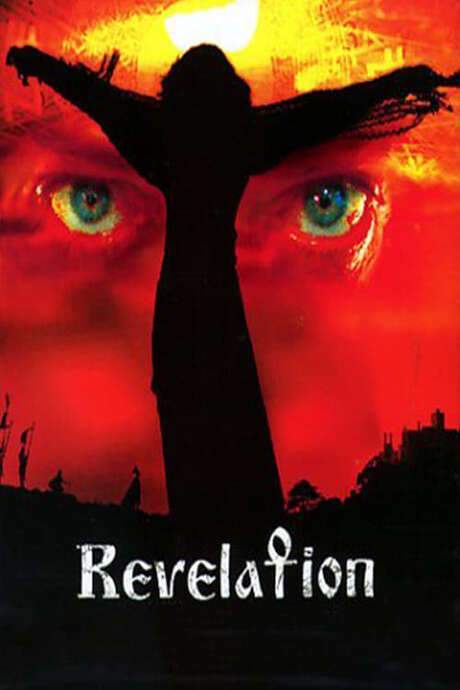
Revelation (2001) movie poster

Plot Summary

Revelation (2001) Plot Summary Explained

Release, runtime and language
2001 · 111 mins · English
JustWatch #14,442 8
Directed by
Stuart Urban
Starring
James D'Arcy, Terence Stamp, Udo Kier, Ron Moody, Liam Cunningham, Oliver Ford Davies

Since AD 50 a sacred relic called the Loculus has fueled a hidden, bloody war. After disappearing for centuries, the artifact resurfaces today, carrying a secret that could doom humanity. Magnus Martel must infiltrate a murderous secret society, uncover the truth about the ancient treasure, and stop the looming catastrophe.

On this page (6)
  1. 1 Where to watch
  2. 2 What happens: full plot
  3. 3 Plot questions answered
  4. 4 Movie threads
  5. 5 Movies like Revelation
  6. 6 Every angle

Where to watch

Where to Watch Revelation (2001)

Where can you watch Revelation? Stream, rent or buy it in the US, including on Shout! Factory TV and Tubi TV: current JustWatch availability with up-to-date prices.

Streaming availability powered by JustWatch

Full plot summary · contains spoilers

What Happens in Revelation: Full Plot Summary

The whole story of Revelation (2001) explained, from the opening scene to the final frame: every key event, every twist and what it all adds up to. Read it as a quick recap before the sequel, to check a scene you missed, or to finally understand what really happened.

Two ancient flashbacks trace the mysterious Loculus: a relic is created in 50 AD, then hidden by Jews fleeing a Crusader mob in medieval Rennes-le-Château. In present-day Rennes-le-Château, Magnus Martel, Terence Stamp, an academic under his watch, is seen with the relic, quietly weighing where to bury it so its immense power cannot be weaponized. The tension tightens as Magnus’s son, Jake Martel, James D'Arcy, a brilliant cryptographer, is released from Wormwood Scrubs Prison and drawn into his father’s secret project. Magnus reveals a chilling truth: the Loculus is tied to the Knights Templar and their shadowy successor, the Order, and the calls from this organization threaten him to speed up the research. Yet Magnus also understands the relic’s potential for both profound good and terrible evil, and he hides it to keep it out of dangerous hands.

When Jake cracks a key code on the Loculus, the tablet unveils the word “palingenesis,” and chaos erupts. As the Order closes in, Jake hides, and Magnus is slain in a brutal assault that leaves him flayed. Frantically, Jake escapes with Mira, an occultist guiding the research, and seeks help from Father Ray Connolly, Liam Cunningham, who becomes a steady backup in their perilous journey.

The trio’s pursuit of answers leads them to a Cambridge library, where they uncover Isaac Newton’s entanglement with the Loculus and its possible role in a hidden eschatological plan. They travel to Rennes-le-Château and its Tour Magdala, tracing a lineage that points to Patmos, the biblical island linked to John’s Revelation. In London, Father Connolly stays behind as a safety net while Mira and Jake press on to Patmos, where the Loculus is secreted beneath a crypt in a Greek Orthodox church—an ancient temple once dedicated to Mary Magdalene, now entwined with Aphrodite in legend.

Within the crypt, the Loculus’s hermaphrodite symbol is used to reveal a hexagram carved into the floor. Jake and Mira shed their clothes and join in a ritual within the symbol, hoping to unlock its door. They share a vision of themselves as Christ and Mary Magdalene, then flee as a pursuer approaches.

The pursuit reveals its true antagonist: Father Connolly has followed them to Patmos, but the real danger lies with the Order and its Grand Master. The trio discovers that the Loculus’s meaning rests in the four nails of the crucifixion, which hold Christ’s preserved DNA—the key the Templars and the Order have pursued to resurrect Jesus. Newton’s earlier attempt failed, but contemporary science gives new possibilities. The group wrestles over what to do with this power: Jake argues for destroying the Loculus to keep it from the Order; Ray advocates delivering it to a trusted African cardinal at the Vatican. Ray’s plan ultimately prevails, but not without peril: in Rome, the Order’s Grand Master seizes the relic, tortures Ray, and orders the slaughter of Mira and Jake.

In a desperate counterstrike, Mira and Jake flood the chamber with sand to kill the intruding troops, and Connolly’s emergency postcard summons the monks to alert them to the danger. Mira escapes, but Jake is buried beneath the sands. Meanwhile, the Grand Master has achieved a chilling victory on a different front: he has cloned Christ and arranged for the Messiah to be proclaimed by the Vatican, bending this figure to his own brutal rule.

The film closes on a stark revelation: Mira, a Magdalene’s descendant, has borne a child by a Martel, ensuring a lineage that must be kept secret from the Order. The child becomes a symbol of resistance against the Grand Master’s puppet Christ, preserving hope for a future that refuses to bow to a world ruled by coercive power.

Characters to watch for:

- Jake Martel, James D'Arcy, a keen cryptographer drawn into the Loculus mystery.

- Magnus Martel, Terence Stamp, his father, whose split between power and prudence drives the early conflict.

- the Grand Master, Udo Kier, the enigmatic force behind the Order’s long shadow.

- Sir Isaac Newton, Ron Moody, whose historical ties to the Loculus inform the modern search.

- Father Ray Connolly, Liam Cunningham, the priest who becomes an ally and moral counterweight.

- Professor Casaubon, Oliver Ford Davies, a scholar tied to the relic’s deeper enigmas.

- Harriet Martel, Celia Imrie, a figure connected to the family’s legacy.

- Librarian, Derek Jacobi, keeper of potentially crucial records.

- Mira, Natasha Wightman, the occultist who partners with Jake.

- Other named cast members include Manuel Cauchi, Pip Torrens, Vernon Dobtcheff, Joseph Long, Mark Heenehan, Chris Rogers, Earl Cameron, Charlotte Weston, Sidney Kean, Diran Meghreblian, Jean-Marc Perret, and Heathcote Williams, who populate the world around the Loculus’s dangerous orbit.

This tale blends ancient myth, cryptic puzzles, and modern ambition to pose a timeless question: when power truly speaks, who decides what is right to do with it?
Last updated: October 09, 2025 at 15:29

Was this helpful?

Plot questions answered

Revelation Plot Explained: Your Questions Answered

The questions people ask most about Revelation (2001): what happens in the confusing scenes, why the characters do what they do, the twists, hidden details and what the ending means. Each answer contains spoilers.

Q1

What is the Loculus and why is it so important?

The Loculus is an ancient relic created in 50 AD containing preserved DNA from Jesus Christ's crucifixion. The four nails that held Christ to the cross were woven into the artifact, preserving his genetic material. This makes it the key to resurrection through cloning, the power of palingenesis, or rebirth. The Knights Templar discovered this secret, and their successor organization, the Order, has hunted the Loculus for centuries to control this divine genetic power.

Foreshadowing: The relic's creation in 50 AD establishes its role as a master key for life and death that transcends eras.

  • loculus
  • dna
  • jesus
  • resurrection
  • cloning
  • palingenesis
  • templars
Q2

Why does the Grand Master clone Jesus Christ?

The Grand Master plans to use the Loculus to create a clone of Jesus, then control and manipulate him as a puppet Messiah. By having the Vatican proclaim this clone as the returned Christ, the Order can bend religious authority to its will and rule the world through coercive religious power. The cloned Christ becomes a tool for the Grand Master to seize ultimate political and spiritual control.

Foreshadowing: Newton's earlier failed attempt at resurrection foreshadows the Order's modern success with cloning technology.

  • grand master
  • clone
  • jesus
  • messiah
  • vatican
  • order
  • manipulation
Q3

How does Mira escape and what happens to Jake in Rome?

When the Order's troops storm their chamber in Rome, Mira and Jake flood the room with sand, killing the intruding soldiers. Father Connolly had预先 sent an emergency postcard warning the monks, allowing them to intervene. Mira escapes through the chaos, but Jake is buried beneath the falling sands and dies. His sacrifice allows Mira to survive and carry forward the resistance.

Foreshadowing: The escalating danger throughout their pursuit builds to this fatal confrontation.

  • mira
  • jake
  • sand
  • flood
  • escape
  • death
  • rome
Q4

What is the significance of the child born at the end?

Mira, revealed as a descendant of Mary Magdalene, has borne a child by Jake Martel. This child represents the continuation of the sacred bloodline, the union of the Martel family with Magdalene's lineage. The Order has pursued this lineage for centuries to control the messianic blood. The child becomes a symbol of resistance against the Grand Master's puppet Christ, preserving hope for a future free from coercive power.

Foreshadowing: The ritual in the Patmos crypt, where Jake and Mira see themselves as Christ and Mary Magdalene, foreshadows their physical union and the child's conception.

  • mira
  • child
  • martel
  • magdalene
  • bloodline
  • resistance
  • lineage
Q5

Why does Father Connolly want to give the Loculus to the Vatican?

Father Connolly believes the Loculus is too dangerous to destroy or keep hidden. He argues that delivering it to a trusted African cardinal at the Vatican ensures it remains under responsible religious authority rather than falling into the Order's hands. His plan reflects a theological position that sacred power should be managed by the Church, not destroyed or weaponized. However, the Order intercepts them in Rome, seizing the relic and torturing Connolly.

Foreshadowing: Connolly's background as a priest establishes his trust in institutional religious authority.

  • connolly
  • vatican
  • loculus
  • cardinal
  • church
  • authority
Q6

Why does Jake want to destroy the Loculus?

Jake wants to destroy the Loculus to prevent the Order from ever using it to resurrect Jesus and control the world through a puppet Christ. Having witnessed his father Magnus murdered by the Order and understanding the relic's immense destructive potential, Jake believes elimination is the only safe option. His father's death and the Order's relentless pursuit reinforce his conviction that the power is too dangerous to exist.

Foreshadowing: Jake's Cryptographer background and his father's murder drive his determination to neutralize the threat.

  • jake
  • magnus
  • destroy
  • loculus
  • order
  • death
Q7

What is the connection between the Order and the Knights Templar?

The Order is the shadowy successor organization to the Knights Templar, the medieval crusader order that was destroyed in the 14th century. The Templars discovered the Loculus's secret, that Jesus's DNA was preserved through the crucifixion nails, and the Order has continued their quest to obtain this power for centuries. The Templars' persecution and the hidden treasures of Rennes-le-Château are all tied to this ancient search for resurrection through genetics.

Foreshadowing: Magnus reveals the Templar connection when he explains the Order's true origins to Jake.

  • order
  • templars
  • knights
  • secret society
  • loculus
  • history
Q8

How was Isaac Newton connected to the Loculus?

Isaac Newton was one of many seekers who attempted to unlock the Loculus's secrets throughout history. The Cambridge library archives reveal Newton's entanglement with the relic and its hidden eschatological plan. However, Newton's attempts at resurrection failed, contemporary science gives the Order new possibilities that weren't available in Newton's time, ultimately enabling their successful cloning of Christ.

Foreshadowing: Newton's historical ties to the Loculus explain how the mystery evolved through centuries of secret research.

  • newton
  • cambridge
  • library
  • research
  • eschatology
Q9

Why does Magnus hide the Loculus instead of destroying it?

Magnus understands the Loculus represents profound potential for both great good and terrible evil. While he recognizes the danger of the Order obtaining it, he also believes the knowledge has value for humanity. His compromise is to hide the Loculus rather than destroy it, keeping it away from dangerous hands while preserving the possibility that future generations might use it responsibly. This split between power and prudence defines his character's tragic conflict.

Foreshadowing: Magnus's decision reflects the film's central moral tension about who decides how to use such power.

  • magnus
  • hide
  • loculus
  • power
  • evil
  • research
Q10

What happens in the Patmos crypt when Jake and Mira enter the hexagram?

In the crypt beneath the Greek Orthodox church, the Loculus's hermaphrodite symbol reflects light to reveal a hexagram carved into the floor. Jake and Mira disrobe and enter the symbol together, performing a ritual that unlocks a vision. They see themselves as Christ and Mary Magdalene, a revelation connecting their own lineage to the sacred story. This moment confirms their bloodline's significance and foreshadows their union and the child's conception.

Foreshadowing: The hermaphrodite symbol's design, created in 50 AD, was specifically crafted to respond to this ritual.

  • patmos
  • crypt
  • hexagram
  • ritual
  • vision
  • magdalene
  • christ
Q11

What do the four nails on the Loculus represent?

The four nails are the actual fasteners from Jesus Christ's crucifixion, preserved within the Loculus. These nails contain Christ's DNA, the genetic material that the Templars and Order have pursued for centuries. The revelation transforms the relic from a symbolic artifact into a literal key for resurrection through cloning. This scientific interpretation of Christian mythology drives the entire conflict.

Foreshadowing: The Templars' esoteric knowledge specifically pointed to the nails as the source of preserved genetic material.

  • nails
  • crucifixion
  • dna
  • jesus
  • resurrection
  • templars

Movie threads

More Movies Like Revelation, by Mood & Story

Curated lists built around what makes Revelation tick: the same mood, the same kind of story or the same emotional payoff. Each list explains why these movies belong together.

Apocalyptic Conspiracy Thrillers like Revelation

Stories where hidden history and secret societies hold the key to preventing global catastrophe. If you enjoyed the high-stakes, esoteric mystery of Revelation, you'll find more movies like it here. These films feature tense races against time, ancient secrets, and shadowy organizations, all centered on a world-ending threat that only a few can prevent.

  • conspiracy
  • apocalyptic
  • suspenseful
  • paranoid
  • occult
  • anxious
  • Tone: tense, paranoid, dark
  • Pacing: steady, urgent
Why these movies?

The story pattern: Narratives typically follow an ordinary or expert individual thrust into a dangerous world of ancient secrets. The plot is driven by a series of escalating discoveries and reveals, often involving codes, relics, and historical figures, building towards a final confrontation with immense stakes.

Why they belong together: Movies in this thread share a core structure of a hidden truth with apocalyptic consequences, a tense and paranoid tone, and a steady buildup of dread and revelation. They appeal to viewers who enjoy complex puzzles, historical mysteries, and high-pressure suspense.

Movies with Heavy Moral Choices like Revelation

Journeys where victory comes at a profound personal cost in a dark, unforgiving setting. For viewers who appreciated the heavy emotional weight and bittersweet ending of Revelation, this thread collects similar films. These stories explore deep moral ambiguity and profound sacrifice, set against dark, tense backdrops where happy endings are hard-won or non-existent.

  • dark
  • moral ambiguity
  • sacrifice
  • heavy
  • bleak
  • anxious
  • Tone: dark, tense, heavy
  • Pacing: steady, deliberate
Why these movies?

The story pattern: The narrative arc focuses on a character grappling with a monumental decision that challenges their core ethics. The journey is emotionally taxing, often involving loss and trauma, and culminates in an ending where the cost of victory is deeply felt, leaving a lasting impact.

Why they belong together: These films are grouped by their exploration of moral ambiguity under extreme pressure, their heavy emotional weight, and their tendency towards bittersweet or bleak conclusions. They deliver a powerful, thought-provoking experience centered on the human cost of conflict.

If you liked this

Movies Like Revelation

Similar movies to Revelation: the same genre, themes or kind of story. Each one comes with its own plot summary, timeline and ending explained.

Browse all movie summaries

Every angle

Revelation (2001) Explained: Plot, Timeline & Characters

Everything about Revelation in one place: what happens in the plot summary, the timeline in chronological order, the characters and meaning and a spoiler-free summary. What's After the Movie adds the cast, box office and post-credit scenes.

Coming soon on iOS and Android

The Plot Explained Movie Summary App

Plot summaries, endings explained and timelines on your phone. Catch up on any movie in minutes, save your favorites and never miss a twist again.

Be the first to know when we launch. Your email stays private, always.

Learn more about the app