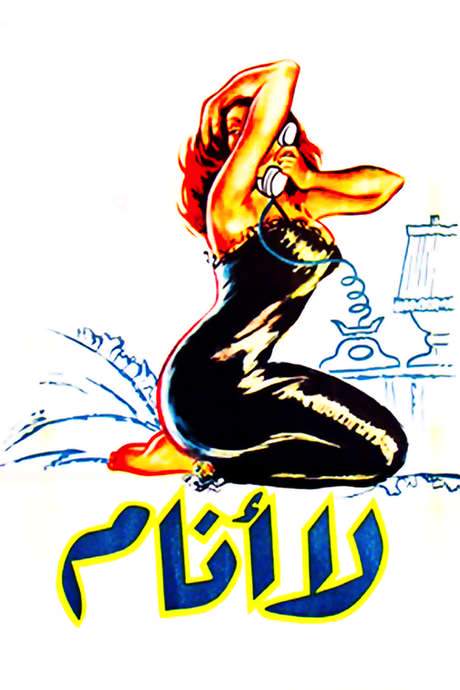
Nadia Lutfy, Faten Hamama, is a young woman born into an aristocratic, upper-class family. After her parents divorce, her father Ahmed Lutfy Yehia Chahine wins custody and raises her. Over the years, their bond grows unusually strong, a closeness that sometimes feels more intimate than what is typical in a father–daughter relationship. This complicated dynamic is described in the story as an Electra complex, a troubling attraction Nadia experiences toward her father while seeking his affection and attention.
At the age of 18, Nadia enters into a premature relationship with Mustafah Emad Hamdy, a writer and journalist who is considerably older than she is. Around the same time, her father meets and falls in love with another woman, Safia Mariam Fakhr Eddine, and decides to marry her. Nadia watches this new union closely, and the growing closeness between her father and Safia stirs a mix of jealousy and resentment in her. She feels pushed aside as Safia receives the father’s attention and kindness, which intensifies her sense of abandonment and fuels her scheming mind.
Determined to ruin the budding relationship between her father and Safia, Nadia blames Safia for infidelity and accuses her of having an affair with Aziz Omar Sharif, Nadia’s young uncle. This accusation sets off a chain of manipulations intended to drive a wedge between Safia and her husband. To bolster her plan, Nadia enlists her friend Kawthar Hind Rostom, a glamorous and shameless woman, to seduce her father and sway him away from Safia. The conspiracy appears to work: Safia and her husband divorce, and Nadia’s father decides to marry Kawthar.
Yet Kawthar’s motives prove more calculated than Nadia realizes. Enticed by the wealth that comes with Nadia’s father, Kawthar agrees to the marriage, but she is revealed to be pursuing her own interests rather than a true, loving partnership. Nadia soon discovers that Kawthar is involved with another young man, Samir Rushdy Abaza, and realizes that Kawthar is using the marriage for financial gain rather than genuine affection. This revelation further unsettles Nadia, who already feels displaced and isolated within her father’s expanding circle.
Meanwhile, Mustafah, who had secretly admired Safia, proposes to her after the divorce from Nadia’s father. Nadia struggles with how much truth to reveal to her father, fearing that any honesty might break him completely. When her father learns of Samir’s presence and influence, Nadia chooses to protect him by lying, telling him that Samir is actually her fiancé. Kawthar escalates the manipulation by insinuating that Nadia and Samir are planning to wed, which Nadia feels compelled to accept under the pressure of her stepmother’s deceit. The truth she finally reveals comes at the worst possible moment: on the night of her own wedding, she shocks her father and the wedding party by confessing the entire web of lies and betrayals she’s been part of, leaving her father traumatized by the painful realities uncovered.
The film builds toward a devastating finale. As the wedding preparations continue, a single candle falls onto Nadia’s wedding dress, igniting a fire that inflicts severe burns. She is rushed to the hospital, where she remains disfigured by the injuries. The ending underscores the emotional cost of Nadia’s relentless vendetta and the way obsession, envy, and manipulation ripple through a family, leaving scars that go far beyond the physical. The story, with its sharply drawn character dynamics and melodramatic turns, examines how desire for control and fear of loss can drive a person to ruin the lives of those they claim to love.