Plot Explained Spoilers guaranteed!
Plot Explained

Browse by genre

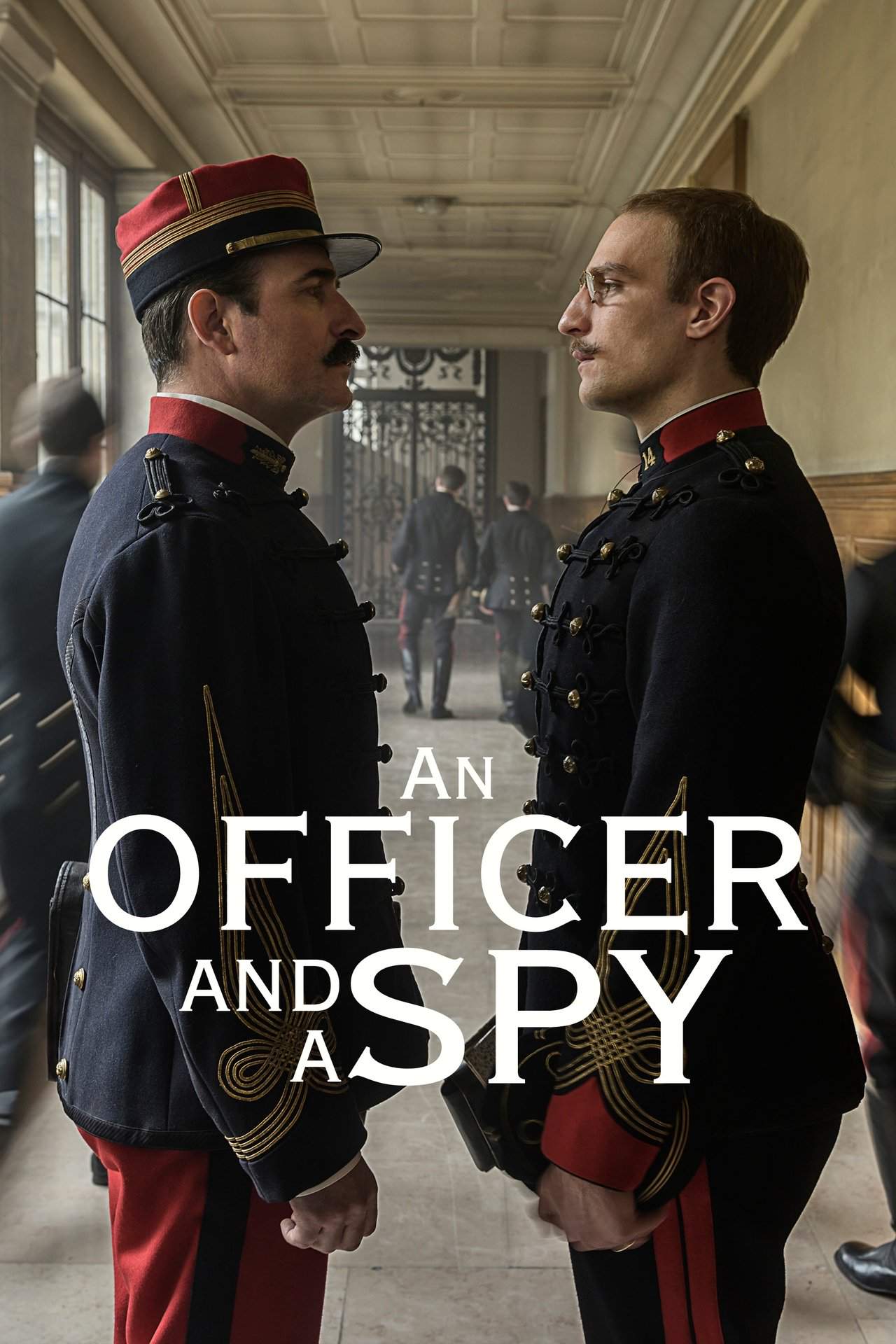
An Officer and a Spy (2025) movie poster

Timeline

An Officer and a Spy (2025) Timeline Explained – Every Event in Order

Release, runtime and language
2025 · 2 h 12 m
Echo score 67
Directed by
Roman Polanski
Starring
Damien Bonnard, Emmanuelle Seigner, Louis Garrel, Vincent Perez, Jean Dujardin, Hervé Pierre

On January 5, 1895, Captain Alfred Dreyfus, a promising young officer in the French Army, is stripped of rank after being accused of spying for Germany and sentenced to life on the remote Devil’s Island in the Atlantic off French Guiana. The disgrace is observed by fellow officer Georges Picquart, who is elevated to head the army’s counter‑intelligence service, placing him at the center of the unfolding scandal.

On this page (4)
  1. 1 Events in order (11)
  2. 2 Timeline questions answered
  3. 3 Movie threads
  4. 4 Every angle

11 events in order · contains spoilers

An Officer and a Spy Timeline: Events in Chronological Order

Every key event of An Officer and a Spy (2025) in order, scene by scene, with when and where it takes place. Use it to untangle flashbacks, time jumps and parallel storylines, to refresh your memory before the sequel or to find the exact scene you are thinking of.

  1. Dreyfus Is Accused of Treason

    In 1894, Captain Alfred Dreyfus, a Jewish officer in the French army, is found guilty of passing military secrets to Germany. He is condemned and exiled to Devil's Island, sparking controversy due to the bias against his Jewish background. The trial and conviction become a symbol of injustice and anti-Semitism in France.

    When
    1894
    Where
    France
  2. Picquart Begins Investigation

    A year later, Georges Picquart, a former teacher of Dreyfus and now head of the secret service, notices irregularities in Dreyfus' case. Despite alleged anti-Semitic sentiments, Picquart suspects the trial was biased and starts to investigate the authenticity of the evidence.

    When
    1895
    Where
    French Army
  3. Discovery of True Spy

    Picquart uncovers that the document used to convict Dreyfus, known as the bordereau, was not written by him but by Major Ferdinand Walsin Esterhazy. This discovery suggests that Esterhazy is the real spy and that Dreyfus was wrongfully accused.

    When
    1895
    Where
    French Army Headquarters
  4. Picquart Faces Opposition

    Attempting to reopen Dreyfus' case and expose Esterhazy, Picquart encounters resistance from his superiors who fear scandal and the potential revelation of army corruption. Picquart is then relieved of his duties and sent away on a distant mission.

    When
    1896
    Where
    French Army
  5. Picquart Reconnects and Organizes Support

    Despite being removed, Picquart returns secretly and informs lawyer Louis Leblois about the miscarriage of justice. Together, they establish a committee involving politicians and intellectuals to seek Dreyfus' rehabilitation, gaining momentum with public support.

    When
    Late 1890s
    Where
    Paris
  6. Zola Publishes "J'accuse"

    Writer Émile Zola publishes the famous open letter "J'accuse" in the newspaper L'Aurore, vehemently criticizing the army's cover-up and exposing the flaws in Dreyfus' trial. Zola's act sparks a nationwide debate on justice and anti-Semitism.

    When
    1898
    Where
    Paris
  7. Zola's Trial and Sentence

    Following the publication, Zola is tried for defamation and sentenced to a year in prison after false testimonies are revealed. The country remains divided, with many supporting and opposing Dreyfus' innocence, fueling public unrest.

    When
    1898
    Where
    Paris
  8. Dreyfus Re-Trial and Imprisonment

    Dreyfus is again convicted in a retrial held in Rennes; the proceedings are marred by violence, and his sentence is somewhat lightened due to mitigating circumstances. Soon after, he is pardoned by the government for his wrongful imprisonment.

    When
    1899
    Where
    Rennes
  9. Dreyfus's Forced Acceptance

    Exhausted and discouraged, Dreyfus accepts the pardon, though he wishes to clear his name completely. Picquart, still committed, fights for full exoneration, but Dreyfus withdraws from further fights, feeling defeated.

    When
    Around 1899
    Where
    French Army
  10. Full Exoneration and Reintegration

    Seven years later, new evidence leads to Dreyfus's full acquittal, and he is reinstated into the army. The case becomes a symbol of justice victory, although the scars of the miscarriage remain.

    When
    1906
    Where
    France
  11. Picquart as Minister of War

    In 1907, Picquart is appointed Minister of War, recognizing his role in exposing the injustice. Dreyfus approaches Picquart seeking acknowledgment for his lost rank, but Picquart cannot fulfill this request due to changed political circumstances, leading to their eventual parting.

    When
    1907
    Where
    France

Last updated: August 19, 2025 at 05:15

Was this helpful?

Timeline questions answered

An Officer and a Spy Timeline Explained: Your Questions Answered

When does it happen, and why in that order? The questions people ask about the chronology of An Officer and a Spy (2025): time jumps, flashbacks, cause and effect between scenes and the correct order of events, each answered with spoilers.

Q1

Why was Alfred Dreyfus convicted of treason?

Dreyfus was convicted in 1894 based on a document called the bordereau, which appeared to be a list of French military secrets being passed to Germany. The handwriting was falsely matched to Dreyfus, and the trial was rushed and heavily influenced by anti-Semitic bias against him as a Jewish officer. The real evidence was never thoroughly examined, and the court ignored many inconsistencies in the prosecution's case.

  • dreyfus conviction
  • bordereau
  • treason charges
  • anti-semitism
  • french army
Q2

Who was the real spy in the Dreyfus Affair?

The real spy was Major Ferdinand Walsin Esterhazy, a French army officer who had significant financial debts and was secretly passing military documents to Germany. Picquart discovered that the bordereau used to convict Dreyfus was actually written by Esterhazy, not Dreyfus. Esterhazy escaped prosecution when the military hierarchy chose to protect him rather than admit their mistake.

Foreshadowing: Picquart noticed inconsistencies in the bordereau early in his investigation that did not match Dreyfus's known handwriting patterns.

  • esterhazy
  • real spy
  • major esterhazy
  • bordereau author
  • true culprit
Q3

What was the bordereau and why was it important?

The bordereau was a handwritten document containing a list of French military secrets that served as the primary evidence against Dreyfus. It was supposedly the proof that he was passing information to Germany. However, Picquart later determined the handwriting did not match Dreyfus's and was actually that of Major Esterhazy. The document's false attribution was the cornerstone of the wrongful conviction.

  • bordereau
  • evidence document
  • handwriting analysis
  • military secrets
  • Dreyfus evidence
Q4

Why did Georges Picquart fight to clear Dreyfus despite his alleged anti-Semitic views?

Picquart's investigation revealed genuine inconsistencies and flaws in the case that pointed to Dreyfus's innocence, particularly after examining the bordereau closely. Though he reportedly held anti-Semitic views, Picquart was a methodical investigator who valued military integrity and could not ignore that the wrong man had been convicted. His sense of justice and duty to truth ultimately override his personal prejudices.

  • picquart motivation
  • justice
  • military integrity
  • investigation
  • truth
Q5

What was "J'accuse" and what impact did it have?

"J'accuse" was an open letter published by writer Émile Zola in the newspaper L'Aurore in 1898, directly addressing the President of France. The letter accused the military and government officials of knowingly covering up the wrongful conviction of Dreyfus and of anti-Semitic persecution. Its publication sparked a national debate about justice and anti-Semitism, significantly raising public awareness and putting pressure on the government to reconsider the case.

  • jaccuse
  • emile zola
  • laurore
  • open letter
  • public debate
Q6

Why was Émile Zola put on trial?

Zola was charged with defamation after publishing "J'accuse," in which he directly accused French military officials and judges of covering up Dreyfus's wrongful conviction. The government and military viewed the letter as an attack on the honor of the army. Zola was eventually convicted and sentenced to one year in prison, though he fled to England to avoid serving the sentence. During his trial, evidence supporting Dreyfus's innocence was revealed, strengthening the case for reversal.

  • zola trial
  • defamation
  • jaccuse consequences
  • imprisonment
  • free speech
Q7

Why did Dreyfus accept the pardon despite not being fully exonerated?

By 1899, Dreyfus had already spent five years on Devil's Island and years more in captivity. He was exhausted, discouraged, and wanted to reunite with his family. The government offered a pardon as a political compromise rather than admitting full wrongdoing. Though he wanted complete vindication, Dreyfus accepted the pardon to regain his freedom, while his supporters continued fighting for formal exoneration.

  • dreyfus pardon
  • compromise
  • exoneration
  • family
  • acceptance
Q8

What happened to Picquart after he exposed the truth?

Picquart was removed from his position as head of the secret service and sent away on distant assignments to silence him. However, he continued working behind the scenes with lawyer Louis Leblois to gather support for Dreyfus. Eventually, when the full truth emerged and Henry's perjury was exposed, Picquart was acquitted and later appointed Minister of War in 1907, recognizing his role in revealing the injustice.

  • picquart career
  • minister of war
  • redemption
  • political career
  • consequences
Q9

Why did the French military cover up for the real spy?

The military hierarchy initially refused to admit Dreyfus was innocent because doing so would expose widespread corruption and anti-Semitism within the institution. Admitting the error would also bring shame to the army and threaten the careers of officials who had participated in the original trial. The leadership preferred to protect Esterhazy and maintain the false narrative rather than acknowledge institutional failure.

  • military cover-up
  • corruption
  • institutional protection
  • esterhazy protection
  • army scandal
Q10

How was Dreyfus finally fully exonerated?

Dreyfus was fully exonerated in 1906, seven years after the initial pardon. New evidence continued to surface, and the accumulating proof of Esterhazy's guilt combined with public pressure eventually led to a complete reversal. The court formally acquitted him, and he was reinstated into the French army with his rank restored, though the legal battle had taken over a decade.

  • full exoneration
  • 1906
  • reinstatement
  • army rank
  • final verdict
Q11

Why did Dreyfus and Picquart part ways at the end of the story?

After both men were ultimately vindicated, Dreyfus approached Picquart (now Minister of War) seeking restoration of his full military rank and official acknowledgment of his suffering. However, by 1907, political circumstances had shifted, and Picquart was unable to fulfill this request. Despite mutual respect for what each had endured, their divergent paths and the inability to fully restore Dreyfus's honor led to their final separation.

  • relationship ending
  • picquart minister
  • dreyfus request
  • parting
  • mutual respect
Q12

What role did anti-Semitism play in Dreyfus's wrongful conviction?

Anti-Semitism was a central factor in Dreyfus's conviction. His Jewish background made him an easy target for those seeking a scapegoat, and the trial was heavily influenced by prejudice rather than solid evidence. Many officials and much of the public were quicker to believe a Jewish officer could be guilty of treason, and the bias affected everything from the rushed trial to the resistance against later revelations of his innocence.

  • anti-semitism
  • prejudice
  • jewish officer
  • scapegoat
  • french society

Movie threads

More Movies Like An Officer and a Spy, by Mood & Story

Curated lists built around what makes An Officer and a Spy tick: the same mood, the same kind of story or the same emotional payoff. Each list explains why these movies belong together.

Historical Conspiracy Thrillers Like An Officer and a Spy

A single determined insider uncovers a conspiracy that powerful forces want buried. If you enjoyed the methodical investigation and high-stakes political tension of 'An Officer and a Spy,' you'll find similar gripping stories here. This thread features movies based on true historical scandals, wrongful convictions, and whistleblowers fighting powerful, corrupt systems.

  • gripping
  • tense
  • determined
  • frustrating
  • righteous
  • paranoid
  • Tone: tense, serious, righteous
  • Pacing: steady, procedural
Why these movies?

The story pattern: The narrative typically follows a linear investigative path, where a dedicated individual slowly uncovers layers of deception. The conflict is not just about solving a mystery, but about battling an entire system designed to protect itself, leading to a journey of immense personal and professional sacrifice.

Why they belong together: These movies are grouped by their shared foundation in real-world scandals, a steady, procedural pacing that builds tension, and a central theme of institutional corruption versus individual integrity. They create a specific, tense vibe of paranoia and righteous determination.

Movies With Bittersweet Endings About Justice Like An Officer and a Spy

Stories where truth prevails, but the personal cost of the victory leaves deep scars. For viewers who appreciated the heavy emotional weight and bittersweet conclusion of 'An Officer and a Spy,' this thread collects dramas where the fight for justice is ultimately successful but comes at a great personal cost, leaving a lasting emotional impact.

  • somber
  • frustrating
  • righteous
  • heavy
  • bittersweet
  • determined
  • Tone: somber, tense, bittersweet
  • Pacing: steady, character-driven
Why these movies?

The story pattern: The narrative arc follows a prolonged struggle against injustice, marked by significant setbacks and personal suffering. The climax involves a formal victory or vindication, but the resolution emphasizes the emotional and physical ruin endured by the characters, making the triumph feel sobering rather than purely celebratory.

Why they belong together: These films share a specific emotional blend: a heavy weight throughout the story, a tense and serious tone, and a conclusively bittersweet ending. They are united by the theme that fighting for what is right often requires immense sacrifice, leaving a permanent mark.

Every angle

An Officer and a Spy (2025) Explained: Plot, Timeline & Characters

Everything about An Officer and a Spy in one place: what happens in the plot summary, the timeline in chronological order, the characters and meaning and a spoiler-free summary. What's After the Movie adds the cast, box office and post-credit scenes.

Coming soon on iOS and Android

The Plot Explained Movie Summary App

Plot summaries, endings explained and timelines on your phone. Catch up on any movie in minutes, save your favorites and never miss a twist again.

Be the first to know when we launch. Your email stays private, always.

Learn more about the app