Plot Explained Spoilers guaranteed!
Plot Explained

Browse by genre

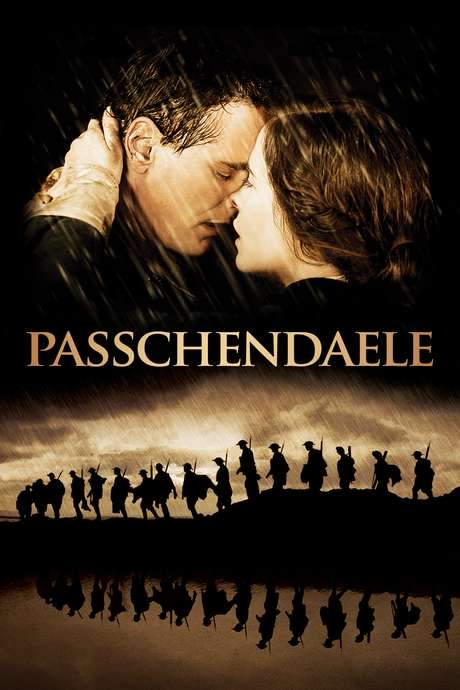
Passchendaele (2008) movie poster

Plot Summary

Passchendaele (2008) Plot Summary Explained

Release, runtime and language
2008 · 114 mins · English
JustWatch #13,197 13
Starring
Gil Bellows, Landon Liboiron, Caroline Dhavernas, Michael Greyeyes, Judith Buchan, Paul Gross

Sergeant Michael Dunne serves with the 10th Battalion—known as the “Fighting Tenth”—of the 1st Canadian Division, taking part in every major Canadian engagement of the war and enduring the brutal conditions of trench warfare. His actions earn him a record number of individual bravery awards for a single battle.

On this page (6)
  1. 1 Where to watch
  2. 2 What happens: full plot
  3. 3 Plot questions answered
  4. 4 Movie threads
  5. 5 Movies like Passchendaele
  6. 6 Every angle

Where to watch

Where to Watch Passchendaele (2008)

Where can you watch Passchendaele? Stream, rent or buy it in the US, including on Amazon Prime Video, Hoopla and Plex: current JustWatch availability with up-to-date prices.

Streaming availability powered by JustWatch

Full plot summary · contains spoilers

What Happens in Passchendaele: Full Plot Summary

The whole story of Passchendaele (2008) explained, from the opening scene to the final frame: every key event, every twist and what it all adds up to. Read it as a quick recap before the sequel, to check a scene you missed, or to finally understand what really happened.

In the spring of 1917, following the fierce Battle of Vimy Ridge, Sergeant Michael Dunne of the 10th Battalion, CEF, returns home from the war, having survived intense combat but suffering from neurasthenia—a psychological condition caused by the stresses of battle. Despite his physical and mental struggles, Dunne is celebrated as a hero for his bravery in taking out a German machine gun position. While receiving treatment in a hospital in Calgary, Alberta, where he initially enlisted, he forms a connection with Sarah Mann, played by [Caroline Dhavernas], a compassionate nurse tending to wounded soldiers.

Meanwhile, David Mann, [Joe Dinicol], Sarah's younger brother, is determined to enlist despite being deemed ineligible due to asthma. The Mann family faces social rejection when it becomes known that their father fought and died at Vimy Ridge for the Imperial German Army, a revelation that complicates the family's standing. However, David's resolve is strengthened by his girlfriend’s father, who intervenes to allow him to join the military. Wanting to protect David, Dunne, feeling a sense of responsibility for Sarah and her brother, reenlists under his mother’s maiden name, McCrae, pledging to keep David safe.

Dunne and David find themselves fighting side by side on the battlefields of Belgium, experiencing the brutal realities of war. Meanwhile, Sarah enlists as a nurse and accompanies the 10th Battalion to the frontlines, working in triage at an Advanced Dressing Station near the fighting zones. They arrive in Flanders just in time for the infamous Battle of Passchendaele, a grueling and muddy engagement. Dunne and Sarah cross paths once again when Dunne brings a wounded soldier to the aid station. His cover story as McCrae is soon uncovered, but he manages to evade punishment. Recognized for his leadership skills and combat experience—which mentioned actions "that should have earned him a V.C."—Dunne is promoted to platoon leader by Lieutenant Colonel Ormond, played by [Paul Gross], who knew him from earlier battles.

As the assault begins, the 8th Battalion (90th Winnipeg Rifles), known as the “Little Black Devils,” faces a fierce German counter-attack. The battalion is pinned down, exhausted and fighting desperately until Dunne's company is called in for support. After they arrive, the 8th Battalion begins to withdraw, believing they are relieved, leaving the difficult task of holding the line to Dunne’s small force. As the battle intensifies, the reality of war starts to sink into David’s consciousness, exposing him to its brutal and chaotic nature. During the night in the trenches, shelling causes a panic attack for David, which Dunne calms, demonstrating his growing concern and protective instincts.

The following morning, the Germans launch a counter-attack that pushes close to the Canadian line, leading to brutal close-quarters combat. In the chaos of retreat, David is overwhelmed and runs after the retreating Germans, attempting to surrender. He jumps into a German trench and pleads in German, only to be confronted with a gun. Just as he is about to be shot, an artillery shell lands nearby, causing a massive explosion that leaves David perilously trapped amidst debris resembling a makeshift cross—a visual echo of the legendary report of a crucified soldier that Dunne had told earlier. Seeing this, Dunne, played by [Gil Bellows], throws down his helmet and gun in a reckless act of heroism, running to save David. He is shot in the process but manages to crawl towards David, who is in a dire state. Amidst heavy fire, Dunne reaches out and, despite his wounds, runs to carry David back to their lines. The fighting resumes with renewed violence, and Dunne succumbs to his injuries in a hospital after sharing a last moment with Sarah. His final words are reflective of his sacrifice, and the news of the Canadian victory at Passchendaele Ridge arrives as he dies.

The closing scenes depict a poignant tribute: David, now a one-legged veteran in a wheelchair; Sarah Mann; David's girlfriend Cassie, played by [Meredith Bailey]; Highway, and Dunne’s close friend Royster (played by [Gil Bellows]) gather at Dunne's grave on his family farm. The gravestone has been altered to mark the year as 1917, removing the original "5" from 1915. As the camera pulls back, the scene transitions to a vast field filled with hundreds of Canadian war graves, with a riderless horse on the horizon, symbolizing the heavy toll of war and the enduring legacy of those who fought and fell.
Last updated: August 19, 2025 at 05:15

Was this helpful?

Plot questions answered

Passchendaele Plot Explained: Your Questions Answered

The questions people ask most about Passchendaele (2008): what happens in the confusing scenes, why the characters do what they do, the twists, hidden details and what the ending means. Each answer contains spoilers.

Q1

Why does Michael Dunne enlist under the name McCrea?

Dunne reenlists using his mother's maiden name, McCrae, specifically to protect David Mann. Since David is Sarah's younger brother and Dunne feels responsible for both Sarah and her brother, he wants to ensure he can watch over David during the war. By using an alias, Dunne avoids the attention his previous hero status would bring and can serve as an ordinary soldier while still looking out for David.

Foreshadowing: This decision is foreshadowed early in the film when Dunne promises Sarah he will keep David safe.

  • david mann
  • enlist
  • mcCrae
  • protection
  • sarah mann
Q2

Why does the Mann family face social rejection?

The Mann family faces ostracism because their father fought and died at Vimy Ridge while serving in the Imperial German Army. This revelation shatters their standing in the community, as fighting for the enemy side during World War I was deeply shameful to Canadian society at the time.

  • mann family
  • german army
  • vimy ridge
  • social rejection
  • ostracism
Q3

Why does David Mann want to enlist despite having asthma?

David is determined to enlist despite being medically ineligible due to asthma because he wants to prove himself and escape the social stigma brought upon his family by his father's service in the German Army. His girlfriend's father eventually intervenes to help him join the military, giving David a chance to restore his family's honor through his own sacrifice.

  • david mann
  • asthma
  • enlist
  • proof
  • honor
Q4

What is neurasthenia and how does it affect Michael Dunne?

Neurasthenia is a psychological condition caused by the extreme stresses of battle, resulting in exhaustion, anxiety, and physical weakness. Dunne suffers from this condition after Vimy Ridge, leaving him physically and mentally drained despite his heroic actions in taking out a German machine gun position. The condition represents the psychological toll of trench warfare on soldiers.

  • neurasthenia
  • psychological trauma
  • battle stress
  • vimy ridge
Q5

Why does David Mann try to surrender to the Germans?

During the German counter-attack, David becomes overwhelmed by the chaos and brutal nature of close-quarters combat. In a moment of panic, he runs after the retreating Germans hoping to surrender, believing it would end his suffering. He jumps into a German trench and pleads in German, only to face being shot until an artillery shell explodes nearby.

Foreshadowing: This moment marks David's first real realization of war's brutality, following his panic attack in the trenches the night before.

  • david mann
  • surrender
  • german trench
  • panic
  • capture
Q6

What is the significance of David being trapped on a cross-like structure?

When the artillery shell explodes near David, he is thrown onto debris that resembles a makeshift cross, a direct visual echo of the legendary report of a crucified soldier that Dunne had told him earlier in the film. This moment visually parallels that story, creating a powerful symbolic connection between the legend and reality of wartime sacrifice.

Foreshadowing: Earlier in the film, Dunne tells David about a legendary report of a crucified soldier, foreshadowing this visual parallel.

  • cross
  • crucified soldier
  • debris
  • symbolism
  • legend
Q7

Why does Michael Dunne throw down his helmet and gun to save David?

Dunne deliberately throws down his helmet and gun in a reckless act of heroism when he sees David trapped. By disarming himself, he demonstrates complete self-sacrifice and signals his intent to save David at any cost. Despite being shot in the process, he crawls to David and carries him back to Canadian lines, sacrificing his own life in the effort.

Foreshadowing: Dunne's protective instincts toward David were established when he calming David's asthmatic panic attack in the trenches.

  • dunne
  • david mann
  • sacrifice
  • helmet
  • heroism
  • rescue
Q8

What happened to the 8th Battalion during the battle?

The 8th Battalion, known as the 'Little Black Devils,' was pinned down by a fierce German counter-attack and became exhausted fighting desperately. When Dunne's company arrives to support them, they begin withdrawing believing they are being relieved. This leaves Dunne's small force to hold the difficult position alone, highlighting the confusing and brutal nature of trench warfare.

  • eighth battalion
  • little black devils
  • withdrawal
  • german counter-attack
Q9

Why does the grave marker show 1917 instead of 1915?

The gravestone initially shows 1915, but is altered to read 1917, signifying that Dunne died in 1917 during the Battle of Passchendaele rather than earlier. This change reflects the film's timeline and emphasizes how the war consumed Dunne's life, extending his story beyond what was initially marked on his family's farm grave.

  • grave
  • 1917
  • 1915
  • year
  • marker
Q10

What is the significance of the riderless horse at the end of the movie?

The riderless horse appearing on the horizon as the camera pulls back to reveal hundreds of Canadian war graves is a traditional symbol of military funeral rites, representing a fallen leader or soldier who will never ride again. This powerful image emphasizes the immense toll of the Battle of Passchendaele and the enduring legacy of all those who fought and died.

  • riderless horse
  • war graves
  • symbolism
  • funeral
  • passchendaele
Q11

Why is Michael Dunne promoted to platoon leader?

Dunne is promoted to platoon leader by Lieutenant Colonel Ormond because of his exceptional leadership skills and combat experience. Ormond notes that Dunne's actions during earlier battles should have earned him a Victoria Cross. His proven bravery and ability to inspire soldiers make him a valuable leader as casualties mount during the Battle of Passchendaele.

  • promotion
  • platoon leader
  • ormond
  • victoria cross
  • leadership

Movie threads

More Movies Like Passchendaele, by Mood & Story

Curated lists built around what makes Passchendaele tick: the same mood, the same kind of story or the same emotional payoff. Each list explains why these movies belong together.

Bleak War Epics like Passchendaele

Intense and tragic depictions of real historical conflicts and their human cost. If you were moved by the grim authenticity of Passchendaele, discover other movies like it that depict the horrors of historical warfare. These similar war stories share a high intensity, bleak tone, and heavy emotional weight, focusing on the tragic cost of conflict.

  • grim
  • somber
  • brutal
  • desperate
  • tragic
  • heroic
  • Tone: bleak, somber
  • Pacing: variable, building to chaotic intensity
Why these movies?

The story pattern: Narratives in this thread often follow soldiers or units through a specific, harrowing battle or campaign. The journey is less about glory and more about survival, psychological endurance, and the devastating cost of victory, frequently culminating in tragic or bittersweet endings.

Why they belong together: Movies are grouped here for their shared commitment to portraying the brutal, unromanticized reality of war. They connect through high intensity, a bleak and somber mood, a focus on historical accuracy, and an emotionally devastating payoff that underscores the futility and tragedy of conflict.

Tragic Wartime Romance Movies like Passchendaele

Love stories forged under extreme pressure, ending in profound sacrifice. For viewers who appreciated the tragic love story at the heart of Passchendaele, this collection features similar movies where romance and sacrifice intertwine. These films explore love during wartime, often with bittersweet or sad endings, sharing a heavy emotional weight and dramatic tension.

  • tragic
  • melancholic
  • desperate
  • romantic
  • heartbreaking
  • somber
  • Tone: tragic, melancholic
  • Pacing: steady, character-driven
Why these movies?

The story pattern: The narrative pattern involves a romance that blossoms under the shadow of imminent danger or societal collapse. The central conflict arises from the choice between personal happiness and a greater duty or sacrifice, with the story typically resolving in a heartbreaking loss that underscores the theme of love's cost.

Why they belong together: These films are connected by their core emotional engine: a romance that is inextricably linked to a backdrop of high-stakes tragedy. They share a heavy emotional weight, a somber mood, and a narrative structure where personal love is ultimately sacrificed to a larger, often devastating, cause.

If you liked this

Movies Like Passchendaele

Similar movies to Passchendaele: the same genre, themes or kind of story. Each one comes with its own plot summary, timeline and ending explained.

Browse all movie summaries

Every angle

Passchendaele (2008) Explained: Plot, Timeline & Characters

Everything about Passchendaele in one place: what happens in the plot summary, the timeline in chronological order, the characters and meaning and a spoiler-free summary. What's After the Movie adds the cast, box office and post-credit scenes.

Coming soon on iOS and Android

The Plot Explained Movie Summary App

Plot summaries, endings explained and timelines on your phone. Catch up on any movie in minutes, save your favorites and never miss a twist again.

Be the first to know when we launch. Your email stays private, always.

Learn more about the app