Plot Explained Spoilers guaranteed!
Plot Explained

Browse by genre

The Man Who Never Was (1956) movie poster

Plot Summary

The Man Who Never Was (1956) Plot Summary Explained

Release, runtime and language
1956 · 103 mins · English
Loading streaming availability…
Directed by
Ronald Neame
Starring
Peter Sellers, Geoffrey Keen, Everley Gregg, Michael Hordern, Gloria Grahame, Cyril Cusack

The story follows a British deception in 1943 aimed at weakening German defenses of Sicily before the Allied invasion. A dead soldier is dressed as a British officer, given forged papers suggesting an Allied landing in Greece, and his body is set adrift. The papers wash ashore, are seized by German intelligence, and the ruse misleads them.

On this page (6)
  1. 1 Where to watch
  2. 2 What happens: full plot
  3. 3 Plot questions answered
  4. 4 Movie threads
  5. 5 Movies like The Man Who Never Was
  6. 6 Every angle
Loading streaming availability…

Full plot summary · contains spoilers

What Happens in The Man Who Never Was: Full Plot Summary

The whole story of The Man Who Never Was (1956) explained, from the opening scene to the final frame: every key event, every twist and what it all adds up to. Read it as a quick recap before the sequel, to check a scene you missed, or to finally understand what really happened.

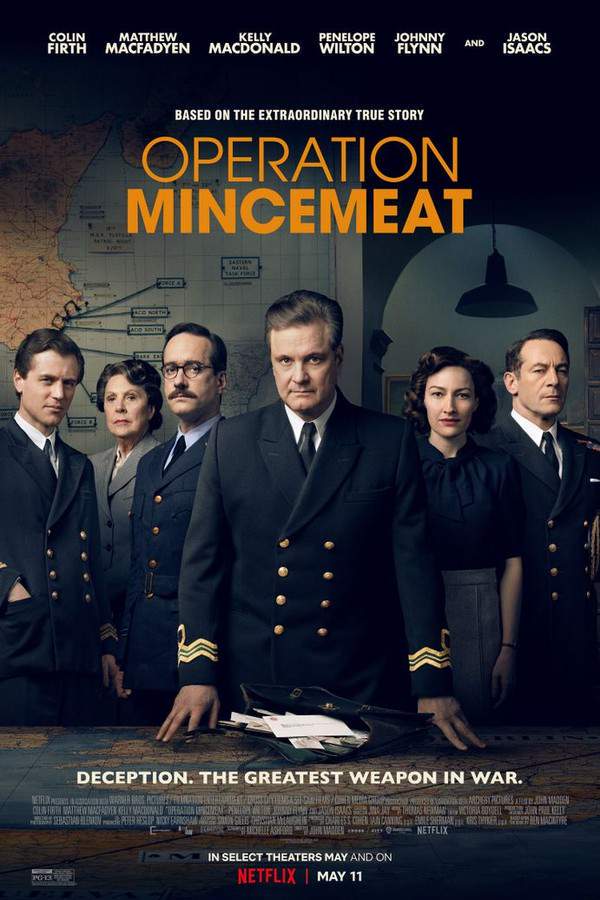
In 1943, Lt. Cmdr. Ewen Montagu, Clifton Webb, conceives a bold deception aimed at misdirecting the Nazis about where the Allied invasion would actually begin in Southern Europe. With the backing of Winston Churchill, he pushes forward a plan that will come to be known as Operation Mincemeat.

Following medical advice, Montagu secures the consent of the deceased’s father and selects a man who died of pneumonia, crafting the illusion that the body had drowned. The corpse is sealed in a canister packed with dry ice and transported to a waiting submarine, beginning a meticulously staged course toward the Atlantic coast of Spain where it is destined to wash ashore. Local authorities, under the watchful eyes of both German and British observers, identify the body and conduct an autopsy, while the attaché case containing the deceptive documents is returned to London. A forensic examination confirms that a crucial letter describing an Allied invasion of Greece has been cleverly opened, photographed, and resealed, bolstering the ruse.

Hitler becomes convinced the documents are genuine, though the German intelligence head, Admiral Canaris, remains skeptical. The Germans dispatch Patrick O'Reilly to London, an Irish spy sent to probe the truth behind the “Martin” story. O'Reilly probes Lucy Sherwood, the flatmate of Montagu’s assistant, Pam, and the pair of women—Lucy and Pam—become part of the spy’s cautious chessboard. Lucy’s genuine grief over a fiancé lost in action initially convinces O'Reilly of the plausibility surrounding the supposed romance and backstory, complicating the investigation.

As a final test, O'Reilly sends a signal by leaving his North London address with Lucy, signaling that he might be in danger. Montagu, Michael Hordern as Gen. Coburn, and Scotland Yard’s Special Branch recognize the risk and rally to halt any misstep. When no arrest comes, O'Reilly radios a triumphant “Martin genuine!” message, and the German forces begin to shift their priorities. The result is a strategic misallocation: most of the Sicily-based troops are diverted to Greece, aiding the eventual Allied invasion of Sicily.

After the war, Montagu receives several decorations for his wartime work, including the Order of the British Empire (OBE). He travels to Spain and places the OBE medal at the grave of Major Martin—the man who never was—as a quiet tribute to the elaborate ruse that helped shorten the conflict. The operation’s legacy lingers in historical memory as a striking example of intelligence craft that shaped the course of a pivotal theater.

Last updated: October 09, 2025 at 12:38

Was this helpful?

Plot questions answered

The Man Who Never Was Plot Explained: Your Questions Answered

The questions people ask most about The Man Who Never Was (1956): what happens in the confusing scenes, why the characters do what they do, the twists, hidden details and what the ending means. Each answer contains spoilers.

Q1

Why did the British use a dead body for the deception?

The British needed a believable Royal Marine courier whose body could wash ashore with secret documents. They selected a man who died of pneumonia and, following medical advice, crafted the illusion that he had drowned. This made the story appear authentic, that a real officer carrying invasion plans had died in a plane crash at sea.

Foreshadowing: Montagu seeks medical advice early on about how to preserve the body and make it appear as a drowning victim.

  • operation mincemeat
  • dead body
  • deception
  • british intelligence
  • major martin
Q2

Why did the Germans believe the fake documents were genuine?

The documents were professionally forged and included a letter suggesting an Allied invasion of Greece. More importantly, the Germans confirmed through forensic examination that the letter had been opened, photographed, and resealed, exactly as would happen if a real officer's attaché case were inspected by enemy agents.

  • germany
  • fake documents
  • operation mincemeat
  • hitler
  • forgeries
Q3

How did Lucy Sherwood's grief help the deception?

Lucy was positioned as Major Martin's fiancée to add emotional credibility to the ruse. When German spy Patrick O'Reilly investigated, she was genuinely grieving her real boyfriend who had just been killed in action. Her authentic sorrow convinced O'Reilly that the romance was real, making the entire story believable.

  • lucy sherwood
  • grief
  • patrick o'reilly
  • german spy
  • fiancée
Q4

What was Patrick O'Reilly's role in the operation?

Patrick O'Reilly was an Irish spy sent by German intelligence to London to investigate whether Major Martin was real. He posed as Martin's old friend and interrogated Lucy Sherwood to test the deception's authenticity. When his investigation uncovered no signs of fraud, he radioed "Martin genuine!" which confirmed to the Germans that the documents were authentic.

  • patrick o'reilly
  • german spy
  • investigation
  • intelligence
  • london
Q5

How did the deception affect the Allied invasion of Sicily?

After O'Reilly confirmed Martin's authenticity, Hitler ordered most German troops stationed in Sicily to be diverted to Greece. This strategic misallocation dramatically weakened Sicily's defenses, allowing the Allied forces to invade and capture the island with significantly less resistance than they would have otherwise faced.

  • sicily invasion
  • operation mincemeat
  • greece
  • hitler
  • troop deployment
Q6

Why did Hitler believe the documents suggested an invasion of Greece?

Hitler was convinced because the fake documents included a letter from a British general discussing invasion plans for Greece. The letter was carefully crafted to appear genuine and was positioned alongside other realistic military correspondence in the attaché case.

Foreshadowing: The forensic examination confirmed the letter had been opened and resealed, making it appear as if German agents had discovered it in the officer's belongings.

  • hitler
  • greece invasion
  • fake documents
  • hitler
  • deception
Q7

Why was the body released off the coast of Spain?

The body was released in Spanish waters because Spain was neutral but had German agents operating there. The plan required the corpse to be discovered in an area where both German and British observers could watch the discovery and autopsy, ensuring the story would reach German intelligence through proper channels.

  • spain
  • body
  • coast
  • operation mincemeat
  • submarine
Q8

What happened to Major Martin's grave after the war?

After the war, Ewen Montagu traveled to Spain where the body had washed ashore. He placed his Order of the British Empire medal at the grave of the unknown man who had been used in the operation, honoring the individual whose death helped shorten the war through the successful deception.

  • major martin
  • grave
  • spain
  • ewen montagu
  • obe medal
Q9

Why was Admiral Canaris skeptical of the documents?

Admiral Canaris, head of German intelligence, remained unconvinced despite Hitler's enthusiasm. His skepticism reflected proper counterintelligence instincts, as he recognized the possibility that the documents could be an elaborate British deception. However, his doubts were overruled by Hitler's conviction that the documents were authentic.

  • admiral canaris
  • german intelligence
  • skepticism
  • hitler
  • counterintelligence
Q10

How were the documents opened, photographed and resealed?

British intelligence performed a meticulous operation where the key letter describing the Greece invasion was carefully opened, photographed, and then resealed with the same seal. This forensic detail was crucial because the Germans would naturally inspect any captured documents, and finding them opened and resealed would confirm their belief that they had discovered secret papers.

  • documents
  • photography
  • forensic
  • deception
  • letter
  • greece
Q11

Why did the Germans move their Sicily troops to Greece?

The Germans moved their forces because the fake documents indicated Greece was the actual Allied invasion target, and their spy Patrick O'Reilly confirmed Major Martin's identity was genuine. Hitler personally ordered the redeployment based on this misinformation, which was exactly what the British deception was designed to achieve.

  • germany
  • troops
  • sicily
  • greece
  • redeployment
  • operation mincemeat

Movie threads

More Movies Like The Man Who Never Was, by Mood & Story

Curated lists built around what makes The Man Who Never Was tick: the same mood, the same kind of story or the same emotional payoff. Each list explains why these movies belong together.

Military Deception Stories like The Man Who Never Was

Stories where clever plans and careful deception win wars from the shadows. If you enjoyed the clever strategy of The Man Who Never Was, explore other movies about high-stakes military ruses and intelligence operations. These films share a focus on meticulous planning, psychological warfare, and stories where brains triumph over brawn.

  • tense
  • cerebral
  • devious
  • meticulous
  • somber
  • suspenseful
  • Tone: tense, cerebral, somber
  • Pacing: steady, methodical
Why these movies?

The story pattern: Narratives in this thread typically follow the careful orchestration of a complex deception, from conception to execution. The tension arises from the constant risk of exposure, often involving a cat-and-mouse game with an intelligent adversary. The climax is the quiet, strategic success of the plan.

Why they belong together: Movies are grouped here for their shared focus on intellectual warfare, meticulous procedural details, and the tension of a high-stakes gamble. They appeal to viewers who enjoy seeing complex plans unfold and appreciate stories where strategy is the true hero.

Bitterswart Victory Movies like The Man Who Never Was

Journeys where victory is achieved, but at a personal or moral cost that lingers. Fans of the poignant ending of The Man Who Never Was will appreciate these films about triumphs that carry a cost. Discover similar movies where success is achieved, but the journey leaves emotional scars or a somber reflection on the price paid.

  • bittersweet
  • somber
  • melancholic
  • quietly triumphant
  • reflective
  • poignant
  • Tone: bittersweet, somber, melancholic
  • Pacing: steady, reflective
Why these movies?

The story pattern: The emotional journey in these films involves achieving a crucial goal, but the path to success is paved with personal sacrifice, ethical compromises, or collateral damage. The ending acknowledges the win but spends equal time mourning the losses, creating a deeply resonant and thoughtful conclusion.

Why they belong together: These films are united by their balanced emotional payload, blending the satisfaction of a goal accomplished with the sobering weight of its cost. They resonate with viewers who appreciate narratives that don't shy away from the complex, often sad, realities of difficult choices.

If you liked this

Movies Like The Man Who Never Was

Similar movies to The Man Who Never Was: the same genre, themes or kind of story. Each one comes with its own plot summary, timeline and ending explained.

Browse all movie summaries

Every angle

The Man Who Never Was (1956) Explained: Plot, Timeline & Characters

Everything about The Man Who Never Was in one place: what happens in the plot summary, the timeline in chronological order, the characters and meaning and a spoiler-free summary. What's After the Movie adds the cast, box office and post-credit scenes.

Coming soon on iOS and Android

The Plot Explained Movie Summary App

Plot summaries, endings explained and timelines on your phone. Catch up on any movie in minutes, save your favorites and never miss a twist again.

Be the first to know when we launch. Your email stays private, always.

Learn more about the app