Plot Explained Spoilers guaranteed!
Plot Explained

Browse by genre

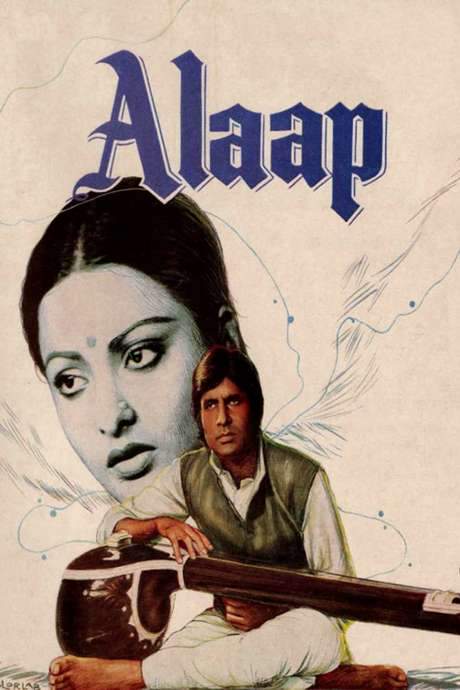
Alaap (1977) movie poster

Plot Summary

Alaap (1977) Plot Summary Explained

Release, runtime and language
1977 · 133 mins · Hindi
Loading streaming availability…
Directed by
Hrishikesh Mukherjee
Starring
Amitabh Bachchan, Benjamin Gilani, Rekha, Farida Jalal, Govardhan Asrani, Om Prakash

Dedicated to the memory of legendary singers K. L. Saigal and Mukesh, this charming, unpretentious film provides a refreshing contrast to the spice‑laden masala epics of its era. Its modest storytelling lets the tribute shine, and it also showcases superstar Amitabh Bachchan in a surprisingly offbeat role.

On this page (6)
  1. 1 Where to watch
  2. 2 What happens: full plot
  3. 3 Plot questions answered
  4. 4 Movie threads
  5. 5 Movies like Alaap
  6. 6 Every angle
Loading streaming availability…

Full plot summary · contains spoilers

What Happens in Alaap: Full Plot Summary

The whole story of Alaap (1977) explained, from the opening scene to the final frame: every key event, every twist and what it all adds up to. Read it as a quick recap before the sequel, to check a scene you missed, or to finally understand what really happened.

Widowed Advocate Triloki Prasad (Om Prakash) lives a comfortable life in a small Indian town, supported by his two sons, Ashok and Alok (Amitabh Bachchan). Ashok is married to Geeta, while Alok, who harbors a deep love for music, has not yet settled into the family law firm. He enrolls in music classes run by Pandit Jamuna Prasad (A.K. Hangal), signaling a path that could diverge from the dull routine of courtrooms and ledgers.

On Triloki’s return, he asks Alok to accompany Ashok to the firm and start learning the trade, a request Alok agrees to honor. Yet his heart keeps pulling him toward the cluttered lanes of the town’s slums, where he spends time with a former courtesan, Sarju Bai Banaraswali. Triloki cautions him about such distractions, but Alok continues his visits, driven perhaps by a longing for a different kind of purpose and connection.

Trouble erupts when Mr. Gupta (Yunus Parvez) approaches Triloki with a plan to seize and demolish the slum area. Using his legal acumen, Triloki maneuvers the court to favor Gupta, rendering Sarju Bai and others homeless. The windfalls from this decision tempt Triloki, who uses the fee to push Alok toward a new idea of mobility: purchasing a used car. Yet Alok chooses a horse-carriage and decides to drive it himself, trying to carve out a living on his own terms. This move infuriates Triloki, who orders him to leave the house.

As the family dynamics intensify, Triloki learns that Alok is finding some success in his independent work, prompting him to counter with a broader strategy: he hires motor coaches to transport people at a cheaper price, aiming to undercut Alok’s enterprise and perhaps force him to rethink his stance and return home. The town’s tensions—between old values, economic pressures, and the lure of personal freedom—play out against the backdrop of a stubborn father and a son who wants to prove himself on his own terms.

The remainder of the film tracks Alok’s resilience as he navigates a maze of challenges, while Triloki tests the boundaries of duty, pride, and family loyalty. Throughout, the question lingers: can the father and son bridge their differences, or will their conflicting visions chart separate courses for their lives? The story unfolds with quiet drama, social undercurrents, and a slowly shifting sense of what family means when wealth, respect, and love intersect. Also echoing through the town is a guest appearance by Raja Bahadur (Sanjeev Kumar), a reminder of the larger power structures at play beyond the family’s walls.

Last updated: February 18, 2026 at 23:46

Was this helpful?

Plot questions answered

Alaap Plot Explained: Your Questions Answered

The questions people ask most about Alaap (1977): what happens in the confusing scenes, why the characters do what they do, the twists, hidden details and what the ending means. Each answer contains spoilers.

Q1

Why does Alok continue visiting Sarju Bai despite his father's warnings?

Alok is drawn to Sarju Bai Banaraswali, a former courtesan living in the slums, because she represents something his privileged life lacks, authentic human connection and a sense of purpose beyond the courtroom. His visits reflect his longing for meaning and his instinctive sympathy for those marginalized by society, which ultimately sets him on a path of principled rebellion against his father's values.

Foreshadowing: Earlier scenes establish Alok's love for music and his discomfort with the conventional lawyer's life his father expects him to follow.

  • alok
  • sarju bai
  • slums
  • courtesan
  • rebellion
Q2

Why does Triloki Prasad agree to help Mr. Gupta demolish the slums?

Triloki uses his legal expertise to sway the court in Gupta's favor primarily for financial gain. He accepts a fee from Gupta for his services, which he later uses to purchase a car for Alok in an attempt to bring his son back into the conventional family fold. This act reveals how wealth and status have already compromised Triloki's moral compass.

Foreshadowing: Triloki's earlier caution about Alok's slum visits hints at his prejudice against the lower classes and his attachment to respectability.

  • triloki
  • gupta
  • slum demolition
  • court
  • corruption
Q3

Why does Alok choose a horse-carriage instead of accepting the car his father offers?

Alok deliberately rejects the car and chooses to drive a horse-carriage himself because he wants to build his life on his own terms, not as a dependent of his wealthy father. The horse-carriage represents independence, dignity of labor, and a conscious rejection of the materialistic values that have corrupted his father's judgment. This act is his first major declaration of autonomy.

Foreshadowing: His enrollment in music classes and continued visits to the slums already signal his resistance to his father's planned future for him.

  • alok
  • horse-carriage
  • car
  • independence
  • defiance
Q4

Why does Triloki Prasad order Alok to leave the house?

Triloki expels Alok from the family home because he sees his son's choice to drive a horse-carriage as a public embarrassment and a direct challenge to his authority and values. Alok's rejection of the car and insistence on working as a carriage driver represents everything Triloki fears, loss of social status and the failure of his paternal control over his son's future.

Foreshadowing: Earlier warnings about the slum visits and Alok's musical pursuits foreshadow the growing irreconcilable differences between them.

  • triloki
  • alok
  • disownment
  • father-son conflict
Q5

Why does Triloki try to undercut Alok's business with motor coaches?

After Alok establishes a successful horse-carriage business, Triloki decides to hire motor coaches and offer cheaper transportation to deliberately undermine his son's enterprise. This aggressive tactic stems from both financial pride and a desperate attempt to force Alok back into the family fold by destroying his independent livelihood. It represents the escalation of their personal conflict into economic warfare.

Foreshadowing: Triloki's earlier use of his legal influence to help Gupta demonstrates his willingness to use any means necessary to achieve his goals.

  • triloki
  • alok
  • motor coaches
  • business competition
  • father-son feud
Q6

What happens to Sarju Bai and the other slum dwellers after the court ruling?

After Triloki manipulates the court decision in Gupta's favor, Sarju Bai Banaraswali and the other residents are rendered homeless due to the slum demolition. This traumatic displacement directly results from Triloki's actions and serves as the moral low point that deepens Alok's disillusionment with his father's values and strengthens his resolve to forge his own path.

Foreshadowing: Alok's repeated visits to the slums and his connection to Sarju Bai foreshadow the personal impact this event will have on him.

  • sarju bai
  • slum demolition
  • homelessness
  • gupta
Q7

Does Alok reconcile with his father at the end of the film?

The film explores whether father and son can bridge their differences, with the narrative suggesting a bittersweet resolution that may involve reconciliation without a complete happy ending. Alok continues to battle against his father's opposition while Triloki remains stubborn in his pride, leaving their relationship in a state of gradual, uncertain healing rather than full resolution.

Foreshadowing: The ongoing conflict throughout the film builds toward this tentative conclusion, with both characters showing moments of vulnerability.

  • alok
  • triloki
  • reconciliation
  • ending
  • resolution
Q8

What role does Pandit Jamuna Prasad play in Alok's life?

Pandit Jamuna Prasad runs the music school where Alok enrolls, representing the artistic and spiritual path that contrasts with the legal career his father demands. This music teacher symbolizes Alok's true passion and serves as a mentor figure who nurtures the creative side that his family dismisses as impractical.

Foreshadowing: Alok's enrollment in music classes early in the story establishes this as his genuine interest versus the forced legal path.

  • pandit jamuna prasad
  • music school
  • alok
  • mentor
Q9

Who is Raja Bahadur and why does he appear in the film?

Raja Bahadur, played by Sanjeev Kumar in a guest appearance, represents the larger power structures operating beyond the family drama. His presence in the town serves as a reminder of the broader social hierarchy and the various forces at play in the small Indian town, adding depth to the film's exploration of class, power, and justice.

Foreshadowing: The film establishes early on that this story operates within a larger social context beyond the immediate family.

  • raja bahadur
  • sanjeev kumar
  • guest appearance
  • power structures

Movie threads

More Movies Like Alaap, by Mood & Story

Curated lists built around what makes Alaap tick: the same mood, the same kind of story or the same emotional payoff. Each list explains why these movies belong together.

Rebellious Journeys of Passion vs. Privilege like in Alaap

Stories of principled rebels who trade wealth for artistic integrity and moral purpose. Find movies like Alaap where characters defy family and societal pressures to pursue an artistic calling. If you enjoyed the heartfelt rebellion and class struggle in Alaap, you'll discover similar stories of following dreams against all odds.

  • rebellious
  • heartfelt
  • determined
  • principled
  • familial conflict
  • self-discovery
  • Tone: hopeful, heartfelt
  • Pacing: steady, character-driven
Why these movies?

The story pattern: The narrative pattern centers on a protagonist, often from a privileged background, who makes a conscious decision to abandon security and status in pursuit of a creative or moral ideal. This journey involves significant personal sacrifice, conflict with authority figures (especially family), and a rediscovery of self-worth outside of material wealth.

Why they belong together: Movies in this thread are grouped by their shared focus on the emotional conflict between duty and passion, the bittersweet nature of forging one's own path, and the uplifting yet challenging journey towards artistic or moral authenticity.

Bittersweet Dramas of Mending Rifts like in Alaap

Emotional stories where difficult journeys lead to complex, imperfect reconciliations. Discover movies similar to Alaap that explore the difficult but hopeful process of healing family estrangement. If you were moved by the complex father-son relationship in Alaap, you'll find other poignant stories of conflict-driven reconciliation.

  • familial
  • heartfelt
  • conflict-driven
  • nostalgic
  • hopeful
  • emotional
  • Tone: bittersweet, conflict-driven
  • Pacing: steady
Why these movies?

The story pattern: The narrative follows characters separated by ideological or personal conflict, frequently a parent and child. The story arcs involve a gradual breakdown of stubbornness, moments of shared vulnerability, and a resolution that acknowledges the pain of the past while offering a tentative, realistic hope for the future.

Why they belong together: These films share a bittersweet emotional core, a moderate narrative complexity driven by character conflict, and a steady pacing that allows the emotional weight of the relationship to unfold authentically, resulting in an ending that feels earned but not saccharine.

If you liked this

Movies Like Alaap

Similar movies to Alaap: the same genre, themes or kind of story. Each one comes with its own plot summary, timeline and ending explained.

Browse all movie summaries

Every angle

Alaap (1977) Explained: Plot, Timeline & Characters

Everything about Alaap in one place: what happens in the plot summary, the timeline in chronological order, the characters and meaning and a spoiler-free summary. What's After the Movie adds the cast, box office and post-credit scenes.

Coming soon on iOS and Android

The Plot Explained Movie Summary App

Plot summaries, endings explained and timelines on your phone. Catch up on any movie in minutes, save your favorites and never miss a twist again.

Be the first to know when we launch. Your email stays private, always.

Learn more about the app