




Plot Explained Spoilers guaranteed!
Plot Explained

Browse by genre

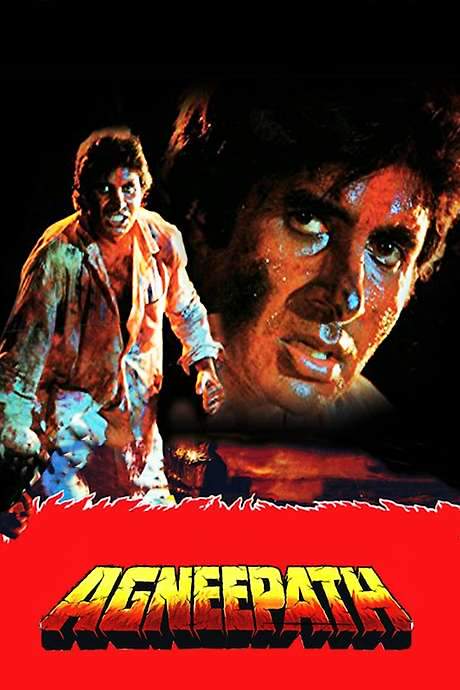
Agneepath (1990) movie poster

Timeline

Agneepath (1990) Timeline Explained – Every Event in Order

Release, runtime and language
1990 · 174 mins · Hindi
JustWatch #15,983 8
Directed by
Mukul Anand
Starring
Amitabh Bachchan, Sharat Saxena, Tinnu Anand, Sudhir Pandey, Mithun Chakraborty, Alok Nath

The path of fire. A young boy’s father is lynched before his eyes; fifteen years later he returns home for revenge.

On this page (6)
  1. 1 Where to watch
  2. 2 Events in order (14)
  3. 3 Timeline questions answered
  4. 4 Movie threads
  5. 5 Movies like Agneepath
  6. 6 Every angle

Where to watch

Where to Watch Agneepath (1990)

Where can you watch Agneepath? Stream, rent or buy it in the US, including on Amazon Prime Video, Netflix and Netflix Standard: current JustWatch availability with up-to-date prices.

Streaming availability powered by JustWatch

14 events in order · contains spoilers

Agneepath Timeline: Events in Chronological Order

Every key event of Agneepath (1990) in order, scene by scene, with when and where it takes place. Use it to untangle flashbacks, time jumps and parallel storylines, to refresh your memory before the sequel or to find the exact scene you are thinking of.

  1. Dinanath's stand ends in tragedy

    In 1965, Dinanath Chauhan, a village schoolmaster, openly criticizes Kancha Cheena's heroin-smuggling plan. Kancha and landlord Dinkar Rao orchestrate a fabricated scandal that frames him. Dinanath is lynched by the villagers, leaving his family destitute. His son Vijay Deenanath Chauhan vows to avenge his father's death and restore the family's honor.

    When
    1965
    Where
    Dinanath's village
  2. Vijay vows vengeance and honor

    The tragedy drives Vijay to vow to avenge his father and reclaim his family's honor. He begins training in the shadows of the criminal world and pledges to expose the corrupt and punish those who wronged his family. This vow sets him on a lifelong path of violent justice.

    When
    1965
    Where
    Dinanath's village
  3. Vijay rises in Mumbai's underworld

    Years after the tragedy, Vijay relocates to Mumbai where he is mentored by Hasmukh, Usman Bhai, and Anna Shetty. Under their guidance he climbs the city's criminal ranks and becomes a feared figure. The idealistic son begins living a ruthless double life.

    When
    late 1960s
    Where
    Mumbai
  4. Warning of assassination plot

    As his power grows, Police Commissioner Gaitonde warns him of an imminent assassination attempt by former allies. Vijay allows the attack to proceed, believing survival will boost his status. The event marks a turning point in his moral choices.

    When
    late 1960s
    Where
    Mumbai
  5. Rescued and cared for

    A coconut vendor, Krishnan Iyer, M.A., rescues Vijay after the attack and becomes a steadfast ally. Vijay is cared for in a hospital, where nurse Mary Matthew becomes his confidante. This period forges new loyalties that shape his future.

    When
    immediately after attack
    Where
    Mumbai Hospital
  6. Eliminations and maternal disapproval

    Vijay eliminates Hasmukh and Usman, who had surrendered to the police to escape him. His mother Suhasini, disillusioned by his criminal life, refuses to acknowledge him and asks him to leave. The combination of violence and estrangement deepens Vijay's resolve and loneliness.

    When
    after hospital
    Where
    Mumbai
  7. Siksha kidnapped; Anna's trap

    Anna Shetty kidnaps Siksha to lure Vijay into a trap. Krishnan tries to rescue her but fails; Vijay arrives in time and kills Anna in a violent confrontation. The incident heightens the stakes for all involved.

    When
    during kidnapping
    Where
    City
  8. Love and family rift

    Romantic feelings develop between Krishnan and Siksha, which Vijay opposes. Suhasini supports the relationship and disowns Vijay, calling Krishnan the son she wishes she had. The personal rift mirrors the violence surrounding their lives.

    When
    after Anna's death
    Where
    Mumbai
  9. Mary becomes wife; vow to reform

    Stung by his mother's words, Vijay marries Mary and vows to reform his life to win back his mother's respect. The marriage marks a shift toward legitimacy, even as he remains entangled with the underworld.

    When
    soon after disownment
    Where
    Mumbai
  10. Return to Kancha Cheena and reclaim village

    Vijay re-engages with Kancha Cheena under a pretense of a deal, gaining access to his old village. He dismantles Cheena's operations, secures legal control of the village, and has Dinkar Rao lynched by the villagers in a symbolic reversal of his father's fate.

    When
    late 1960s–early 1970s
    Where
    Old village
  11. Kancha convicted and Laila testifies

    Vijay arranges for Kancha's mistress Laila to testify against him in court; Laila is revealed to be Shanti, daughter of a woman involved in Dinanath's framing. Kancha is convicted and Vijay returns the village to his mother.

    When
    after trial
    Where
    Village and court
  12. Kancha escapes and kidnaps Vijay's family

    Kancha escapes custody by murdering witnesses and retaliates by kidnapping Vijay's family. Vijay is forced back into violence to rescue them.

    When
    after conviction
    Where
    Village
  13. Final battle and Kancha's death

    Vijay storms the village in a final confrontation, throwing Kancha into a raging fire and killing him. Mortally wounded, he dies in his mother's arms at the site of their former home. He reflects that he was not a criminal, but a son who walked the path of fire to seek justice.

    When
    final battle
    Where
    Village site
  14. Forgiveness and memory

    Suhasini forgives Vijay in his last moments, acknowledging his sacrifice. The film closes with a sense of his moral struggle and the enduring myth of the path he walked.

    When
    final moments
    Where
    Village

Last updated: October 09, 2025 at 15:06

Was this helpful?

Timeline questions answered

Agneepath Timeline Explained: Your Questions Answered

When does it happen, and why in that order? The questions people ask about the chronology of Agneepath (1990): time jumps, flashbacks, cause and effect between scenes and the correct order of events, each answered with spoilers.

Q1

Why was Dinanath Chauhan framed and lynched in the village?

Dinanath was a schoolmaster who openly opposed Kancha Cheena's plan to turn the village into a heroin smuggling base. Kancha and landlord Dinkar Rao orchestrated a fabricated scandal to frame him for a crime he didn't commit. The villagers, manipulated by these powerful figures,lynched Dinanath, leaving his family destitute and setting the entire revenge plot in motion.

Foreshadowing: Earlier scenes show Dinanath's principled stand against corruption, making his tragic fate inevitable in a village controlled by criminals.

  • dinanath chauhan
  • kancha cheena
  • dinkar rao
  • framing
  • lynching
  • village
Q2

Why does Vijay become a gangster instead of seeking legal justice?

After watching his father lynched and seeing his family left homeless and shamed, young Vijay decides that legitimate channels cannot deliver justice against powerful criminals like Kancha Cheena. He believes the only way to avenge his father and defeat such men is to become equally ruthless and powerful in their own world. The tragedy hardened him, making him see violence as the only language those in power understand.

Foreshadowing: The film opens with Vijay as a young boy witnessing his father's murder, establishing that trauma drives his choices.

  • vijay deenanath Chauhan
  • revenge
  • underworld
  • crime
  • justice
  • motivation
Q3

Why does Vijay allow the assassination attempt to happen rather than avoid it?

Police Commissioner Gaitonde warns Vijay about the assassination plot by his former allies. Instead of hiding or preventing the attack, Vijay deliberately lets it unfold because he believes that surviving such an attempt would dramatically increase his reputation and standing in the underworld. He sees it as an opportunity to prove his toughness and earn more fear and respect from rivals.

Foreshadowing: This moment marks Vijay's moral turning point, where he prioritizes power over self-preservation.

  • vijay
  • assassination attempt
  • gaitonde
  • underworld
  • power
  • reputation
Q4

Why does Vijay kill Hasmukh and Usman Bhai after they surrendered to police?

Vijay eliminates Hasmukh and Usman Bhai because they betrayed him by surrendering to the police to escape his wrath. Even though they had been his mentors in the criminal world, Vijay views their surrender as a betrayal of loyalty. He sees their elimination as necessary to maintain his reputation and send a message that betrayal will not be tolerated in his organization.

Foreshadowing: This act demonstrates how far Vijay has descended into moral corruption, prioritizing loyalty to his code over his mentors.

  • vijay
  • hasmukh
  • usman bhai
  • betrayal
  • murder
  • underworld
Q5

Why does Vijay's mother refuse to accept him despite his intentions?

Vijay's mother Suhasini cannot accept the life he has chosen because she sees him transforming into exactly the kind of man who destroyed her husband. Though Vijay believes his criminal path is a form of justice for his father, his mother sees only that he has become a murderer and gangster. She disowns him when he opposes Krishnan's relationship with Siksha, telling him Krishnan is the son she wishes she had.

Foreshadowing: The mother-son rift mirrors Dinanath's earlier moral stand against corruption, creating a painful parallel.

  • suhasini
  • vijay
  • mother
  • disown
  • family
  • moral corruption
Q6

What triggers Vijay to decide to reform and go legitimate?

Vijay's decision to reform comes after his mother disowns him and tells him she wishes Krishnan Iyer was her son instead. Stung by these words and the isolation they represent, Vijay marries nurse Mary Matthew and vows to change his life. He hopes that by going legitimate and earning an honest living, he can eventually win back his mother's respect and prove his path was about justice, not criminality.

Foreshadowing: This moment represents Vijay's final attempt to reconcile his revenge mission with his family's honor.

  • vijay
  • mary
  • reform
  • mother
  • Suhasini
  • redemption
  • marriage
Q7

How does Vijay manage to convict Kancha Cheena with Laila's testimony?

Vijay locates Laila, Kancha's mistress, and arranges for her to testify against him in court. The key revelation is that Laila is actually Shanti, the daughter of a woman who was involved in framing Dinanath years earlier. This connection provides the legal evidence needed to convict Kancha for his role in Dinanath's framing and murder, allowing Vijay to legally reclaim the village and restore his mother's honor.

Foreshadowing: Laila's true identity connects the past crimes to present justice, tying up the narrative threads.

  • kancha cheena
  • laila
  • shanti
  • testimony
  • conviction
  • court
  • dinanath
Q8

How does Vijay defeat Kancha Cheena in the final confrontation?

In the final battle, Vijay storms the village where Kancha has kidnapped his family. After a ferocious fight, Vijay gains the upper hand and hurls Kancha into a raging fire, killing him. The act symbolically mirrors the lynching of Vijay's father and represents the complete reversal of the injustice that started the story. However, the battle leaves Vijay mortally wounded.

Foreshadowing: The fire imagery connects back to the title 'Agneepath' - the path of fire Vijay chose.

  • vijay
  • kancha cheena
  • final battle
  • fire
  • confrontation
  • death
Q9

What does Vijay mean when he says he walked the Agneepath?

In his dying moments, Vijay declares he was never a criminal but a son who walked the path of fire (Agneepath) to seek justice for his father. The 'path of fire' represents the destructive journey he chose - one filled with violence, sacrifice, and moral compromise. He sees his actions as a form of righteous vengeance, not criminality, even though the cost was his life and his family's happiness. His mother's forgiveness validates this interpretation, confirming he achieved his goal of restoring family honor.

Foreshadowing: The entire film builds toward this thematic conclusion about justice, sacrifice, and the nature of revenge.

  • agneepath
  • path of fire
  • ending
  • vijay
  • sacrifice
  • justice
  • meaning
  • theme

Movie threads

More Movies Like Agneepath, by Mood & Story

Curated lists built around what makes Agneepath tick: the same mood, the same kind of story or the same emotional payoff. Each list explains why these movies belong together.

Relentless revenge sagas like Agneepath

Characters consumed by a singular, violent quest for vengeance. If the intense, single-minded quest for vengeance in Agneepath captivated you, explore these other movies with similar gritty revenge sagas. These films feature protagonists pushed to their limits, navigating brutal worlds and moral compromises to achieve their goal.

  • vengeful
  • grim
  • intense
  • agonizing
  • tragic
  • resolute
  • Tone: dark, vengeful, tragic
  • Pacing: fast, propulsive, driven
Why these movies?

The story pattern: The narrative typically begins with a profound personal tragedy that ignites a lifelong mission for revenge. The protagonist's journey is linear and driven, often involving infiltration into a criminal underworld, a series of violent confrontations, and significant personal sacrifice, culminating in a pyrrhic victory.

Why they belong together: They are grouped by their shared focus on a classic revenge arc executed with high intensity and a dark tone. The emotional core is the protagonist's transformation and the heavy cost of their actions, creating a powerful, cathartic, yet tragic viewing experience.

Tragic anti-heroes of the underworld like in Agneepath

Stories of morally conflicted figures navigating a brutal criminal landscape. For viewers who appreciated Vijay's complex moral journey in Agneepath, this collection features similar movies about tragic anti-heroes in the criminal underworld. These stories explore the conflict between personal honor and violent necessity, often ending with profound sacrifice.

  • tragic
  • melancholic
  • gritty
  • moral conflict
  • corrupt
  • lonely
  • Tone: dark, melancholic, morally complex
  • Pacing: steady, character-driven with bursts of action
Why these movies?

The story pattern: These narratives explore the rise and fall of a charismatic but doomed figure within a powerful crime syndicate or corrupt society. The central conflict is often internal, pitting the character's original values against the demands of their violent environment, culminating in their physical or spiritual destruction.

Why they belong together: They share a focus on a charismatic protagonist whose noble intentions are corrupted by a ruthless world. The similarity lies in the blend of crime genre tropes with a heavy, character-driven drama that examines themes of honor, betrayal, and redemption through a tragic lens.

If you liked this

Movies Like Agneepath

Similar movies to Agneepath: the same genre, themes or kind of story. Each one comes with its own plot summary, timeline and ending explained.

Browse all movie summaries

Every angle

Agneepath (1990) Explained: Plot, Timeline & Characters

Everything about Agneepath in one place: what happens in the plot summary, the timeline in chronological order, the characters and meaning and a spoiler-free summary. What's After the Movie adds the cast, box office and post-credit scenes.

Coming soon on iOS and Android

The Plot Explained Movie Summary App

Plot summaries, endings explained and timelines on your phone. Catch up on any movie in minutes, save your favorites and never miss a twist again.

Be the first to know when we launch. Your email stays private, always.

Learn more about the app