Plot Explained Spoilers guaranteed!
Plot Explained

Browse by genre

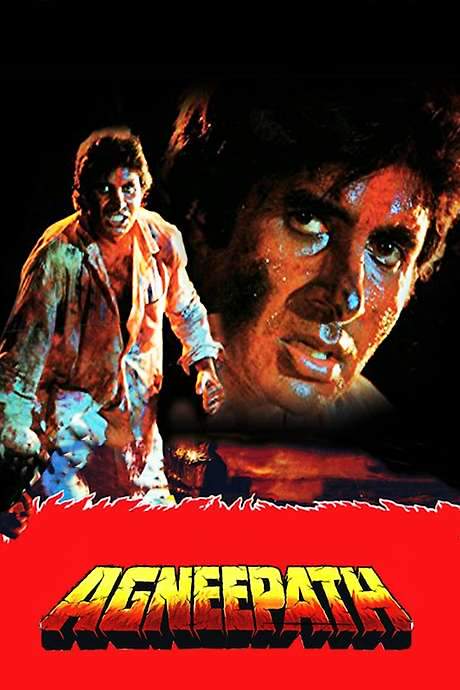
Agneepath (2012) movie poster

Plot Summary

Agneepath (2012) Plot Summary Explained

Release, runtime and language
2012 · 174 mins · Hindi
JustWatch #31,479 3
Directed by
Karan Malhotra
Starring
Brijendra Kala, Sanjay Dutt, Sachin Khedekar, Om Puri, Rishi Kapoor, Hrithik Roshan

The Path of Fire. After his father is lynched by a mob, framed by a notorious gangster, a young boy and his pregnant mother abandon their village for Mumbai. Immersed in the underworld, he rises as a gangster, vowing to exact revenge on those responsible. This film is a modern remake of the 1990 original.

On this page (5)
  1. 1 Where to watch
  2. 2 What happens: full plot
  3. 3 Plot questions answered
  4. 4 Movie threads
  5. 5 Every angle

Where to watch

Where to Watch Agneepath (2012)

Where can you watch Agneepath? Stream, rent or buy it in the US, including on Netflix, Netflix Standard and Amazon Video: current JustWatch availability with up-to-date prices.

Streaming availability powered by JustWatch

Full plot summary · contains spoilers

What Happens in Agneepath: Full Plot Summary

The whole story of Agneepath (2012) explained, from the opening scene to the final frame: every key event, every twist and what it all adds up to. Read it as a quick recap before the sequel, to check a scene you missed, or to finally understand what really happened.

On the secluded island of Mandwa in 1977, Deenanath Chauhan stands as a revered school teacher, earning the complete respect of the village. His broad admiration becomes a target in the hands of the ambitious village chief, who enlists his son, Kancha Cheena, to smear Deenanath’s name and push a hidden, darker plan forward. A twelve-year-old Vijay Deenanath Chauhan watches all this unfold from the shadows of his tight-knit family. His father’s steady guidance—to temper his fire and wait for the right moment to exercise power—sows a seed of restraint in a boy whose temper is known to flare.

Kancha arrives with a seemingly innocent proposal: a lease of the villagers’ land in exchange for supposed profits from a salt factory. But the real motive is far more sinister—the island would become Kancha’s gateway to a cocaine empire. Deenanath warns the villagers about the 100-year lease, insisting that no one living today will still be there in a century to see what becomes of their land, a line meant to deter the greed-driven plan but one that only hardens Kancha’s schemes. In a calculated act of brutality, Kancha orchestrates a chilling conspiracy: his men assault and murder a young girl in the school next to Deenanath’s home. When Deenanath investigates the night-terrified sounds and the girl dies, the villagers, misled by fear and shame, point their blame at him. The mob’s fury culminates in a public hanging—Deenanath is lynched from a tree, a cruel tableau that sears itself into the memory of all who witness it.

Vijay and his pregnant mother Suhasini Chauhan flee Mandwa and find refuge in a crowded Chawl in Dongri, Mumbai. It is here that Suhasini gives birth to a daughter, Shiksha, and Vijay forms a tentative bond with a local girl, Kaali Kaali Gawde. In the bustling, perilous streets of Mumbai, Vijay crosses paths with the formidable crime lord Rauf Lala, who harbors a personal vendetta against Kancha and watches Vijay with growing interest. Witnessing a murder committed by Lala, Vijay chooses silence over testimony, a choice that draws the enmity of the police and assigns him a precarious place in the criminal underworld.

A corrupt cop, paid by Lala’s enemies, tries to bend Vijay to his will, but the young man refuses to bend. In a decisive act, Vijay shoots the corrupt officer and seeks shelter with Lala, who sees in him not just potential but a kind of loyalty that could be harnessed for greater power. Despite his mother’s protests, Vijay’s path hardens around a new, dangerous creed: loyalty to a kingpin who wields fear as currency. Suhasini, worried for her children, eventually retrieves Shiksha while Vijay’s heart grows more consumed by vengeance as he pushes Kaali away during dark times—until Kaali’s abusive father is killed in a brutal moment of rage, a reckoning that forces Shiksha into Vijay’s circle again.

Fifteen years pass, and the world shifts. It is now 1992, and Kaali Kaali Gawde remains a steadfast presence in the same Mumbai chawl, while Vijay has grown into a formidable, calculating lieutenant of Lala’s empire. The city’s corridors of power are strained as Commissioner Eknath Gaitonde quietly works to curb Mumbai’s drug trade and criminal networks. Kancha, intent on extending his empire into the city, sends his emissary Shantaram to bribe key officials, including the Home Secretary Mr. Borkar. Vijay, ever the tactician, intercepts Borkar’s smuggling operations and wrests a monopoly for Lala’s syndicate, earning Lala’s trust and control over the Dongri district.

The score grows more personal as events spiral toward Mandwa. An attempted hit on Rauf’s rivals catapults Vijay into a brutal confrontation that leaves Lala’s position more precarious than ever. With Mazhar Lala Mazhar Lala dead and Lala hospitalized, Vijay rises to consolidate power, demolishing the syndicate’s illegal scaffolding, including the trafficking of teenage girls. The stage is set for a dramatic showdown: Kancha invites Vijay back to Mandwa for an alliance, promising a share of drug traffic in Mumbai in exchange for Mandwa. Vijay’s response is sharp and unequivocal—he demands Mandwa as the price of Mumbai’s dependency, unsettling Kancha.

In a bid to destabilize Vijay, Kancha’s forces strike, kidnapping Shiksha and leaving Kaali endangered as the border between loyalty and vengeance blurs. Vijay returns to Mumbai in a torrent of violence, and a brutal clash with Kancha’s men ends with Lala’s death and the revelation of deeper betrayals. Back in the Chawl, Suhasini reveals to Shiksha that Vijay is her brother, a truth that binds the family in a new, fragile unity. As Ganesh Chaturthi celebrations unfold, Surya Surya — Kancha’s lieutenant — grows suspicious of Vijay’s allegiance and attempts to eliminate him, only to be slain in a public spectacle that cements Vijay’s identity as a force to be reckoned with.

Love and tragedy intertwine as Kaali and Vijay marry, but the wedding is cut short by a brutal shooting that leaves Kaali dead. Grief steels Vijay’s resolve as he plans a final reckoning against Kancha. He returns to Mandwa, orchestrating a chain of explosions that reduce the island to ashes and bring the old score to a head. Kancha, having kidnapped Vijay’s mother and sister, finds Vijay and confronts him in a fight where Kancha proves fearsome yet vulnerable to Vijay’s calculated fury. The climactic moment arrives as Vijay, despite mounting injuries, hangs Kancha from the same tree that bore witness to his father’s execution, delivering poetic justice at last.

The victory is costly. Vijay sustains grave wounds and dies in his mother’s arms, his final vision a bittersweet reunion with his father and the younger self he once was. In the quiet aftermath, his mother finds a path to forgiveness, and the tale of Mandwa and Mumbai closes with the memory of a son who walked through fire to reclaim his family’s name and, in his own way, to redeem what had been broken.

Last updated: October 01, 2025 at 10:21

Was this helpful?

Plot questions answered

Agneepath Plot Explained: Your Questions Answered

The questions people ask most about Agneepath (2012): what happens in the confusing scenes, why the characters do what they do, the twists, hidden details and what the ending means. Each answer contains spoilers.

Q1

Why was Deenanath Chauhan framed and killed by the villagers of Mandwa?

Deenanath was targeted because he refused to support Kancha Cheena's plan to take over the villagers' land through a bogus salt factory deal. Kancha orchestrated a brutal conspiracy where his men assaulted and murdered a young girl at the school next to Deenanath's home. When Deenanath investigated and the girl died pointing at him, Kancha manipulated the villagers into believing Deenanath was guilty. The mob then lynched him from a tree, believing they were delivering justice for the girl's death.

Foreshadowing: Earlier in the film, Deenanath warns the villagers about the 100-year lease trap, directly opposing Kancha's schemes and marking himself as an enemy.

  • deenananth chauhan
  • killing
  • framed
  • kancha
  • mandwa villagers
Q2

Why did Vijay choose to align with Rauf Lala in Mumbai?

Vijay aligned with Rauf Lala because Lala was a powerful crime lord who had a personal vendetta against Kancha Cheena. After witnessing Lala commit a murder, Vijay chose silence over testifying, a decision that drew police enmity and made him a target. When a corrupt cop tried to force Vijay into cooperation, Vijay shot the officer and sought refuge with Lala, who recognized Vijay's potential and loyalty. Lala became the mentor who helped Vijay rise in the criminal underworld while pursuing his own revenge against Kancha.

Foreshadowing: Deenanath's advice to Vijay about waiting for the right moment to exercise power foreshadows Vijay's calculated rise under Lala's protection.

  • vijay
  • rauf lala
  • mentor
  • crime lord
  • kancha vendetta
Q3

How did Vijay rise to become a powerful gangster in Dongri?

Vijay rose through Lala's empire by proving himself as a loyal and capable lieutenant. He intercepted Borkar's smuggling operations and secured a monopoly for Lala's syndicate, earning his trust. After Lala suffered a heart attack and his position weakened, Vijay seized control, dismantled illegal operations including trafficking of teenage girls, and became the undisputed drug retailer of Mumbai. His strategic mind and ruthless efficiency made him indispensable.

Foreshadowing: Vijay's early decision to stay silent about witnessing Lala's murder set him on the path to becoming an underworld figure.

  • vijay
  • dongri
  • drug empire
  • crime lord
  • rise to power
Q4

Why was Kancha Cheena so determined to control Mandwa island?

Kancha wanted Mandwa as his gateway to a massive cocaine empire. His initial scheme involved a bogus salt factory with a 100-year lease, which would give him control over the entire island. Once he gained control, he planned to use Mandwa as a base for drug trafficking operations. This is why he was willing to frame and kill Deenanath, Deenanath opposed the deal and exposed the trap the villagers were walking into.

Foreshadowing: Deenanath's warning that no one living today would see what becomes of their land in a hundred years hints at Kancha's long-term criminal ambitions.

  • kancha
  • mandwa
  • cocaine
  • drug empire
  • land grab
Q5

Why did Vijay kill Kaali's abusive father?

Vijay killed Kaali's father in a fit of rage when he witnessed the man abusing Kaali. This violent act forced Shiksha back into Vijay's circle and further cemented his reputation as a ruthless figure in the underworld. The murder also pushed Kaali closer to Vijay emotionally, though their relationship would face many more trials.

Foreshadowing: This brutal act demonstrates Vijay's inability to control his temper, a trait his father had warned him about in childhood.

  • vijay
  • kaali
  • father
  • killed
  • abuse
  • domestic violence
Q6

What did Kancha Cheena demand from Vijay to seal their alliance?

Kancha demanded that Vijay assassinate Commissioner Eknath Gaitonde as the price for their alliance. Kancha wanted to expand his drug empire into Mumbai and needed Vijay's help. This demand was a test, Kancha knew that killing a police commissioner would make Vijay irreversibly complicit in his crimes and dependent on Kancha's protection.

Foreshadowing: Commissioner Gaitonde had been quietly working to curb Mumbai's drug trade, making him a direct threat to Kancha's expansion plans.

  • kancha
  • vijay
  • commissioner gaitonde
  • assassination
  • alliance
Q7

Why did Kancha's men kidnap Shiksha?

Kancha kidnapped Shiksha to destabilize Vijay and force him into submission during their power struggle. When Kancha learned that Vijay was planning to take over Mandwa and challenge his authority, he used Shiksha as leverage. This act escalated the conflict between them and pushed Vijay toward the violent confrontation that would follow.

Foreshadowing: Kancha's willingness to use family against Vijay demonstrates his ruthless nature and foreshadows the final showdown.

  • shiksha
  • kidnapped
  • kancha
  • vijay
  • leverage
  • family
Q8

How did Kaali die in the film?

Kaali was fatally shot by Kancha's henchmen during a brutal shooting spree that followed her wedding rituals with Vijay. Despite their love and marriage, Kancha ordered her killing to inflict maximum pain on Vijay. The wedding, which represented a rare moment of hope and happiness in Vijay's life, was cut short by this tragedy.

Foreshadowing: The film builds toward this tragedy as Kaali remains a constant in Vijay's life, making her death a devastating payoff.

  • kaali
  • death
  • shot
  • wedding
  • kancha
  • henchmen
Q9

How did Vijay manage to defeat Kancha Cheena at the end?

Vijay returned to Mandwa and orchestrated a chain of explosions that devastated the island. During the final confrontation, Kancha overpowered Vijay and tied him for a hanging, replicating the method used to kill Vijay's father. However, Vijay summoned his remaining strength and managed to hang Kancha from the same tree that witnessed his father's execution, delivering poetic justice. Despite being gravely wounded in the fight, Vijay succeeded in killing his father's murderer.

Foreshadowing: The film repeatedly references the hanging tree as the defining symbol of Deenanath's murder, making this ending a deliberate thematic payoff.

  • vijay
  • kancha
  • defeat
  • hanging
  • poetic justice
  • father
Q10

Why did Vijay die at the end after defeating Kancha?

Vijay died from the grave injuries sustained during his final confrontation with Kancha. Despite achieving his revenge and hanging Kancha from the same tree where his father was lynched, Vijay's body gave out. He died in his mother's arms, but not before experiencing a final vision of reconciliation with his father and his younger self, finding peace despite the physical cost.

Foreshadowing: The film's title 'Agneepath' (Path of Fire) foreshadows that Vijay's journey of vengeance would ultimately consume him.

  • vijay
  • death
  • injuries
  • mother
  • forgiveness
  • tragic ending

Movie threads

More Movies Like Agneepath, by Mood & Story

Curated lists built around what makes Agneepath tick: the same mood, the same kind of story or the same emotional payoff. Each list explains why these movies belong together.

Epic revenge tragedies like Agneepath

Consuming quests for vengeance that ultimately destroy the hero. Discover movies like Agneepath that chronicle a hero's epic and consuming quest for vengeance. If you liked the story of Vijay's brutal path to retribution and its bittersweet, tragic conclusion, you'll find similar stories of morally compromised heroes and the high cost of revenge here.

  • vengeful
  • tragic
  • operatic
  • somber
  • intense
  • gritty
  • Tone: dark, tragic, vengeful
  • Pacing: steady, epic
Why these movies?

The story pattern: The narrative typically begins with a profound injustice or personal tragedy that ignites an all-consuming need for revenge. The protagonist's subsequent rise to power is inextricably linked to their quest, often involving moral compromises and immersion in a dark world. The story escalates toward a final, explosive confrontation where the hero succeeds but pays the ultimate price, creating a tragic and cathartic conclusion.

Why they belong together: These films are grouped by their shared focus on the revenge arc as a tragic, epic-scale journey. They feature high emotional weight, dark tones, and a steady pacing that builds towards a bittersweet or bleak ending where the cost of vengeance is made painfully clear.

Gritty underworld ascension stories like Agneepath

Brutal stories of rising through the criminal ranks for a personal cause. Explore movies similar to Agneepath that follow a character's brutal rise to power within a criminal underworld. If you were captivated by Vijay's journey from a traumatized boy to a feared gang lord in Mumbai, you'll find other gripping tales of underworld ambition, moral compromise, and violent legacies.

  • gritty
  • intense
  • dark
  • violent
  • crime
  • underworld
  • Tone: dark, gritty, intense
  • Pacing: steady, methodical
Why these movies?

The story pattern: The narrative pattern involves a catalyst that forces an ordinary person into the criminal world. Through strategic alliances, ruthless violence, and navigating complex power dynamics, the protagonist climbs the underworld ladder. The story explores the tension between their original, often noble, goal and the corrupting nature of the power they accumulate.

Why they belong together: These movies share a focus on the process of gaining power in a criminal setting. They are characterized by a dark tone, high intensity, gritty violence, and a steady pacing that meticulously charts the protagonist's rise, often questioning the cost of their ambition.

Every angle

Agneepath (2012) Explained: Plot, Timeline & Characters

Everything about Agneepath in one place: what happens in the plot summary, the timeline in chronological order, the characters and meaning and a spoiler-free summary. What's After the Movie adds the cast, box office and post-credit scenes.

Coming soon on iOS and Android

The Plot Explained Movie Summary App

Plot summaries, endings explained and timelines on your phone. Catch up on any movie in minutes, save your favorites and never miss a twist again.

Be the first to know when we launch. Your email stays private, always.

Learn more about the app