Plot Explained Spoilers guaranteed!
Plot Explained

Browse by genre

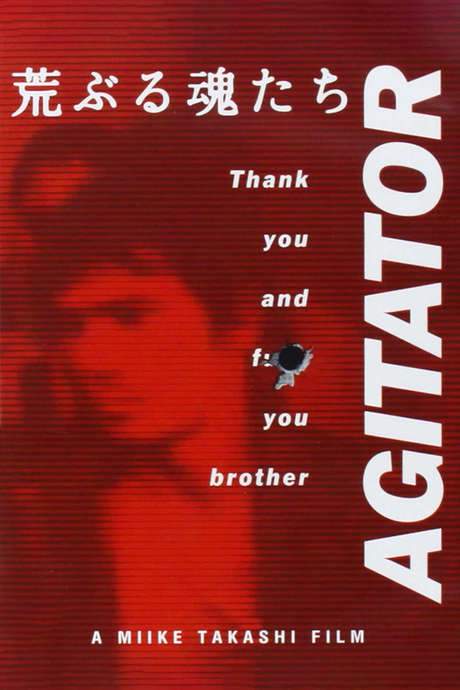
Agitator (2001) movie poster

Plot Summary

Agitator (2001) Plot Summary Explained

Release, runtime and language
2001 · 150 mins · Japanese
Loading streaming availability…
Starring
Daisuke Ryû, Ken'ichi Endô, Naoto Takenaka, Takashi Miike, Masatô Ibu, Hitoshi Ozawa

A gruff salute of “thank you—and fuck you—brother” opens the story. When a reckless young Yakuza torments patrons at a rival crime family’s nightclub, his corpse is soon discovered. The killing sparks inter‑family retaliation, leading to the murder of a powerful crime boss. Devastated, the hot‑headed Kenzaki vows revenge, and a brutal cycle of violence erupts, driving the body count to staggering levels.

On this page (6)
  1. 1 Where to watch
  2. 2 What happens: full plot
  3. 3 Plot questions answered
  4. 4 Movie threads
  5. 5 Movies like Agitator
  6. 6 Every angle
Loading streaming availability…

Full plot summary · contains spoilers

What Happens in Agitator: Full Plot Summary

The whole story of Agitator (2001) explained, from the opening scene to the final frame: every key event, every twist and what it all adds up to. Read it as a quick recap before the sequel, to check a scene you missed, or to finally understand what really happened.

Mr. Kaito, Hiroki Matsukata, runs the Kaito Group, a formidable force of over 2,000 soldiers within the Tenseikai Syndicate. His ambition is stark and unyielding: absorb the Shirane Group’s 500 fighters and the Yokomizo Family’s 400, and emerge as the single largest faction so that he can be chosen as the successor to the syndicate’s hospitalized leader. To pull off this audacious plan, he enlists the help of Mizushima, the sharp-witted head of the Shirane Group, and Muroi, a trusted man within Shirane. Mizushima, in turn, is promised the top spot within Shirane if the maneuver succeeds, a reward that makes the scheme feel all too doable for everyone involved.

To set events in motion, Muroi turns to violence as a catalyst: he hires an outside assassin called Shinozaki Takashi Miike, who launches an attack on Yokomizo turf by preying on hostesses. The assault draws a sharp rebuke from the Higuchi Gang, led by Naoto Takenaka, but Mizushima and Muroi press forward. They orchestrate a deeper ruse by bringing in Numata Hakuryu, an outside killer, to eliminate Yokomizo Takanori and present the hit as revenge for Shirane’s betrayal. The plan is crafted to look like Shirane vengeance, even as the motive is the consolidation of power under Kaito.

Mediating for the Tenseikai, Kaito pushes a broader scheme, but Tsuchiya from the Yokomizo camp resists the initial offers. Undeterred, Mizushima and Muroi propose a staged brotherhood: Shirane Kozo would be brought to a precise moment where Yokomizo soldiers could kill him, clearing the way for Mizushima to assume leadership of Shirane, with Tsuchiya and Kaito swearing loyalty in a formal alliance. The edges of trust begin to fray as Kunihiko Kenzaki of the Higuchi Gang is sent to kill Shirane Kozo and completes the mission without interference, fueling suspicions that the hit was orchestrated from within. The Higuchi Gang severs ties with the Yokomizo Family just before Mizushima and Tsuchiya seal their “brotherhood” under Kaito, a move that further destabilizes the delicate balance of power.

As tensions mount, Kunihiko and his Kenzaki Squad kidnap Muroi and brutalize him to extract a taped confession. They use this to blackmail Tsuchiya, threatening to release the damning evidence if Yoichi Higuchi is not made head of Yokomizo. Yet Yoichi, already weary of the shifting loyalties, has made up his mind that Yokomizo and Shirane are now aligned within the same orbit. In a brutal twist, Muroi is traded back to Shirane for a 50 million yen payoff, but the bargain collapses when Numata shoots Yokomizo. The political calculus has turned personal, and the power plays grow bloodier by the day.

Torii rises as the new head of the Higuchi Gang, signaling a shift in alliances. Kunihiko dismantles the Kenzaki Squad and disperses a windfall of 20 million yen to his men, but soon turns his attention to Mizushima, killing him in a barber shop in a moment that underscores how quickly loyalties can be sundered in this world. The Executive Committee of the Yokomizo Family hears Muroi’s confession and expels Hirata for his involvement while suspending the Higuchi Gang pending further notice, leaving the gang landscape in a precarious limbo.

Numata’s grisly cat-and-mouse game intensifies when he kidnaps Kunihiko’s soldier Sakuraba, dragging Kunihiko into a perilous pursuit through the woods. In the climactic gunfire, Numata kills Yoshio while Hitoshi is left to whimper and bleed as Otomo and Kunihiko’s other loyalists converge to save Sakuraba. The struggle ends in a brutal exchange: Kunihiko and Numata face off, Sakuraba dies despite Kunihiko’s attempt to shield him, Otomo drops dead in the crossfire, and Numata falls to Kunihiko’s final shot. In the end, Kunihiko and Hitoshi emerge as the sole survivors, driving out of the yakuza stronghold with a lit stick of dynamite—an image that captures the film’s unflinching meditation on power, loyalty, and the cost of ambition within a world where lines between friend and foe blur in smoke and blood.
Last updated: October 09, 2025 at 15:17

Was this helpful?

Plot questions answered

Agitator Plot Explained: Your Questions Answered

The questions people ask most about Agitator (2001): what happens in the confusing scenes, why the characters do what they do, the twists, hidden details and what the ending means. Each answer contains spoilers.

Q1

Why does Kaito want to absorb the Shirane Group and Yokomizo Family?

Kaito aims to become the largest faction within the Tenseikai Syndicate so he can be chosen as successor to the hospitalized leader. By absorbing Shirane's 500 fighters and Yokomizo's 400 fighters into his existing 2,000-man Kaito Group, he would command overwhelming power and secure control over the entire syndicate.

Foreshadowing: Early in the film, Kaito's ambition is explicitly stated as consolidating power to become the next leader.

  • kaito
  • tenseikai syndicate
  • power takeover
  • succession
Q2

Why does Mizushima agree to help Kaito's takeover plan?

Mizushima is promised that he will become the leader of the Shirane Group if Kaito's plan succeeds. This incentive motivates him to collaborate with Kaito and Muroi in orchestrating the complex scheme that involves framing Yokomizo and eliminating Shirane Kozo.

Foreshadowing: Kaito explicitly promises Mizushima leadership of Shirane in exchange for his cooperation.

  • mizushima
  • shirane group
  • leadership promise
  • betrayal
Q3

Why is Shirane Kozo killed and who arranges it?

Shirane Kozo is killed as part of a power grab orchestrated by Mizushima and Muroi. Their plan involves luring Kozo to a pre-arranged meeting where Yokomizo soldiers would kill him, allowing Mizushima to take over Shirane leadership. The hit is framed as Yokomizo revenge, but Kunihiko Kenzaki from the Higuchi Gang actually carries out the killing.

Foreshadowing: Mizushima and Muroi's scheme is revealed when they propose the staged brotherhood to Tsuchiya.

  • shirane kozo
  • assassination
  • mizushima
  • muroi
  • kenzaki
Q4

What is the purpose of kidnapping Muroi and extracting his confession?

Kunihiko and the Kenzaki Squad kidnap Muroi to force a taped confession about the entire conspiracy. They plan to use this recording to blackmail Tsuchiya into making Yoichi Higuchi the head of Yokomizo. However, Yoichi has already accepted the new political arrangement, rendering the blackmail attempt ineffective.

Foreshadowing: Muroi's involvement in hiring Numata makes him a key witness to the conspiracy.

  • muroi
  • kidnapping
  • confession
  • blackmail
  • tenseikai
Q5

Why does Numata kill Yoichi Higuchi?

Numata kills Yoichi to prevent the taped confession from being released. When Mizushima and Muroi trade Muroi back to Shirane for 50 million yen, Numata shoots Yoichi to ensure the conspiracy remains hidden and the power grab can proceed without exposure.

Foreshadowing: Numata is the outside killer hired to eliminate Yokomizo Takanori and frame Shirane.

  • numata
  • yoichi higuchi
  • murder
  • conspiracy cover-up
Q6

Why does Kunihiko kill Mizushima in the barber shop?

Kunihiko kills Mizushima as retaliation for orchestrating the conspiracy that led to Shirane Kozo's death. After disbanding the Kenzaki Squad and distributing 20 million yen to his men, Kunihiko travels to the barber shop and eliminates Mizushima, demonstrating how quickly loyalties shift in this world.

Foreshadowing: Mizushima's role in the conspiracy makes him a target for those seeking revenge.

  • kunihiko
  • mizushima
  • barber shop
  • revenge
  • killing
Q7

Why does the Higuchi Gang sever ties with Yokomizo Family?

The Higuchi Gang cuts ties with Yokomizo after Kunihiko completes the hit on Shirane Kozo without interference. This raises suspicions that the assassination was orchestrated from within the organization, causing the Higuchi Gang to distance itself from the deteriorating situation.

Foreshadowing: The severed ties occur shortly before Mizushima and Tsuchiya swear brotherhood under Kaito.

  • higuchi gang
  • yokomizo family
  • alliance
  • severed ties
Q8

What happens in the woods confrontation with Numata?

Numata kidnaps Kunihiko's soldier Sakuraba, leading Kunihiko, Otomo, and Hitoshi to pursue him through the woods. During the standoff, Numata kills Yoshio while Sakuraba dies despite Kunihiko's attempt to shield him. Otomo is also killed in the crossfire before Kunihiko finally defeats Numata.

Foreshadowing: Numata's cat-and-mouse game with Sakuraba sets up the final confrontation.

  • numata
  • woods
  • sakuraba
  • confrontation
  • final battle
Q9

What does the dynamite at the end represent?

Kunihiko and Hitoshi emerge as the sole survivors and drive out of the yakuza headquarters with a lit stick of dynamite. This image symbolizes the explosive, self-destructive nature of their world. The dynamite represents the inevitable destruction that comes with their brutal power struggles, leaving only ashes of their former alliances.

Foreshadowing: The entire film builds toward this symbolic conclusion of consumed by their own violence.

  • dynamite
  • ending
  • symbolism
  • destruction
  • bleak conclusion
Q10

Why is Numata hired as an outside assassin?

Numata is hired by Mizushima and Muroi to kill Yokomizo Takanori and present it as revenge for Shirane's betrayal. This outside killer allows them to distance themselves from the murder while destabilizing rivals. The plan is crafted to make it appear as if Shirane is seeking vengeance, concealing the true motive of power consolidation under Kaito.

Foreshadowing: The use of outside killers is part of the layered deception throughout the film.

  • numata
  • outside assassin
  • framing
  • shirane
  • yokomizo
Q11

What is the purpose of the brotherhood pledge between Mizushima and Tsuchiya?

Mizushima and Tsuchiya swear brotherhood under Kaito as part of the power consolidation scheme. This formal alliance is meant to pave the way for Kaito to take control of the Tenseikai Syndicate while allowing Mizushima to assume leadership of Shirane after Kozo's elimination. The pledge represents the fragile, calculated trust between rival factions.

Foreshadowing: The brotherhood pledge is proposed during the mediation attempts.

  • brotherhood pledge
  • mizushima
  • tsuchiya
  • kaito
  • alliance
Q12

Why do only Kunihiko and Hitoshi survive?

Kunihiko and Hitoshi emerge as the sole survivors because they are the last loyalists standing after the brutal cycle of violence consumes nearly everyone involved in the conspiracy. The film depicts a relentless series of assassinations, betrayals, and retaliations that decimate the Kenzaki Squad, the Higuchi Gang leadership, and rival factions, leaving only these two to escape.

Foreshadowing: The mounting body count throughout the film builds to this inevitable outcome.

  • kunihiko
  • hitoshi
  • survivors
  • violence
  • yakuza

Movie threads

More Movies Like Agitator, by Mood & Story

Curated lists built around what makes Agitator tick: the same mood, the same kind of story or the same emotional payoff. Each list explains why these movies belong together.

Gritty crime cycle movies like Agitator

Stories where revenge and betrayal trigger an unstoppable cascade of brutality. If you liked the relentless brutality and fatalistic spiral of violence in Agitator, explore these movies. This section features similar fast-paced crime stories steeped in betrayal and revenge, creating a tense and bleak viewing experience for fans of hard-hitting yakuza and organized crime dramas.

  • violent
  • tense
  • brutal
  • ruthless
  • fatalistic
  • grim
  • Tone: dark, tense, bleak
  • Pacing: fast, relentless
Why these movies?

The story pattern: The narrative typically begins with a catalyst—an assassination or betrayal—that shatters an already fragile balance of power. This single event sets off a domino effect of retaliations, drawing characters deeper into a vortex of violence from which there is no escape. The journey is one of escalating stakes, broken loyalties, and the tragic realization that the cycle consumes everyone involved.

Why they belong together: Movies are grouped here because they share a core narrative engine: an unstoppable cycle of violence driven by codes of honor, revenge, and power struggles. They create a similar viewing experience defined by high tension, fast pacing, dark tone, and a bleak outlook on the futility of violence.

Paranoid underworld thrillers similar to Agitator

Cinematic journeys into claustrophobic criminal hierarchies where trust is a liability. For viewers who appreciated the tense power struggles and pervasive sense of betrayal in Agitator, this section collects movies with a similar feel. Discover more complex crime dramas that explore the ruthless ambition and deep-seated paranoia within tight-knit criminal worlds, offering a gritty and emotionally heavy experience.

  • paranoid
  • tense
  • gritty
  • ruthless
  • claustrophobic
  • complex
  • Tone: dark, paranoid, tense
  • Pacing: variable, but often fast-paced with intricate plotting
Why these movies?

The story pattern: These stories unfold within rigid, hierarchical structures like yakuza families or mafia syndicates. The plot revolves around a power vacuum or a consolidation scheme, forcing characters to navigate a web of shifting allegiances. The narrative is often complex, driven by deceptions and layered motivations, as characters grapple with the question of who to trust in a world built on distrust.

Why they belong together: These films are united by their immersive and grim depiction of criminal organizations as pressure cookers of ambition and fear. They share a high emotional weight, a complex narrative structure, and a consistently dark tone that makes loyalty feel like a temporary and dangerous luxury.

If you liked this

Movies Like Agitator

Similar movies to Agitator: the same genre, themes or kind of story. Each one comes with its own plot summary, timeline and ending explained.

Browse all movie summaries

Every angle

Agitator (2001) Explained: Plot, Timeline & Characters

Everything about Agitator in one place: what happens in the plot summary, the timeline in chronological order, the characters and meaning and a spoiler-free summary. What's After the Movie adds the cast, box office and post-credit scenes.

Coming soon on iOS and Android

The Plot Explained Movie Summary App

Plot summaries, endings explained and timelines on your phone. Catch up on any movie in minutes, save your favorites and never miss a twist again.

Be the first to know when we launch. Your email stays private, always.

Learn more about the app