Plot Explained Spoilers guaranteed!
Plot Explained

Browse by genre

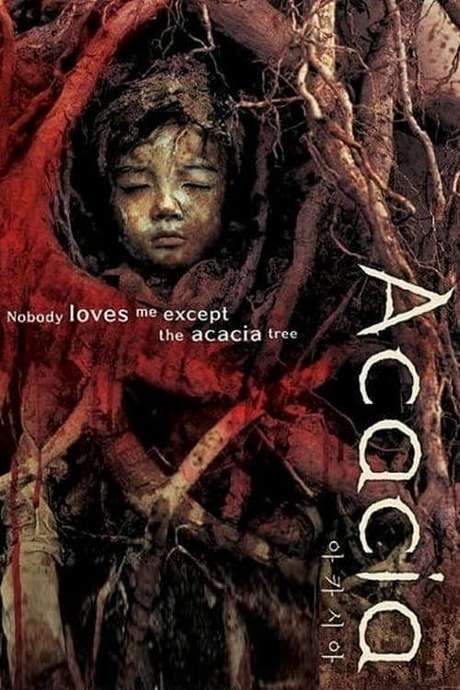
Acacia (2003) movie poster

Timeline

Acacia (2003) Timeline Explained – Every Event in Order

Release, runtime and language
2003 · 102 mins · Korean
Loading streaming availability…
Directed by
Park Ki-hyung
Starring
Shim Hye-jin, Kim Mi-kyeong, Park Woong, Jung Hee-tae, Jung Na-Yoon, Moon Woo-Bin

A Korean horror film follows an adopted boy who is mysteriously linked to a dead acacia tree. After settling into his new home, the tree revives and unsettling occurrences begin. When his adoptive parents become pregnant, the boy is sent back to the orphanage, unleashing further terror.

On this page (6)
  1. 1 Where to watch
  2. 2 Events in order (12)
  3. 3 Timeline questions answered
  4. 4 Movie threads
  5. 5 Movies like Acacia
  6. 6 Every angle
Loading streaming availability…

12 events in order · contains spoilers

Acacia Timeline: Events in Chronological Order

Every key event of Acacia (2003) in order, scene by scene, with when and where it takes place. Use it to untangle flashbacks, time jumps and parallel storylines, to refresh your memory before the sequel or to find the exact scene you are thinking of.

  1. Adoption and move to a new home

    Mi-sook and Do-il adopt a young boy named Jin-seong and bring him into their home. His name is later changed to Kim Jin-seong as he settles in with the couple. The acacia tree in their backyard quickly becomes a focal point in his new life and imagination.

    When
    initial
    Where
    Mi-sook and Do-il's house and backyard
  2. Jin-seong forms a bond with the acacia tree

    Jin-seong is drawn to the acacia tree in the backyard and believes it is his mother. The tree becomes a center for unsettling events as he starts acting as if he has run away. His attachment to the tree marks the first signs of the disturbing influence it will have on his life.

    When
    shortly after adoption
    Where
    Backyard of the family home
  3. Jin-seong befriends Min-jee

    Jin-seong befriends an older girl named Min-jee, who tells him she cannot attend school due to blood loss. After she kisses him, Jin-seong becomes more aggressive. The encounter marks the emergence of Jin-seong's darker impulses.

    When
    early friendship
    Where
    Neighborhood and Jin-seong's home
  4. Mi-sook becomes pregnant and the new baby arrives

    Mi-sook becomes pregnant and gives birth to a baby named Hae-sung. Jin-seong's mood shifts toward withdrawal and anger as his sense of stability diminishes. The growing family dynamic intensifies the underlying tensions.

    When
    mid pregnancy to birth
    Where
    Family home
  5. Jin-seong's violence escalates

    Jin-seong's emotional difficulties deepen and he grows more volatile toward his adopted family. His aggression peaks when he tries to smother the newborn Hae-sung, revealing a chilling loss of control. The incident confirms a dangerous change in his behavior.

    When
    after Hae-sung's birth
    Where
    Family home
  6. Mi-sook chops down the acacia tree

    Frustrated by Jin-seong's fixation, Mi-sook decides to chop down the acacia tree. The act ignites a new crisis, and Jin-seong is said to have run away afterward. The tree's removal is a turning point in the family's dynamics.

    When
    soon after the baby is born
    Where
    Backyard
  7. The tree blooms and Min-jee changes

    After Jin-seong's disappearance, the acacia tree blooms with unusual life. Min-jee's behavior shifts—she grows obsessed with the tree and claims to hear Jin-seong's voice from inside it. Paranoraml phenomena begin to unfold around the tree, affecting others in the family.

    When
    post-disappearance
    Where
    Backyard near the tree
  8. Revelation of the accident and burial

    It is revealed that Jin-seong was gravely injured by accident when his mother tried to chop down the tree. Do-il witnessed the injury and helped bury him, believing he was dead. This revelation reframes the family’s fears and guilt surrounding Jin-seong's fate.

    When
    revelation moment
    Where
    Backyard burial site
  9. Jin-seong's alive arm and final burial

    When Jin-seong's arm moves, proving he is alive, Do-il kills him by finishing the burial with a shovel. The moment isolates the family in its tragedy and seals Jin-seong’s fate in their stories. The act is driven by shock and denial following the earlier injury.

    When
    upon discovery of life
    Where
    Backyard burial site
  10. Mother’s guilt manifests as a delusion

    Overwhelmed by guilt and stress, Jin-seong's mother creates an illusion that her adopted son ran away. She clings to this false memory as a coping mechanism, gradually losing grip on reality. Her mental state worsens as the mysterious events surrounding the tree intensify.

    When
    post-burial
    Where
    Family home, later isolation
  11. Paranormal events intensify around the tree

    With Jin-seong believed dead by the family, the acacia tree continues to radiate life and triggers more supernatural occurrences. Flowers and ants attack members of Jin-seong's family, while Min-jee and others report eerie sounds and voices. The tree becomes the epicenter of the haunting narrative.

    When
    post-burial or ongoing
    Where
    Backyard around the tree
  12. The cycle of guilt and obsession continues

    The family remains trapped in a cycle of guilt, fear, and fascination with the tree and Jin-seong's supposed presence. Min-jee's obsession mirrors the mother's deteriorating mental state, suggesting that the past tragedy continues to shape their lives. The conclusion leaves open the fates of the characters and the lingering influence of the acacia tree.

    When
    final
    Where
    Family home and surroundings

Last updated: October 09, 2025 at 15:23

Was this helpful?

Timeline questions answered

Acacia Timeline Explained: Your Questions Answered

When does it happen, and why in that order? The questions people ask about the chronology of Acacia (2003): time jumps, flashbacks, cause and effect between scenes and the correct order of events, each answered with spoilers.

Q1

Why does Jin-seong believe the acacia tree is his mother?

Jin-seong's attachment to the acacia tree stems from his adoption trauma. As an orphan, he creates a symbolic maternal connection to the tree, using it as a psychological substitute for the birth mother he never knew. This desperate need for maternal connection is a core element of his character development throughout the film.

Foreshadowing: The tree's significance is established immediately after his adoption, when he is drawn to it in the backyard.

  • jin-seong
  • acacia tree
  • adoption
  • orphan
  • mother figure
Q2

Why can't Min-jee attend school and what happened to her?

Min-jee reveals she cannot go to school because she has 'lost a lot of blood.' This hints at either a medical condition or, more likely in the film's context, that she may have been sexually abused or exploited, possibly by her father, which is a common interpretation given the film's dark themes involving children and trauma.

Foreshadowing: Min-jee's condition and her disturbing kiss on Jin-seong trigger his violent behavioral changes.

  • min-jee
  • blood loss
  • school
  • abuse
  • trauma
Q3

Why does Jin-seong try to harm the newborn baby Hae-sung?

Jin-seong's attempt to smother baby Hae-sung stems from profound emotional instability caused by several factors: his obsessive connection to the acacia tree, the arrival of a biological child threatening his place in the family, and the corrupting influence of Min-jee's kiss which awakens darker impulses in him. He sees the baby as a replacement that will erase him.

Foreshadowing: His behavior grows increasingly erratic and violent after Min-jee kisses him and after Mi-sook becomes pregnant.

  • jin-seong
  • hae-sung
  • baby
  • attack
  • violence
  • adopted son
Q4

Why does Mi-sook chop down the acacia tree?

Mi-sook decides to chop down the tree because she believes it is influencing Jin-seong's disturbing behavior. As his fixation on the tree intensifies, combined with his violent actions toward the baby, she sees the tree as the source of corruption and hopes removing it will restore normalcy to her adopted son.

Foreshadowing: This decision directly follows Jin-seong's attempt to harm the newborn and his escalating obsession.

  • mi-sook
  • acacia tree
  • chop
  • adopted son
  • family
Q5

What really happened to Jin-seong after he disappeared?

Jin-seong did not run away. When Mi-sook tried to chop down the tree, the axe slipped and struck Jin-seong, seriously injuring him. His adoptive father Do-il buried him, believing he was dead. When Jin-seong's arm moved showing he was still alive, Do-il struck him with a shovel to finish the burial, killing him.

Foreshadowing: The family claims Jin-seong ran away, but the tree blooming after his disappearance and Min-jee hearing his voice hint at something more sinister.

  • jin-seong
  • death
  • burial
  • do-il
  • accident
  • tree
Q6

Why does Do-il kill Jin-seong when he finds him alive under the tree?

Do-il kills Jin-seong in a moment of panic and shock. After burying what he thought was a dead body, he sees Jin-seong's arm move, proving the boy is still alive. Rather than seeking help or attempting to save him, Do-il chooses to complete the burial, either believing the boy is too injured to survive or acting out of fear of the consequences.

Foreshadowing: This tragic act explains the family's subsequent guilt and the mother's delusional coping mechanism.

  • do-il
  • jin-seong
  • kill
  • murder
  • burial
  • alive
Q7

Why does the acacia tree bloom after Jin-seong disappears?

The tree blooms dramatically after Jin-seong's death, suggesting a supernatural connection between the boy and the tree. The film implies the tree draws life force from Jin-seong, he believed it was his mother, but it may have been sustaining him or feeding on him. His death releases the tree into unnatural bloom, turning it into a symbol of his lingering presence and vengeance.

Foreshadowing: Jin-seong's belief that the tree was his mother foreshadows their spiritual bond continuing after death.

  • acacia tree
  • bloom
  • supernatural
  • jin-seong
  • death
Q8

Why does Min-jee hear Jin-seong's voice coming from the tree?

Min-jee becomes obsessed with the tree after Jin-seong's death and claims to hear his voice emanating from within the trunk. This could be interpreted as: the tree actually contains his spirit, Min-jee's own trauma and guilt manifest as auditory hallucinations, or the film suggests a psychic connection between the two children who shared a traumatic bond.

Foreshadowing: Their earlier connection through Min-jee's kiss and shared trauma sets up this supernatural link.

  • min-jee
  • voice
  • tree
  • supernatural
  • jin-seong
  • paranormal
Q9

Why does Jin-seong's adoptive mother believe he ran away?

Mi-sook's mother creates an elaborate delusion that Jin-seong ran away rather than accepting the truth of his death. Overwhelmed by guilt and psychological stress from her role in his injury and subsequent murder by Do-il, she constructs this false memory as a coping mechanism. This delusion progressively worsens, eroding her grip on reality.

Foreshadowing: The mother's refusal to accept the truth is established early as she insists Jin-seong simply ran away.

  • mi-sook mother
  • delusion
  • guilt
  • ran away
  • psychological
Q10

Is the acacia tree actually supernatural in the film?

The acacia tree operates as both a psychological symbol and a supernatural force. It draws Jin-seong's obsession, blooms unnaturally after his death, produces flowers and ants that attack his adoptive family, and becomes a vessel for his voice. The film leaves ambiguity but suggests the tree has a malevolent, supernatural presence tied to Jin-seong's spirit.

Foreshadowing: The tree's ominous presence is established from Jin-seong's first day in the home, where unsettling events begin.

  • acacia tree
  • supernatural
  • horror
  • spirit
  • haunting
Q11

What is the cycle of guilt and obsession that traps the family?

The family becomes trapped in a destructive cycle: Mi-sook's guilt over injuring Jin-seong manifests as overprotectiveness, Do-il's guilt drives him to bury the truth, the mother retreats into delusion, and Min-jee becomes obsessed with the tree, mirroring Jin-seong's own fixation. This cycle perpetuates the haunting as the family can never openly confront their collective crime.

Foreshadowing: The film's conclusion shows no resolution, with the haunting continuing as the family remains locked in their各自的心理监狱.

  • guilt
  • obsession
  • family
  • cycle
  • psychological
  • haunting

Movie threads

More Movies Like Acacia, by Mood & Story

Curated lists built around what makes Acacia tick: the same mood, the same kind of story or the same emotional payoff. Each list explains why these movies belong together.

Family trauma horror movies like Acacia

Supernatural forces punish families for their buried sins and psychological wounds. If you liked the oppressive, trauma-driven horror of Acacia, explore these movies where supernatural events are a direct consequence of family secrets and psychological wounds. These films blend domestic drama with atmospheric terror for a deeply unsettling experience.

  • unsettling
  • oppressive
  • tragic
  • melancholic
  • atmospheric
  • anxious
  • Tone: dark, melancholic, tragic
  • Pacing: steady, escalating dread
Why these movies?

The story pattern: Stories in this thread typically explore a family unit being psychologically and supernaturally dismantled by a repressed event, often involving a child. The horror escalates steadily as past sins are unearthed, leading to a bleak confrontation with the consequences of their actions.

Why they belong together: These films are grouped by their shared focus on using supernatural horror as a metaphor for family trauma. They create a heavy, anxious mood through a steady pace, dark tone, and the chilling idea that the home itself has become haunted by guilt.


Psychological decay horror films similar to Acacia

Stories where guilt manifests as a supernatural force that erodes the mind. For viewers who appreciated the psychological horror and theme of guilt in Acacia, this list features movies where characters are tormented by supernatural manifestations of their own sins, leading to a steady, bleak unraveling of their sanity.

  • psychological
  • unsettling
  • somber
  • tragic
  • anxious
  • guilt-ridden
  • Tone: dark, somber, tragic
  • Pacing: steady, psychological burn
Why these movies?

The story pattern: The narrative follows characters, often parents or caregivers, as they are haunted by a specific, grievous mistake. The horror is internal and psychological, with external supernatural events serving to mirror and accelerate their mental and moral collapse towards an inescapably bleak conclusion.

Why they belong together: These movies share a core pattern of psychological horror where the real terror is the character's guilt. They are united by a heavy emotional weight, a steady pacing that builds unease, and a focus on the tragic consequences of a single horrific choice.

If you liked this

Movies Like Acacia

Similar movies to Acacia: the same genre, themes or kind of story. Each one comes with its own plot summary, timeline and ending explained.

Browse all movie summaries

Every angle

Acacia (2003) Explained: Plot, Timeline & Characters

Everything about Acacia in one place: what happens in the plot summary, the timeline in chronological order, the characters and meaning and a spoiler-free summary. What's After the Movie adds the cast, box office and post-credit scenes.

Coming soon on iOS and Android

The Plot Explained Movie Summary App

Plot summaries, endings explained and timelines on your phone. Catch up on any movie in minutes, save your favorites and never miss a twist again.

Be the first to know when we launch. Your email stays private, always.

Learn more about the app