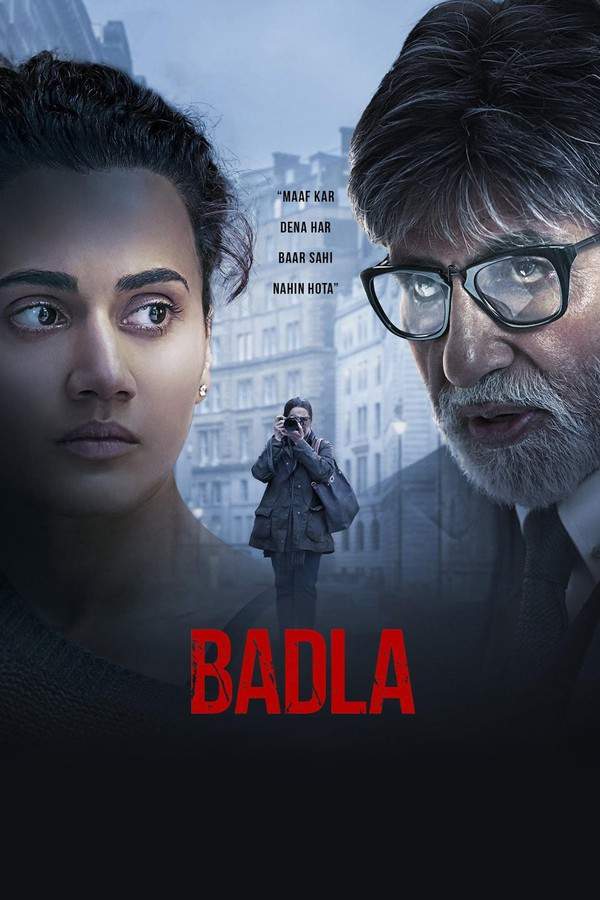
Siddharth is a celebrated film director whose life takes a dark turn when his wife Anjali is found murdered in their home. The case instantly becomes a media storm and a focal point for public opinion, largely because the standout prosecutor, Veerendra, is known as a fearless and incorruptible figure who has never lost a case. The courtroom drama that follows is charged with suspense, reputation, and the black-and-white questions of guilt and innocence.
At the bail hearing, the state presents CCTV footage that seemingly places Siddharth at the crime scene, painting him as the sole person potentially connected to the murder. The judge denies bail, and Siddharth remains in custody while investigators search for a solid thread to pull. During interrogation, he does not confess, but he makes a provocative prediction: that Veerendra—a prosecutor by trade yet someone who respects the pursuit of truth above all else—will one day defend him. This odd confidence piques Veerendra’s curiosity and sets him on a path to re-examine the entire case.
On a fresh look at the crime scene, Veerendra spots a crucial discrepancy in the chain of evidence: the house window shows signs of a break-in, hinting at a scenario more complex than a straightforward crime carried out by a single person. This tiny clue prompts a broader reevaluation of what actually happened that night and who might have been involved.
In a dramatic turn, at the next hearing, Veerendra flips sides and takes up Siddharth’s defense. He publicly questions the initial narrative and shifts the focus to Munna, a man who once harassed Anjali and admired her from afar. Munna had served a brief jail term after Anjali reported him, and in the days leading up to the murder he had begun working as a carpenter in a neighboring house. CCTV footage shows him entering a neighbor’s home a few hours before the crime but—crucially—does not show him leaving. Veerendra argues that Munna exploited the break-in window to slip inside Anjali’s house and commit the murder. The court accepts this version, Siddharth is released, and Munna becomes the prime target of pursuit with an arrest warrant issued in his name.
After his release, Siddharth pursues Munna, and a confrontation leaves Munna bruised and beaten before the police intervene and rush him to the hospital. In court, Munna eventually confesses to killing Anjali but offers no remorse, and he is sentenced to death. The case seems closed, but the undercurrents of truth begin to shift again.
A few days later, Veerendra visits Siddharth’s home and notices something unsettling: Munna’s mother arrives with a large bag of cash, pressing Siddharth to “return the money and give her son back.” In a tense showdown, Siddharth and the police officer Nayak reveal the deeper truth: Siddharth did kill Anjali. He bribed Nayak to manufacture a flaw in the evidence and to erase footage that showed Munna leaving the house. Initially, Siddharth had planned to kill Munna to silence him, but Anjali urged him to confess, and fear of bringing his family into the spotlight kept him from doing so.
In a hospital room filled with mounting guilt, Siddharth and Nayak had offered Munna money to take the blame, hoping Nayak’s influence could secure a lighter sentence. Munna accepted, driven by his mother’s cancer and his family’s poverty, not expecting a death penalty. Faced with the unraveling of his carefully crafted public image and the threat of a reopened case, Veerendra makes a final, desperate attempt to deliver justice by other means. He survives a violent assault but is left paralyzed, forced to confront the consequences of his pursuit.
With Veerendra unable to pursue the matter in court any longer, Siddharth’s burden of truth grows heavier. He ultimately chooses to reveal everything to the authorities: the premeditated actions that led to Anjali’s death and the cover-up that followed. As the case comes to a head, Munna’s execution date arrives, but a Governor’s order abruptly halts the proceedings and authorizes Siddharth’s arrest, obtained by showing spy camera footage of Siddharth’s confession. The blow to Siddharth’s public image proves too great, and in the face of personal tragedy and mounting guilt, he makes a final, irreversible choice: he commits suicide.
- This layered, high-stakes thriller unfolds with a steady pulse of courtroom strategy, moral ambivalence, and the shifting sands of truth. It questions the price of justice, the ease with which public opinion can sway, and the dark rooms where guilt can be manufactured, concealed, or finally exposed.