Plot Explained Spoilers guaranteed!
Plot Explained

Browse by genre

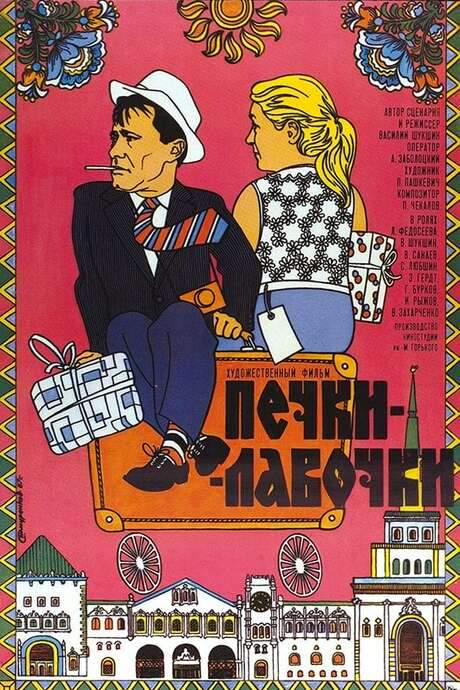
A Trip Without a Load (1963) movie poster

Characters & Themes

A Trip Without a Load (1963) Characters, Setting & Themes Explained

Release, runtime and language
1963 · 89 mins · Russian
Loading streaming availability…
Directed by
Vladimir Vengerov
Starring
Sergey Dreyden, Tamara Syomina, German Kachin, Georgiy Yumatov, Anatoliy Papanov, Nikolai Kryukov

Based on Sergei Antonov’s story, a young journalist from a central newspaper travels to a Siberian timber plant to write a tribute to driver Khromov. He discovers Khromov falsifies distance vouchers and siphons fuel, implicating the plant director. The reporter’s findings force Khromov to escort him on the return trip, providing evidence for a trial.

On this page (8)
  1. 1 Where to watch
  2. 2 Characters explained (3)
  3. 3 Where & when it takes place
  4. 4 Themes & meaning (3)
  5. 5 Character & meaning questions
  6. 6 Movie threads
  7. 7 Movies like A Trip Without a Load
  8. 8 Every angle
Loading streaming availability…

3 main characters · contains spoilers

A Trip Without a Load Characters Explained: Who Is Who

The main characters of A Trip Without a Load (1963), heroes and villains: what drives them, how they change over the course of the story and what each of them reveals about the film's bigger ideas.

  • Pavel Sirotkin (Aleksandr Demyanenko)

    A young novice Moscow journalist who is assigned to investigate the northern timber industry. He gathers facts about fraud and the activities of self-serving workers, but his moral compass is tested as he weighs exposing the truth against personal and professional risk.

    • 🗞️ Journalist
    • 🧭 Moral Dilemma
  • Nikolai Khromov (Georgiy Yumatov)

    A shrewd driver and foreman in the timber operation. He is capable and calculating, manipulating mileage accounts to serve his own interests. Under pressure, his loyalty to his own survival clashes with the journalist's push for the truth.

    • 🚚 Driver
    • 🧭 Moral Ambition
  • Akim Sevastyanovich (Anatoliy Papanov)

    Director of the forestry administration, a cunning and resourceful chief who values implementing the plan at any price. He resists the journalist's exposé and embodies the systemic drive toward expediency over integrity.

    • 🏛️ Director
    • 🧭 Calculating

Last updated: October 04, 2025 at 16:46

Was this helpful?

Setting

Where and When Does A Trip Without a Load Take Place?

The setting of A Trip Without a Load (1963): the year and time period, the places and locations, and how they shape the characters, the mood and the tension of the story.

Time period

Location

Russia's northern taiga timber region

The film is set in the harsh winter taiga of northern Russia, focused on the timber industry. Snowbound landscapes, long nights and frozen rivers frame the narrative as it follows workers and managers in a remote forestry setting. The setting highlights the cold, remote work camps and the rigid power dynamics of the forestry administration.

  • 🌲 Taiga
  • 🏭 Timber Industry
  • ❄️ Winter Landscape

Last updated: October 04, 2025 at 16:46

Was this helpful?

3 major themes

A Trip Without a Load Meaning: Themes & Message Explained

What is A Trip Without a Load (1963) really about? The emotional, social and philosophical themes the film keeps returning to, its symbolism and the message beneath the surface.

  • Moral Conflict

    A young journalist must choose between exposing fraud and staying true to his principles. The pursuit of truth collides with pressure from powerful figures and personal risk. The film uses Pavel Sirotkin's dilemma to explore integrity in a corrupt system.

  • Survival

    The protagonists face brutal winter conditions: a snowstorm, a frozen river, and temperatures dropping to minus 40 degrees. Their survival hinges on decisions, loyalty, and resourcefulness in a landscape where help is distant. The environment amplifies the moral tensions driving the story.

  • Power and Corruption

    Khromov's manipulation of mileage and the forestry director's ruthless pragmatism reveal how a system rewards expediency over ethics. The characters are tested by a leadership culture that values results over truth. The film examines whether individuals can resist corrupt accelerants within entrenched power.

Last updated: October 04, 2025 at 16:46

Was this helpful?

Character & theme questions

A Trip Without a Load Characters & Meaning: Your Questions Answered

The questions people ask about A Trip Without a Load (1963): who the characters really are, their relationships, what the symbols mean, where it takes place and what the movie is really about. Each answer contains spoilers.

Q1

Where is the movie set?

The film takes place in Russia's northern taiga, a remote Siberian forest region known for its harsh winter conditions. The story unfolds around timber industry work camps surrounded by snowbound landscapes, frozen rivers, and long northern nights.

  • siberia
  • taiga
  • timber camp
  • winter
  • russia
  • setting
Q2

What time period does the film depict?

The film is set in the post-World War II Soviet era, during a period when the Soviet Union was actively developing its northern territories and natural resource industries. This context places the story in the 1950s or early 1960s Soviet Union.

  • soviet union
  • 1950s
  • 1960s
  • post-war
  • era
Q3

What is the main moral conflict in the story?

The central moral conflict revolves around a young journalist named Pavel Sirotkin who must decide whether to expose systemic fraud at a timber plant or protect himself from powerful figures who threaten his safety. The film explores integrity versus self-preservation in a corrupt system.

  • journalist
  • corruption
  • truth
  • integrity
  • moral dilemma
  • ethics
Q4

How does the harsh environment affect the story?

The brutal winter conditions, snowstorms, frozen rivers, and temperatures dropping to minus 40 degrees, serve as both a literal threat and a metaphor for the characters' moral crucible. The frozen, isolated landscape amplifies the stakes of the journalist's dilemma and forces life-or-death decisions.

  • winter
  • survival
  • cold
  • snowstorm
  • frozen river
  • danger
Q5

How does the film portray power and corruption?

The film depicts a system where officials like the forestry director Akim Sevastyanovich value results over truth, rewarding those who manipulate the system for expediency. Driver Khromov's falsification of distance vouchers illustrates how corruption becomes normalized within the hierarchy.

  • corruption
  • power
  • bureaucracy
  • fraud
  • director
  • systemic abuse
Q6

Who is Pavel Sirotkin and what is his role?

Pavel Sirotkin is a young, novice journalist from Moscow assigned to investigate the northern timber industry. He represents journalistic integrity and must navigate the dangerous waters of exposing fraud while facing personal and professional threats.

  • journalist
  • moscow
  • investigator
  • protagonist
  • truth seeker
Q7

Who is Nikolai Khromov and what defines him?

Nikolai Khromov is a shrewd driver and foreman at the timber operation. He is capable and calculating, manipulating mileage accounts to serve his own interests. His character embodies the moral compromise many make to survive in the corrupt system.

  • driver
  • foreman
  • timber worker
  • corruption
  • self-interest
Q8

Who is Akim Sevastyanovich and what does he represent?

Akim Sevastyanovich is the director of the forestry administration, a cunning and resourceful leader who prioritizes meeting quotas and implementing the plan at any price. He embodies the systemic corruption that values expediency over integrity.

  • director
  • forestry
  • administrator
  • bureaucracy
  • authority
  • power
Q9

What does the film say about truth in a corrupt system?

The film examines whether individuals can resist corrupt practices entrenched within powerful institutions. It suggests that pursuing truth brings personal danger but also represents a moral imperative, even when the system is designed to suppress accountability.

  • truth
  • exposure
  • danger
  • journalism
  • accountability
  • resistance
Q10

What is the cultural context of the film?

As a Soviet-era production from 1963, the film reflects the tensions within post-Stalinist Soviet society, exploring themes of institutional fraud and individual conscience within a system that demanded unwavering loyalty to state objectives.

  • soviet culture
  • 1963
  • cold war
  • social critique
  • post-stalinist

Movie threads

More Movies Like A Trip Without a Load, by Mood & Story

Curated lists built around what makes A Trip Without a Load tick: the same mood, the same kind of story or the same emotional payoff. Each list explains why these movies belong together.

Movies about exposing corruption like A Trip Without a Load

A lone investigator uncovers systemic rot, facing grave personal danger. If you enjoyed the high-stakes investigation in A Trip Without a Load, explore these other films where journalists, whistleblowers, or outsiders risk everything to uncover the truth in harsh and unforgiving settings.

  • investigative
  • tense
  • corruption
  • dangerous
  • moral conflict
  • suspenseful
  • Tone: dark, tense
  • Pacing: variable, building suspense
Why these movies?

The story pattern: The narrative follows a protagonist who begins with a specific, often professional, mission that leads them to a dark secret. Their discovery transforms the mission into a desperate survival scenario, forcing a physical and moral test far beyond their initial goal.

Why they belong together: These films share a core structure of investigation turning into survival, blending tense procedural elements with intense psychological and physical threats. They are united by a dark tone, heavy emotional weight, and the theme of moral conviction clashing with systemic decay.


Harsh survival dramas with moral tests like A Trip Without a Load

An extreme environment strips away civilization, testing a character's core. For viewers who appreciated the brutal Siberian setting of A Trip Without a Load, this collection features other films where extreme isolation and a fight for survival become the ultimate test of a character's morality and will.

  • isolated
  • harsh
  • survival
  • psychological
  • oppressive
  • intense
  • Tone: oppressive, intense
  • Pacing: variable, deliberate survival
Why these movies?

The story pattern: The narrative uses an oppressive and isolated setting to externalize internal conflicts. The struggle against the environment becomes a parallel to a psychological or moral battle, where survival depends on difficult choices that redefine the characters.

Why they belong together: These movies are grouped by their use of a harsh, isolating setting as a central narrative device. They share a tense, oppressive mood, high stakes, and a focus on how extreme circumstances force brutal character revelations and moral reckonings.

If you liked this

Movies Like A Trip Without a Load

Similar movies to A Trip Without a Load: the same genre, themes or kind of story. Each one comes with its own plot summary, timeline and ending explained.

Browse all movie summaries

Every angle

A Trip Without a Load (1963) Explained: Plot, Timeline & Characters

Everything about A Trip Without a Load in one place: what happens in the plot summary, the timeline in chronological order, the characters and meaning and a spoiler-free summary. What's After the Movie adds the cast, box office and post-credit scenes.

Coming soon on iOS and Android

The Plot Explained Movie Summary App

Plot summaries, endings explained and timelines on your phone. Catch up on any movie in minutes, save your favorites and never miss a twist again.

Be the first to know when we launch. Your email stays private, always.

Learn more about the app