Plot Explained Spoilers guaranteed!
Plot Explained

Browse by genre

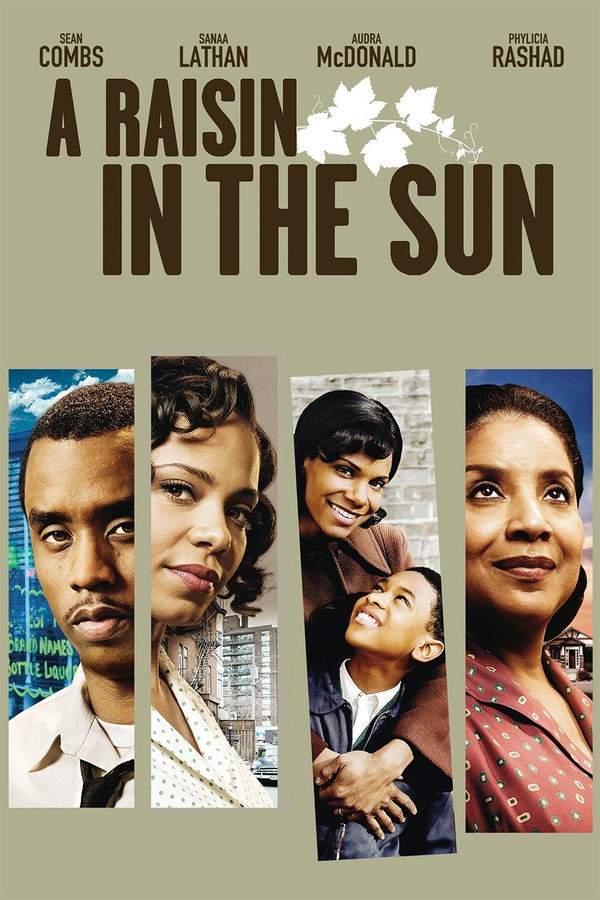
A Raisin in the Sun (2008) movie poster

Timeline

A Raisin in the Sun (2008) Timeline Explained – Every Event in Order

Release, runtime and language
2008 · 131 mins · English
Loading streaming availability…
Directed by
Kenny Leon
Starring
Morgan Freeman, Sean Patrick Thomas, David Oyelowo, Martin Roach, Sanaa Lathan, Bill Nunn

The Younger family confronts a pivotal choice after the patriarch’s death leaves them $10,000 in life‑insurance money. They debate whether to purchase a new home in a better neighborhood or invest in a liquor store, each path fraught with risk. Set on Chicago’s South Side in the 1950s, their struggle underscores how dreams can uplift or be shattered by hard decisions.

On this page (6)
  1. 1 Where to watch
  2. 2 Events in order (13)
  3. 3 Timeline questions answered
  4. 4 Movie threads
  5. 5 Movies like A Raisin in the Sun
  6. 6 Every angle
Loading streaming availability…

13 events in order · contains spoilers

A Raisin in the Sun Timeline: Events in Chronological Order

Every key event of A Raisin in the Sun (2008) in order, scene by scene, with when and where it takes place. Use it to untangle flashbacks, time jumps and parallel storylines, to refresh your memory before the sequel or to find the exact scene you are thinking of.

  1. Life insurance check arrives

    The Younger family learns they will receive a $10,000 life insurance payout after Big Walter's death. Each member envisions different uses for the money, revealing their competing dreams. Walter Lee hopes the funds will launch a liquor store venture to lift the family out of poverty.

    Where
    Chicago, Illinois
  2. Green Hat liquor store plan

    Walter Lee and Bobo discuss opening a liquor store as a route to prosperity. Willy Harris chips in with tips about obtaining a business license and moving the operation closer to the Green Hat. The plan grows more concrete, while Lena watches warily from the sidelines.

    Where
    Green Hat club
  3. Ruth's pregnancy revealed

    The next day, Beneatha and Lena discover Ruth is two months pregnant and anxious about the added financial strain. Ruth fears she cannot provide for another child and worries about the future. The revelation compounds the family’s urgency to decide how to use the insurance money.

    Where
    Youngers' apartment
  4. Beneatha's Nigerian dress and date

    Beneatha dresses in Nigerian attire for a date with George Murchinson; she is wary of his dismissive attitude toward her heritage. George belittles her background, while Walter barges in boasting about his own prospects. The scene underscores conflicting ambitions within the family.

    Where
    Youngers' apartment
  5. House purchase announced

    Lena reveals she spent $3,500 on a house in Clybourne Park, delivering unexpected news to the family. Walter’s dream of a liquor business clashes with Lena’s commitment to homeownership. The revelation shifts the focus from quick wealth to long-term security.

    Where
    Youngers' apartment
  6. Walter misses work; Lena locates him

    Mrs. Arnold calls to report Walter missing from his job, prompting Lena to take action. She eventually finds him at the Green Hat, where he reluctantly returns to work. The moment exposes the fragility of his ambitions and the strain it places on the family.

    Where
    Green Hat club
  7. Ruth considers abortion; changes mind

    Ruth seeks an abortion with Miss Tilly's help but learns about the procedure and then decides against it, leaving the salon with a new resolve. The pregnancy remains a central concern for the family as they confront money troubles. Ruth’s choice adds another layer to the household’s decisions.

    Where
    Miss Tilly's salon
  8. Lena reveals house money and tuition plan

    In a cafe, Lena explains she spent $3,500 on the house, leaving $6,500 to allocate. She tells Walter to set aside $3,000 for Beneatha’s medical school tuition and keep the rest for himself. The exchange highlights the rift between Lena’s practical dream and Walter’s elusive ambition.

    Where
    Cafe
  9. New house tour and Lindner visit

    The Youngers tour the new house, which provokes the white neighbors’ disgust. Karl Lindner from the Clybourne Park Improvement Association arrives with an offer to buy them out. The family refuses the deal, asserting their right to move into the home.

    Where
    Clybourne Park neighborhood
  10. Bobo reveals the missing money

    Bobo arrives at the apartment with the devastating news that he gave all the insurance money to Willy Harris, who never showed up at the train station. Walter processes the betrayal and the collapse of his plans. The family confronts the reality of being defrauded.

    Where
    Youngers' apartment
  11. Walter seeks more money from Lindner

    Walter explains that he intends to contact Karl Lindner for additional funds to salvage the house plan. The moment shows a desperate bid to salvage the dream and a growing sense of responsibility toward the family. Tensions rise as the plan teeters on the edge of collapse.

    Where
    Youngers' apartment
  12. Move-in decision and final resolve

    Lindner arrives to sign the papers, but Walter has a change of heart and refuses the deal. He declares the family will move into the house, reclaiming their choice and dignity. The Youngers prepare to leave their apartment and begin a new chapter.

    Where
    Youngers' apartment
  13. Final plan: moving into Clybourne Park

    The family commits to moving into their new home in Clybourne Park, despite ongoing controversy. They rally around each other and look toward a hopeful future. The film ends with the Youngers stepping into a new chapter together.

    Where
    Clybourne Park

Last updated: October 07, 2025 at 10:00

Was this helpful?

Timeline questions answered

A Raisin in the Sun Timeline Explained: Your Questions Answered

When does it happen, and why in that order? The questions people ask about the chronology of A Raisin in the Sun (2008): time jumps, flashbacks, cause and effect between scenes and the correct order of events, each answered with spoilers.

Q1

Why did Lena buy a house instead of letting Walter use the money for the liquor store?

Lena (Mama) chose to buy a house because it represented her late husband's dream and her own desire for stability and dignity. After years of living in a cramped apartment, she wanted her family to have a real home with a yard, a place they could own. While Walter's liquor store represented his personal ambition to escape poverty and gain respect, Lena saw it as a risky gamble that could lose everything. She allocated $3,500 for the house, $3,000 for Beneatha's medical school, and left the remaining money for Walter to use as he saw fit, but her priority was securing the family's future through property rather than speculative business.

  • Lena Younger
  • house purchase
  • liquor store
  • insurance money
  • family dreams
Q2

What happened to the money Willy Harris was supposed to use for the liquor store?

Willy Harris completely stole the money. Walter gave $6,500 to his friend Bobo to hand to Willy Harris, who was supposed to meet him at the train station with the business license and paperwork. Instead, Willy Harris never showed up, and Bobo arrived with the devastating news that all the money was gone. The family had been swindled, leaving them with only the house Lena had already purchased and no funds for Walter's business dreams.

  • Willy Harris
  • stolen money
  • liquor store
  • Bobo
  • betrayal
Q3

Why did Walter refuse Karl Lindner's buyout offer at the end?

Walter refused the buyout because he finally reclaimed his dignity and chose his family's future over money. When Lindner returned to finalize the deal, Walter realized that accepting payment to stay out of the neighborhood would mean surrendering their dream to prejudice. He declared the family would move into the house they had already purchased, asserting their right to live where they chose. This moment represented Walter's transformation from a man consumed by personal ambition to one who prioritizes his family's collective dream and stands up to racial discrimination.

  • Walter Lee Younger
  • Karl Lindner
  • buyout offer
  • Clybourne Park
  • dignity
  • racial discrimination
Q4

Why did Ruth consider having an abortion?

Ruth discovered she was pregnant at a time when the family was already struggling financially. With Walter unemployed, the insurance money uncertain, and their living situation precarious, she feared she could not provide for another child. The pregnancy added to her overwhelming stress, leading her to seek an abortion at Miss Tilly's salon. However, after learning about the procedure, Ruth changed her mind and decided to keep the baby, choosing hope over despair despite the family's uncertain circumstances.

  • Ruth Younger
  • pregnancy
  • abortion
  • financial struggle
  • family decisions
Q5

What does Walter mean when he says life is about "the takers and the tooken"?

Walter's phrase "the takers and the tooken" reflects his worldview that life is a constant struggle between those who seize opportunities and those who have things taken from them. He uses this philosophy to explain why he desperately wants the liquor store, he believes his family has always been "taken" rather than "taking." The line encapsulates his frustration with poverty and his desire to finally claim something for himself and his family. However, the phrase also highlights the tension within the family, as different members have different definitions of what it means to truly "take" life.

  • Walter Lee Younger
  • takers and the tooken
  • philosophy
  • poverty
  • ambition
Q6

Why did the white neighbors oppose the Youngers moving into Clybourne Park?

The white neighbors in Clybourne Park represented the racial prejudice and fear of integration that existed in 1950s Chicago. When the Youngers purchased a house in the previously all-white neighborhood, the white residents reacted with hostility and disgust. Karl Lindner from the Clybourne Park Improvement Association arrived to offer the family money to withdraw their purchase, attempting to maintain the neighborhood's segregation. This external pressure forced the Youngers to choose between accepting compensation to avoid conflict or standing their ground and claiming their right to live wherever they chose.

  • Clybourne Park
  • racial segregation
  • white neighbors
  • Karl Lindner
  • housing discrimination
Q7

Why does Beneatha pursue a relationship with Joseph Asagai?

Beneatha is drawn to Joseph Asagai because he represents a connection to her African heritage that she craves amid her assimilation-minded family. While her date with George Murchison dismisses her Nigerian attire as a costume, Joseph genuinely appreciates her interest in her roots. Their relationship evolves as he consoles her after the money is stolen, and he encourages her to maintain hope. Beneatha's attraction to Joseph reflects her larger search for identity and cultural belonging beyond the constraints of her Chicago neighborhood.

  • Beneatha Younger
  • Joseph Asagai
  • Nigerian heritage
  • cultural identity
  • relationship
Q8

What caused Walter to miss work at the beginning of the story?

Walter began missing work because he became obsessed with the liquor store plan and stopped focusing on his job as a chauffeur. After the insurance check arrived, Walter spent his time at the Green Hat club planning the business venture with Willy Harris rather than reporting to work. His absence prompted Mrs. Arnold (his employer) to call Lena, and she eventually found Walter at the club and urged him to return to his job. This marked one of the early fractures in the family's stability as Walter prioritized his personal ambition over his responsibilities.

  • Walter Lee Younger
  • missing work
  • Green Hat club
  • liquor store ambition
Q9

How much of the insurance money did Lena use to buy the house?

Lena spent $3,500 of the $10,000 life insurance check to purchase the house in Clybourne Park. This left approximately $6,500 for the family's other ambitions. Lena then instructed Walter to set aside $3,000 of that remaining amount for Beneatha's medical school tuition, leaving about $3,500 for Walter to use as he wished, presumably for his liquor store venture. However, when Willy Harris stole the money, the remaining funds were lost, leaving the family with only the house Lena had already secured.

  • insurance money
  • house purchase
  • $3
  • 500
  • Clybourne Park
  • allocation
Q10

Why was the $10,000 insurance check so important to the Younger family?

The $10,000 life insurance check represented a rare opportunity for the Younger family to escape poverty and pursue their individual dreams. For years, they had lived in a cramped apartment on Chicago's South Side, struggling financially. The sudden windfall meant each family member could potentially achieve their vision: Ruth hoped for relief from constant hardship, Beneatha wanted medical school education, Walter sought financial independence through business ownership, and Lena dreamed of homeownership. The money symbolized possibility, but its competing uses also exposed deep family tensions.

  • life insurance
  • $10
  • 000
  • poverty
  • family dreams
  • financial opportunity
Q11

Why was Walter so desperate to open a liquor store?

Walter desperately wanted the liquor store because he saw it as his path to dignity, independence, and proving his worth as a man. Working as a chauffeur for white employers left him feeling powerless and humiliated. He believed owning a business would finally give him control over his life and the respect he craved. The liquor store represented more than money, it was his chance to stop being "taken" and start "taking" in a world that had marginalized him. His ambition was also tied to providing for his family, though his single-minded pursuit sometimes conflicted with their needs.

  • Walter Lee Younger
  • liquor store
  • ambition
  • dignity
  • poverty
  • independence

Movie threads

More Movies Like A Raisin in the Sun, by Mood & Story

Curated lists built around what makes A Raisin in the Sun tick: the same mood, the same kind of story or the same emotional payoff. Each list explains why these movies belong together.

Movies about dignity under pressure like A Raisin in the Sun

Families facing systemic injustice fight to maintain their pride and dreams. If you liked A Raisin in the Sun, you'll appreciate these movies where characters fight for respect and a better life against systemic obstacles. They are powerful family and social dramas about maintaining hope and pride in the face of racial and economic hardship.

  • dignified
  • tense
  • hopeful
  • oppressive
  • frustrating
  • melancholic
  • Tone: hopeful, tense, dignified
  • Pacing: steady, deliberate
Why these movies?

The story pattern: Narratives in this thread often involve a family or group at a critical juncture, where an opportunity for advancement is threatened by external prejudice or internal conflict. The central journey is not just about achieving a goal, but about affirming their worth and humanity in the process, often culminating in a defiant, bittersweet victory.

Why they belong together: Movies are grouped here for their shared focus on the human need for dignity amidst adversity. They balance heavy emotional themes with a resilient, hopeful tone, creating a powerful and moving viewing experience centered on moral courage.
Bittersweet family crossroads dramas like A Raisin in the Sun

A single decision divides a family, testing bonds and reshaping their future. Find movies similar to A Raisin in the Sun, where a family inheritance or windfall creates tension and forces difficult choices. These character-driven dramas explore generational conflict and moral dilemmas, resulting in emotionally heavy stories with bittersweet conclusions.

  • tense
  • frustrating
  • melancholic
  • hopeful
  • family conflict
  • moral dilemma
  • Tone: bittersweet, tense, hopeful
  • Pacing: steady, character-driven
Why these movies?

The story pattern: The narrative pattern involves an external catalyst—like an inheritance or a major opportunity—that exposes the divergent dreams and values within a family. The story unfolds through passionate debates and personal sacrifices, leading to a climax where the family's unity is tested. The ending typically sees a partial achievement of their goals, but at a significant personal or financial cost, strengthening bonds through shared hardship.

Why they belong together: These films are connected by their central 'what would you do?' dilemma that drives the plot. They share a steady, dialogue-heavy pacing, a mix of tense and hopeful tones, and a profound emotional weight derived from the high-stakes personal choices faced by relatable characters.

If you liked this

Movies Like A Raisin in the Sun

Similar movies to A Raisin in the Sun: the same genre, themes or kind of story. Each one comes with its own plot summary, timeline and ending explained.

Browse all movie summaries

Every angle

A Raisin in the Sun (2008) Explained: Plot, Timeline & Characters

Everything about A Raisin in the Sun in one place: what happens in the plot summary, the timeline in chronological order, the characters and meaning and a spoiler-free summary. What's After the Movie adds the cast, box office and post-credit scenes.

Coming soon on iOS and Android

The Plot Explained Movie Summary App

Plot summaries, endings explained and timelines on your phone. Catch up on any movie in minutes, save your favorites and never miss a twist again.

Be the first to know when we launch. Your email stays private, always.

Learn more about the app