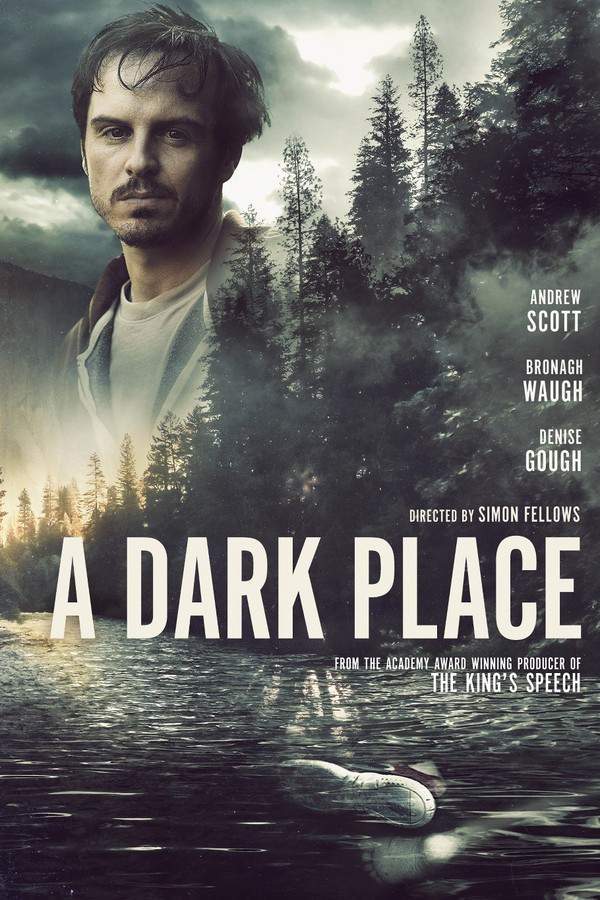








In a quiet community, a child’s disappearance disrupts the peace and exposes hidden tensions. Donald, an ordinary man haunted by his own history, becomes determined to find the missing child. His investigation leads him down a dangerous path, revealing unsettling secrets within the seemingly perfect neighborhood and forcing him to confront his own demons as he searches for answers.
Find where to stream, rent, or buy A Dark Place (2019) in the US with current JustWatch availability, up-to-date pricing, and platform listings for subscription, rental, and digital purchase options.
Warning: spoilers below!
Haven’t seen A Dark Place yet? This summary contains major spoilers. Bookmark the page, watch the movie, and come back for the full breakdown. If you're ready, scroll on and relive the story!
Trace every key event in A Dark Place (2019) with our detailed, chronological timeline. Perfect for unpacking nonlinear stories, spotting hidden connections, and understanding how each scene builds toward the film’s climax. Whether you're revisiting or decoding for the first time, this timeline gives you the full picture.
Last updated: March 05, 2026 at 18:40
Find frequently asked questions about the A Dark Place (2019) timeline, including chronological order, nonlinear jumps, cause-and-effect links, and scene sequence clarifications. This timeline FAQ helps explain when key events happen, how moments connect, and why the story unfolds in that specific order.
Donald's investigation stems from his deep concern for the missing child and his conviction that the boy's death was not an accident. As an autistic man, Donald processes information differently and notices details others overlook. His personal history and own demons drive him to seek justice when he believes the community is ignoring the truth. He cannot accept the official narrative that the boy simply drowned, especially when evidence suggests foul play involving Dr. Pomorski.
Early in the film, Donald's growing unease about the case sets him apart from neighbors who accept the official story.
Donald's autism shapes how he perceives details and processes information, giving him an unusual ability to notice small inconsistencies that others miss. While this makes him an effective investigator, it also makes him more anxious and sensitive to the pressure he faces. The investigation becomes both a way to help others and a personal battleground for his mental health, as the stress of pursuing the truth while caring for his mother and maintaining his job takes a significant toll.
The film establishes early on that Donald sees the world differently, which is why he questions what everyone else accepts.
Donald uncovers that Dr. Joel Pomorski has a history of child abuse and was a frequent visitor to the Zeigler household before the boy disappeared. This discovery reveals that the missing child's death is connected to systemic abuse rather than being a simple accident or random tragedy. The pattern of Pomorski's visits directly links him to the victim, making Donald increasingly certain that abuse led to the boy's death.
Donald's persistent questioning gradually reveals the disturbing connection between Pomorski and the Zeigler family.
Sheriff Mooney has close personal and professional ties to Dr. Pomorski, which explains why he works so hard to suppress Donald's investigation. The Sheriff threatens, intimidates, and ultimately beats Donald to prevent the truth from emerging. This corruption means the official channels for justice are compromised, forcing Donald to take matters into his own hands. The Sheriff's protectiveness suggests he either knows about or is complicit in Pomorski's crimes.
The Sheriff's aggressive efforts to shut down Donald's questions early on hint at a deeper, more personal stake in the case.
Two masked men attack Donald at a remote overpass, attempting to force him to commit suicide by jumping. While the attackers' identities are not explicitly confirmed, the timing and context suggest they were hired by parties threatened by Donald's investigation, likely connected to the Sheriff or Pomorski. The attack represents a coordinated effort to silence Donald permanently rather than simply discourage him.
Earlier encounters with the Sheriff and cryptic police contacts foreshadow that powerful forces are working against Donald.
Donna Reutzel is Donald's sanitation colleague who saves his life during the overpass ambush. When the masked men attempt to force Donald toward suicide, Donna arrives with a revolver and fires at the attackers, driving them away. Her intervention demonstrates that not everyone in the community is corrupted or indifferent, she is willing to risk her own safety to protect Donald and support his quest for truth.
Donna's appearance provides a turning point, showing that Donald has allies even as danger escalates.
After discovering Pomorski's history of child abuse and connecting it to the missing boy, Donald confronts Pomorski at his home. When Pomorski attempts to flee, Donald shoots him with a single arrow, killing him. The act represents Donald's culmination of months of investigation, frustration with systemic corruption, and personal anguish. Rather than waiting for a corrupt system to deliver justice, Donald takes decisive, even if illegal, action to end what he sees as an evil that has gone unpunished.
Donald's retrieval of his daughter's bow and arrow signals his transition from investigation to violent resolution.
The missing boy's body is recovered from the town's creek, though the film suggests he did not drown accidentally. Donald's investigation reveals the boy was likely abused by Dr. Pomorski, who frequented the Zeigler home. While the exact cause of death is not explicitly stated, the evidence points to abuse-related circumstances rather than a simple drowning accident.
Donald's suspicion from the beginning that something was wrong with the official story drives his entire investigation.
After killing Pomorski with an arrow, Donald sits on a fence beside the body and waits for the police to arrive. He raises his hands in surrender when officers approach. Sheriff Mooney watches with a mix of concern and suspicion as Donald is taken into custody. The ending leaves Donald's future uncertain, he has achieved his goal of vengeance but now faces arrest and legal consequences for killing Pomorski.
The film's tone suggests this outcome was inevitable: Donald could not find justice through proper channels.
Donald maintains a fragile bond with his teenage daughter Tara, whom he visits during the film. Their relationship is strained by his obsessive investigation and his struggles with autism and anxiety. When Donald visits Tara to retrieve the bow and arrow, the scene highlights both his longing for connection and his isolation from normal life. Tara represents what Donald is fighting to protect, and what he risks losing through his dangerous pursuit of truth.
Donald's memories of his daughter give him courage before confronting Pomorski.
Donald cares for his wheelchair-bound mother Betty while simultaneously pursuing his investigation. This responsibility adds to his stress and anxiety, as he must balance family duties with his obsessive search for the truth. His role as a caregiver highlights his capacity for love and duty, contrasting with the darkness he encounters in his investigation. The dual pressures of caregiving and pursuing dangerous truths contribute to his psychological deterioration throughout the film.
The opening scenes establish Donald's domestic responsibilities before the mystery takes over his life.
Discover curated groups of movies connected by mood, themes, and story style. Browse collections built around emotion, atmosphere, and narrative focus to easily find films that match what you feel like watching right now.
A lone outsider uncovers corruption and violence hidden beneath a placid community. Fans of A Dark Place will find similar tension in these movies about obsessive investigations that expose corruption in quiet communities. If you liked the heavy atmosphere and Donald's lonely quest, these films offer a comparable sense of unease and moral weight.
Stories in this thread follow a linear, character-driven investigation where the protagonist's personal history and mental state are intrinsically linked to the case. The plot unfolds methodically, building tension as secrets are revealed, often culminating in a confrontation with the truth that leaves the protagonist forever changed, sometimes at great personal cost.
Movies are grouped here because they share a specific narrative focus: a lone individual's obsessive pursuit of justice in a corrupt, closed-off community. They feature a consistently dark tone, heavy emotional weight, and a steady pacing that builds tension through character immersion rather than rapid plot twists.
Fragile protagonists descend into darkness while confronting external threats and internal trauma. For viewers who appreciated the psychological depth of A Dark Place, this thread collects movies where a character's fragile mental state is central to the plot. These films share a similar slow-burn pacing, high intensity, and a focus on the heavy toll of confronting darkness both outside and within.
The narrative pattern focuses on a protagonist grappling with significant personal issues—such as grief, mental illness, or past trauma—that are exacerbated by an external crisis. The story's progression is interwoven with the character's psychological breakdown or hard-won stability, often leading to a bittersweet or ambiguous resolution where survival comes at a profound psychological cost.
These films are grouped together because they prioritize the internal, psychological journey of a vulnerable character facing immense stress. They share a high intensity derived from emotional and psychological stakes, a dark or melancholic tone, and a pacing that allows for deep immersion into the character's fragile mind.
Don't stop at just watching - explore A Dark Place in full detail. From the complete plot summary and scene-by-scene timeline to character breakdowns, thematic analysis, and a deep dive into the ending - every page helps you truly understand what A Dark Place is all about. Plus, discover what's next after the movie.
Read a complete plot summary of A Dark Place, including all key story points, character arcs, and turning points. This in-depth recap is ideal for understanding the narrative structure or reviewing what happened in the movie.
Discover the characters, locations, and core themes that shape A Dark Place. Get insights into symbolic elements, setting significance, and deeper narrative meaning - ideal for thematic analysis and movie breakdowns.