







Plot Explained Spoilers guaranteed!
Plot Explained

Browse by genre

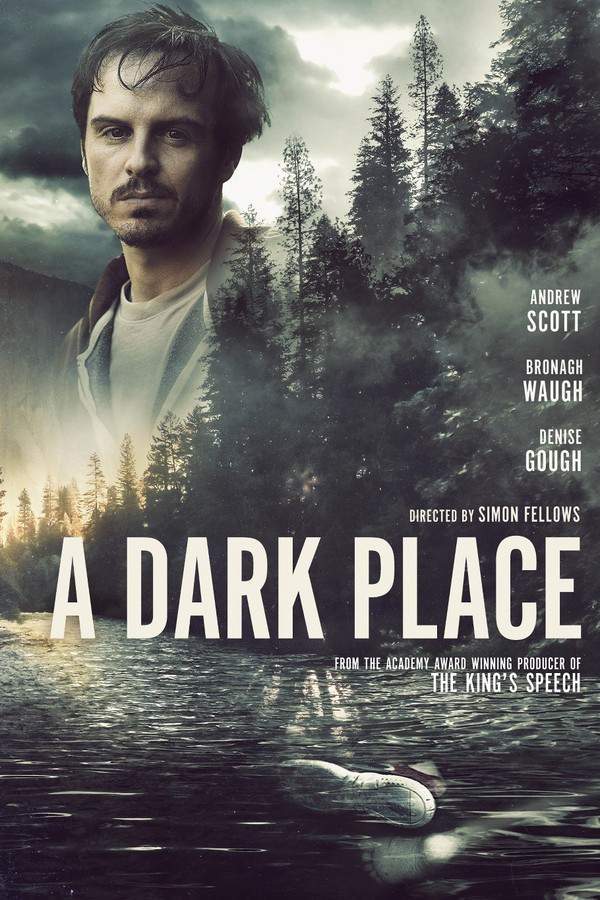
A Dark Place (2019) movie poster

Characters & Themes

A Dark Place (2019) Characters, Setting & Themes Explained

Release, runtime and language
2019 · 89 min · English
Echo score 66
JustWatch #21,396 3
Directed by
Simon Fellows
Starring
Andrew Scott, Sandra Ellis Lafferty, Jared Bankens, Jason Davis, Catherine Dyer, Denise Gough

In a quiet community, a child’s disappearance disrupts the peace and exposes hidden tensions. Donald, an ordinary man haunted by his own history, becomes determined to find the missing child. His investigation leads him down a dangerous path, revealing unsettling secrets within the seemingly perfect neighborhood and forcing him to confront his own demons as he searches for answers.

On this page (7)
  1. 1 Where to watch
  2. 2 Characters explained (14)
  3. 3 Where & when it takes place
  4. 4 Themes & meaning (4)
  5. 5 Character & meaning questions
  6. 6 Movie threads
  7. 7 Every angle

Where to watch

Where to Watch A Dark Place (2019)

Where can you watch A Dark Place? Stream, rent or buy it in the US, including on Amazon Prime Video, Hoopla and Fandango at Home Free: current JustWatch availability with up-to-date prices.

Streaming availability powered by JustWatch

14 main characters · contains spoilers

A Dark Place Characters Explained: Who Is Who

The main characters of A Dark Place (2019), heroes and villains: what drives them, how they change over the course of the story and what each of them reveals about the film's bigger ideas.

  • Donald Devlin (Andrew Scott)

    An anxious sanitation worker who cares for his wheelchair-bound mother and forms a bond with his teenage daughter. His determination to uncover the truth amid personal health challenges drives him to question authority and risk confrontation with powerful figures. His pursuit reveals how personal resilience can become a double-edged blade when entangled with corruption.

    • 🧠 autism spectrum
    • 🧭 relentless pursuit
    • 👨‍👧‍👦 family responsibility
  • Betty Devlin (Sandra Ellis Lafferty)

    Donald’s mother, wheelchair-bound, serves as an emotional anchor in his life. Her presence underscores the caregiver dynamic and the pressures Donald faces at home while dealing with the investigation. She provides a stabilizing influence amid the town’s unrest.

    • 👵 elder resilience
    • 🧷 caregiver
    • 🏡 family center
  • George Arzerodt (Jared Bankens)

    An old classmate who offers ambiguous information through the police channel. His role hints at murky past connections within the community. He embodies the unreliable leads that complicate Donald’s quest for the truth.

    • 🕵️‍♂️ ambiguous informant
    • 🧩 murky past
    • 🗺️ unreliable leads
  • Jerry Zeigler (Jason Davis)

    A member of the Zeigler family involved in the broader circle around the case; his involvement ties the Zeiglers to the house visits and dynamics surrounding Dr. Pomorski. His actions contribute to the sense of a web of influence over the disappearance.

    • 👨‍👦 family ties
    • 🧩 linked mystery
    • 🏠 household connections
  • Linda Connolly (Denise Gough)

    A member of the Connolly family connected to the central figures in the town; the summary does not specify her exact role, but she is part of the network surrounding the investigation. Her presence hints at family or community stakes in the case.

    • 👩‍👧‍👦 family link
    • 🕵️‍♂️ community stake
    • 🧩 peripheral influence
  • Tara (Becky Wahlstrom)

    Donald’s teenage daughter, a focal point of his personal life and motivation. Her existence frames Donald’s longing to protect his family and adds emotional weight to his decisions. The bow-and-arrow moment underscores family ties and legacy.

    • 👧 daughter
    • 💬 family ties
    • 🏹 parental protection
  • Donna Reutzel (Bronagh Waugh)

    A sanitation colleague who confronts the attackers and offers support to Donald. Her courage and willingness to challenge danger contrast with the town’s corruption and fear.

    • 🛡️ protector
    • 🔫 courage
    • 🤝 colleague solidarity
  • Wendy Connolly (Christa Beth Campbell)

    A member of the Connolly family connected to the broader network around the case. The summary does not detail her specific actions, but she is part of the community context that frames the investigation.

    • 🧭 family connection
    • 🧩 unknown role
    • 🚪 relational ties
  • Justin Zeigler (Christian Finlayson)

    Another member of the Zeigler family involved in the case’s circle. The summary references the Zeiglers’ residence in relation to the investigation, indicating family involvement in the events.

    • 👨‍👦 family member
    • 🧩 family ties
    • 🏠 household involvement
  • Max Himmler (Griff Furst)

    An old classmate who works for the police and provides information that affects Donald’s investigation. His presence underscores the town’s internal connections to authority.

    • 🕵️‍♂️ police link
    • 🧭 insider knowledge
    • 👤 former classmate
  • Sheriff Benjamin Mooney (Michael Rose)

    The local lawman whose corrupt ties and dismissive attitude toward Donald’s mental health create a hostile environment for the investigation. His threats and power dynamics serve as a central obstacle.

    • 🏛️ corruption
    • ⚖️ abuse of power
    • 🔒 intimidation
  • Dr. Joel Pomorski

    A doctor with a history of abuse who frequented the Zeiglers’ home and becomes a focal point in the case. His connection to powerful figures amplifies the stakes of the investigation.

    • 🧪 abusive history
    • ⚖️ legal/ethical breach
    • 🏠 proximity to family
  • Unknown character (J.D. Evermore)

    A cast member listed as J.D. Evermore; the summary does not specify this character’s name or role, but they are part of the film's ensemble around the case.

    • ❓ unknown role
    • 🧩 potential clue
    • 🗝️ link to case
  • Catherine Dyer

    Cast member whose exact in-film role is not detailed in the summary; she is part of the town’s cast that interacts with the investigation.

    • 🎭 supporting figure
    • 🕵️‍♂️ town involvement
    • 🧩 ancillary influence

Last updated: March 05, 2026 at 18:12

Was this helpful?

Setting

Where and When Does A Dark Place Take Place?

The setting of A Dark Place (2019): the year and time period, the places and locations, and how they shape the characters, the mood and the tension of the story.

Time period

Location

Small Town, local creek, remote overpass, rural countryside

The story unfolds in a quiet, blue-collar town built around a local creek. Key locations include a remote overpass and open farmland, emphasizing the isolation residents feel. The town’s familiar streets versus the darker corners of authority create a tense backdrop for the investigation and confrontation.

  • 🏘️ Small town
  • 🌊 Creek setting
  • 🚧 Rural roads

Last updated: March 05, 2026 at 18:12

Was this helpful?

4 major themes

A Dark Place Meaning: Themes & Message Explained

What is A Dark Place (2019) really about? The emotional, social and philosophical themes the film keeps returning to, its symbolism and the message beneath the surface.

  • Vigilantism

    Donald’s belief that he must act outside the system pushes him toward violent resolution. The film examines the moral costs and consequences when a private pursuit of justice collides with official law enforcement. Tension builds as personal commitment overrides procedural boundaries, leading to a climactic act of violence.

  • Mental Health

    Donald’s anxiety and autism shape how he perceives danger and processes information. The story shows the stigma and misinterpretation he faces from authorities, complicating the pursuit of truth. The narrative considers how mental health intersects with crime investigation and community judgment.

  • Corruption

    The sheriff’s ties to Dr. Pomorski reveal a corrupt network that can obstruct justice. Power and fear influence decisions and shield wrongdoing within local authority structures. The plot exposes how influence and money can derail investigations and protect abusers.

  • Trauma

    Grief, nostalgia, and social alienation color Donald’s actions and relationships. The film treats trauma as a driving force behind both empathy and escalating danger. The resolution confronts the lasting impact of violence on individuals and families.

Last updated: March 05, 2026 at 18:12

Was this helpful?

Character & theme questions

A Dark Place Characters & Meaning: Your Questions Answered

The questions people ask about A Dark Place (2019): who the characters really are, their relationships, what the symbols mean, where it takes place and what the movie is really about. Each answer contains spoilers.

Q1

Where is A Dark Place set?

The movie takes place in a small, blue-collar town built around a local creek. Key locations include remote overpasses, open farmland, and quiet residential streets. The setting emphasizes the isolation residents feel, contrasting familiar neighborhood corners with the darker aspects of local authority.

  • small town setting
  • creek town
  • rural setting
  • isolated community
Q2

What are the main themes in A Dark Place?

The film explores four major themes: vigilantism, mental health, corruption, and trauma. Vigilantism examines the moral costs when Donald pursues justice outside the legal system. Mental health focuses on how his anxiety and autism shape his perception and face stigma from authorities. Corruption reveals how the sheriff's ties to Dr. Pomorski obstruct justice. Trauma shows how grief and social alienation drive Donald's dangerous actions.

  • vigilantism
  • mental health
  • corruption
  • trauma
  • themes
Q3

Who is Donald Devlin?

Donald Devlin is an anxious sanitation worker living in the small town who cares for his wheelchair-bound mother and has a teenage daughter named Tara. Haunted by personal history and health challenges, he becomes determined to find a missing child, leading him to question authority and confront powerful figures in the community.

  • donald devlin
  • protagonist
  • sanitation worker
  • caregiver
Q4

Who is Sheriff Benjamin Mooney?

Sheriff Benjamin Mooney is the local lawman who serves as a central obstacle in the story. He has corrupt ties to Dr. Pomorski and displays a dismissive, hostile attitude toward Donald, particularly regarding his mental health. His abuse of power creates a hostile environment that obstructs the investigation.

  • sheriff
  • benjamin mooney
  • corrupt sheriff
  • law enforcement
Q5

Who is Dr. Joel Pomorski?

Dr. Joel Pomorski is a doctor with a history of abuse who frequented the Zeiglers' home. His connection to powerful figures in the town, particularly the sheriff, amplifies the stakes of the investigation. He represents how influence and money can shield wrongdoers within local authority structures.

  • dr pomorski
  • doctor
  • abuser
  • corruption
Q6

How does A Dark Place handle mental health?

The film portrays Donald's anxiety and autism as integral to how he perceives danger and processes information. His mental health impacts his investigation, and he faces stigma and misinterpretation from authorities. The narrative explores how mental health intersects with crime investigation and community judgment.

  • anxiety
  • autism
  • mental health
  • stigma
Q7

What does A Dark Place say about vigilantism?

The film examines how Donald's belief that he must act outside the system pushes him toward violent resolution. It shows the moral costs and consequences when a private pursuit of justice collides with official law enforcement. Personal commitment overrides procedural boundaries, leading to a climactic act of violence.

  • vigilantism
  • justice
  • violence
  • moral cost
Q8

How does corruption play into the story?

The sheriff's ties to Dr. Pomorski reveal a corrupt network that obstructs justice. Power and fear influence decisions within local authority structures, shielding wrongdoing. The plot exposes how influence and money can derail investigations and protect abusers, creating a system where Donald cannot trust official channels.

  • corruption
  • sheriff
  • police corruption
  • power abuse
Q9

What role does trauma play in A Dark Place?

Grief, nostalgia, and social alienation color Donald's actions and relationships throughout the film. The narrative treats trauma as a driving force behind both empathy and escalating danger. The resolution confronts the lasting impact of violence on individuals and families, showing how past wounds propel the present conflict.

  • trauma
  • grief
  • loss
  • emotional pain
Q10

Why is the town's isolation important to the story?

The quiet, blue-collar town's isolation emphasizes the vulnerability of its residents and the contrast between familiar streets and darker corners of authority. This setting creates a tense backdrop where a tight-knit community harbors hidden secrets, and where Donald's investigation exposes the tension between public normalcy and private corruption.

  • isolation
  • small town secrets
  • community
  • rural atmosphere
Q11

Who is Tara in A Dark Place?

Tara is Donald Devlin's teenage daughter. She represents his personal motivation and emotional anchor, framing his longing to protect his family. Her existence adds emotional weight to Donald's decisions throughout the film, as he wrestles with how his pursuit of justice affects those closest to him.

  • tara
  • daughter
  • family
  • donald's family
Q12

Who is Betty Devlin?

Betty Devlin is Donald's wheelchair-bound mother. She serves as an emotional anchor in his life, representing the caregiver dynamic and the pressures Donald faces at home while dealing with the investigation. Her presence provides a stabilizing influence amid the town's unrest.

  • betty devlin
  • mother
  • caregiver
  • family

Movie threads

More Movies Like A Dark Place, by Mood & Story

Curated lists built around what makes A Dark Place tick: the same mood, the same kind of story or the same emotional payoff. Each list explains why these movies belong together.

Gritty small-town crime thrillers like A Dark Place

A lone outsider uncovers corruption and violence hidden beneath a placid community. Fans of A Dark Place will find similar tension in these movies about obsessive investigations that expose corruption in quiet communities. If you liked the heavy atmosphere and Donald's lonely quest, these films offer a comparable sense of unease and moral weight.

  • gritty
  • tense
  • oppressive
  • lonely
  • melancholic
  • somber
  • Tone: dark, tense, somber
  • Pacing: steady, methodical
Why these movies?

The story pattern: Stories in this thread follow a linear, character-driven investigation where the protagonist's personal history and mental state are intrinsically linked to the case. The plot unfolds methodically, building tension as secrets are revealed, often culminating in a confrontation with the truth that leaves the protagonist forever changed, sometimes at great personal cost.

Why they belong together: Movies are grouped here because they share a specific narrative focus: a lone individual's obsessive pursuit of justice in a corrupt, closed-off community. They feature a consistently dark tone, heavy emotional weight, and a steady pacing that builds tension through character immersion rather than rapid plot twists.

Slow-burn psychological thrillers like A Dark Place

Fragile protagonists descend into darkness while confronting external threats and internal trauma. For viewers who appreciated the psychological depth of A Dark Place, this thread collects movies where a character's fragile mental state is central to the plot. These films share a similar slow-burn pacing, high intensity, and a focus on the heavy toll of confronting darkness both outside and within.

  • anxious
  • slow burn
  • somber
  • psychological
  • heavy
  • tense
  • Tone: dark, melancholic, anxious
  • Pacing: steady, slow burn
Why these movies?

The story pattern: The narrative pattern focuses on a protagonist grappling with significant personal issues—such as grief, mental illness, or past trauma—that are exacerbated by an external crisis. The story's progression is interwoven with the character's psychological breakdown or hard-won stability, often leading to a bittersweet or ambiguous resolution where survival comes at a profound psychological cost.

Why they belong together: These films are grouped together because they prioritize the internal, psychological journey of a vulnerable character facing immense stress. They share a high intensity derived from emotional and psychological stakes, a dark or melancholic tone, and a pacing that allows for deep immersion into the character's fragile mind.

Every angle

A Dark Place (2019) Explained: Plot, Timeline & Characters

Everything about A Dark Place in one place: what happens in the plot summary, the timeline in chronological order, the characters and meaning and a spoiler-free summary. What's After the Movie adds the cast, box office and post-credit scenes.

Coming soon on iOS and Android

The Plot Explained Movie Summary App

Plot summaries, endings explained and timelines on your phone. Catch up on any movie in minutes, save your favorites and never miss a twist again.

Be the first to know when we launch. Your email stays private, always.

Learn more about the app