Plot Explained Spoilers guaranteed!
Plot Explained

Browse by genre

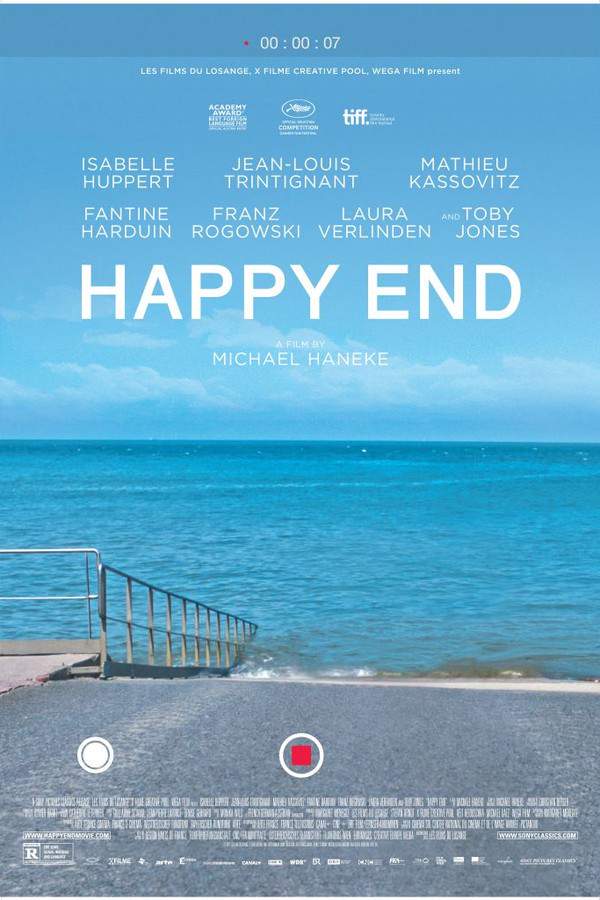
Happy End (1999) movie poster

Plot Summary

Happy End (1999) Plot Summary Explained

Release, runtime and language
1999 · 99 mins · Swedish
Loading streaming availability…
Directed by
Christina Olofson
Starring
Alexander Skarsgård, Harriet Andersson, Lotta Karlge, Rebecka Hemse, Robert Jelinek, Elin Gradin

A film about freedom, lies and unusual act of love. Lukas, a self‑absorbed young man hoping to be a rock star, escapes to his father's flat in Visby, Gotland, where he finds it occupied by Marja, a 69‑year‑old writer finishing her memoirs. Their unexpected companionship is tested when Marja’s hidden secret emerges, changing their stay on Gotland.

On this page (6)
  1. 1 Where to watch
  2. 2 What happens: full plot
  3. 3 Plot questions answered
  4. 4 Movie threads
  5. 5 Movies like Happy End
  6. 6 Every angle
Loading streaming availability…

Full plot summary · contains spoilers

What Happens in Happy End: Full Plot Summary

The whole story of Happy End (1999) explained, from the opening scene to the final frame: every key event, every twist and what it all adds up to. Read it as a quick recap before the sequel, to check a scene you missed, or to finally understand what really happened.

Choi Bora, who works at an English language institute, is entangled in an affair with her ex-lover, Kim Il-beom. Her husband, Seo Min-ki, a former banker, has lost his job and now shoulders the domestic duties—cooking, cleaning, and watching their baby. In his rare downtime, he watches soap operas and reads romance novels, trying to keep something normal amid the strain.

Min-ki seems aware of the affair but appears willing to endure it and continue living with Bora, largely because of his deep love for their infant daughter. He tells Bora that he would be happy if she could be a good mother to their baby, a sentiment that sits uneasily alongside Bora’s growing unease with the relationship and with Il-beom’s increasingly pushy advances.

Il-beom’s persistence becomes a source of real danger. He phones Bora at home and even shows up at her door, pressing to take the affair further. Bora, shaken by the possibilities of exposure and the threat to her family, makes a drastic and controversial choice that shakes the already fragile balance of their lives: she drugs her own child. The consequence is immediate and alarming when Min-ki discovers the toddler alone at home and rushes the child to the hospital, a moment that crystallizes the perilous state of their household.

The narrative then careens toward its conclusion, moving through a tense terrain of misdirection and doubt. Min-ki’s outward appearance suggests he leaves the city by train, accompanied by a female friend who shares the same building. Yet the truth is darker: he returns to the apartment, murders Bora, and attempts to frame Il-beom for the crime. A neighbor’s discovery of Bora’s body, coupled with Il-beom’s suspicious behavior and the planted evidence, convinces the police that Il-beom is responsible for the death—a conclusion that complicates the viewer’s sense of guilt, motive, and justice.

Despite the film’s title and its moments of ambiguity, the tone isn’t wholly bleak. The director, Jung Ji-woo, adopts an observational stance, letting events unfold through a restrained, almost documentary-like lens. The camera work often relies on handheld rigs, which contribute to a sense of immediacy and intimacy as we follow the three central figures—their desires, their fears, and the consequences of their choices.

Themes of desire, betrayal, and the fragility of domestic life run through the story, presenting a portrait of adult relations that is candid, unsettled, and ethically murky. The film does not shy away from explicit sexuality or from moments of brutal violence, which underscore the fragility of trust and the volatility that can exist beneath the surface of a seemingly ordinary existence. In the end, the work remains focused on how ordinary people respond to extraordinary pressures, and how the pursuit of personal happiness can collide with responsibility, illusion, and the unpredictable tides of fate.

Last updated: February 17, 2026 at 19:57

Was this helpful?

Plot questions answered

Happy End Plot Explained: Your Questions Answered

The questions people ask most about Happy End (1999): what happens in the confusing scenes, why the characters do what they do, the twists, hidden details and what the ending means. Each answer contains spoilers.

Q1

Why does Bora drug her own child?

Bora drugs her child as a desperate attempt to cover up her affair. When Il-beom becomes increasingly pushy, calling her at home and showing up at her doorstep, she fears exposure and the collapse of her family. In a drastic move, she sedates her toddler to create an opportunity to meet Il-beom without interruption, believing this would give her time to manage the situation. The act reveals how far she is willing to go to maintain control over her dual life, though it immediately endangers her daughter and triggers the film's violent climax.

Foreshadowing: Earlier scenes show Il-beom threatening to expose the affair if Bora doesn't comply, creating the pressure that leads to her extreme decision.

  • Bora
  • Il-beom
  • affair
  • drugged child
  • desperation
Q2

Why does Min-ki tolerate Bora's affair?

Min-ki tolerates the affair primarily because of his deep love for their infant daughter. Despite being aware of Bora's relationship with Il-beom, he chooses to endure the humiliation and stay in the marriage. As a former banker who has lost his job, he has become the primary caregiver at home, cooking, cleaning, and watching the baby, while Bora works. His willingness to accept this situation stems from a desire to keep the family intact for their child's sake, though this passive acceptance ultimately masks growing resentment.

Foreshadowing: Min-ki tells Bora he would be happy if she could simply be a good mother, revealing his prioritization of the child over his own dignity.

  • Min-ki
  • tolerance
  • affair
  • daughter
  • marriage
Q3

How does Min-ki frame Il-beom for Bora's murder?

After appearing to leave the city by train with a female neighbor, which misleads both Bora and the viewer, Min-ki secretly returns to the apartment. He kills Bora and strategically plants evidence to make Il-beom appear guilty. When a neighbor discovers Bora's body and police investigate, Il-beom's suspicious behavior combined with the planted evidence leads them to conclude he is the killer. The frame-up succeeds because Min-ki manipulates the crime scene while directing suspicion toward the man who was already involved in the affair.

Foreshadowing: The scene where Min-ki boards the train with a female friend is deliberately constructed to mislead viewers about his whereabouts.

  • Min-ki
  • frame-up
  • Il-beom
  • murder
  • evidence
Q4

Why does Min-ki kill Bora?

Min-ki kills Bora as an act of revenge and a desperate attempt to reclaim control over his crumbling domestic life. Having tolerated the affair for months while caring for their child, he reaches a breaking point after the traumatic incident of Bora drugging their daughter. The murder represents the culmination of his accumulated resentment, humiliation, and anger. By killing Bora and framing Il-beom, he eliminates both the source of his betrayal and the man involved, while ensuring the police would blame an outsider rather than himself.

Foreshadowing: The hospital scene, where Min-ki rushes his drugged daughter to the doctor, marks the moment his patience shatters and sets the trajectory toward violence.

  • Min-ki
  • murder
  • revenge
  • betrayal
  • domestic crisis
Q5

Why does Bora start an affair with Il-beom?

Bora begins the affair with her ex-lover Il-beom while working at an English language institute, rekindling a past relationship despite being married to Min-ki. The affair appears driven by personal desire and emotional dissatisfaction in her marriage, particularly as Min-ki has lost his job and taken on domestic roles that may have shifted the power dynamic in their relationship. However, once the affair begins, Il-beom's increasingly aggressive behavior, he phones her at home and appears at her door, turns what started as a secret relationship into a threatening situation she cannot easily escape.

Foreshadowing: The summary establishes early that Bora works at the language institute where the affair with Il-beom unfolds, placing the original sin in her professional life.

  • Bora
  • Il-beom
  • affair
  • ex-lover
  • desire
Q6

What happens when Min-ki discovers the drugged child?

When Min-ki returns home and finds his toddler left alone and unconscious from the sedation, he immediately rushes the child to the hospital. This emergency scene becomes a turning point that crystallizes the dangerous state of their household. The doctors respond to the poisoning, and the family is forced to confront the consequences of Bora's rash decision. The incident accelerates the film's descent toward its violent climax, as Min-ki's role as a devoted father is highlighted against Bora's calculated betrayal.

Foreshadowing: Bora drugs her child specifically to create time for Il-beom to visit, making the discovery inevitable when Min-ki returns unexpectedly.

  • Min-ki
  • drugged child
  • hospital
  • emergency
Q7

What does Min-ki actually do after appearing to leave on the train?

After the film shows Min-ki seemingly departing by train with a female friend from their building, creating the impression that he is abandoning the marriage, Min-ki secretly returns to the apartment. This is a deliberate narrative deception. He kills Bora while everyone believes he has left the city, then plants evidence to frame Il-beom. The misdirection is key to the plot's twist, as viewers are led to suspect Il-beom or assume Min-ki has simply walked away from his troubled marriage.

Foreshadowing: The train scene is presented as a straightforward departure, but the film later reveals it was a calculated ruse to establish an alibi.

  • Min-ki
  • train
  • deception
  • return
  • murder
Q8

Why does the title "Happy End" seem ironic?

The title "Happy End" is deeply ironic given the film's bleak conclusion. Despite the name, there is no redemptive outcome: Min-ki murders his wife, successfully frames an innocent man, and the police investigation wrongly convicts Il-beom. The child survives but grows up without either parent in a morally bankrupt situation. Director Jung Ji-woo uses the title to underscore the fragility of domestic happiness and the dark irony that pursuit of personal satisfaction leads to destruction rather than resolution.

Foreshadowing: The film's observational, almost clinical camera style maintains distance from the characters, reinforcing the sense that no true happiness will emerge.

  • title
  • irony
  • ending
  • morally complex
  • deception
Q9

Why does Il-beom become threatening toward Bora?

Il-beom grows impatient as Bora attempts to maintain boundaries in their affair. He becomes increasingly pushy, demanding the relationship progress and threatening to expose the affair if she resists. His calls to her home and appearance at her doorstep represent a deliberate escalation designed to pressure Bora into deeper commitment. This threatening behavior transforms the affair from a secret romance into a dangerous situation where Bora fears both exposure and physical threat, ultimately contributing to her desperate decision to drug her own child.

Foreshadowing: Timeline notes establish Il-beom's persistence as a source of real danger that destabilizes Bora's already fragile circumstances.

  • Il-beom
  • threats
  • pressure
  • exposure
  • affair
Q10

What specifically drives Min-ki to murder Bora?

Min-ki's decision to murder Bora is driven by a combination of accumulated resentment, betrayal, and a desire for revenge after discovering she drugged their child. While he had tolerated the affair, the image of his unconscious toddler at the hospital breaks something in him. He sees the murder as both punishment for Bora's betrayal and a way to end the affair definitively. By framing Il-beom, he ensures the man who cuckolded him will bear the blame, making the murder also an act of manipulation to escape consequence.

Foreshadowing: The hospital scene marks the moment Min-ki's passive acceptance transforms into active violence.

  • Min-ki
  • murder decision
  • revenge
  • resentment
  • hospital
Q11

How does the police investigation conclude?

After a neighbor discovers Bora's body, the police investigation points to Il-beom as the culprit. His suspicious behavior, stemming from his secret affair with the victim, combined with planted evidence at the crime scene convinces investigators of his guilt. The film ends with Il-beom as the prime suspect, despite being framed. This outcome adds another layer of moral ambiguity: the innocent man will likely face conviction for a crime he did not commit, while Min-ki escapes undetected.

Foreshadowing: Min-ki strategically plants evidence during the murder, ensuring the investigation misfires.

  • police
  • investigation
  • Il-beom
  • frame-up
  • evidence
Q12

What themes define the film's ending?

The film's ending explores themes of desire, betrayal, and the fragility of domestic life. It presents a portrait of ordinary people, Min-ki, Bora, and Il-beom, whose pursuit of personal happiness collides with responsibility and consequence. The violent conclusion underscores how betrayal escalates: an affair leads to desperation, which leads to child endangerment, which leads to murder. Director Jung Ji-woo's detached, observational style prevents the film from moralizing, leaving viewers to contemplate how ordinary pressures can drive ordinary people to extraordinary brutality.

Foreshadowing: The handheld, documentary-like cinematography maintains emotional distance, reinforcing the film's focus on realistic consequence rather than judgment.

  • themes
  • desire
  • betrayal
  • domestic life
  • consequences

Movie threads

More Movies Like Happy End, by Mood & Story

Curated lists built around what makes Happy End tick: the same mood, the same kind of story or the same emotional payoff. Each list explains why these movies belong together.

Claustrophobic domestic dramas similar to Happy End

Intense dramas where domestic spaces become psychological prisons. Find more movies like Happy End that focus on tense, psychological dynamics within domestic settings, exploring themes of deception and the breakdown of relationships in confined spaces.

  • claustrophobic
  • tense
  • domestic
  • psychological
  • observational
  • uneasy
  • Tone: dark, tense, unsettling
  • Pacing: steady, observational
Why these movies?

The story pattern: These stories typically unfold within limited domestic settings, focusing on the intense psychological warfare between a small cast of characters. The narrative builds steadily towards a confrontation or revelation that shatters the fragile facade of normalcy.

Why they belong together: Movies are grouped here because they share a high intensity, dark tone, and a focus on the brutal honesty and deception within intimate relationships. They create a palpable sense of claustrophobia and psychological dread.

Movies about bleak secrets and revelations like Happy End

Stories where a hidden secret is exposed, leading to a devastating outcome. If you liked the revealing secret and its dark consequences in Happy End, explore these other films where a hidden truth leads to a heavy and emotionally devastating ending.

  • unsettling
  • tense
  • melancholic
  • brutal
  • psychological drama
  • deception
  • Tone: bleak, heavy, tense
  • Pacing: steady, building towards revelation
Why these movies?

The story pattern: The narrative pattern follows a character's discovery of a fundamental truth that upends their understanding of a situation or relationship. The story's climax is the confrontation with this truth, and the ending is almost always bleak, offering no easy redemption or happy resolution.

Why they belong together: These movies are connected by their focus on deception and the moment it collapses. They share a heavy emotional weight, a dark tone, and a bleak ending feel, making the viewing experience emotionally taxing but compelling.

If you liked this

Movies Like Happy End

Similar movies to Happy End: the same genre, themes or kind of story. Each one comes with its own plot summary, timeline and ending explained.

Browse all movie summaries

Every angle

Happy End (1999) Explained: Plot, Timeline & Characters

Everything about Happy End in one place: what happens in the plot summary, the timeline in chronological order, the characters and meaning and a spoiler-free summary. What's After the Movie adds the cast, box office and post-credit scenes.

Coming soon on iOS and Android

The Plot Explained Movie Summary App

Plot summaries, endings explained and timelines on your phone. Catch up on any movie in minutes, save your favorites and never miss a twist again.

Be the first to know when we launch. Your email stays private, always.

Learn more about the app