Plot Explained Spoilers guaranteed!
Plot Explained

Browse by genre

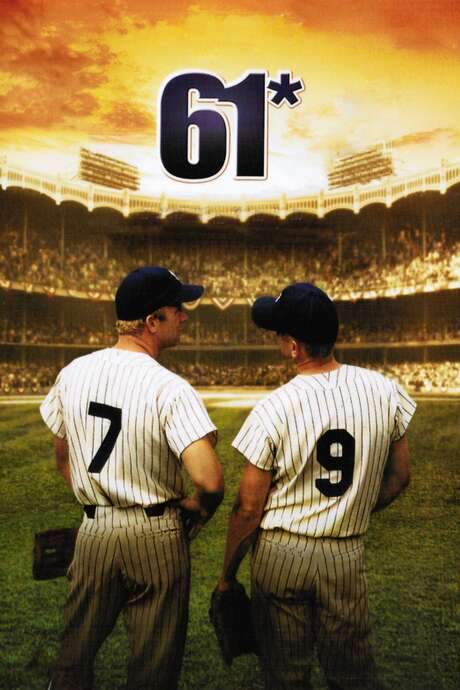
61* (2001) movie poster

Plot Summary

61* (2001) Plot Summary Explained

Release, runtime and language
2001 · 129 mins · English
JustWatch #16,400 18
Directed by
Billy Crystal
Starring
Seymour Cassel, Richard Masur, Robert Joy, Renée Taylor, Barry Pepper, Bruce McGill

In 1961 the New York Yankees featured two legendary sluggers, Roger Maris and Mickey Mantle. While Mantle was adored nationwide, Maris faced scorn despite his talent. Both launched spectacular seasons and closed in on Babe Ruth’s iconic 60‑home‑run mark, sparking a fierce debate over which of them would finally break the record.

On this page (6)
  1. 1 Where to watch
  2. 2 What happens: full plot
  3. 3 Plot questions answered
  4. 4 Movie threads
  5. 5 Movies like 61*
  6. 6 Every angle

Where to watch

Where to Watch 61* (2001)

Where can you watch 61*? Stream, rent or buy it in the US, including on HBO Max, Amazon Video and Apple TV Store: current JustWatch availability with up-to-date prices.

Streaming availability powered by JustWatch

Full plot summary · contains spoilers

What Happens in 61*: Full Plot Summary

The whole story of 61* (2001) explained, from the opening scene to the final frame: every key event, every twist and what it all adds up to. Read it as a quick recap before the sequel, to check a scene you missed, or to finally understand what really happened.

In 1998, the family of the late Roger Maris Richard Masur goes to Busch Stadium to witness Mark McGwire Mark McGwire of the St. Louis Cardinals break their father's record with a 62nd home run. Maris' widow, Pat Pat Crowley, is hospitalized due to complications from arrhythmia and watches the game on television from a hospital bed.

Decades earlier, in 1961, Roger Maris is presented with the Most Valuable Player award for the 1960 baseball season, but Mickey Mantle Thomas Jane remains the Yankees' superstar. Mantle starts off hot while Maris struggles, fueling a tense but exciting race between two teammates who push each other toward Babe Ruth’s famed mark. As the season unfolds, Maris grows wary that he might be traded, while new manager Ralph Houk Bruce McGill rearranges the lineup, shuffling Mantle and Maris to see if the change can spark a breakthrough. It does: both sluggers begin racking up home runs at a historic pace, and the idea of the “M&M Boys” chasing Ruth’s record becomes the defining storyline of the year.

On the field, the pressure is matched by the scrutiny off it. Mantle’s charisma and troubles draw fans and media scrutiny, but Maris’s quiet demeanor makes him an easy target for criticism and misinterpretation. The crowd’s affection for Mantle grows, while Maris faces harsher treatment, including hostile crowds and relentless questions from reporters. The MLB Commissioner Ford Frick Donald Moffat weighs a controversial decision: to treat Ruth’s 60-home-run standard as a benchmark that applies to Ruth’s 154-game era, or to acknowledge the expanded 162-game season with a separate record. The choice adds another layer of pressure to an already fraught race.

As the season unfolds, Mantle’s off-field life takes a toll. He drinks, revels in the Manhattan nightlife, and often arrives at the ballpark hung over, with occasional help from pitcher Whitey Ford Anthony Michael Hall. To shield Mantle from himself, Maris and teammate/roommate Bob Cerv Chris Bauer invite him to move in with them in a modest Queens home, with one strict condition: no women. The dynamic tightens as Mantle grapples with pain, long hours, and an unyielding spotlight, while Maris does his best to stay focused and steady under the glare of the media and the public.

The story deepens as Mantle’s health falters and a problematic injection from a doctor further weakens him, forcing him to the sidelines. With Mantle out of the lineup, the stage is set for Maris to push toward the record. The path is grueling, with constant media speculation and public scrutiny, and the pressure intensifies as fans demand every at-bat be a step toward Ruth’s iconic achievement. In the climactic moments, Maris does not break the record in the 154th game, but he finally reaches a historic milestone with his 61st home run in the season’s final game, sealing a chapter of baseball history marked by perseverance, rivalry, and the weight of expectation.
Last updated: October 09, 2025 at 16:30

Was this helpful?

Plot questions answered

61* Plot Explained: Your Questions Answered

The questions people ask most about 61* (2001): what happens in the confusing scenes, why the characters do what they do, the twists, hidden details and what the ending means. Each answer contains spoilers.

Q1

Why did Commissioner Ford Frick create a separate home run record for Babe Ruth?

Commissioner Ford Frick ruled that Babe Ruth's 60 home runs would be counted separately from Roger Maris's pursuit because Ruth achieved his record during a 154-game season, while the 1961 season had expanded to 162 games. Frick argued it would be unfair to compare records across different season lengths, creating a controversial "asterisk" situation that added extra pressure to Maris's chase.

Foreshadowing: The decision is announced mid-season, creating additional scrutiny on Maris as he nears the record.

  • ford frick
  • asterisk
  • 154 games
  • 162 games
  • separate record
  • commissioner decision
Q2

Why did New York fans and media favor Mickey Mantle over Roger Maris?

Mickey Mantle was already an established superstar with charisma, charm, and a relatable personality that made him a fan favorite. Maris, by contrast, was more quiet and reserved, coming from a working-class background in Ohio. His demeanor was often misinterpreted as aloofness, and he never fully connected with the New York media or fans, even though he was theMVP in 1960.

Foreshadowing: Early in the season, Mantle starts hot while Maris struggles, cementing the narrative of the beloved hero versus the outsider.

  • mickey mantle
  • roger maris
  • fans
  • media
  • new york
  • favorite
  • superstar
Q3

What happened to Mickey Mantle's health during the 1961 season?

Mantle's health deteriorated significantly throughout the season due to chronic pain from old injuries and a problematic injection from a doctor that caused complications requiring hospitalization. His physical decline forced him to spend time on the sidelines, creating the opportunity for Maris to pursue the record without direct competition from his teammate.

Foreshadowing: Earlier scenes show Mantle arriving at the ballpark hung over and in pain, setting up his eventual withdrawal from the race.

  • mickey mantle
  • health
  • injuries
  • hospital
  • injection
  • sidelines
Q4

Why did Mickey Mantle move in with Roger Maris and Bob Cerv?

Mantle's teammates were concerned about his heavy drinking and wild Manhattan nightlife, which was affecting his performance and wellbeing. Maris and Cerv invited Mantle to move into their modest Queens home with one strict rule: no women. The arrangement was meant to help Mantle stay focused, get adequate rest, and avoid the temptations that were hindering his season.

Foreshadowing: The move comes after scenes of Mantle arriving at the ballpark hung over, with pitcher Whitey Ford occasionally helping him.

  • mickey mantle
  • roger maris
  • bob cerv
  • queens
  • move in
  • drinking
  • teammates
Q5

Why did manager Ralph Houk rearrange the batting order to swap Mantle and Maris?

New manager Ralph Houk rearranged the lineup hoping to spark a breakthrough for both hitters who were struggling early in the season. The swap placed Mantle and Maris in different spots in the order to test if a different arrangement could generate more offense. The move worked, and both sluggers began hitting at a historic pace after the change.

Foreshadowing: The timeline shows this rearrangement happens before both players begin their record-setting pace.

  • ralph houk
  • manager
  • lineup
  • batting order
  • swap
  • mantle
  • maris
Q6

Why did Roger Maris face such hostile crowds and media scrutiny?

Maris became a target because of his quiet personality and the perception that he was trying to take something precious from Babe Ruth, a baseball legend. Fans and reporters resented that an outsider was potentially breaking Ruth's sacred record. The hostility escalated to the point where Maris received hate mail and threats, making the pressure feel oppressive.

Foreshadowing: Early scenes establish that while Mantle drew fans and media attention for his charisma, Maris was seen as cold and unreachable.

  • roger maris
  • hostile
  • crowds
  • media
  • scrutiny
  • hate mail
  • threats
  • pressure
Q7

Why did Roger Maris fail to break the record in the 154th game of the season?

Maris came up short of the 60-home-run mark in the 154th game, falling one home run short of tying Ruth's record. The miss added to the dramatic tension surrounding the chase. He then finally hit his 61st home run in the final game of the season, breaking Ruth's record outright despite the commissioner's ruling to keep them separate.

Foreshadowing: The timeline builds tension throughout the season, with the 154th game representing the original benchmark from Ruth's era.

  • roger maris
  • 154th game
  • 61st home run
  • final game
  • record
  • babe ruth
Q8

Why does the movie open with Mark McGwire breaking Roger Maris's record in 1998?

The opening scene at Busch Stadium in 1998 serves as a framing device that establishes the historical significance of Maris's achievement. It shows his family present when McGwire hits his 62nd home run, with Maris's widow Pat watching from a hospital bed due to arrhythmia complications. This frames Maris's 1961 pursuit within the broader legacy of baseball history and adds emotional weight to his eventual triumph.

Foreshadowing: This opening immediately establishes that Maris's record would eventually be broken, adding a bittersweet quality to his achievement.

  • mark mcgwire
  • 1998
  • busch stadium
  • pat maris
  • hospital
  • 62nd home run
  • record broken
Q9

Why was Roger Maris worried about being traded by the Yankees?

Maris grew concerned throughout the season that he might be traded, likely because of his struggles early in the year and the tension between him and the New York media. The possibility of being traded added another layer of anxiety to an already pressure-filled season, as Maris wanted to stay in New York to complete his pursuit of Ruth's record.

Foreshadowing: This concern is present from early in the season, contributing to Maris's overall stress during the chase.

  • roger maris
  • trade
  • yankees
  • concern
  • new york
  • season
Q10

Why did the Yankees owner pressure manager Ralph Houk to change the lineup?

Yankees owner George Steinbrenner attempted to leverage the record chase to push for a lineup change that would benefit Mantle, possibly by moving Maris down in the order. However, Houk resisted because the current arrangement had been producing wins, and the team ultimately stuck with the lineup that was working.

Foreshadowing: This tension between owner and manager occurs as both players are heating up and the race gains momentum.

  • steinbrenner
  • owner
  • lineup
  • houk
  • manager
  • yankees
  • pressure
Q11

Was there real tension between Mickey Mantle and Roger Maris during the 1961 season?

While the movie depicts a competitive rivalry, it also shows the teammates supporting each other. The tension came more from the outside, fans and media constantly comparing them and pitting them against each other. Maris and Mantle actually had a cordial relationship, with Maris even helping Mantle by inviting him to live together to stay out of trouble.

Foreshadowing: The 'M&M Boys' narrative was created by the media, not the players themselves.

  • mickey mantle
  • roger maris
  • tension
  • rivalry
  • teammates
  • m&m boys

Movie threads

More Movies Like 61*, by Mood & Story

Curated lists built around what makes 61* tick: the same mood, the same kind of story or the same emotional payoff. Each list explains why these movies belong together.

Movies about the pressure of greatness like 61*

Stories about the immense psychological burden of chasing a historic achievement. If you liked the tense atmosphere of 61*, explore more movies about the psychological toll of chasing historic achievements. These stories feature characters under immense public scrutiny, dealing with media pressure and the personal cost of greatness, similar to the journey of Roger Maris and Mickey Mantle.

  • pressured
  • anxious
  • competitive
  • reflective
  • resilient
  • scrutinized
  • Tone: tense, anxious, reflective
  • Pacing: steady, linear progression
Why these movies?

The story pattern: Stories in this thread follow a linear progression towards a singular, high-stakes goal. The central conflict is often internal, focusing on the protagonist's resilience against mounting psychological pressure from external forces like the media and public opinion, rather than a straightforward physical antagonist.

Why they belong together: These films are grouped by their shared atmosphere of tense anxiety and their focus on the emotional burden of potential success. They capture a specific feeling of being watched and judged, where the journey is as much about surviving the pressure as it is about achieving the goal.

Bittersweet sports dramas with complex victories like 61*

Athletic achievements where the glory is shadowed by personal cost or controversy. Fans of 61*'s nuanced ending will appreciate these movies about sports triumphs that feel bittersweet. These films feature athletic achievements that are shadowed by controversy, injury, or personal sacrifice, offering a more realistic and emotionally complex take on victory, similar to the story of 61*.

  • bittersweet
  • triumphant
  • reflective
  • resilient
  • historic
  • legacy
  • Tone: bittersweet, tense, reflective
  • Pacing: steady, climactic
Why these movies?

The story pattern: The narrative follows a classic underdog or competition structure, but subverts the pure triumph of a standard sports movie. The climax involves achieving the goal, but the resolution emphasizes the complications, sacrifices, or mixed feelings that accompany the success, leaving the audience with a poignant, thoughtful feeling.

Why they belong together: These films are united by their specific emotional payoff: a victory that feels earned yet is complicated by external or internal factors. They share a steady pacing that builds to a climax which is celebratory yet sobering, rejecting simple happy endings for something more layered and memorable.

If you liked this

Movies Like 61*

Similar movies to 61*: the same genre, themes or kind of story. Each one comes with its own plot summary, timeline and ending explained.

Browse all movie summaries

Every angle

61* (2001) Explained: Plot, Timeline & Characters

Everything about 61* in one place: what happens in the plot summary, the timeline in chronological order, the characters and meaning and a spoiler-free summary. What's After the Movie adds the cast, box office and post-credit scenes.

Coming soon on iOS and Android

The Plot Explained Movie Summary App

Plot summaries, endings explained and timelines on your phone. Catch up on any movie in minutes, save your favorites and never miss a twist again.

Be the first to know when we launch. Your email stays private, always.

Learn more about the app