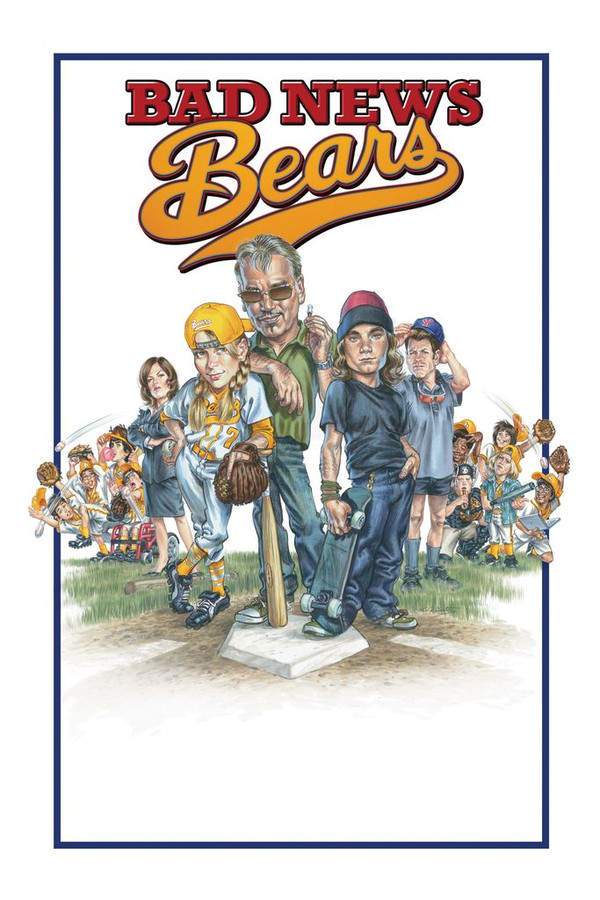
In 1976, Morris Buttermaker, a recovering alcoholic pool cleaner and former minor-league pitcher, steps into a surprising coaching role for Toby’s youth baseball league expansion team, the Bears. The whole venture is wrapped in secrecy, fueled by a cash payment from lawyer Bob Whitewood, and born out of a settlement meant to address a lawsuit over excluding players like those on the Bears from other teams. From the start, the Bears are outsiders in the Southern California league: unskilled, underfunded, and dismissed by the better-organized squads and the pushy, competitive parents who populate the stands.
Buttermaker’s initial work is embarrassingly thin. Before their first game, the only clear win is securing a sponsor to provide uniforms; beyond that, the team is ill-prepared. The opening game ends in a staggering defeat, with the Bears allowing 26 runs and recording no outs. The humiliation rattles the boys, and the sign of the season’s trouble seems to be written in their faces as they contemplate quitting.
Seeing the collective blow to their confidence, Buttermaker makes a turn toward serious coaching. He starts teaching the basics—how to hit, how to field, how to slide into bases—and slowly, the Bears begin to show real improvement. To bolster the team, he brings in two unexpected prospects: Amanda Whurlitzer, the 11-year-old daughter of his former girlfriend, who is a gifted pitcher, and Kelly Leak, a volatile but undeniably talented local athlete known for his rebellious streak and Harley-Davidson-and-smoke-filled persona. Amanda’s presence adds a complicated dynamic, since her relationship with Buttermaker provides a hint of a history between them. Kelly, meanwhile, injects a fearless, almost reckless energy that pushes the team to new heights.
With Amanda and Kelly on board, the Bears’ fortunes shift. They start to win, and the mood around the dugout grows more hopeful. The team’s improvement is not just about raw talent; it’s about the growing sense that every player has a role to play, and that teamwork can matter as much as individual prowess. As the Bears gain cohesion, the past tensions between Buttermaker and Amanda surface, adding emotional depth to the season and underscoring the theme that relationships are part of the game as much as the scoreboard is.
The Bears’ ascent leads them to the championship game, where they face the top-tier Yankees. The Yankees are a polished, imposing force, coached by Roy Turner, whose drive to win contrasts sharply with Buttermaker’s more relaxed, if stubborn, approach. As the game unfolds, the atmosphere intensifies. The coaches’ competitive ferocity spills over onto the field, and the clash becomes as much about ethics and temperament as it is about baseball strategy. Turner’s harsher discipline—striking his own son for failing to follow orders—sparks tension that ripples through both dugouts.
In a pivotal moment of clarity, Buttermaker realizes that his fixation on winning has overshadowed the joy of playing and the growth the boys have achieved. He makes a radical, team-first decision: he benches his regular lineup and puts the bench-warmers into the field, ensuring that everyone gets a chance to contribute. The shift changes the rhythm of the game. Although the Bears ultimately fall short of victory, they come closer to beating the Yankees than anyone expected, a testament to the late-season transformation spurred by a coach who learned to balance competitive drive with inclusive play.
After the trophy ceremony, a symbolic gesture seals the film’s tone: Buttermaker hands the team beer, and they celebrate with a carefree, almost comic exuberance, spraying each other as if they had won. The moment is punctuated by his line to the Yankees about the championship—an irreverent, defiant wink at the idea that trophies define the worth of a season. The Bears’ season ends on a note that blends disappointment with a hard-won sense of dignity; they may not have taken the title, but they have proven something vital about courage, camaraderie, and the value of letting everyone participate.
This story captures a quintessential underdog tale: an unlikely coach, a motley crew of young players, and a few fearless outsiders who push a whole community to reexamine what success really means. The film blends humor with heart, offering a character-driven portrait of growth, resilience, and the messy, rewarding process of learning how to play—on the field and in life.