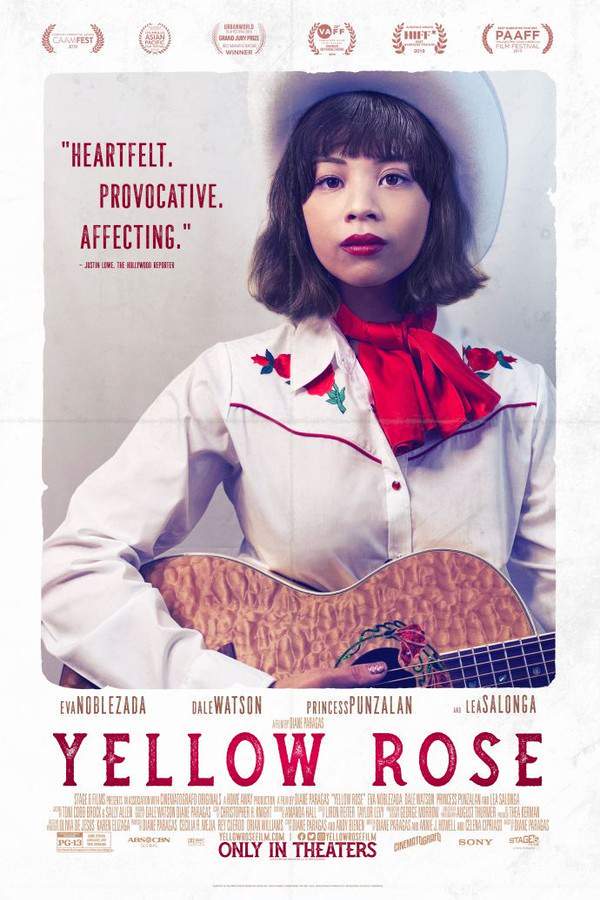
In a small town in Texas, Rose Garcia, Eva Noblezada, is a young undocumented Filipina who dreams of making music. She lives with her mother, Priscilla Garcia, Princess Punzalan, who works at a motel and hopes her daughter will study rather than chase a singer’s life, a promise tied to memories of her late husband. Rose longs for a future in which her talent can shine, while her mother clings to a path she believes will keep them safe and supported.
Rose visits her friend Elliot, Liam Booth, who works at a music shop and invites her to Austin. Rose pleads for permission from Priscilla, who denies the trip, setting off a quiet tension at home. In a moment of frustration, Priscilla vents about a failed attempt to hire an immigration lawyer, the money long gone and the dream of legal citizenship slipping further away. The weight of their situation hangs over every choice they make.
To prove she can be independent, Rose and Elliot pretend they’re going to church, but their real destination is a night in Austin. Elliot hands Rose a fake ID and urges her to practice singing, feeding her confidence and the thrill of a false sense of security. In the city, they slip into a bar called the Broken Spoke, where Rose, underage, drinks and dives into the world she yearns for. There, she meets country singer Dale Watson, Dale Watson, who respects her knowledge of music and who will become a crucial mentor. The evening shifts from performance to dancing, and for a moment the weight of her immigration status feels distant.
When dawn comes, Priscilla has been arrested by Immigration and Customs Enforcement, and Rose and Elliot manage to escape the immediate consequences. They return to look for Priscilla’s belongings, including a letter to Rose from Aunt Gail, who claims to hold power of attorney and could help with citizenship. Rose heads to Gail’s house, only to find that Gail herself is largely unaware of Priscilla’s peril, signaling a widening rift and a growing sense of isolation for Rose.
At Gail’s, tensions rise as Gail argues with her husband, Mark, about getting involved. Mark fears the family’s risk and asks to stay uninvolved, and Rose, feeling like a burden, contemplates leaving. Gail offers her money and a phone number, a small lifeline in the midst of danger, though the sense of family that once connected them has frayed. Meanwhile, Jolene, a bartender from the Broken Spoke, steps in to shelter Rose when necessary, offering a place to stay and a sense of belonging she’s not found at home.
Rose begins working at the Broken Spoke alongside Jose, Gustavo Gomez, and the two form a bond forged by their shared undocumented status. Dale continues in her life as a teacher and mentor, introducing her to the guitar’s mechanics and the beauty of the craft. Jolene admires Rose’s talent and helps her see a path forward, even as the threat of deportation looms.
As Priscilla calls, pleading for Rose to stay with Gail, the choice becomes momentous: stay with Gail and risk deportation for both, or continue to fight for a life that might never be fully safe. Rose’s decision weighs heavy on her, and Elliot stops by, offering a chance to process and choose. A night of heavy drinking follows, and the same night brings a raid: ICE sweeps the Broken Spoke, capturing Jose and another worker while Rose is left vulnerable, the sanctuary momentarily fractured.
Morning brings a shift in orientation. Jolene makes it clear that she can’t indefinitely shield Rose, but she provides a lifeline: a contact in Dale Watson, who offers a temporary refuge and a chance to channel her experiences into a song. Rose moves into Dale’s trailer, where he encourages her to turn hardship into art and to see the personal as universal through song.
A difficult conversation with Elliot reveals that Priscilla’s fate hangs in the balance—renewing DACA or returning to Manila—but Rose remains torn between the life she’s built and the family she’s left behind. A visit to a detention center with Elliot’s cousin as a driver brings a brief sense of closure: a heart-to-heart with Priscilla about the dehumanizing reality of immigration detention, a moment that is tender but brief before they must part again.
As summer nears its end, Rose wrestles with crafting a demo that captures her essence: country music, stage fright from a past talent show, and the sting of being nicknamed “Yellow Rose.” Dale urges her to persevere, and he arranges a small gathering where she can perform in front of a crowd that includes Elliot and Jolene. Jolene records her singing at a studio, and Priscilla is deported to Manila, weighing on Rose’s sense of home and belonging.
Dale gifts Rose a new guitar, a tangible symbol of hope, but the practical reality worsens when Rose learns her living situation is unstable and her mother has indeed been deported. The idea of adoption surfaces as a possible escape route to stay in the United States, but Dale declines, insisting the hardship is temporary. The rejection stings, and Rose leaves to find shelter elsewhere. In the Philippines, Priscilla lives apart from her daughter, while Rose clings to the memory of home as she struggles to survive. A late-night call with her mother brings a painful but defining line: when Priscilla asks why she won’t come home, Rose answers with a quiet, resolute declaration, "This is home for me."
> This is home for me.
Back with Dale, the two reconnect to write a song that holds both their pains and their hopes. The ending finds Rose preparing for a concert that could mark a turning point: she reunites with Elliot, shares a kiss, and they perform together, with Dale and Jolene in attendance. As the show unfolds, Gail watches from the audience, and Priscilla’s memories of Manila are carried to the Philippines by Rose’s cousins—an emotional echo of the life they once imagined and the life they must now navigate. The finale frames Rose not only as a gifted musician but as a young woman who has forged a fragile, enduring sense of home through resilience, community, and music.