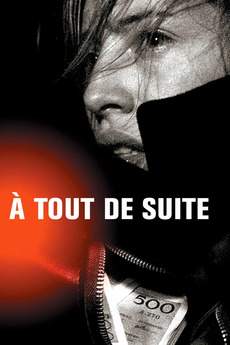
Philippe Letzger [Philippe Lefebvre] is the host of It's Tissue Time!, an exploitation television game show where contestants are made to cry. The show’s audiences are warmed up by one of Letzger’s assistants, Bastien, an ambitious young man who provides Letzger with fresh ideas for the program, ideas that his boss eagerly takes credit for. Bastien tolerates Letzger’s antics in order to work with Jean-Louis Broustal, the show’s sophisticated producer whom he admires. Bastien’s girlfriend, Fabienne, is frustrated by his worship of the suave producer, and Bastien himself grows increasingly uneasy when he learns that the blonde he’s attracted to at the office is Broustal’s young wife, Clara.
One day, Broustal begins to take real interest in Bastien’s ideas for the show and invites him to spend the weekend with him and his wife at their country estate to work on a concept for a new program called Proof in Pictures. As they arrive, [Clara] seduces Bastien, yet Broustal appears unmoved by the turn of events. The weekend unfolds with a tense, almost clinical distance as the trio navigates desire, power, and the possibility of a breakthrough that could catapult Bastien into television stardom. Broustal hints that he can elevate Bastien’s career, but the promises feel layered with motives that are strange, and perhaps sinister, casting a shadow over every interaction.
Throughout the stay at the country estate, the boundaries between mentorship and manipulation blur. Bastien finds himself drawn deeper into a world where entertainment and personal ambition collide, and where the lines between professional collaboration and intimate betrayal become dangerously thin. The dynamic between the three adults—ambition, flirtation, and control—drives the narrative forward as Bastien weighs what he’s willing to sacrifice for a shot at fame. The film meticulously observes how the allure of a television spotlight can distort judgments and priorities, peeling back the glossy surface of media success to reveal something far more troubling beneath.
As the weekend progresses, the questions intensify: Who is truly steering the project called Proof in Pictures? Who stands to gain, and at what cost? The mood remains coolly restrained, allowing the characters’ ambitions and insecurities to come into sharper focus. The story refuses to overstate its points, instead inviting viewers to read between the lines of every conversation and gesture. By the end, the tension lingers, leaving a lingering impression about power, consent, and the price of chasing a dream in a world where entertainment and exploitation can feel closely intertwined.