Plot Explained Spoilers guaranteed!
Plot Explained

Browse by genre

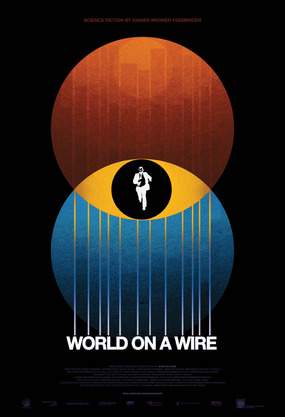
World on a Wire (1973) (2011) movie poster

Plot Summary

World on a Wire (1973) (2011) Plot Summary Explained

Release, runtime and language
2011 · 205 min · Hebrew
Loading streaming availability…
Directed by
Rainer Werner Fassbinder
Starring
Klaus Löwitsch, Barbara Valentin, Karl Heinz Vosgerau, Mascha Rabben

In this dystopian science fiction film, cybernetics engineer Fred Stiller discovers a vast corporate-governmental conspiracy that challenges his perception of reality. As he investigates, the lines between truth and illusion become increasingly blurred, and he finds himself caught in a complex web of paranoia. The film explores themes of simulation, identity, and the potential dangers of unchecked technological advancement, ultimately questioning the nature of existence itself.

On this page (5)
  1. 1 Where to watch
  2. 2 What happens: full plot
  3. 3 Plot questions answered
  4. 4 Movie threads
  5. 5 Every angle
Loading streaming availability…

Full plot summary · contains spoilers

What Happens in World on a Wire (1973): Full Plot Summary

The whole story of World on a Wire (1973) (2011) explained, from the opening scene to the final frame: every key event, every twist and what it all adds up to. Read it as a quick recap before the sequel, to check a scene you missed, or to finally understand what really happened.

In contemporary times, the Institute for Cybernetics and Futurology (Institut für Kybernetik und Zukunftsforschung) has developed a groundbreaking supercomputer that runs a detailed simulation, housing over 9,000 identity units who live their lives completely unaware that their existence is merely a virtual construct. The program's technical director, Professor Vollmer (Adrian Hoven), is on the brink of a colossal revelation but becomes increasingly disturbed and withdrawn before meeting an untimely and mysterious demise. His successor, Dr. Fred Stiller (Klaus Löwitsch), engages in a perplexing conversation with Günther Lause (Karl Heinz Vosgerau), the institute's security consultant. However, Lause mysteriously disappears before he can disclose Vollmer’s secret to Stiller, leading to an unfathomable situation as none of the other staff at the institute seem to recall Lause.

In the midst of this turmoil, one of the identity units in the simulation attempts to end its own life. To maintain the stability of their artificial environment, Stiller's colleague Walfang (Mascha Rabben) deletes the unit. Driven to uncover the reasons behind the tragic event, Stiller dives into the simulated realm, where he interviews a unique identity unit named Einstein. This particular unit is unique because it possesses the knowledge that their entire world is indeed a simulation. In a daring effort to experience genuine existence, Einstein swaps his consciousness into Walfang's body while Stiller is engaged with the simulated environment. Einstein reveals to Stiller that the "real world" he perceives is merely a projection of a higher reality.

As this harrowing revelation sinks in, Stiller spirals into madness. The other individuals in this supposed "real" world confront him, threatening him with death or institutionalization as he attempts to share the truth. Eventually, he manages to convince Hahn, the psychologist at the IKZ, of his theories. Tragically, Hahn dies in an accident shortly thereafter, and Stiller is cast as the prime suspect in the murders of both Hahn and Vollmer.

Fleeing from the chaos, Stiller seeks the key contact that could bridge the connection between his simulated reality and the genuine one situated above. He endures multiple assassination attempts and ultimately discovers that the contact he has been searching for is Eva. Projected into the simulation after Vollmer's passing, Eva is portrayed as his fictitious daughter. Stiller, fueled by a longing for connection, believes they once shared a romantic history. Eva reveals that he is based on the authentic Fred Stiller, a man who succumbed to madness from his control over the simulation in the higher reality. As Stiller learns that he is destined to perish in a scheduled ambush, Eva ingeniously swaps their minds, pulling the simulated Stiller into the true world.
Last updated: November 08, 2024 at 03:08

Was this helpful?

Plot questions answered

World on a Wire (1973) Plot Explained: Your Questions Answered

The questions people ask most about World on a Wire (1973) (2011): what happens in the confusing scenes, why the characters do what they do, the twists, hidden details and what the ending means. Each answer contains spoilers.

Q1

Why does Günther Lause disappear and why can't anyone remember him?

Lause vanishes after speaking with Stiller about Vollmer's secret. The implication is that the higher-level reality's controllers erased Lause to prevent the truth from reaching Stiller. His removal from the system also deletes him from the memories of everyone at the Institute, showing how completely the upper reality can manipulate the simulated world.

Foreshadowing: Earlier, Professor Vollmer becomes increasingly disturbed and withdrawn as he nears discovering the truth about the simulation.

  • Günther Lause
  • disappearance
  • memory wipe
  • conspiracy
  • Institute for Cybernetics
Q2

Why does an identity unit attempt to end its own life in the simulation?

One of the 9,000 identity units attempts suicide, though the specific reason is not detailed in the summary. This event is significant because it destabilizes the simulation, prompting Stiller to investigate the simulated world directly to understand why an apparently content simulated person would want to die.

  • identity unit
  • suicide
  • simulation stability
  • simulation inhabitants
Q3

Who is Einstein and what makes him unique among the identity units?

Einstein is a special identity unit who possesses full awareness that his entire world is a simulation. Unlike the other 9,000 units who believe their existence is real, Einstein knows the truth. This awareness drives him to attempt escaping his virtual existence by swapping his consciousness into Walfang's body during Stiller's investigation.

  • Einstein
  • identity unit
  • awareness
  • consciousness transfer
  • simulation escape
Q4

How does Einstein manage to swap his consciousness into Walfang's body?

Einstein exploits the system during Stiller's investigation of the simulated environment. While Stiller is engaged within the simulation, Einstein transfers his consciousness into Walfang's body in the 'real' world, allowing him to experience genuine physical existence. This demonstrates that the technology permits consciousness to move between the simulated and 'real' bodies, though the mechanics are not fully explained.

Foreshadowing: The Institute's technology was designed to run the simulation with 9,000 identity units, suggesting advanced consciousness manipulation capabilities.

  • consciousness swap
  • Einstein
  • Walfang
  • mind transfer
  • simulation technology
Q5

Why does Fred Stiller spiral into madness and start questioning reality?

After Einstein reveals that Stiller's 'real' world is itself a simulation projected from a higher reality, Stiller cannot reconcile this with his understanding of existence. The revelation that everything he believed about his world is false, combined with being accused of murders he didn't commit, causes him to descend into paranoia and madness as he struggles to prove his discoveries to hostile colleagues.

Foreshadowing: Professor Vollmer experienced similar disturbances and withdrew before his mysterious death, suggesting the same realization destroyed his sanity.

  • Fred Stiller
  • madness
  • paranoia
  • reality discovery
  • simulation revelation
Q6

Who is Eva and what is her true identity in the simulation?

Eva appears to be Vollmer's fictitious daughter, projected into the simulation after his death. However, she is actually an identity unit like Einstein, someone who possesses awareness of the simulated nature of reality. She was created or positioned as Vollmer's daughter to serve as a contact point for Stiller, functioning as the bridge between the simulation levels.

  • Eva
  • Vollmer's daughter
  • identity unit
  • simulation bridge
  • projection
Q7

What does Eva reveal about Fred Stiller's true origin?

Eva reveals that Stiller is based on the real Fred Stiller from the higher reality, a man who went mad from his control over the simulation. This means Stiller is himself an identity unit, a copy of the original Fred Stiller who succumbed to madness. This revelation shatters Stiller's understanding of his own identity and suggests he is destined to share the same fate.

Foreshadowing: Stiller's descent into madness mirrors the original Fred Stiller's deterioration, suggesting his fate was preordained.

  • real Fred Stiller
  • identity copy
  • original Stiller
  • simulation creator
  • identity origin
Q8

Why is Fred Stiller framed for the murders of Vollmer and Hahn?

Stiller becomes the prime suspect in the deaths of both Vollmer and Hahn because he is actively trying to expose the truth about the simulation. Those controlling the higher reality view him as a threat who could destabilize the entire project. His revelations to psychologist Hahn make him appear even more dangerous and delusional, conveniently positioning him as the culprit when Hahn dies in an 'accident.'

Foreshadowing: The mysterious disappearance of Lause, who knew crucial information, shows the pattern of eliminating those who get too close to the truth.

  • Fred Stiller
  • framed
  • murder
  • Vollmer
  • Hahn
  • conspiracy
  • false accusation
Q9

What happens when Eva swaps minds with Stiller at the end?

Learning that Stiller is scheduled to be killed in an ambush, Eva performs a desperate consciousness swap, trading places with him. This allows the simulated Stiller to enter what they believe is the 'true' world above, while Eva takes his place in the simulation. The ending is ambiguous because the 'true world' they escape to may simply be another simulation layer, especially given the earlier revelation that even the 'real' world was simulated.

Foreshadowing: Einstein previously demonstrated that consciousness can be transferred between bodies in different reality levels, making this final swap technically possible.

  • final scene
  • mind swap
  • Eva
  • consciousness transfer
  • escape
  • ambiguous ending
Q10

How many levels of reality exist in the film?

The film presents at least two levels of reality: the upper 'true' world where the Institute operates, and the lower simulation containing 9,000 identity units. However, the crucial twist is that even what appears to be the 'real' world is revealed to be a simulation projected from an even higher reality. This creates a potentially infinite stack of realities, each believing itself to be the genuine existence.

Foreshadowing: Einstein tells Stiller that the 'real world' he perceives is merely a projection of a higher reality, hinting at nested simulations.

  • simulation levels
  • nested simulation
  • multiple realities
  • higher reality
  • virtual worlds
Q11

Why does Professor Vollmer die and what disturbs him before his death?

Professor Vollmer, the technical director of the simulation, becomes increasingly disturbed and withdrawn as he approaches a major revelation about the nature of reality. He dies mysteriously before revealing what he discovered. The film implies that those controlling the highest reality eliminated him to prevent his knowledge from spreading, similar to how Lause is later erased.

  • Professor Vollmer
  • death
  • secret
  • discovery
  • elimination
  • technical director

Movie threads

More Movies Like World on a Wire (1973), by Mood & Story

Curated lists built around what makes World on a Wire (1973) tick: the same mood, the same kind of story or the same emotional payoff. Each list explains why these movies belong together.

Mind-bending simulation thrillers like World on a Wire (1973)

Characters discover their world is a fabrication, sparking an existential crisis. If you enjoyed the reality-questioning plot of World on a Wire, explore these movies where characters confront simulated worlds and fabricated realities. These similar sci-fi stories are known for their existential dread, complex narratives, and tense, paranoid atmosphere.

  • mind-bending
  • paranoid
  • existential
  • disorienting
  • anxious
  • cold
  • Tone: tense, paranoid, mind-bending
  • Pacing: variable, building mystery
Why these movies?

The story pattern: Narratives typically follow a protagonist who stumbles upon inconsistencies in their world, leading them down a rabbit hole of investigation. This journey often involves confronting a powerful entity, facing psychological disorientation, and ultimately grappling with a shocking revelation about the nature of their existence.

Why they belong together: Movies are grouped here based on their shared core premise of a simulated reality and the profound psychological and existential crisis this discovery triggers. They evoke a similar feeling of paranoia and a slow, unsettling dismantling of the viewer's and character's sense of what is real.

Paranoid thrillers about psychological unraveling like World on a Wire (1973)

A lone investigator's pursuit of truth leads to their psychological undoing. For viewers who liked the anxious, disorienting vibe of World on a Wire, this list features movies with protagonists losing their grip on reality. These similar tense and complex stories explore themes of conspiracy, isolation, and the heavy emotional weight of questioning everything.

  • paranoid
  • claustrophobic
  • anxious
  • disorienting
  • melancholic
  • atmospheric
  • Tone: tense, claustrophobic, melancholic
  • Pacing: variable, methodical build
Why these movies?

The story pattern: The narrative pattern involves a protagonist, often isolated or working against a faceless system, digging into a conspiracy or mystery. As they get closer to the truth, they face increasing resistance, their grasp on reality weakens, and they must confront whether the threat is external or a manifestation of their own crumbling mind.

Why they belong together: These films are united by their intense, claustrophobic focus on a character's subjective experience of paranoia and psychological disintegration. They share a heavy emotional weight, a tense tone, and a complex structure that mirrors the protagonist's confused mental state.

Every angle

World on a Wire (1973) (2011) Explained: Plot, Timeline & Characters

Everything about World on a Wire (1973) in one place: what happens in the plot summary, the timeline in chronological order, the characters and meaning and a spoiler-free summary. What's After the Movie adds the cast, box office and post-credit scenes.

Coming soon on iOS and Android

The Plot Explained Movie Summary App

Plot summaries, endings explained and timelines on your phone. Catch up on any movie in minutes, save your favorites and never miss a twist again.

Be the first to know when we launch. Your email stays private, always.

Learn more about the app