#65160 Year: 2015
Runtime: 85 min
Language: English
Directors: Christopher K. Walker, Michael Beach Nichols
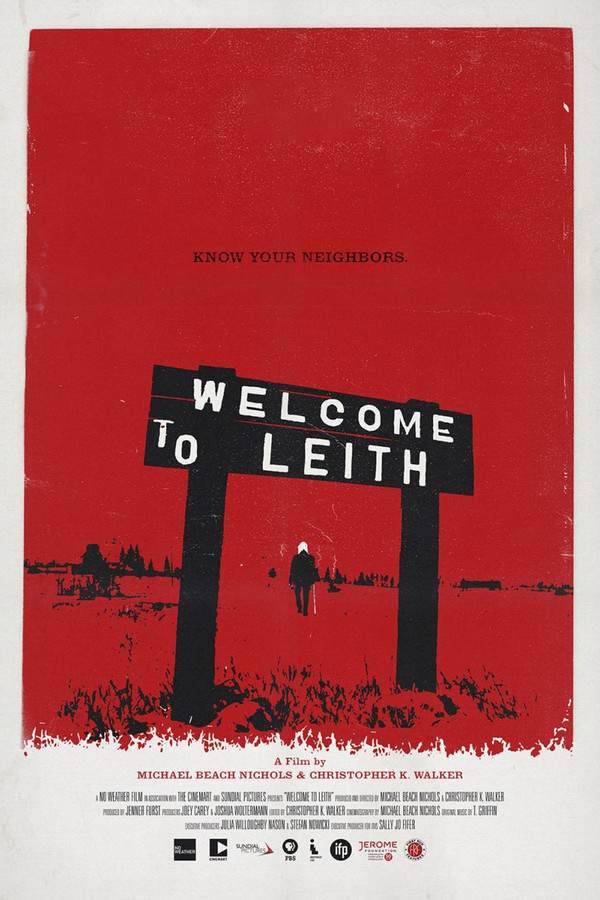
In rural North Dakota, the small town of Leith faces upheaval when white supremacist Craig Cobb arrives with plans to transform the community. The documentary follows the escalating tensions as residents grapple with Cobb’s extremist ideology and fight to protect their town’s identity and sense of belonging. It's a compelling look at the clash between a close-knit community and the forces seeking to divide it.
Find where to stream, rent, or buy Welcome to Leith (2015) in the US with current JustWatch availability, up-to-date pricing, and platform listings for subscription, rental, and digital purchase options.
Warning: spoilers below!
Haven’t seen Welcome to Leith yet? This summary contains major spoilers. Bookmark the page, watch the movie, and come back for the full breakdown. If you're ready, scroll on and relive the story!
Trace every key event in Welcome to Leith (2015) with our detailed, chronological timeline. Perfect for unpacking nonlinear stories, spotting hidden connections, and understanding how each scene builds toward the film’s climax. Whether you're revisiting or decoding for the first time, this timeline gives you the full picture.
Last updated: November 03, 2024 at 14:01
Find frequently asked questions about the Welcome to Leith (2015) timeline, including chronological order, nonlinear jumps, cause-and-effect links, and scene sequence clarifications. This timeline FAQ helps explain when key events happen, how moments connect, and why the story unfolds in that specific order.
Residents speculated that Cobb's interest in purchasing property was economically motivated, since the Bakken oil fields are located approximately 70 miles north of Leith. The area experienced an oil boom during that period, making it plausible that an outsider would invest in cheap land for potential profit. This speculation persisted until Cobb's extremist background became public knowledge.
Earlier in the documentary, Cobb's economic justifications for his property purchases plant the seed of doubt about his true intentions.
Cobb's true intention was not economic investment but a political takeover of Leith's local government. He sought to transform the small town into a white separatist community through his extremist ideology. This plan went beyond simply acquiring land, he aimed to establish a stronghold for his white supremacist agenda.
The film hints at Cobb's ideological motivations early through his history of extremist beliefs.
Other individuals who shared Cobb's white separatist ideology moved to Leith to support his vision and help rehabilitate the properties he had acquired. Their arrival represented an organized effort to establish a community aligned with extremist beliefs, further escalating the threat to the existing residents.
The film establishes early that Cobb had connections to a broader network of like-minded individuals.
Cobb conducted armed patrols throughout Leith, creating a climate of fear among the residents. These provocative displays of weaponry escalated tensions dramatically and directly threatened the safety of the community. The patrols represented a clear intimidation tactic designed to assert dominance over the town.
Earlier scenes showing Cobb's escalating behavior and growing influence hint at the potential for violent confrontation.
Cobb was arrested for instilling fear among the townspeople through his armed patrols. His provocative behavior crossed a legal line, leading to charges related to threatening the community. The arrest represented a turning point in the conflict, as the authorities intervened to protect residents from his intimidation tactics.
The film builds toward this moment through escalating confrontations between Cobb and residents.
After six months of incarceration, Cobb was released, which reignited tensions in Leith. His return brought back the threat of his extremist agenda, leaving residents feeling vulnerable and anxious about their safety. The community faced the ongoing challenge of confronting radical ideology without the temporary protection his absence had provided.
Earlier residents express fear that Cobb's release would only prolong their struggle, which proves accurate.
Residents organized to fight against Cobb's radical vision and protect their community's identity and way of life. Their response included documenting the events, mobilizing local opposition, and cooperating with law enforcement during the investigation and arrest process. The documentary captures their struggle to maintain autonomy against ideological invasion.
The film shows early community meetings where residents discuss their concerns about the outsider.
The outcome was bittersweet, while Cobb was temporarily arrested, his eventual release meant the community's struggle continued. The documentary ends with Leith still facing the threat of extremist ideology, suggesting the battle for the town's identity remains ongoing. Residents experienced temporary relief but live with lasting anxiety about their future.
Earlier scenes establish that even before Cobb's arrest, residents feared his return would be inevitable.
Discover curated groups of movies connected by mood, themes, and story style. Browse collections built around emotion, atmosphere, and narrative focus to easily find films that match what you feel like watching right now.
Stories where a close-knit group must defend itself against an invading force.If you liked the tense, real-world conflict in Welcome to Leith, explore more movies about communities under threat. These films, including documentaries and thrillers, capture the chilling dynamics of a group fighting to preserve its identity against hostile infiltration or ideological takeover.
The narrative pattern follows a community's peaceful existence being disrupted by an external antagonist. Tensions escalate methodically as the threat becomes more entrenched, forcing residents to organize, debate difficult choices, and confront their own values under extreme pressure. The conflict is often ideological or psychological, pitting communal bonds against divisive forces.
These movies are grouped by their shared focus on collective struggle, palpable social anxiety, and the grim realism of a group defending its home. They create a similar vibe of unease and tension by exploring how ordinary people respond to extraordinary threats to their community.

Non-fiction stories where a real-life threat creates unbearable, creeping anxiety.Fans of the methodical, anxiety-inducing pace of Welcome to Leith will appreciate these movies. They are documentaries and docu-dramas that capture real-world conflicts with a steady, observant camera, building tension through the grim reality of the events rather than cinematic manipulation.
These stories unfold chronologically, often over an extended period, as a problematic situation develops from a minor concern into a full-blown crisis. There is no fast-paced editing or artificial drama; the tension arises organically from the real stakes and the palpable fear of the people involved. The journey is one of watching a powder keg slowly being filled.
They are grouped by their shared commitment to realism, a steady pacing that methodically builds unease, and a high-intensity emotional experience derived from true events. The相似 vibe comes from the sobering, immersive feeling of witnessing a dangerous reality unfold in real time.
Don't stop at just watching - explore Welcome to Leith in full detail. From the complete plot summary and scene-by-scene timeline to character breakdowns, thematic analysis, and a deep dive into the ending - every page helps you truly understand what Welcome to Leith is all about. Plus, discover what's next after the movie.
Read a complete plot summary of Welcome to Leith, including all key story points, character arcs, and turning points. This in-depth recap is ideal for understanding the narrative structure or reviewing what happened in the movie.
Discover the characters, locations, and core themes that shape Welcome to Leith. Get insights into symbolic elements, setting significance, and deeper narrative meaning - ideal for thematic analysis and movie breakdowns.