






Plot Explained Spoilers guaranteed!
Plot Explained

Browse by genre

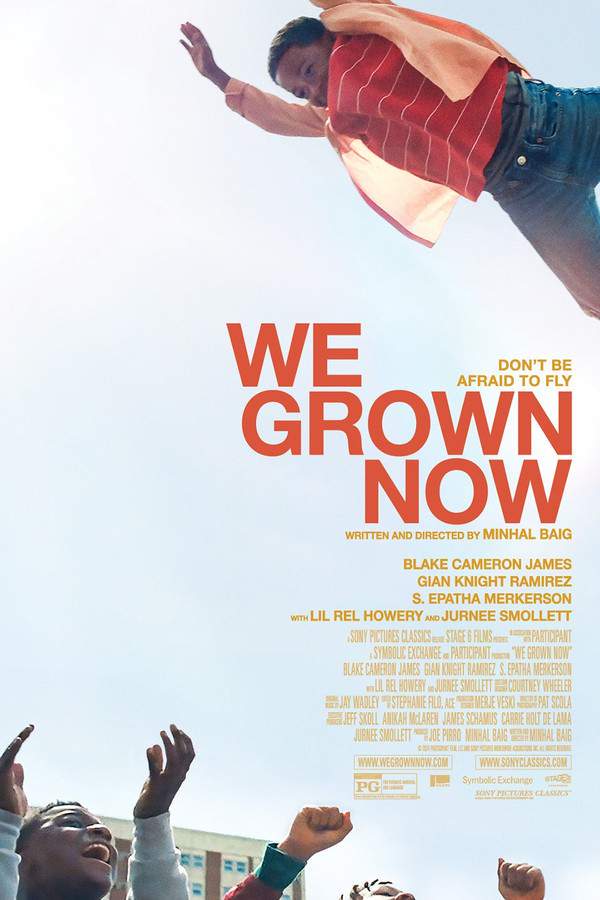
We Grown Now (2024) movie poster

Characters & Themes

We Grown Now (2024) Characters, Setting & Themes Explained

Release, runtime and language
2024 · 1 h 33 m · English
Echo score 80
Directed by
Minhal Baig
Starring
S. Epatha Merkerson, Jurnee Smollett, Avery Holliday, Blake James, Lil Rel Howery, Matthew Campbell

Against the backdrop of Michael Jordan's Chicago Bulls championship season, two close friends, Malik and Eric, grapple with adolescence and the challenges of their South Side neighborhood. Living in public housing, their strong bond is tested as they each pursue their own aspirations and come of age, striving to forge their own paths and create their own legacies.

On this page (8)
  1. 1 Where to watch
  2. 2 Characters explained (7)
  3. 3 Where & when it takes place
  4. 4 Themes & meaning (3)
  5. 5 Character & meaning questions
  6. 6 Movie threads
  7. 7 Movies like We Grown Now
  8. 8 Every angle

Where to watch

Where to Watch We Grown Now (2024)

Where can you watch We Grown Now? Stream, rent or buy it in the US, including on Amazon Video, Apple TV Store and Fandango At Home: current JustWatch availability with up-to-date prices.

Streaming availability powered by JustWatch

7 main characters · contains spoilers

We Grown Now Characters Explained: Who Is Who

The main characters of We Grown Now (2024), heroes and villains: what drives them, how they change over the course of the story and what each of them reveals about the film's bigger ideas.

  • Malik (Blake James)

    A mischievous but friendly boy who loves spending time at the park with Eric. He envisions a better life but remains deeply loyal to his friends and family. Throughout the story he learns that the people you meet give a home its meaning, a realization he expresses during a school assignment. His resilience and warmth drive the narrative's emotional core.

    • 🎒 Student
    • 🧒 Young Protagonist
    • 🧭 Loyal Friend
  • Eric (Gian Knight Ramirez)

    A slightly more introverted boy who lives with his single father and older sister. He grows withdrawn under pressure and is wary of change, especially if it means losing Malik. His arc involves confronting mortality, fear, and the pull between staying and growing up, culminating in a meaningful reconciliation with Malik.

    • 🧑‍🤝‍🧑 Introverted
    • 🧭 Thoughtful
    • 🧍 Brother
  • Dolores (Jurnee Smollett)

    Malik and Dee's mother, a single parent who faces the challenge of providing for her family. She is offered a promotion in Peoria, creating a difficult choice between better opportunities and staying connected to her children. Her decision shapes the family’s future and tests the strength of their bonds.

    • 👩 Mother
    • 💼 Working Woman
    • 🏠 Family First
  • Anita (S. Epatha Merkerson)

    Malik’s grandmother who moved from Mississippi for better opportunities and now anchors the family with her experience and steady love. She supports Dolores’s choices and emphasizes resilience in the face of systemic pressures. Anita’s role frames the generational memory and strength driving the home they share.

    • 👵 Grandmother
    • 🏡 Pillar of Family
  • Amber (Avery Holliday)

    Eric’s older sister who lives on the floor above with her father and plays a protective, steady role in the brothers’ lives. She embodies the family’s persistence in a challenging environment and helps to balance the brothers’ perspectives as events unfold.

    • 👩 Sister
    • 🛡️ Protective
  • Jason (Lil Rel Howery)

    Eric’s single father who pushes his son to succeed while grappling with the pressures of providing for the family. He encourages reconciliation and acts as a mediator as tensions rise, highlighting themes of responsibility and care within a strained urban household.

    • 👨 Father
    • 💪 Provider
    • 📚 Motivator
  • Dee

    Malik’s younger sister who is part of the family’s close circle. Although not deeply explored in the summary, her presence reinforces the familial warmth and the everyday stakes of staying together in a volatile environment.

    • 🧒 Younger Sister
    • 🏠 Family Member

Last updated: April 08, 2026 at 18:19

Was this helpful?

Setting

Where and When Does We Grown Now Take Place?

The setting of We Grown Now (2024): the year and time period, the places and locations, and how they shape the characters, the mood and the tension of the story.

Time period

1992

The narrative is set in early 1990s Chicago, where life in the Cabrini–Green projects is colored by economic hardship and rising racial tensions. The city experiences a crackdown on activity in the neighborhood, including ID checks and drug searches. A key visit to the Art Institute of Chicago offers a lens to confront systemic racism and consider what home means beyond the block.

Location

Cabrini–Green Homes, Chicago

The story unfolds within Cabrini–Green Homes, a large public housing complex in Chicago. It portrays a tight-knit community living under challenging conditions shaped by poverty and neighborhood tension. The environment drives the characters' daily lives and the choices they make as they navigate danger, hope, and renewal.

  • 🏙️ Urban housing project
  • 🧒 Childhood in Chicago
  • 🛡️ Systemic oppression

Last updated: April 08, 2026 at 18:19

Was this helpful?

3 major themes

We Grown Now Meaning: Themes & Message Explained

What is We Grown Now (2024) really about? The emotional, social and philosophical themes the film keeps returning to, its symbolism and the message beneath the surface.

  • Systemic Racism

    The film portrays how the community endures discriminatory policies and intensified policing. Dantrelle's death and the subsequent crackdown highlight how policy and law-enforcement responses shape everyday life for Black families. The protagonists grapple with inequality while seeking dignity and opportunity within a constrained system. Artistic moments at the Art Institute provide critical perspective on racism.

  • Friendship

    Malik and Eric form a defining bond that anchors them amid turbulence. Their shared games, conversations, and mutual care frame a sense of belonging that transcends their housing complex. Conflict arises as possibilities of separation test their trust, but reconciliation reinforces the depth of their connection. The idea that home is found in people, not just places, runs through their relationship.

  • Displacement

    Dolores is offered a promotional opportunity in Peoria, introducing the prospect of leaving Chicago and disrupting family life. The move forces the family to reconsider what makes a home, while Malik learns to weigh dreams of a better future against loyalty to friends. The tension between staying and leaving underscores the emotional costs of relocation and the hope tied to new beginnings.

Last updated: April 08, 2026 at 18:19

Was this helpful?

Character & theme questions

We Grown Now Characters & Meaning: Your Questions Answered

The questions people ask about We Grown Now (2024): who the characters really are, their relationships, what the symbols mean, where it takes place and what the movie is really about. Each answer contains spoilers.

Q1

Where is the movie set?

We Grown Now takes place in Cabrini-Green Homes, a large public housing complex on Chicago's South Side. The story unfolds within this tight-knit community, portraying daily life shaped by poverty and neighborhood tension.

  • cabrini-green
  • chicago
  • public housing
  • setting
  • urban
Q2

What is Cabrini-Green Homes?

Cabrini-Green was a notorious public housing development in Chicago known for high crime rates and deteriorated buildings. The film portrays a community living under challenging conditions, where residents navigate danger, hope, and renewal despite systemic oppression.

  • cabrini-green
  • chicago housing
  • public housing
  • urban poverty
Q3

What time period is the movie set in?

We Grown Now is set in 1992 Chicago, during the early 1990s. The narrative captures life in the Cabrini-Green projects during a period marked by economic hardship, rising racial tensions, and intensified policing in the neighborhood.

  • 1992
  • chicago
  • early 1990s
  • time period
  • historical
Q4

What are the main themes in the movie?

The film explores three interconnected themes: systemic racism, depicting how discriminatory policies and policing shape everyday life for Black families; friendship, showing how the bond between Malik and Eric anchors them through turbulence; and displacement, examining the emotional costs of relocation when families seek better opportunities.

  • systemic racism
  • friendship
  • displacement
  • themes
  • community
Q5

How does the film address systemic racism?

We Grown Now portrays how discriminatory policies and intensified policing directly impact Black families in the Cabrini-Green projects. The death of character Dantrelle and subsequent police crackdown highlight how law enforcement responses shape daily life. A key visit to the Art Institute of Chicago offers moments to confront systemic racism and consider what home means beyond the block.

  • systemic racism
  • policing
  • discrimination
  • art institute
  • chicago
Q6

How is friendship portrayed in the film?

Malik and Eric's friendship serves as the emotional core of the film. Their shared games, conversations, and mutual care create a sense of belonging that transcends their housing complex. As possibilities of separation test their trust, conflict arises but reconciliation reinforces the depth of their connection, embodying the idea that home is found in people, not just places.

  • malik
  • eric
  • friendship
  • bond
  • childhood
  • loyalty
Q7

What does the displacement theme explore?

The displacement theme centers on Dolores's promotional opportunity in Peoria, which forces the family to consider leaving Chicago. This creates tension between pursuing a better future and remaining loyal to friends and community. The film explores the emotional costs of relocation while also highlighting hope tied to new beginnings.

  • displacement
  • peoria
  • relocation
  • family
  • dreams
  • opportunity
Q8

Who are the key characters in the movie?

The main characters include Malik and Eric, two close friends navigating adolescence in the housing project; their mothers Dolores and Jason; Malik's grandmother Anita who provides generational strength; Eric's older sister Amber; and Malik's younger sister Dee. Each character represents different aspects of family and community resilience.

  • malik
  • eric
  • dolores
  • anita
  • amber
  • jason
  • characters
Q9

What is Malik's role in the story?

Malik is the film's protagonist, a mischievous but friendly boy who loves spending time at the park with Eric. He envisions a better life but remains deeply loyal to friends and family. His arc involves learning that the people you meet give a home its meaning, a realization he expresses during a school assignment.

  • malik
  • protagonist
  • loyalty
  • dreams
  • resilience
Q10

Who is Eric in the movie?

Eric is Malik's best friend, a slightly more introverted boy who lives with his single father Jason and older sister Amber. He grows withdrawn under pressure and is wary of change, especially if it means losing Malik. His arc involves confronting mortality, fear, and the tension between staying and growing up, culminating in reconciliation with Malik.

  • eric
  • malik's friend
  • introvert
  • growth
  • reconciliation
Q11

What role does Dolores play?

Dolores is Malik and Dee's mother, a single parent facing the challenge of providing for her family. When offered a promotion in Peoria, she must choose between better opportunities and staying connected to her children. Her decision shapes the family's future and tests the strength of their bonds.

  • dolores
  • mother
  • single parent
  • opportunity
  • family
Q12

Who is Anita in the story?

Anita is Malik's grandmother who moved from Mississippi to Chicago for better opportunities. She anchors the family with her experience and steady love, supporting Dolores's choices and emphasizing resilience in the face of systemic pressures. Her role represents generational memory and strength.

  • anita
  • grandmother
  • mississippi
  • resilience
  • generational

Movie threads

More Movies Like We Grown Now, by Mood & Story

Curated lists built around what makes We Grown Now tick: the same mood, the same kind of story or the same emotional payoff. Each list explains why these movies belong together.

Urban coming-of-age stories like We Grown Now

Childhood innocence meets the harsh realities of city life and systemic struggle. Find more movies like We Grown Now that explore childhood and friendship against a backdrop of urban struggle. These similar drama films capture the bittersweet feeling of growing up while facing systemic challenges and poverty.

  • nostalgic
  • melancholic
  • hopeful
  • oppressive
  • tender
  • anxious
  • Tone: bittersweet, melancholic, hopeful
  • Pacing: steady, character-driven
Why these movies?

The story pattern: These narratives follow young protagonists navigating their formative years in challenging urban settings. The stories are often linear and character-driven, focusing on the tension between youthful aspirations and the oppressive realities of their environment, leading to a maturation that is both painful and necessary.

Why they belong together: They are grouped by their shared focus on the poignant intersection of childhood and urban adversity. They balance a tender, nostalgic look at youth with a heavy, often melancholic recognition of the systemic forces that shape these young lives, resulting in a consistently bittersweet tone.

Movies about friendship in hardship like We Grown Now

Powerful bonds between friends tested by a challenging and oppressive world. Discover films similar to We Grown Now that focus on powerful friendships tested by adversity. If you liked the bond between Malik and Eric, you'll enjoy these emotional stories about loyalty and growing up under difficult circumstances.

  • tender
  • melancholic
  • hopeful
  • reflective
  • anxious
  • heartfelt
  • Tone: bittersweet, tender, reflective
  • Pacing: steady
Why these movies?

The story pattern: The core of these films is the evolution of a central friendship. The plot is often structured around how this bond is strengthened, strained, and ultimately transformed by shared and individual struggles against a difficult environment, leading to a conclusion that is heartfelt yet realistically complex.

Why they belong together: They share a primary focus on the emotional dynamics of a close friendship as a central pillar of the narrative. This thread prioritizes films where the relationship is the main vehicle for exploring themes of loyalty, resilience, and personal growth amidst heavy external challenges.

If you liked this

Movies Like We Grown Now

Similar movies to We Grown Now: the same genre, themes or kind of story. Each one comes with its own plot summary, timeline and ending explained.

Browse all movie summaries

Every angle

We Grown Now (2024) Explained: Plot, Ending, Timeline & Characters

Everything about We Grown Now in one place: what happens in the plot summary, the timeline in chronological order, the characters and meaning, the ending explained and a spoiler-free summary. What's After the Movie adds the cast, box office and post-credit scenes.

Coming soon on iOS and Android

The Plot Explained Movie Summary App

Plot summaries, endings explained and timelines on your phone. Catch up on any movie in minutes, save your favorites and never miss a twist again.

Be the first to know when we launch. Your email stays private, always.

Learn more about the app