Plot Explained Spoilers guaranteed!
Plot Explained

Browse by genre

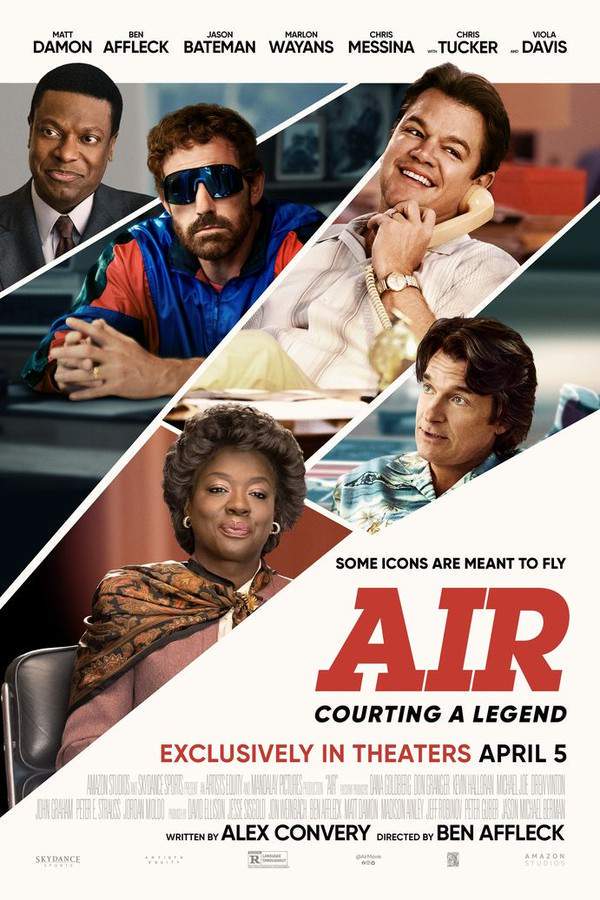
Air (2023) movie poster

Plot Summary

Air (2023) Plot Summary & Ending Explained

Release, runtime and language
2023 · 112 min · English
Echo score 76
Starring
Chris Messina, Matt Damon, Ben Affleck, Viola Davis, Jason Bateman, Matthew Maher
Budget
$90M

A partnership forms between a determined group and Nike’s basketball division, leading to the creation of a groundbreaking brand. Michael Jordan's exceptional abilities are central to this high-stakes venture, and his mother’s belief in him provides unwavering support. The collaboration propels Jordan toward unprecedented success, ultimately reshaping the world of basketball and establishing a lasting legacy.

On this page (6)
  1. 1 What happens: full plot
  2. 2 Plot questions answered
  3. 3 How it ends
  4. 4 Movie threads
  5. 5 Movies like Air
  6. 6 Every angle

Full plot summary · contains spoilers

What Happens in Air: Full Plot Summary

The whole story of Air (2023) explained, from the opening scene to the final frame: every key event, every twist and what it all adds up to. Read it as a quick recap before the sequel, to check a scene you missed, or to finally understand what really happened.

In 1984, Nike, Inc., based in Oregon, finds itself on the brink of closing its basketball shoe division due to dismal sales figures. In an effort to turn things around, Rob Strasser (Jason Bateman), the Marketing VP, and co-founder and CEO Phil Knight (Ben Affleck) assign the task of finding a fresh spokesperson for their basketball shoes to Sonny Vaccaro (Matt Damon). The situation is critical; after a significant layoff of 25% of their workforce, Nike's basketball division is limited to a modest budget of just $250,000. Despite the existing dominance of Nike in the running shoe market, Knight is doubtful about the public interest in basketball shoes.

Sonny has a gambler's instinct, often spending time in Las Vegas where he wins frequently but risks losing it all on one impulsive bet. The landscape of basketball shoe marketing in 1984 is heavily dominated by Converse, holding a commanding 54% of the market, while Adidas follows with 29% and Nike lags behind at 17%. Although Nike offers lucrative endorsement deals, high school basketball stars are drawn to Adidas, leaving Nike perceived merely as a jogging brand.

A key piece of advice from Howard White (Chris Tucker) resonates with Sonny: players often sign deals through their mothers, emphasizing the importance of family trust. Notably, the iconic Nike slogan, "Just do it," originated from the last words of a condemned man facing execution, serving as a testament to the boldness they aim to embody.

As the executives analyze potential players in the 1984 NBA draft, they dismiss Michael Jordan (Damian Delano Young), believing him to be an Adidas fan and out of reach financially. Instead, they consider lower-ranked players, yet a conversation with a grocery clerk fuels Sonny’s determination to pursue Jordan. The clerk’s skepticism regarding Jordan’s potential ignites a spark in Sonny as he witnesses Jordan's high school highlights, coupled with an inspiring commercial featuring Arthur Ashe.

Sonny passionately argues to Strasser that at only 18 years old, Jordan was pivotal in shaping his team’s victory, with even his coach recognizing his exceptional talent. In a bold move, he proposes to use the entire division's budget to create a signature shoe for Jordan. However, David Falk (Chris Messina), Jordan's agent, proves to be a formidable obstacle, insisting that Adidas is already making a substantial offer that includes enticing perks.

In a personal appeal, Sonny seeks out support from his friend George Raveling (Marlon Wayans), who had coached Jordan during the Olympics. Recognizing the risks involved, George encourages Sonny yet highlights the stakes of bypassing Falk.

Sonny eventually travels to Wilmington, North Carolina, where he meets Deloris Jordan (Viola Davis), Michael's mother. He passionately advocates for Nike, assuring her that they would provide Michael with the individual attention that Converse and Adidas might fail to deliver. After an initial rejection from David, delivering a message of urgency, Sonny learns that the Jordans have agreed to meet with Nike at their headquarters.

As they prepare their pitch, they enlist Peter Moore (Matthew Maher) to create a prototype shoe, named "Air Jordan," utilizing Nike's innovative Air Sole technology. In a defiant act against the NBA's outdated color rule for basketball shoes, Sonny and Strasser decide to embrace a distinctive design, ready to pay any fines incurred.

To their surprise, following a successful presentation, Deloris contacts Sonny with an expansive condition for signing – Michael would earn a percentage of every Air Jordan sold. Although initially hesitant about the financial implications, Knight recognizes the necessity of this deal to secure Jordan's endorsement.

The aftermath sees an extraordinary success unfold as the Air Jordan line surpasses knight's hopes, generating $162 million in its first year alone. This triumph effectively transforms Nike and forever alters the landscape of athletic endorsements. It is revealed that Nike's division is now worth $4 billion annually, with Strasser earning recognition, White becoming a founding figure in the Air Jordan division, and Michael Jordan profiting handsomely from his revenue share. Nike's acquisition of Converse in 2003 further solidified their market presence, while Deloris Jordan’s charitable work expands immensely, marking a profound change in the athletic and philanthropic landscape.
Last updated: November 04, 2024 at 01:45

Was this helpful?

Plot questions answered

Air Plot Explained: Your Questions Answered

The questions people ask most about Air (2023): what happens in the confusing scenes, why the characters do what they do, the twists, hidden details and what the ending means. Each answer contains spoilers.

Q1

Why was Nike's basketball division about to close in 1984?

Nike's basketball division was struggling with only 17% market share, far behind Converse (54%) and Adidas (29%). The company had already laid off 25% of its workforce, and CEO Phil Knight was skeptical about basketball shoes, viewing Nike primarily as a running shoe brand. With a meager budget of $250,000, the division was on the brink of being shut down.

Foreshadowing: The crisis sets the stage for the risky gamble that defines the entire film.

  • nike crisis
  • basketball shoes
  • market share
  • 1984
  • corporate struggle
Q2

Why did Sonny Vaccaro choose Michael Jordan despite initial doubts?

After a conversation with a grocery clerk who doubted Jordan's potential, Sonny watched Jordan's high school highlights and became convinced he was extraordinary. He argued that at just 18 years old, Jordan had already shaped his team's victory and possessed talent that could transform Nike's entire basketball division.

Foreshadowing: This moment marks the turning point where Sonny commits everything to pursuing Jordan.

  • sonny vaccaro
  • michael jordan
  • endorsement
  • talent
  • nike
Q3

How did Sonny Vaccaro convince Deloris Jordan to meet with Nike?

Sonny traveled to Wilmington, North Carolina, and met directly with Deloris Jordan. He emphasized that Nike would give Michael the individual attention that larger brands like Converse and Adidas might not provide. His genuine passion and the personal approach convinced her to schedule a meeting at Nike headquarters.

Foreshadowing: Howard White's earlier advice about players signing through their mothers proves crucial.

  • deloris jordan
  • sonny vaccaro
  • meeting
  • nike
  • family trust
Q4

What made the Air Jordan deal different from other endorsement deals?

The deal included a revenue-sharing clause where Michael Jordan would earn a percentage of every Air Jordan shoe sold. This was unprecedented at the time, as most endorsement deals were flat fees. Although Phil Knight initially hesitated at the financial implications, he recognized it was necessary to secure Jordan's endorsement.

Foreshadowing: This innovative structure would become the model for future athlete endorsements.

  • air jordan deal
  • revenue share
  • endorsement terms
  • michael jordan
  • groundbreaking
Q5

Why did Nike break the NBA's color rules with the Air Jordan?

Nike deliberately created a shoe with bold red and black colors that violated the NBA's outdated uniform code requiring white shoes. Rather than toning down the design, Sonny and Strasser decided to embrace the distinctive look and pay any fines incurred, turning the controversy into marketing appeal.

Foreshadowing: The defiance of NBA rules becomes a key part of the Air Jordan legend.

  • nba color rule
  • air jordan design
  • defiance
  • basketball shoes
  • fines
Q6

How did the Air Jordan become so successful?

The Air Jordan exceeded all expectations, generating $162 million in its first year alone. The combination of Michael Jordan's rising stardom, the controversial design, and the innovative marketing approach created unprecedented demand that transformed Nike's failing basketball division into a $4 billion annual business.

Foreshadowing: The success validates Sonny's risky gamble that nearly everyone considered foolish.

  • air jordan success
  • revenue
  • $162 million
  • transformation
  • nike
Q7

What was the $250,000 budget and why was it significant?

Nike's entire basketball division had only $250,000 to spend on an endorsement deal. Sonny proposed using this entire budget to create a signature shoe for Michael Jordan, essentially betting the entire division's future on one player, a massive gamble that shocked even his colleagues.

Foreshadowing: The decision to risk everything on one athlete defines the film's central tension.

  • $250000 budget
  • nike basketball division
  • risk
  • endorsement
  • gamble
Q8

Why was David Falk reluctant to sign Michael Jordan with Nike?

David Falk, Jordan's agent, was skeptical of Nike because Adidas was making a substantial offer with attractive perks. Falk viewed Nike as merely a jogging brand with limited basketball credibility, and he initially rejected Nike's advances, insisting the Jordan brand was already leaning toward Adidas.

Foreshadowing: Falk's resistance creates a major obstacle that Sonny must overcome.

  • david falk
  • agent
  • adidas
  • michael jordan
  • negotiation
Q9

How did Howard White's advice help sign Michael Jordan?

Howard White told Sonny that players often sign deals through their mothers, emphasizing that family trust was crucial in endorsement decisions. This insight led Sonny to bypass the traditional route through agents and approach Deloris Jordan directly, which proved pivotal in securing the deal.

Foreshadowing: This advice directly influences Sonny's strategy in Wilmington.

  • howard white
  • advice
  • mothers
  • deloris jordan
  • family trust
Q10

What happened to Nike after the Air Jordan success?

Following the Air Jordan phenomenon, Nike's basketball division grew to be worth $4 billion annually. In 2003, Nike acquired Converse, the very brand that once dominated 54% of the basketball shoe market. Deloris Jordan also expanded her charitable work significantly, creating lasting impact beyond athletics.

Foreshadowing: The ending shows how one risky decision reshaped the entire athletic industry.

  • nike growth
  • converse acquisition
  • 2003
  • legacy
  • deloris jordan philanthropy

Ending explained

What Happens at the End of Air?

How Air (2023) ends, in short: the final scene, the last twist and what it means for the characters. The full ending explained, with every spoiler, lives on its own page.

Read the full ending explained

The film "Air" concludes with the historic signing of Michael Jordan by Nike, a deal that would forever change the sneaker industry and solidify Jordan’s legacy beyond basketball. Throughout the story, we see Sonny Vaccaro’s relentless determination and willingness to take risks—betting his career on the belief that Jordan’s unparalleled talent would redefine sports and culture. The ending shows Nike finally backing the deal after Phil Knight, initially hesitant, realizes that taking risks is necessary to stay competitive and leave a lasting legacy. While the film doesn’t focus on showing Jordan’s face explicitly—only quick glimpses and side angles—it emphasizes that Jordan’s true impact is felt not just in his athletic prowess but in the cultural and financial influence he would eventually wield.

As a true story, the film depicts how a small struggling company transformed into a global giant through this one bold decision. The deal also provided Michael Jordan and his family with lasting financial empowerment, allowing him to build a brand that transcended basketball, including the iconic Jumpman logo. The film ends on an optimistic note, celebrating perseverance, daring to take big chances, and the idea that “you miss 100% of the shots you don’t take.” Ultimately, “Air” highlights that courageous risks—like Nike’s gamble on Jordan—can lead to legendary outcomes, echoing the film’s message about the power of boldness and believing in the impossible.

Air ending explained in full

Movie threads

More Movies Like Air, by Mood & Story

Curated lists built around what makes Air tick: the same mood, the same kind of story or the same emotional payoff. Each list explains why these movies belong together.

Business origin stories like Air

Gripping tales of corporate risk-takers betting everything on a visionary idea. If you enjoyed the high-stakes corporate drama of Air, you'll like these movies about visionary entrepreneurs and business underdogs. This section features films based on true stories of brand creation, risky ventures, and the tense negotiations that shaped industries.

  • motivational
  • urgent
  • gripping
  • triumphant
  • underdog
  • strategic
  • Tone: hopeful, urgent, triumphant
  • Pacing: steady, methodical build
Why these movies?

The story pattern: The narrative follows a linear, straightforward path from a struggling business unit or individual to a high-consequence opportunity. The central conflict is the immense financial and professional risk involved in pursuing a breakthrough idea, leading to tense negotiations and a final, triumphant validation.

Why they belong together: They share a motivational and urgent mood, blending corporate strategy with a classic underdog story. The pacing is steady and methodical, building tension from business uncertainty rather than physical danger, and culminating in a satisfying, hopeful conclusion.

Triumphant teamwork movies like Air

Stories of determined groups uniting to achieve an against-all-odds victory. Fans of the collaborative spirit and underdog victory in Air will enjoy these movies about teams working together against the odds. Discover similar stories of group determination, strategic effort, and the motivational payoff of a collective triumph.

  • underdog
  • triumphant
  • motivational
  • collaborative
  • gripping
  • hopeful
  • Tone: hopeful, motivational, triumphant
  • Pacing: steady, character-driven
Why these movies?

The story pattern: The plot centers on a group of specialists or colleagues who must unite around a common, difficult goal. Their journey involves overcoming internal doubts and external skepticism through a blend of individual expertise and strong teamwork, leading to a victory that validates their collective effort.

Why they belong together: These films are grouped by their core theme of collaborative success and their motivational, hopeful vibe. They feature a steady pacing that builds towards a cathartic, triumphant ending, making them satisfying watches about the power of unity and belief.

If you liked this

Movies Like Air

Similar movies to Air: the same genre, themes or kind of story. Each one comes with its own plot summary, timeline and ending explained.

Browse all movie summaries

Every angle

Air (2023) Explained: Plot, Ending, Timeline & Characters

Everything about Air in one place: what happens in the plot summary, the timeline in chronological order, the characters and meaning, the ending explained and a spoiler-free summary. What's After the Movie adds the cast, box office and post-credit scenes.

Coming soon on iOS and Android

The Plot Explained Movie Summary App

Plot summaries, endings explained and timelines on your phone. Catch up on any movie in minutes, save your favorites and never miss a twist again.

Be the first to know when we launch. Your email stays private, always.

Learn more about the app