


Plot Explained Spoilers guaranteed!
Plot Explained

Browse by genre

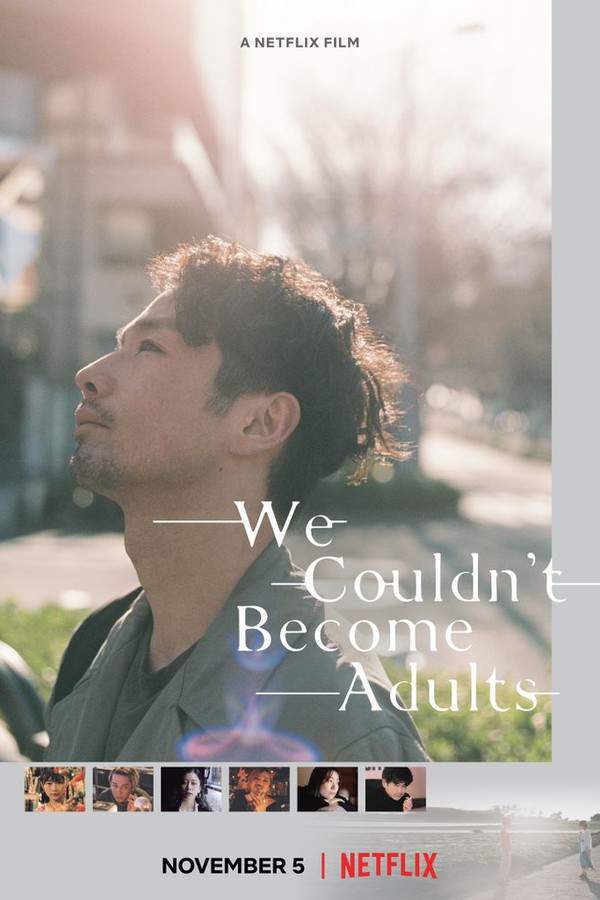
We Couldn't Become Adults (2021) movie poster

Characters & Themes

We Couldn't Become Adults (2021) Characters, Setting & Themes Explained

Release, runtime and language
2021 · 124 min · Japanese
JustWatch #27,559 1
Directed by
Hayato Kawai, Yoshihiro Mori
Starring
Rich Ting, Masahiro Higashide, Sairi Itô, Moemi Katayama, Masanobu Takashima, Masato Hagiwara

As he reconnected with a past love, a man's journey through nostalgia was sparked, transporting him back to the vibrant era of the 1990s, where hope and passion burned bright.

On this page (8)
  1. 1 Where to watch
  2. 2 Characters explained (3)
  3. 3 Where & when it takes place
  4. 4 Themes & meaning (3)
  5. 5 Character & meaning questions
  6. 6 Movie threads
  7. 7 Movies like We Couldn't Become Adults
  8. 8 Every angle

Where to watch

Where to Watch We Couldn't Become Adults (2021)

Where can you watch We Couldn't Become Adults? Stream, rent or buy it in the US, including on Netflix and Netflix Standard: current JustWatch availability with up-to-date prices.

Streaming availability powered by JustWatch

3 main characters · contains spoilers

We Couldn't Become Adults Characters Explained: Who Is Who

The main characters of We Couldn't Become Adults (2021), heroes and villains: what drives them, how they change over the course of the story and what each of them reveals about the film's bigger ideas.

  • Makoto Sato

    Makoto is the central character who navigates his past while facing the reality of his present. His introspective nature reveals his fears and regrets about love and career, leading to moments of self-discovery. Despite his struggles, Makoto's journey reflects the universal quest for identity and belonging.

    • 👨‍🎤 Protagonist
    • 🧠 Introspective
    • 🌪️ Complex
  • Kaori Ishida

    played by Yûko Ôshima

    Kaori, Makoto's first girlfriend, embodies the spirit of freedom and nonconformity. Her departure from traditional life choices serves as a catalyst for Makoto's reflections on what he values in life. Kaori's influence lingers throughout the film, emphasizing themes of love and self-discovery.

    • 🌸 Free Spirit
    • 💕 First Love
    • 🌃 Reflective
  • Nanase

    played by Takehiro Hira

    Nanase, the crossdressing pub owner, serves as a grounding presence in Makoto's life, providing humor and emotional support. His character reflects themes of friendship and resilience, especially during tough times. Nanase's own struggles add depth to the narrative, showcasing the hardships faced by many during challenging periods.

    • 🍸 Supportive Friend
    • 🎭 Complex
    • 😔 Resilient

Last updated: December 03, 2024 at 14:31

Was this helpful?

Setting

Where and When Does We Couldn't Become Adults Take Place?

The setting of We Couldn't Become Adults (2021): the year and time period, the places and locations, and how they shape the characters, the mood and the tension of the story.

Time period

1998 - 2020

The story unfolds between 1998 and 2020, a period marked by significant societal shifts and personal transformations for the characters. During these years, the impact of technology and changing social values profoundly shapes relationships and career paths. The exploration of nostalgia reveals how past experiences continue to resonate into the present.

Location

Tokyo

Tokyo is a bustling metropolis known for its vibrant nightlife, cultural landmarks, and modern architecture. The film navigates through its deserted night streets, showcasing both the loneliness and memories woven into the city's fabric. From public hangouts to love hotels, Tokyo serves as both a backdrop and a character in Makoto's journey of self-reflection.

  • 🏙️ City
  • 🌃 Nightlife
  • 🍜 Culture

Last updated: December 03, 2024 at 14:31

Was this helpful?

3 major themes

We Couldn't Become Adults Meaning: Themes & Message Explained

What is We Couldn't Become Adults (2021) really about? The emotional, social and philosophical themes the film keeps returning to, its symbolism and the message beneath the surface.

  • Nostalgia

    Nostalgia plays a central role in the film, with Makoto's reflections on his past relationships and career decisions spanning over decades. His journey invites viewers to explore their own memories and consider how they shape the present. The film suggests that cherished moments and choices continue to influence personal growth and understanding of adulthood.

  • Love and Relationships

    The theme of love and relationships is intricately examined through Makoto's encounters and lost connections. From first loves to failed marriages, the film illustrates the complexities of human interaction and emotional attachment. It raises questions about what it truly means to grow up and the challenges of finding fulfillment in relationships.

  • Career vs. Personal Life

    The struggle between career ambitions and personal happiness permeates the narrative. Makoto's long hours at work and dedication to his job come at the expense of meaningful relationships. The film challenges societal norms regarding success and prompts a reevaluation of priorities in the quest for true contentment.

Last updated: December 03, 2024 at 14:31

Was this helpful?

Character & theme questions

We Couldn't Become Adults Characters & Meaning: Your Questions Answered

The questions people ask about We Couldn't Become Adults (2021): who the characters really are, their relationships, what the symbols mean, where it takes place and what the movie is really about. Each answer contains spoilers.

Q1

How does Tokyo function as more than just a backdrop in the film?

Tokyo serves as both setting and symbolic character in Makoto's journey. The film's focus on deserted night streets, love hotels, and public hangouts reflects the loneliness and memories woven into the city's fabric. The contrast between the bustling metropolis and Makoto's emotional isolation highlights how the city transforms alongside his personal changes from 1998 to 2020.

  • Tokyo
  • setting
  • night city
  • urban landscape
  • backdrop
Q2

What does the 1998 to 2020 timeframe represent in the story?

The story unfolds between 1998 and 2020, a period that captures significant societal shifts and personal transformations. These decades mark major changes in technology and social values that profoundly shaped relationships and career paths. The time span allows the film to explore how past experiences continue to resonate into the present, with Makoto examining choices made during Japan's economic changes.

  • 1998
  • 2020
  • time period
  • era
  • Japanese economy
  • nostalgia
Q3

What role does nostalgia play in the film?

Nostalgia is the central theme, with Makoto's reflections on past relationships and career decisions spanning over two decades. The film invites viewers to explore how cherished moments and choices continue to influence personal growth and understanding of adulthood. Makoto's journey shows that nostalgia is not just about longing for the past, but about examining how earlier decisions shape who we become.

Foreshadowing: The film's title itself hints at the nostalgic regret that permeates Makoto's reflections.

  • nostalgia
  • memory
  • past
  • reflection
  • self-discovery
Q4

How does the film examine love and relationships?

The film intricately examines love through Makoto's encounters and lost connections, from first loves to failed marriages. It illustrates the complexities of emotional attachment and raises questions about what it truly means to grow up while finding fulfillment in relationships. The theme suggests that adult relationships are complicated by past choices and unresolved feelings.

  • love
  • relationships
  • romance
  • emotional attachment
  • marriage
Q5

What does the film say about career versus personal life?

The film explores the struggle between career ambitions and personal happiness through Makoto's experience. His long hours at work and dedication to his job come at the expense of meaningful relationships. The narrative challenges societal norms regarding success and prompts a reevaluation of priorities, suggesting that career achievements often come at a hidden personal cost.

  • career
  • success
  • work-life balance
  • priorities
  • happiness
Q6

Who is Makoto Sato and what drives him?

Makoto Sato is the film's central character who navigates his past while facing the reality of his present. His introspective nature reveals deep fears and regrets about love and career decisions. His journey reflects the universal quest for identity and belonging, showing how accumulated choices lead to a life that doesn't match original expectations.

  • Makoto Sato
  • protagonist
  • main character
  • self-reflection
Q7

Who is Kaori Ishida and why is she important to the story?

Kaori Ishida is Makoto's first girlfriend, who embodies the spirit of freedom and nonconformity. Her departure from traditional life choices serves as a catalyst for Makoto's reflections on what he truly values. Kaori's influence lingers throughout the film, emphasizing themes of love, self-discovery, and the roads not taken.

  • Kaori Ishida
  • first love
  • girlfriend
  • freedom
  • nonconformity
Q8

What role does Nanase play in the narrative?

Nanase is a crossdressing pub owner who serves as a grounding presence in Makoto's life, providing humor and emotional support. His character reflects themes of friendship and resilience during tough times. Nanase's own struggles add depth to the narrative, showcasing the hardships faced by many during challenging periods in Japanese society.

  • Nanase
  • pub owner
  • friend
  • support
  • resilience
  • crossdressing
Q9

What is the emotional tone of the film?

The film maintains a melancholic tone established by Makoto's pervasive sense of regret and longing for a past that contrasted with his unfulfilling present. The ending is bittersweet, combining sadness from his unfulfilled life with the poignant acceptance found in revisiting memories. The pacing is slow, privileging emotional reflection over plot momentum.

  • tone
  • melancholy
  • bittersweet
  • emotional
  • regret

Movie threads

More Movies Like We Couldn't Become Adults, by Mood & Story

Curated lists built around what makes We Couldn't Become Adults tick: the same mood, the same kind of story or the same emotional payoff. Each list explains why these movies belong together.

Movies like We Couldn't Become Adults: Nostalgic Journeys Through Midlife Regret

Characters revisiting their past to make sense of a disappointing present. Find more films like We Couldn't Become Adults that delve into the bittersweet nature of memory and the quiet regrets of middle age. If you enjoyed this reflective journey through a character's past loves and career disillusionment, you'll appreciate these similar moody and melancholic dramas.

  • nostalgic
  • regretful
  • wistful
  • reflective
  • lonely
  • somber
  • Tone: melancholic, wistful, reflective
  • Pacing: slow, contemplative
Why these movies?

The story pattern: These stories often unfold non-linearly, intertwining a character's unfulfilled present with pivotal moments from their past. The central conflict is internal: a confrontation with the gap between youthful aspirations and the compromises of adult life, leading to a poignant, often bittersweet, acceptance.

Why they belong together: They are grouped by their shared melancholic tone, slow pacing, and thematic focus on memory, time, and the emotional fallout of personal and professional choices that didn't pan out as hoped.

Bittersweet Romance Movies Like We Couldn't Become Adults

Stories where reconnecting with a past love sparks a journey of painful reflection. Discover romance films with a bittersweet tone similar to We Couldn't Become Adults. If you were moved by the story of rekindled connection and romantic regret set against the backdrop of memory, this collection of slow-burn, emotionally resonant dramas is for you.

  • romantic
  • bittersweet
  • wistful
  • regretful
  • nostalgic
  • somber
  • Tone: bittersweet, melancholic, romantic
  • Pacing: slow, character-driven
Why these movies?

The story pattern: The plot typically hinges on a chance encounter or deliberate reconnection with a significant former lover. This event triggers a deep dive into shared history, revealing how choices led to separation. The journey is less about rekindling the romance and more about understanding its impact and coming to terms with its permanent place in the past.

Why they belong together: They share a core focus on romantic regret, a bittersweet emotional tone, and a narrative structure that uses memory to explore the 'road not taken,' all wrapped in a medium-intensity, reflective mood.

If you liked this

Movies Like We Couldn't Become Adults

Similar movies to We Couldn't Become Adults: the same genre, themes or kind of story. Each one comes with its own plot summary, timeline and ending explained.

Browse all movie summaries

Every angle

We Couldn't Become Adults (2021) Explained: Plot, Ending, Timeline & Characters

Everything about We Couldn't Become Adults in one place: what happens in the plot summary, the timeline in chronological order, the characters and meaning, the ending explained and a spoiler-free summary. What's After the Movie adds the cast, box office and post-credit scenes.

Coming soon on iOS and Android

The Plot Explained Movie Summary App

Plot summaries, endings explained and timelines on your phone. Catch up on any movie in minutes, save your favorites and never miss a twist again.

Be the first to know when we launch. Your email stays private, always.

Learn more about the app