


Plot Explained Spoilers guaranteed!
Plot Explained

Browse by genre

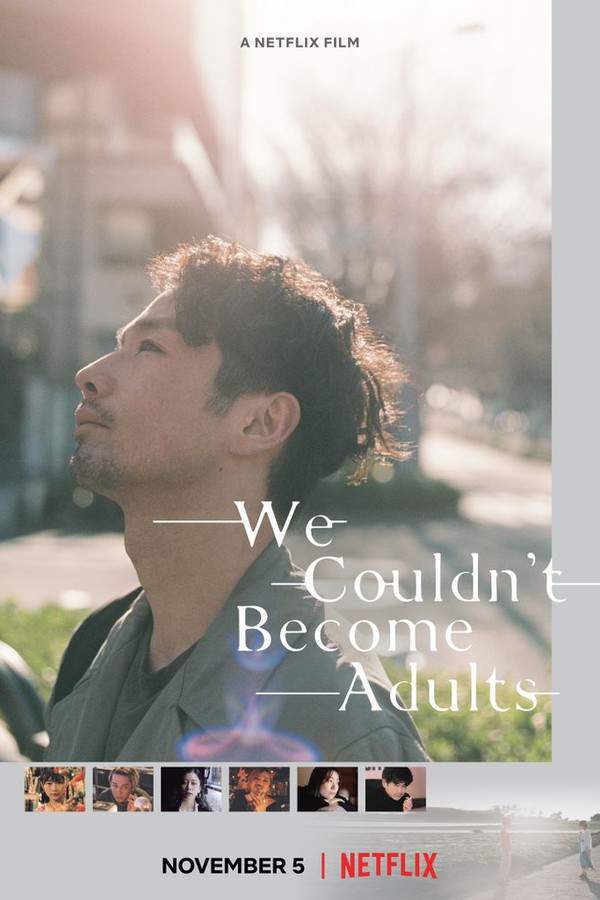
We Couldn't Become Adults (2021) movie poster

Timeline

We Couldn't Become Adults (2021) Timeline Explained – Every Event in Order

Release, runtime and language
2021 · 124 min · Japanese
JustWatch #27,559 1
Directed by
Hayato Kawai, Yoshihiro Mori
Starring
Rich Ting, Masahiro Higashide, Sairi Itô, Moemi Katayama, Masanobu Takashima, Masato Hagiwara

As he reconnected with a past love, a man's journey through nostalgia was sparked, transporting him back to the vibrant era of the 1990s, where hope and passion burned bright.

On this page (6)
  1. 1 Where to watch
  2. 2 Events in order (14)
  3. 3 Timeline questions answered
  4. 4 Movie threads
  5. 5 Movies like We Couldn't Become Adults
  6. 6 Every angle

Where to watch

Where to Watch We Couldn't Become Adults (2021)

Where can you watch We Couldn't Become Adults? Stream, rent or buy it in the US, including on Netflix and Netflix Standard: current JustWatch availability with up-to-date prices.

Streaming availability powered by JustWatch

14 events in order · contains spoilers

We Couldn't Become Adults Timeline: Events in Chronological Order

Every key event of We Couldn't Become Adults (2021) in order, scene by scene, with when and where it takes place. Use it to untangle flashbacks, time jumps and parallel storylines, to refresh your memory before the sequel or to find the exact scene you are thinking of.

  1. Makoto's Introspective Moment

    The story begins with Makoto falling into some rubbish on the deserted streets of Tokyo at night. His friend shares a thought-provoking insight that only 1% of the world is truly happy because they are ignorant, prompting Makoto to reflect deeply on his own life choices.

    When
    2020
    Where
    Tokyo
  2. Farewell Event for Long-running Show

    The narrative transitions to a farewell event hosted by Mitsuo Oguro, celebrating a long-running show that is finally concluding. Makoto engages in conversations about the paths others have taken in their lives and recounts his own experiences as a graphics person for the show.

  3. Encounter with a Performer

    At the farewell event, Makoto meets a performer and they end up spending the night together at his hotel room. This brief encounter highlights his ongoing search for connection amidst his introspection and reflections on his past.

    Where
    Hotel Room
  4. Divorce from Megumi Ishida

    In a flashback, Makoto is depicted breaking up with his now ex-wife, Megumi Ishida. As she takes her possessions, he stumbles upon a postcard of a sunset from an old flame, reminding him of memories long past.

  5. Reminiscing about Su

    Makoto fondly recalls meeting Su at his favorite hangout, owned by the crossdressing pub owner Nanase. The night takes an unexpected turn as they leave together, only for Makoto to discover that Su is a prostitute, forcing him to confront uncomfortable realities.

    Where
    Nanase's Pub
  6. Reflections on Failed Relationships

    As the story progresses, Makoto reflects on various past relationships and the toll his demanding career has taken on his personal life. His numerous failed attempts at love echo the struggles of balancing ambition and intimacy.

  7. Facebook Friend Request from Kaori

    Midway through the narrative, Makoto receives a Facebook friend request from his ex-girlfriend, Kaori, prompting mixed emotions. Upon viewing her profile, he realizes she has embraced a conventional life, marrying and raising children, contrary to the ideals she once espoused.

  8. Reflections on Kaori's Choices

    Makoto reflects on the dichotomy between his life and Kaori's, noting that while he sought to live freely according to her advice, she has settled into an ordinary life. This revelation challenges his understanding of personal happiness and fulfillment.

  9. First Love and Early Relationship

    The plot dives into Makoto's early love life, where he finds himself enchanted by an alternative girl named Kaori, who initially identifies as Inu-cara. Their relationship blossoms quickly, marked by an unforgettable night spent in a themed love hotel.

    Where
    Love Hotel
  10. Career Transition at the Bakery

    During his youth, Makoto works at a bakery where he is recognized by his manager, Nanase, who presents him with flowers as a farewell gift. This transition marks a significant turn in his career as he moves on to a graphics company, yet unspoken feelings linger between them.

    Where
    Bakery
  11. Life with the Free-Spirited Kaori

    As his relationship with Kaori develops, it becomes clear that her free-spirited nature clashes with Makoto’s demanding job. Despite her encouragement to pursue creative endeavors, the weight of his career keeps him from realizing his dreams, ultimately leading to their separation.

  12. Reunion with Nanase

    Returning to the present timeline, Makoto encounters Nanase, who is down on his luck after being ejected from another pub. Their reunion reflects the changes in their lives and serves as a catalyst for Makoto's introspection.

    When
    2020
    Where
    Another Pub
  13. Wandering Through Memories

    After parting ways with Nanase, Makoto visits familiar spots around town, filled with nostalgia and memories of his time with Kaori. He discovers that the love hotel they frequented is now closed, symbolizing the end of an era in his life.

    When
    2020
    Where
    Tokyo
  14. Reflections on Adulthood

    Makoto ultimately arrives at the location where he first met Kaori, triggering a flood of memories. As he reflects on his relationships and personal growth, he grapples with the realization that he has struggled to embrace adulthood fully.

    Where
    Meeting Spot

Last updated: December 03, 2024 at 14:27

Was this helpful?

Timeline questions answered

We Couldn't Become Adults Timeline Explained: Your Questions Answered

When does it happen, and why in that order? The questions people ask about the chronology of We Couldn't Become Adults (2021): time jumps, flashbacks, cause and effect between scenes and the correct order of events, each answered with spoilers.

Q1

Why does Makoto keep the postcard from Kaori after his divorce?

Makoto keeps the postcard because it symbolizes his last connection to a time when he believed in living freely and pursuing dreams. While he divorced Megumi and moved forward with his career, the postcard served as a tangible reminder of Kaori and the ideals she represented, spontaneity and rejecting conventional life. Finding it among Megumi's belongings reactivated his nostalgia and set the stage for his later reflection on how his life diverged from those early aspirations.

  • postcard
  • kaori
  • nostalgia
  • divorce
  • memories
Q2

Why did Kaori leave Makoto?

Kaori left Makoto because his demanding job consumed all his time and passion, preventing him from pursuing the creative dreams she encouraged. She was a free-spirited person who rejected an ordinary life, but Makoto's work at the graphics company kept him constantly busy. The strain of his career overshadowed their relationship, ultimately leading her to depart despite their deep connection.

Foreshadowing: Early in their relationship, Kaori pushed Makoto to pursue creative work, hinting at the eventual conflict his job would create.

  • kaori
  • breakup
  • career
  • free-spirited
  • job
Q3

Why is Makoto still single in 2020?

Makoto remains single in 2020 because his career advancements came at the direct cost of his personal relationships. His rise from a small graphics office to a larger company required constant late nights and work focus. This pattern repeated throughout his life, his relationship with Kaori ended due to his workload, his marriage to Megumi failed, and subsequent connections like Su also didn't lead to lasting bonds. His pursuit of professional success left no room for meaningful romantic relationships.

Foreshadowing: The film shows Makoto transitioning from the bakery to graphics work, establishing early that work would dominate his life.

  • single
  • career
  • relationships
  • work
  • loneliness
Q4

What happened to Kaori after she left Makoto?

After leaving Makoto, Kaori eventually married and had children, settling into the conventional life she once rejected. When Makoto receives her Facebook friend request in 2020, he discovers she has abandoned the free-spirited ideals they shared. This revelation deeply affects him because he clung to her philosophy of living freely, only to find that she herself chose the ordinary domestic path he avoided.

Foreshadowing: Kaori's early rejection of 'ordinary life' and her marriage to another creates dramatic irony about her future choices.

  • kaori
  • marriage
  • children
  • facebook
  • ex-girlfriend
Q5

Why did Makoto meet Su at Nanase's pub and what happened?

Makoto met Su at his favorite hangout, Nanase's crossdressing pub, which he frequented to escape his lonely present. Su was a performer or patron he connected with that evening. However, when they left together, Makoto discovered she was involved in prostitution, forcing him to confront an uncomfortable truth about seeking connection and the transactional nature of some relationships. This encounter further illustrates his pattern of failed intimate connections.

  • su
  • nanase
  • pub
  • prostitute
  • failed relationship
Q6

Why does Makoto wander through Tokyo at the end of the film?

After reuniting with Nanase, Makoto wanders through Tokyo visiting locations tied to his past with Kaori, where they met, the love hotel they used, and other meaningful spots. This wandering represents his final confrontation with nostalgia and regret. Discovering that the love hotel has closed symbolizes the end of that chapter in his life. He grapples with the realization that he never fully embraced adulthood while others around him moved on with conventional lives.

Foreshadowing: The opening scene establishes Makoto's late-night wandering habit, setting up this final reflective journey.

  • tokyo
  • wandering
  • love hotel
  • memories
  • closure
Q7

What does the 1% happiness quote mean at the beginning of the film?

At the start, Makoto's friend suggests only 1% of the world is truly happy because they are ignorant, this frames Makoto's entire journey. The philosophy implies that those unaware of life's deeper meanings or missed opportunities can live happily, while people like Makoto who reflect deeply are doomed to regret. This resonates with Makoto throughout the film as he confronts his failed relationships and choices, suggesting his unhappiness stems from his awareness of what he lost.

  • 1 percent
  • happiness
  • philosophy
  • ignorance
  • regret
Q8

Why did Makoto choose a career in graphics over pursuing his dreams?

Makoto transitioned from working at a bakery to becoming a graphics designer, a path encouraged by his manager Nanase who gave him flowers upon his departure. However, rather than pursuing creative freedom as Kaori had urged, he ended up in demanding corporate work that consumed his time. The career provided financial success and status but directly prevented him from nurturing relationships or creative passions, illustrating how practical choices often override idealistic dreams.

Foreshadowing: Nanase's farewell gift of flowers hints at the emotional connections Makoto will prioritize over career advancement.

  • graphics
  • career
  • bakery
  • nanase
  • work
Q9

Why did Makoto divorce Megumi Ishida?

Makoto's marriage to Megumi Ishida ended in divorce, though the specific reasons aren't detailed. The divorce occurs in the past timeline, with Megumi collecting her belongings from their shared home. The broader context suggests Makoto's inability to commit fully to relationships due to his work commitments and lingering feelings for Kaori contributed to the marriage's failure. The divorce marks another in his series of failed romantic connections.

  • megumi
  • divorce
  • marriage
  • breakup
Q10

What was Inu-cara and why did Kaori use that name?

Inu-cara was Kaori's pen-pal identity when she first corresponded with Makoto through a personal advertisement. 'Inu-cara' appears to be a playful or alternative-style name that fit her free-spirited personality and rejection of conventional identity. She initially used this pseudonym before revealing herself to Makoto in person, and their relationship progressed from written correspondence to meeting at a bakery where he worked, eventually leading to their intimate relationship.

  • inu-cara
  • pen pal
  • kaori
  • personal advertisement
Q11

Why does Nanase run a crossdressing pub?

Nanase, who appears both as Makoto's bakery manager in the past and as a pub owner in the present, runs a crossdressing pub in 2020. The film presents this as his chosen lifestyle without extensive explanation. In 1998, he managed the bakery and encouraged Makoto through personal ads to find love. By 2020, after his pub closed, he was ejected from another establishment, showing his downward trajectory. His crossdressing represents his non-conformist identity spanning both timelines.

  • nanase
  • crossdresser
  • pub
  • bakery
  • manager
Q12

Why did Makoto attend the farewell gala for the TV show?

Makoto attended the farewell gala because he previously worked as a graphics designer for the long-running television show. At the event, hosted by Mitsuo Oguro, he connected with a performer and spent the night with her in his hotel room. This encounter represents his continued search for human connection while reflecting on his past, mixing nostalgia for his career history with present-day loneliness.

  • farewell gala
  • mitsuo oguro
  • graphics
  • performer
  • tv show
Q13

What does the title 'We Couldn't Become Adults' mean?

The title reflects Makoto's inability to fully embrace adulthood and its responsibilities. Throughout the film, he remains stuck in nostalgia, revisiting past relationships and idealizing former flames rather than accepting his present reality. While others like Kaori transitioned to conventional adult lives with marriages and children, Makoto stayed emotionally suspended in his memories. His wandering through Tokyo at the end, refusing to fully let go of the past, embodies this failure to mature and commit to adult responsibilities.

  • adulthood
  • title
  • maturity
  • regret
  • growing up

Movie threads

More Movies Like We Couldn't Become Adults, by Mood & Story

Curated lists built around what makes We Couldn't Become Adults tick: the same mood, the same kind of story or the same emotional payoff. Each list explains why these movies belong together.

Movies like We Couldn't Become Adults: Nostalgic Journeys Through Midlife Regret

Characters revisiting their past to make sense of a disappointing present. Find more films like We Couldn't Become Adults that delve into the bittersweet nature of memory and the quiet regrets of middle age. If you enjoyed this reflective journey through a character's past loves and career disillusionment, you'll appreciate these similar moody and melancholic dramas.

  • nostalgic
  • regretful
  • wistful
  • reflective
  • lonely
  • somber
  • Tone: melancholic, wistful, reflective
  • Pacing: slow, contemplative
Why these movies?

The story pattern: These stories often unfold non-linearly, intertwining a character's unfulfilled present with pivotal moments from their past. The central conflict is internal: a confrontation with the gap between youthful aspirations and the compromises of adult life, leading to a poignant, often bittersweet, acceptance.

Why they belong together: They are grouped by their shared melancholic tone, slow pacing, and thematic focus on memory, time, and the emotional fallout of personal and professional choices that didn't pan out as hoped.

Bittersweet Romance Movies Like We Couldn't Become Adults

Stories where reconnecting with a past love sparks a journey of painful reflection. Discover romance films with a bittersweet tone similar to We Couldn't Become Adults. If you were moved by the story of rekindled connection and romantic regret set against the backdrop of memory, this collection of slow-burn, emotionally resonant dramas is for you.

  • romantic
  • bittersweet
  • wistful
  • regretful
  • nostalgic
  • somber
  • Tone: bittersweet, melancholic, romantic
  • Pacing: slow, character-driven
Why these movies?

The story pattern: The plot typically hinges on a chance encounter or deliberate reconnection with a significant former lover. This event triggers a deep dive into shared history, revealing how choices led to separation. The journey is less about rekindling the romance and more about understanding its impact and coming to terms with its permanent place in the past.

Why they belong together: They share a core focus on romantic regret, a bittersweet emotional tone, and a narrative structure that uses memory to explore the 'road not taken,' all wrapped in a medium-intensity, reflective mood.

If you liked this

Movies Like We Couldn't Become Adults

Similar movies to We Couldn't Become Adults: the same genre, themes or kind of story. Each one comes with its own plot summary, timeline and ending explained.

Browse all movie summaries

Every angle

We Couldn't Become Adults (2021) Explained: Plot, Ending, Timeline & Characters

Everything about We Couldn't Become Adults in one place: what happens in the plot summary, the timeline in chronological order, the characters and meaning, the ending explained and a spoiler-free summary. What's After the Movie adds the cast, box office and post-credit scenes.

Coming soon on iOS and Android

The Plot Explained Movie Summary App

Plot summaries, endings explained and timelines on your phone. Catch up on any movie in minutes, save your favorites and never miss a twist again.

Be the first to know when we launch. Your email stays private, always.

Learn more about the app