


Plot Explained Spoilers guaranteed!
Plot Explained

Browse by genre

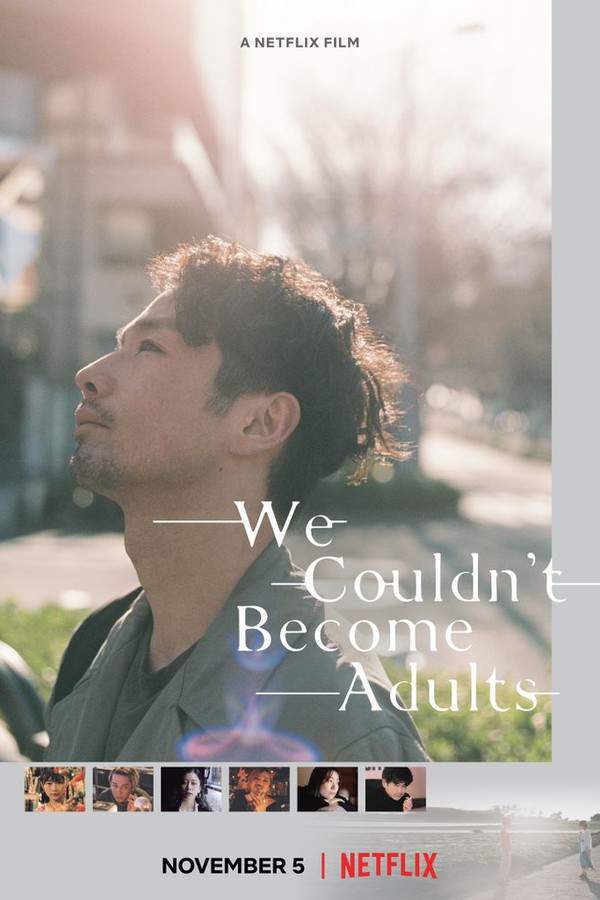
We Couldn't Become Adults (2021) movie poster

Ending Explained

We Couldn't Become Adults (2021) Ending Explained – Final Scene & Meaning

Release, runtime and language
2021 · 124 min · Japanese
JustWatch #27,565 5
Directed by
Hayato Kawai, Yoshihiro Mori
Starring
Rich Ting, Masahiro Higashide, Sairi Itô, Moemi Katayama, Masanobu Takashima, Masato Hagiwara

As he reconnected with a past love, a man's journey through nostalgia was sparked, transporting him back to the vibrant era of the 1990s, where hope and passion burned bright.

On this page (7)
  1. 1 Where to watch
  2. 2 What happens at the end
  3. 3 Final events in order
  4. 4 Ending questions answered
  5. 5 Movie threads
  6. 6 Movies like We Couldn't Become Adults
  7. 7 Every angle

Where to watch

Where to Watch We Couldn't Become Adults (2021)

Where can you watch We Couldn't Become Adults? Stream, rent or buy it in the US, including on Netflix and Netflix Standard: current JustWatch availability with up-to-date prices.

Streaming availability powered by JustWatch

Ending explained · contains spoilers

What Happens at the End of We Couldn't Become Adults?

How We Couldn't Become Adults (2021) ends, what the final scene means, which earlier moments set it up and how to read the ending if the film leaves it open. The full ending explained, with every spoiler.

In the final moments of "We Couldn’t Become Adults," Sato’s realization hits hard. After many years, he reconnects with Kaori through Facebook, only to discover she is happily married with children. This revelation surprises him because he'd held onto her memory as the person who defined what was ‘not ordinary’ in his life and who inspired him to rebel against the mundane. He had believed that living by his own rules meant avoiding the “ordinary,” but now he sees that his obsession with being different kept him trapped in a kind of emotional immaturity.

Kaori’s words haunted him — “It’s not where you go but who you go with” — emphasizing that life’s richness comes from the connections and relationships, not from trying to stand out or be unique for the sake of it. Sato had spent decades pretending to be extraordinary, but in doing so, he missed out on real growth and genuine happiness. His life, which he always viewed as ‘ordinary,’ was actually filled with moments and experiences that he failed to appreciate because he was obsessed with avoiding the ‘ordinary’ and living in a dream of his own making.

Ultimately, the film’s ending reveals that Sato’s inability to fully embrace adulthood wasn’t just about age; it was about his refusal to accept the reality of life's ordinary, yet meaningful, stages. His youthful rebelliousness kept him from truly maturing. The story closes on his quiet reflection, acknowledging that true growth involves accepting life as it is — messy, ordinary, and often unpredictable — rather than trying to live a version of life that’s always just out of reach. In the end, Sato understands that growing up means recognizing the value in the simple, everyday moments he once dismissed as boring or meaningless, and embracing them as part of what it truly means to be an adult.

Last updated: June 25, 2025 at 08:58

Was this helpful?

The last 4 events

How We Couldn't Become Adults Ends: The Final Events in Order

The last events of We Couldn't Become Adults (2021) in chronological order, the run-up to the ending explained above. The complete timeline has all 14 events, scene by scene.

Open the full timeline
  1. Life with the Free-Spirited Kaori

    As his relationship with Kaori develops, it becomes clear that her free-spirited nature clashes with Makoto’s demanding job. Despite her encouragement to pursue creative endeavors, the weight of his career keeps him from realizing his dreams, ultimately leading to their separation.

  2. Reunion with Nanase

    Returning to the present timeline, Makoto encounters Nanase, who is down on his luck after being ejected from another pub. Their reunion reflects the changes in their lives and serves as a catalyst for Makoto's introspection.

    When
    2020
    Where
    Another Pub
  3. Wandering Through Memories

    After parting ways with Nanase, Makoto visits familiar spots around town, filled with nostalgia and memories of his time with Kaori. He discovers that the love hotel they frequented is now closed, symbolizing the end of an era in his life.

    When
    2020
    Where
    Tokyo
  4. Reflections on Adulthood

    Makoto ultimately arrives at the location where he first met Kaori, triggering a flood of memories. As he reflects on his relationships and personal growth, he grapples with the realization that he has struggled to embrace adulthood fully.

    Where
    Meeting Spot

Ending questions answered

We Couldn't Become Adults Ending: Your Questions Answered

The questions people ask most about the ending of We Couldn't Become Adults (2021): what the final scene means, how the twist works, what happens to each character and how to read the ending. Each answer contains spoilers.

Q1

Why was Sato surprised to find Kaori married?

Sato was surprised because he had held onto Kaori's memory as the person who represented what was 'not ordinary' in his life. He had idealized her as the girl who inspired his rebellion against the mundane, so discovering she had chosen a conventional life of marriage and children contradicted the image he preserved of her for decades.

Foreshadowing: Earlier scenes show Sato romanticizing his past with Kaori, treating her as a symbol of his unique identity rather than a real person.

  • sato
  • kaori
  • marriage
  • facebook
  • reunion
  • idealization
Q2

What did Kaori mean by "it's not where you go but who you go with"?

Kaori meant that life's richness comes from relationships and connections, not from trying to stand out or be unique for its own sake. Her words directly challenge Sato's decades-long belief that avoiding an ordinary life would lead to fulfillment.

Foreshadowing: This quote echoes Sato's earlier decisions to pursue unconventional paths, suggesting his isolation was a choice that prevented meaningful bonds.

  • kaori
  • quote
  • relationships
  • meaning
  • connection
  • ordinary
Q3

Why did Sato's obsession with being different hold him back?

His obsession with being extraordinary kept him trapped in emotional immaturity because he was so focused on avoiding ordinariness that he missed actual personal growth. He spent decades pretending to be unique while refusing to engage with real life experiences that would require vulnerability and commitment.

Foreshadowing: The film shows Sato consistently choosing rebellion over building genuine connections, revealing a pattern of using 'uniqueness' as a shield against adult responsibilities.

  • sato
  • rebellion
  • immaturity
  • adulthood
  • growth
  • identity
Q4

What did Sato finally understand about adulthood?

Sato understood that growing up means accepting life's ordinary yet meaningful stages rather than chasing an elusive version of uniqueness. True adulthood involves recognizing value in simple, everyday moments he previously dismissed as boring or meaningless.

Foreshadowing: His reflection in the final scene connects to earlier scenes where he dismissed 'boring' adult responsibilities as beneath him.

  • sato
  • adulthood
  • growth
  • acceptance
  • ordinary
  • maturity
Q5

Why did Sato miss out on real happiness?

Sato missed out because his preoccupation with appearing extraordinary prevented him from appreciating the genuine moments and experiences already in his life. He was too busy rejecting ordinariness to see that his own life contained meaningful experiences worth cherishing.

Foreshadowing: Earlier scenes depict Sato looking down on conventional life choices while simultaneously feeling unfulfilled by his own path.

  • sato
  • happiness
  • regret
  • missed
  • experiences
  • fulfillment
Q6

What realization did Sato have about his own life?

Sato realized his life, which he always viewed as ordinary and therefore inadequate, was actually filled with meaningful moments he failed to appreciate. His self-imposed label of ordinariness blinded him to the genuine experiences he had lived through.

Foreshadowing: This revelation ties back to Sato's early dismissive attitude toward his own life choices compared to his idealized version of Kaori's path.

  • sato
  • realization
  • ordinary
  • life
  • appreciation
  • self-perception
Q7

Does Sato accept his life by the end of the movie?

Yes, the ending shows Sato in quiet reflection, acknowledging that true growth involves accepting life as it is, messy, ordinary, and unpredictable. He moves from regret toward a tentative acceptance of his choices and their consequences.

Foreshadowing: This acceptance contrasts sharply with his earlier defiant stance against conventional life throughout the film.

  • sato
  • acceptance
  • ending
  • reflection
  • growth
  • resolution
Q8

What does the title mean in context of the ending?

The title refers to Sato's inability to fully embrace adulthood, not because of his age, but because of his refusal to accept reality's ordinary yet meaningful stages. His perpetual rebellion against the mundane kept him from the emotional growth required to truly mature.

Foreshadowing: The title's meaning becomes clear through Sato's journey, showing that 'becoming an adult' is about mindset rather than age.

  • title
  • meaning
  • adulthood
  • immaturity
  • growth
  • symbolism

Movie threads

More Movies Like We Couldn't Become Adults, by Mood & Story

Curated lists built around what makes We Couldn't Become Adults tick: the same mood, the same kind of story or the same emotional payoff. Each list explains why these movies belong together.

Movies like We Couldn't Become Adults: Nostalgic Journeys Through Midlife Regret

Characters revisiting their past to make sense of a disappointing present. Find more films like We Couldn't Become Adults that delve into the bittersweet nature of memory and the quiet regrets of middle age. If you enjoyed this reflective journey through a character's past loves and career disillusionment, you'll appreciate these similar moody and melancholic dramas.

  • nostalgic
  • regretful
  • wistful
  • reflective
  • lonely
  • somber
  • Tone: melancholic, wistful, reflective
  • Pacing: slow, contemplative
Why these movies?

The story pattern: These stories often unfold non-linearly, intertwining a character's unfulfilled present with pivotal moments from their past. The central conflict is internal: a confrontation with the gap between youthful aspirations and the compromises of adult life, leading to a poignant, often bittersweet, acceptance.

Why they belong together: They are grouped by their shared melancholic tone, slow pacing, and thematic focus on memory, time, and the emotional fallout of personal and professional choices that didn't pan out as hoped.

Bittersweet Romance Movies Like We Couldn't Become Adults

Stories where reconnecting with a past love sparks a journey of painful reflection. Discover romance films with a bittersweet tone similar to We Couldn't Become Adults. If you were moved by the story of rekindled connection and romantic regret set against the backdrop of memory, this collection of slow-burn, emotionally resonant dramas is for you.

  • romantic
  • bittersweet
  • wistful
  • regretful
  • nostalgic
  • somber
  • Tone: bittersweet, melancholic, romantic
  • Pacing: slow, character-driven
Why these movies?

The story pattern: The plot typically hinges on a chance encounter or deliberate reconnection with a significant former lover. This event triggers a deep dive into shared history, revealing how choices led to separation. The journey is less about rekindling the romance and more about understanding its impact and coming to terms with its permanent place in the past.

Why they belong together: They share a core focus on romantic regret, a bittersweet emotional tone, and a narrative structure that uses memory to explore the 'road not taken,' all wrapped in a medium-intensity, reflective mood.

If you liked this

Movies Like We Couldn't Become Adults

Similar movies to We Couldn't Become Adults: the same genre, themes or kind of story. Each one comes with its own plot summary, timeline and ending explained.

Browse all movie summaries

Every angle

We Couldn't Become Adults (2021) Explained: Plot, Ending, Timeline & Characters

Everything about We Couldn't Become Adults in one place: what happens in the plot summary, the timeline in chronological order, the characters and meaning, the ending explained and a spoiler-free summary. What's After the Movie adds the cast, box office and post-credit scenes.

Coming soon on iOS and Android

The Plot Explained Movie Summary App

Plot summaries, endings explained and timelines on your phone. Catch up on any movie in minutes, save your favorites and never miss a twist again.

Be the first to know when we launch. Your email stays private, always.

Learn more about the app