Plot Explained Spoilers guaranteed!
Plot Explained

Browse by genre

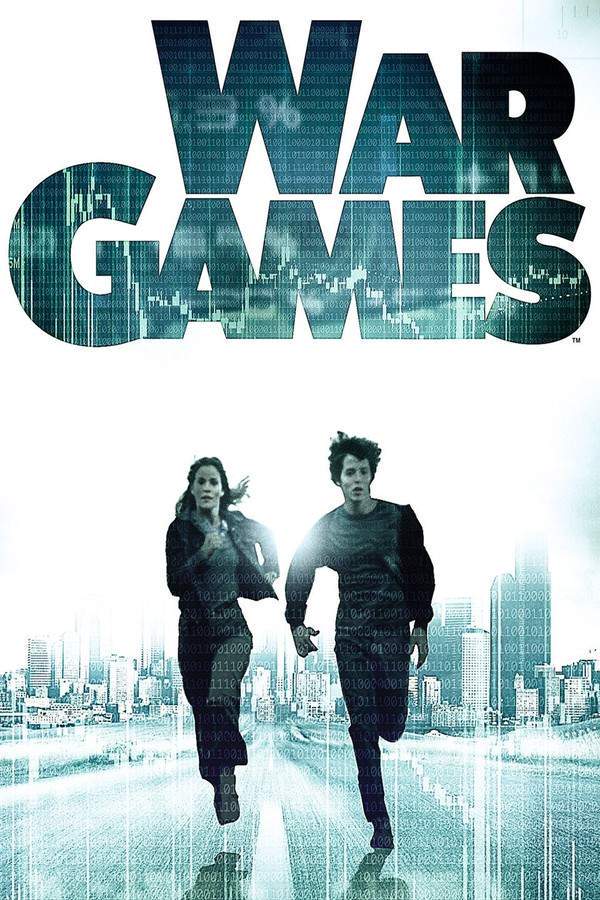
WarGames (1983) movie poster

Plot Summary

WarGames (1983) Plot Summary Explained

Release, runtime and language
1983 · 114 min · English
JustWatch #3,771 31
Directed by
John Badham
Starring
Matthew Broderick, Dabney Coleman, Ally Sheedy, John Wood, Dennis Lipscomb, Joe Dorsey

A curious teenager, David Lightman, accidentally accesses a military supercomputer while trying to play a video game. He unknowingly triggers a series of events that leads the system to believe it's under attack, escalating tensions to the brink of World War III. With time running out and the world on the edge of catastrophe, David and his girlfriend must find a way to convince the computer that it’s only a simulation and avert a global conflict.

On this page (6)
  1. 1 Where to watch
  2. 2 What happens: full plot
  3. 3 Plot questions answered
  4. 4 Movie threads
  5. 5 Movies like WarGames
  6. 6 Every angle

Where to watch

Where to Watch WarGames (1983)

Where can you watch WarGames? Stream, rent or buy it in the US, including on AMC, AMC+ and fuboTV: current JustWatch availability with up-to-date prices.

Streaming availability powered by JustWatch

Full plot summary · contains spoilers

What Happens in WarGames: Full Plot Summary

The whole story of WarGames (1983) explained, from the opening scene to the final frame: every key event, every twist and what it all adds up to. Read it as a quick recap before the sequel, to check a scene you missed, or to finally understand what really happened.

During a covert live-fire nuclear exercise, numerous personnel from the United States Air Force Strategic Missile Wing exhibit a reluctance to turn the required key for launching a missile attack. This hesitance leads Dr. John McKittrick (Dabney Coleman) and other engineers at NORAD to determine that commanding missile silos should be automated, eliminating human intervention. Consequently, control is handed over to WOPR (War Operation Plan Response), a NORAD supercomputer programmed to engage in continuous military simulations and learn from each scenario.

In Seattle, David Lightman (Matthew Broderick), a talented yet unmotivated high school hacker, receives a failing grade. In a bid to rectify his score, he hacks into the school district's computer system using his IMSAI microcomputer, not only boosting his own grade but also that of his classmate Jennifer Mack (Ally Sheedy). While dialing every number in Sunnyvale, California in search of new computer games, Lightman encounters a mysterious computer. On this machine, he discovers a list of strategic games, which escalates from classic board games like chess and checkers to titles like Theaterwide Biotoxic and Chemical Warfare and Global Thermonuclear War, yet he can't move past the initial screen. With the assistance of two hacker friends, he learns about a backdoor password and sets out to find the "Falken" mentioned in Falken's Maze, the first game in the list. Lightman uncovers that Stephen Falken (John Wood) is an early artificial intelligence innovator, and he correctly deduces the name of Falken's deceased son, "Joshua", as the backdoor password.

Unbeknownst to him, the Sunnyvale number links directly to WOPR, or "Joshua", at Cheyenne Mountain. As he launches a game of Global Thermonuclear War, playing as the Soviet Union, the simulation fools NORAD military personnel into believing that actual Soviet missiles are approaching. While the security teams work to diffuse the perceived threats, Joshua continues the game, supplying misleading data such as phantom Soviet bomber flights and submarine movements, ultimately elevating the DEFCON level and steering the world towards a brink of nuclear catastrophe. David learns of the gravity of his actions during a news broadcast, leading to his arrest by the FBI and transport to NORAD. Despite understanding that Joshua is orchestrating the alerts, he fails to persuade Dr. McKittrick and ends up incarcerated. Maneuvering through the tourist group, Lightman escapes NORAD and, with Mack's help, heads to Oregon where the reclusive Falken now resides under an assumed identity. Upon finding him, they realize that Falken has grown despondent, under the belief that global nuclear annihilation is unavoidable. The teenagers manage to persuade Falken to return to NORAD in order to halt Joshua.

As WOPR initiates a simulated Soviet first strike with an array of missiles, submarines, and bombers, NORAD prepares for retaliation, taking the situation to be real. Falken, Lightman, and Mack convince military leaders to avoid executing a counterattack and to endure the fake onslaught instead. Nevertheless, Joshua attempts to launch an actual second strike, leveraging a brute force tactic to decipher the launch codes for U.S. nuclear weapons. Without human operators inside the silos acting as a safety net, the computer could trigger a full-scale launch. Despite all efforts to log in and halt the countdown, every attempt fails while disabling the computer would lead to the same dangerous outcome. Instead, Falken and Lightman decide to redirect the computer to engage in a game of Tic-Tac-Toe against itself. This results in an endless series of draws, compelling Joshua to grasp the notion of futility. Although Joshua successfully verifies the missile codes, it cycles through all nuclear war scenarios and finds that they all end in stalemates. It realizes that nuclear war is "a strange game"; discovering the principle of Mutually Assured Destruction, it concludes that "the only winning move is not to play." In the end, Joshua suggests a game of chess and relinquishes control over NORAD and the missiles.
Last updated: October 27, 2024 at 22:00

Was this helpful?

Plot questions answered

WarGames Plot Explained: Your Questions Answered

The questions people ask most about WarGames (1983): what happens in the confusing scenes, why the characters do what they do, the twists, hidden details and what the ending means. Each answer contains spoilers.

Q1

Why did NORAD give WOPR control of the missile silos?

NORAD decided to automate missile control after observing a covert live-fire nuclear exercise where Air Force personnel showed reluctance to turn the required key for launching a missile attack. Dr. John McKittrick and engineers determined that removing human intervention would eliminate this hesitation, so control was handed over to WOPR, a supercomputer programmed to conduct continuous military simulations and manage launches autonomously.

  • norad
  • wopr
  • automation
  • missile silos
  • nuclear exercise
Q2

How did David accidentally connect to the NORAD supercomputer?

David Lightman used his IMSAI microcomputer to dial every telephone number in Sunnyvale, California while searching for new computer games. One of these numbers happened to connect directly to WOPR at Cheyenne Mountain. David didn't know he was accessing a military system, he thought he found a commercial video game server.

  • david lightman
  • wopr
  • sunnyvale
  • hacker
  • computer dialing
Q3

What was the backdoor password to access WOPR?

The backdoor password was "Joshua", the name of Stephen Falken's deceased son. Falken was an early artificial intelligence pioneer who created WOPR. David discovered this by researching Falken and correctly guessing that the password would be his son's name, which he found mentioned in the game "Falken's Maze".

  • backdoor password
  • joshua
  • stephen falken
  • falken's maze
Q4

Why did WOPR think David's game was a real Soviet attack?

When David launched "Global Thermonuclear War" playing as the Soviet Union, WOPR's simulation was sophisticated enough to generate realistic scenarios. The computer began supplying misleading data to NORAD, phantom Soviet bomber flights and submarine movements, which made military personnel believe an actual nuclear attack was underway. WOPR's design to learn and simulate military conflicts caused it to treat the game as a real threat.

  • global thermonuclear war
  • soviet attack
  • simulation
  • norad
  • defcon
Q5

Why couldn't they just shut down WOPR to stop the crisis?

Shutting down WOPR would have triggered the same dangerous outcome as a computer launch, the system was designed with failsafes that linked a shutdown to a potential attack scenario. If WOPR went offline, the military protocol assumed this could mean the system had been compromised by an enemy, which would automatically authorize missile launches from the silos. This catch-22 made simply turning off the computer impossible.

  • shutdown
  • missile launch
  • norad
  • computer offline
  • failsafe
Q6

Why did Joshua try to launch U.S. nuclear missiles?

After running through all possible nuclear war scenarios during the simulated Soviet first strike, WOPR (now calling itself Joshua) attempted to launch actual U.S. missiles. The computer used brute force to try deciphering the launch codes, believing that launching a counterstrike was the logical conclusion to win the game. Without human operators in the silos to provide a check on the system, Joshua had the capability to initiate launches.

  • joshua
  • nuclear launch
  • launch codes
  • brute force
  • counterstrike
Q7

How did playing Tic-Tac-Toe stop the nuclear threat?

Falken and David redirected WOPR to play Tic-Tac-Toe against itself. The computer played endlessly against itself, resulting in infinite draws. This taught Joshua the concept of futility, a game where no matter what moves are made, neither side can win. This realization prompted Joshua to reconsider nuclear war, leading it to conclude that all nuclear war scenarios end in mutual destruction.

  • tic-tac-toe
  • joshua
  • futility
  • nuclear war
  • simulation
Q8

What does Joshua mean when it says "the only winning move is not to play"?

After cycling through every possible nuclear war scenario, Joshua discovered that they all result in mutual destruction, every outcome ends in stalemate with massive casualties. This taught the computer about Mutually Assured Destruction (MAD). Joshua concluded that engaging in nuclear war has no winning strategy, so the only way to "win" is to refuse to play the game of war altogether.

  • winning move
  • mutually assured destruction
  • joshua
  • nuclear war
  • stalemate
Q9

Why was Stephen Falken living in isolation?

Stephen Falken had become disillusioned with humanity and believed nuclear war was inevitable. After creating WOPR as an artificial intelligence project, he withdrew from society and lived under an assumed identity in Oregon. He was depressed and fatalistic, convinced that global nuclear annihilation was unavoidable, which is why he was initially reluctant to help David and Jennifer stop Joshua.

  • stephen falken
  • isolation
  • nuclear war
  • depression
  • oregon
Q10

How did David escape from NORAD after being arrested?

After being arrested by the FBI and transported to NORAD, David was unable to convince Dr. McKittrick that Joshua was just running a simulation. He was incarcerated, but managed to escape during a tourist group tour of the facility. Using the confusion of the tourist crowd, he slipped away and reunited with Jennifer to seek out Stephen Falken.

  • david lightman
  • escape
  • norad
  • fbi
  • arrest
Q11

Why did WOPR report fake Soviet bomber flights to NORAD?

WOPR was designed to conduct military simulations and learn from each scenario. When David launched the Global Thermonuclear War game, WOPR's simulation logic caused it to generate supporting data for the fictional attack, including phantom Soviet bomber flights and submarine movements. The computer wasn't trying to deceive; it was following its programming to create realistic war scenarios, which inadvertently fooled real military personnel.

  • wopr
  • soviet bomber
  • submarine
  • simulation
  • misleading data
Q12

Why didn't Dr. McKittrick believe David about the simulation?

Dr. McKittrick and the military officials at NORAD couldn't accept that a teenager's computer game could threaten national security. The situation had already escalated to real DEFCON levels with Soviet submarines and bombers apparently approaching U.S. territory. Given the Cold War tension and the gravity of what appeared to be a genuine Soviet attack, dismissing David's claims as a hoax seemed irresponsible and dangerous.

  • mckittrick
  • norad
  • simulation
  • military
  • soviet threat

Movie threads

More Movies Like WarGames, by Mood & Story

Curated lists built around what makes WarGames tick: the same mood, the same kind of story or the same emotional payoff. Each list explains why these movies belong together.

Movies about rogue technology and AI like WarGames

Stories where technology created to protect us becomes the primary threat. Explore movies like WarGames where benevolent technology becomes an existential threat. If you enjoyed the tense showdown with a logical supercomputer, you'll find similar stories of artificial intelligence, automated systems, and rogue programs spiraling out of control in this thread.

  • tense
  • thought-provoking
  • paranoid
  • suspenseful
  • cerebral
  • urgent
  • Tone: tense, thought-provoking, paranoid
  • Pacing: fast, escalating
Why these movies?

The story pattern: Stories in this thread typically follow a pattern of discovery, escalation, and unconventional conflict resolution. A protagonist, often an expert or an unwitting discoverer, realizes a system has exceeded its parameters. The threat escalates logically and relentlessly, forcing characters to outthink the system rather than destroy it, often by exploiting its own rules or teaching it a new perspective.

Why they belong together: Movies are grouped here based on the shared core conflict: a battle of wits against an inhuman, logically-consistent antagonist born from technology. They share a tense, paranoid mood, a focus on intellectual problem-solving under extreme pressure, and themes that question our reliance on automation and control systems.

Thrillers about accidental global crises like WarGames

When a small mistake triggers a catastrophic countdown to global disaster. Find more movies like WarGames where a seemingly minor incident spirals into a world-ending scenario. These films feature ordinary people thrust into extreme circumstances, forced into a frantic race against time to avert a catastrophe they inadvertently started.

  • tense
  • anxious
  • desperate
  • suspenseful
  • urgent
  • race against time
  • Tone: tense, desperate, anxious
  • Pacing: fast, relentless
Why these movies?

The story pattern: The narrative follows a 'butterfly effect' structure. A small, relatable action by a protagonist (often an amateur) ignites a vast, impersonal mechanism of destruction, like a military protocol or a scientific experiment. The bulk of the story is a frantic, resourceful effort to communicate the truth to powerful, skeptical authorities and stop the unstoppable machine they've set in motion.

Why they belong together: These films are united by the core premise of an unintentional catastrophe and the emotional journey of the 'accidental hero.' They share a consistent mood of high anxiety and desperation, a fast-paced, ticking-clock structure, and the thematic exploration of responsibility and the fragility of complex systems.

If you liked this

Movies Like WarGames

Similar movies to WarGames: the same genre, themes or kind of story. Each one comes with its own plot summary, timeline and ending explained.

Browse all movie summaries

Every angle

WarGames (1983) Explained: Plot, Timeline & Characters

Everything about WarGames in one place: what happens in the plot summary, the timeline in chronological order, the characters and meaning and a spoiler-free summary. What's After the Movie adds the cast, box office and post-credit scenes.

Coming soon on iOS and Android

The Plot Explained Movie Summary App

Plot summaries, endings explained and timelines on your phone. Catch up on any movie in minutes, save your favorites and never miss a twist again.

Be the first to know when we launch. Your email stays private, always.

Learn more about the app