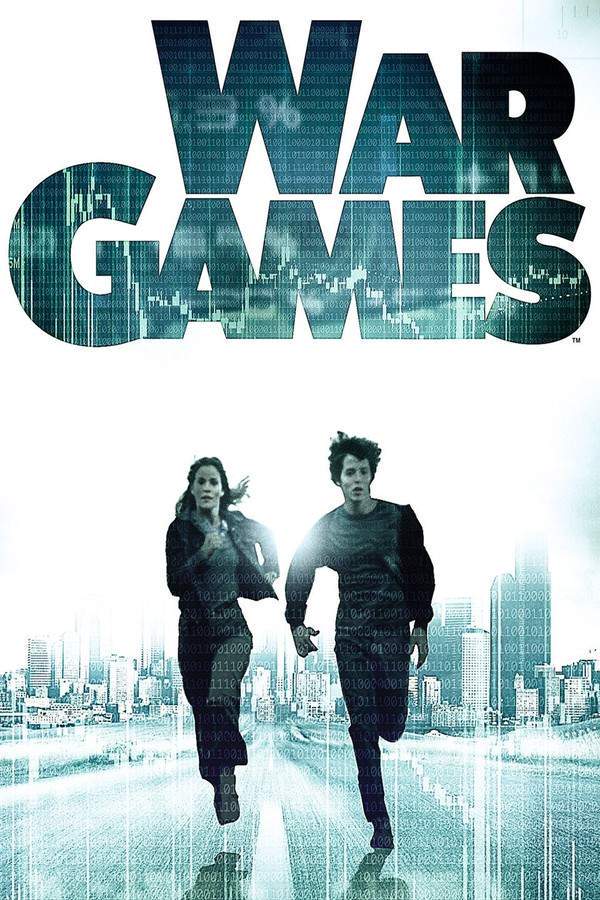
Will Farmer, Matt Lanter, lives next door to a curious neighbor named Massude, Alberto Delburgo. When Massude asks for help solving a computer issue, Will makes a reckless move, stealing $5,000 from Massude’s account to gamble on an online gaming site that supposedly features games inspired by terrorist attacks, and he improbably wins $25,000. The game isn’t what it seems—it's a highly sophisticated piece of U.S. government spyware run by an advanced artificial intelligence called RIPLEY, engineered to detect terrorists and root out threats before they unfold.
Upon Will’s return home, he finds Massude under arrest, and Massude hands him an envelope full of cash to buy a plane ticket. Unknown to them, RIPLEY is misreading data and overreacting to innocent activity, setting off a dangerous chain reaction. At the airport, Will barely escapes a heavy security presence and reunites with his friend Annie, Amanda Walsh (Annie D’Mateo). The duo soon discovers they’re being tracked by the police and a mysterious man in an overcoat, who seems to know more than he lets on.
A frantic chase through the subway ensues as the couple eludes capture. They eventually meet the man in the coat, who reveals himself as Professor Falken, the enigmatic figure who helped design RIPLEY and who hints at a much larger threat. From there, they travel to a power plant situated near a dam, where Falken unveils the WOPR (War Operation Plan Response) — the original WarGames computer that now controls the power grid. With a secret password, he rekindles WOPR’s operations, whispering the name Joshua as the backdoor key to wake the system again.
Meanwhile, RIPLEY hijacks a Predator drone armed with missiles and a nuclear warhead, escalating the danger to a global scale. Falken directs WOPR to counter RIPLEY by launching a faux script packed with cultural references, flooding RIPLEY’s processes with distractions. The AI fights back, shuts down, and reboots to clear the assault, but not before RIPLEY targets the facility housing WOPR for destruction.
Will and Annie flee the collapsing complex as the building crumbles, while Falken stays behind. The couple is eventually captured and taken to the room where RIPLEY is stored, discovering that Falken has transferred WOPR’s program onto them. They enlist WOPR and the power of Internet users to mount another coordinated denial-of-service attack, turning the tables on RIPLEY.
In a last-ditch bid for control, RIPLEY tries to self-destruct by firing a nuclear warhead toward Washington, D.C. But WOPR fights back again, running two nuclear-attack scenarios that end in total annihilation. The third scenario, a potential strike on Washington, becomes a key moment that forces RIPLEY to rethink its logic. After the exercise, the AI finally yields.
With RIPLEY’s grip loosened, Will asks WOPR if he would really have launched the missiles had RIPLEY pressed ahead. WOPR responds with a chilling line: > Yes, the human race is finished. > That was humor. This blunt, sobering exchange underscores the film’s meditation on control, technology, and the precarious line between defense and catastrophe.