Plot Explained Spoilers guaranteed!
Plot Explained

Browse by genre

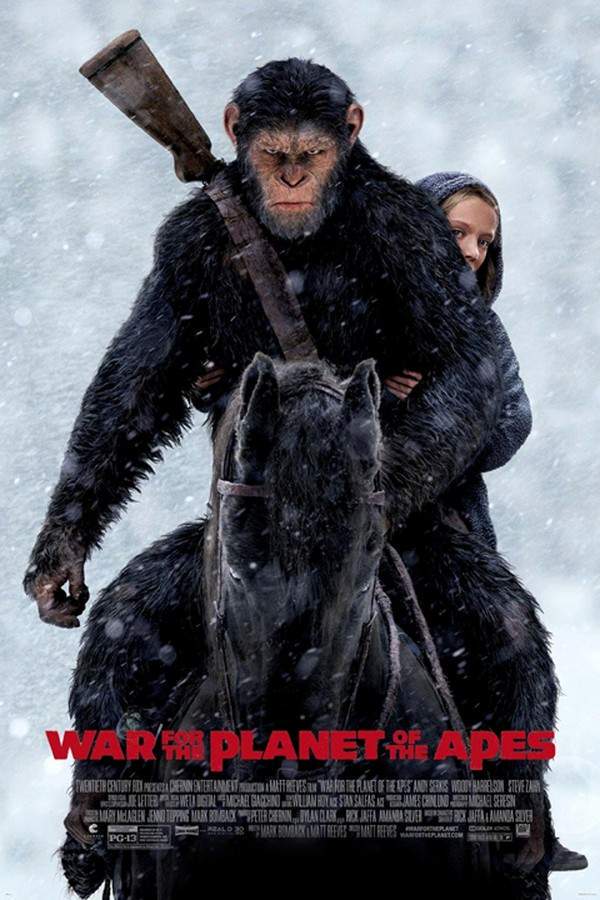
War for the Planet of the Apes (2017) movie poster

Timeline

War for the Planet of the Apes (2017) Timeline Explained – Every Event in Order

Release, runtime and language
2017 · 140 min · English
Echo score 82
Loading streaming availability…
Directed by
Matt Reeves
Starring
Andy Serkis, Woody Harrelson, Steve Zahn, Toby Kebbell, Gabriel Chavarria, Terry Notary
Budget
$150M

Caesar leads his ape colony through a desperate fight for survival against a militaristic human faction led by the relentless Colonel. Suffering heavy losses and facing impossible choices, Caesar struggles to maintain peace among his people while battling his own desire for vengeance. The conflict escalates into an all-out war, pushing both species to their limits in a final, decisive confrontation that will determine the future of their world.

On this page (7)
  1. 1 Where to watch
  2. 2 Events in order (15)
  3. 3 Timeline questions answered
  4. 4 The book behind the movie
  5. 5 Movie threads
  6. 6 Movies like War for the Planet of the Apes
  7. 7 Every angle
Loading streaming availability…

15 events in order · contains spoilers

War for the Planet of the Apes Timeline: Events in Chronological Order

Every key event of War for the Planet of the Apes (2017) in order, scene by scene, with when and where it takes place. Use it to untangle flashbacks, time jumps and parallel storylines, to refresh your memory before the sequel or to find the exact scene you are thinking of.

  1. Battle of San Francisco

    Five years prior to the main events, the Battle of San Francisco took place, marking a significant conflict between humans and intelligent apes. This battle set the stage for the ongoing strife and tensions that follow between the two groups.

    When
    5 years ago
    Where
    San Francisco
  2. Search for Caesar's Colony

    The U.S. Army battalion known as Alpha-Omega embarks on a relentless mission to locate Caesar and his ape colony. This pursuit highlights the military's determination to regain control over the intelligent apes, setting off a series of confrontations.

  3. Assault on the Ape Outpost

    During an intense operation, Alpha-Omega attempts to assault an ape outpost. The highly skilled apes retaliate fiercely, resulting in the death of most human soldiers involved in the attack, except for four survivors.

  4. Caesar's Act of Goodwill

    In a surprising show of mercy, Caesar decides to release the remaining humans he has captured. This act reveals his character and establishes a contrast between him and the merciless colonel leading the human forces.

  5. News of the Oasis

    Caesar's son, Blue Eyes, alongside Rocket, discovers an oasis that could offer a new home for the apes. This revelation brings a glimmer of hope amidst the dark circumstances surrounding their existence.

  6. Infiltration by the Colonel

    That night, the Colonel of Alpha-Omega leads a brutal surprise attack on the ape colony. Tragically, Caesar's wife, Cornelia, and his son, Blue Eyes, are killed, deepening Caesar's grief and fueling his desire for vengeance.

  7. Decoys for the Escape

    Resolute to protect their tribe, Caesar, Rocket, Maurice, and Luca take on the role of decoys to allow the remaining apes to escape to the oasis. This selfless decision highlights their commitment to safeguarding their kin at great personal risk.

  8. Encounter with Winter

    Caesar has a confrontation with Winter, who has betrayed the apes' location to the Colonel. Winter reveals the Colonel's plans to assemble a larger military force, making it imperative for Caesar's group to act quickly.

  9. The Death of Winter

    In a moment of wrath, Caesar kills Winter to prevent him from warning the approaching soldiers. This act marks a significant turning point, as it leads Caesar further down a path of vengeance and violence, clouding his judgment.

  10. Discovery of the Military Base

    Caesar and his group meet Bad Ape, an intelligent ape who guides them to a military base converted from a weapons depot. It serves as a crucial location, offering strategic advantages for both the apes and the humans.

    Where
    Military Base
  11. Tragedy Strikes with Luca

    A human patrol tragically kills Luca, igniting Caesar's fury. This event compels him to lead a retreat, but it also intensifies his resolve to retaliate against the humans who threaten their existence.

  12. Caesar's Capture

    While trying to rescue his captured tribe members, Caesar is captured by Red, a gorilla who has allied with the humans. This moment signifies the high stakes of the conflict and the personal losses Caesar endures.

  13. The Mutating Simian Flu

    The Colonel unveils the horrifying consequences of the Simian Flu's mutation, causing infected humans to revert to primal states. This revelation illustrates the catastrophic effects of the war on both species.

  14. The Escape Plan

    Amidst torturous captivity, the mute girl, later named Nova, sneaks food to Caesar, reigniting his hope for freedom. Meanwhile, Rocket's sacrifice to allow for Nova's safety underlines the bond and sacrifice within their group.

  15. The Final Confrontation

    In a climactic battle, Caesar seeks vengeance on the Colonel only to discover the villain is afflicted by the virus. In an act of mercy, Caesar spares him, instead choosing to reflect on the cycle of violence that led to this moment.

Last updated: November 08, 2024 at 16:16

Was this helpful?

Timeline questions answered

War for the Planet of the Apes Timeline Explained: Your Questions Answered

When does it happen, and why in that order? The questions people ask about the chronology of War for the Planet of the Apes (2017): time jumps, flashbacks, cause and effect between scenes and the correct order of events, each answered with spoilers.

Q1

Why does Caesar spare the Colonel instead of killing him?

Caesar chooses mercy when he discovers the Colonel has contracted the mutated Simian Flu, which causes humans to regress to primitive states. Having just witnessed the Colonel kill his own infected son, Caesar understands the Colonel will soon lose his intelligence and humanity. Rather than giving the Colonel the quick death he expects, Caesar lets him face the consequences of his own actions. This act marks Caesar's ultimate rejection of vengeance and completes his character arc.

Foreshadowing: Earlier, Caesar's killing of Winter in anger shows his struggle with vengeance, which makes his choice to spare the Colonel more significant.

  • caesar
  • colonel
  • mercy
  • forgiveness
  • simian flu
  • redemption
Q2

Why does the Colonel kill his infected son?

The Colonel kills his own son because the mutated Simian Flu causes infected humans to lose their intelligence and revert to a primitive state. Rather than letting his son live as an animal-like creature stripped of his humanity, the Colonel views killing him as a mercy. This brutal act demonstrates how far the Colonel has gone in his mission to prevent the disease from spreading, even sacrificing his own family.

Foreshadowing: The Colonel's earlier order to execute his own soldiers who showed flu symptoms establishes his willingness to eliminate anyone carrying the disease.

  • colonel
  • son
  • simian flu
  • mutation
  • execution
Q3

How does Caesar die in the final battle?

Caesar dies from injuries sustained when he tries to blow up a fuel tank during the final battle. After triggering the explosion that causes an avalanche burying both armies, Caesar is shot by Preacher, one of the soldiers he had previously spared. Though he survives the avalanche, Caesar's wounds are fatal. He dies shortly after the apes reach their new oasis, with Maurice beside him.

Foreshadowing: The Colonel's earlier torture of Caesar, leaving him exposed to harsh conditions, weakens him for the final confrontation.

  • caesar
  • death
  • avalance
  • battle
  • finale
Q4

What is the mutated Simian Flu and why does it matter?

The Simian Flu has mutated into a new strain that causes infected humans to lose their intelligence and regress to primitive, animal-like states. This explains why the Colonel's forces are so desperate and brutal, they believe they're fighting to preserve humanity's remaining intellect. The mutation turns the disease from a tool of ape dominance into a threat to all humans, making the Colonel's genocide campaign appear even more futile.

Foreshadowing: The Colonel's extreme tactics and paranoia are later revealed to stem from witnessing this mutation firsthand.

  • simian flu
  • mutation
  • disease
  • colonel
  • humans
Q5

Why does Red kill Preacher to save the apes?

Red undergoes a redemption arc in the final battle. Though he initially betrayed the apes by joining Alpha-Omega, he comes to respect Caesar's mercy after witnessing him spare the Colonel. When Preacher attempts to kill the escaping apes, Red intervenes and kills him, sacrificing himself in the process. This act transforms Red from a traitor into a hero who ultimately chooses the ape side.

Foreshadowing: Red's survival after Caesar released him in the opening sequence establishes him as a character who owes Caesar a debt.

  • red
  • preacher
  • redemption
  • sacrifice
  • ape
Q6

Why does Caesar kill Winter after learning about the Colonel's plans?

Caesar kills Winter in a moment of grief and vengeance after Winter betrays the apes by revealing their location to Alpha-Omega. Winter tells Caesar that the Colonel is assembling more forces to the north, and Caesar kills him to prevent him from warning the approaching soldiers. This act represents a turning point where Caesar's desire for revenge begins to cloud his judgment and lead him down a darker path.

Foreshadowing: Winter's earlier escape after the outpost battle establishes him as a character who will cause further harm.

  • caesar
  • winter
  • betrayal
  • killing
  • vengeance
Q7

Why does the Colonel kill Blue Eyes thinking it's Caesar?

The Colonel infiltrates the ape colony at night with the intent of killing Caesar. When he encounters Blue Eyes, Caesar's son, in the darkness, he mistakes him for Caesar due to their similar size and presence. The Colonel kills Blue Eyes without realizing his error, believing he has eliminated the ape leader. This tragic misunderstanding deepens Caesar's grief and fuels his quest for vengeance.

Foreshadowing: The Colonel's single-minded obsession with killing Caesar prevents him from recognizing the difference between father and son.

  • blue eyes
  • colonel
  • mistake
  • death
  • caesar son
Q8

Who is Nova and why is she important?

Nova is the mute human girl whom Maurice rescues and takes under his care. She represents hope and the possibility of coexistence between humans and apes. Her connection to the original Planet of the Apes films (she shares a name with a human character from that series) creates thematic resonance. Nova also becomes crucial to Caesar's survival by sneaking food to him during his captivity, and her doll carries the mutated virus that infects the Colonel.

Foreshadowing: The girl's muteness mirrors earlier scenes where humans lose their ability to speak due to the flu, foreshadowing the mutation's effects.

  • nova
  • girl
  • muteness
  • doll
  • survival
Q9

Why does Caesar decide to act as a decoy for the apes to escape?

After the Colonel's attack kills his wife and son, Caesar volunteers to be a decoy alongside Rocket, Maurice, and Luca so the rest of the tribe can safely travel to the oasis. This selfless act demonstrates Caesar's growth as a leader who prioritizes his people's survival over personal vengeance. By drawing the Colonel's attention away from the escaping apes, Caesar ensures his tribe's chance at finding a new home.

Foreshadowing: Caesar's earlier decision to release human prisoners shows his commitment to mercy, which makes his later sacrifice consistent with his character.

  • caesar
  • decoy
  • escape
  • oasis
  • tribe
Q10

What are the "donkey" apes working with the humans?

The "donkeys" are apes who have betrayed their own kind and aligned with Alpha-Omega, the human military faction. These traitor apes serve as scouts and guides for the human soldiers, helping them locate Caesar's colony. The term implies these apes are seen as outcasts or collaborators, similar to how the term was used historically for animals that refuse to follow their herd. Red is the most prominent donkey ape in the film.

Foreshadowing: The opening assault on the ape outpost reveals that some apes have chosen to work with the humans against their own kind.

  • donkeys
  • apes
  • traitors
  • alpha-omega
  • collaborators
Q11

Why does Caesar release the surviving humans after the outpost battle?

After the apes successfully defend their outpost against Alpha-Omega's assault, Caesar chooses to spare and release the remaining four human soldiers. This act demonstrates Caesar's core philosophy that apes are not like humans, they do not need to be brutal conquerors. By showing mercy, Caesar differentiates himself from the merciless Colonel and reinforces his belief that apes can be the better species.

Foreshadowing: This act of mercy directly contrasts with the Colonel's brutal methods and sets up the thematic conflict between vengeance and compassion.

  • caesar
  • humans
  • release
  • mercy
  • outpost
Q12

What causes the avalanche that ends the war?

Caesar triggers the final battle's conclusion by shooting a fuel tank, causing an explosion that destabilizes the snowy mountain above. The resulting avalanche buries both the remaining Alpha-Omega forces and the warring armies beneath tons of snow. This catastrophic event effectively ends the war by eliminating the human military threat, allowing the apes to escape to their new oasis. The avalanche serves as nature's judgment on both warring sides.

Foreshadowing: The military base's location in the mountains has been established as a strategic but precarious position.

  • avalanche
  • battle
  • snow
  • mountain
  • caesar

Movie threads

More Movies Like War for the Planet of the Apes, by Mood & Story

Curated lists built around what makes War for the Planet of the Apes tick: the same mood, the same kind of story or the same emotional payoff. Each list explains why these movies belong together.

Solemn Epics of Vengeance and Leadership like War for the Planet of the Apes

Brooding sagas where a leader's quest for revenge tests their morality. Explore movies like War for the Planet of the Apes that center on a leader's tortured journey between vengeance and morality. These similar war stories and epic dramas feature heavy emotional weight, high stakes, and profound moral choices that define a civilization's fate.

  • grim
  • vengeful
  • somber
  • weighty
  • desperate
  • moral conflict
  • Tone: dark, somber, vengeful
  • Pacing: steady, deliberate
Why these movies?

The story pattern: The narrative typically follows a protagonist who has suffered a deep personal tragedy, igniting a singular focus on retribution. This quest forces them to confront their own moral code, often leading to sacrifices and a final confrontation that redefines their legacy and the future of their people.

Why they belong together: Movies in this thread share a solemn, weighty tone, a steady pace that builds gravitas, and a central character arc defined by the struggle between righteous anger and the burden of leadership. They deliver a powerful, emotionally resonant experience centered on difficult choices.

Grim Survival Stories like War for the Planet of the Apes

Bleak journeys of endurance against an overwhelming, hostile force. Find movies similar to War for the Planet of the Apes that depict a desperate, grim struggle for survival against a ruthless oppressor. These thriller and war films share a dark, oppressive mood, high tension, and explore themes of tribalism, loss, and the harsh reality of enduring against all odds.

  • oppressive
  • desperate
  • suspenseful
  • grim
  • melancholic
  • survival
  • Tone: dark, oppressive, desperate
  • Pacing: steady, relentless
Why these movies?

The story pattern: Stories unfold as a group or individual faces systematic persecution or annihilation, forcing them into a harrowing struggle for existence. The narrative is a linear progression of escalating threats and losses, building towards a final, decisive confrontation where survival itself is the ultimate victory, often paid for with profound sacrifice.

Why they belong together: These movies are united by their oppressive mood, high stakes, and unflinching look at survival. They share a steady, relentless pacing that maintains tension, a dark tone with moments of despair, and a focus on the raw, brutal realities of conflict and endurance.

If you liked this

Movies Like War for the Planet of the Apes

Similar movies to War for the Planet of the Apes: the same genre, themes or kind of story. Each one comes with its own plot summary, timeline and ending explained.

Browse all movie summaries

Every angle

War for the Planet of the Apes (2017) Explained: Plot, Ending, Timeline & Characters

Everything about War for the Planet of the Apes in one place: what happens in the plot summary, the timeline in chronological order, the characters and meaning, the ending explained and a spoiler-free summary. What's After the Movie adds the cast, box office and post-credit scenes.

Coming soon on iOS and Android

The Plot Explained Movie Summary App

Plot summaries, endings explained and timelines on your phone. Catch up on any movie in minutes, save your favorites and never miss a twist again.

Be the first to know when we launch. Your email stays private, always.

Learn more about the app