Year: 1973
Runtime: 93 min
Language: English
Director: J. Lee Thompson
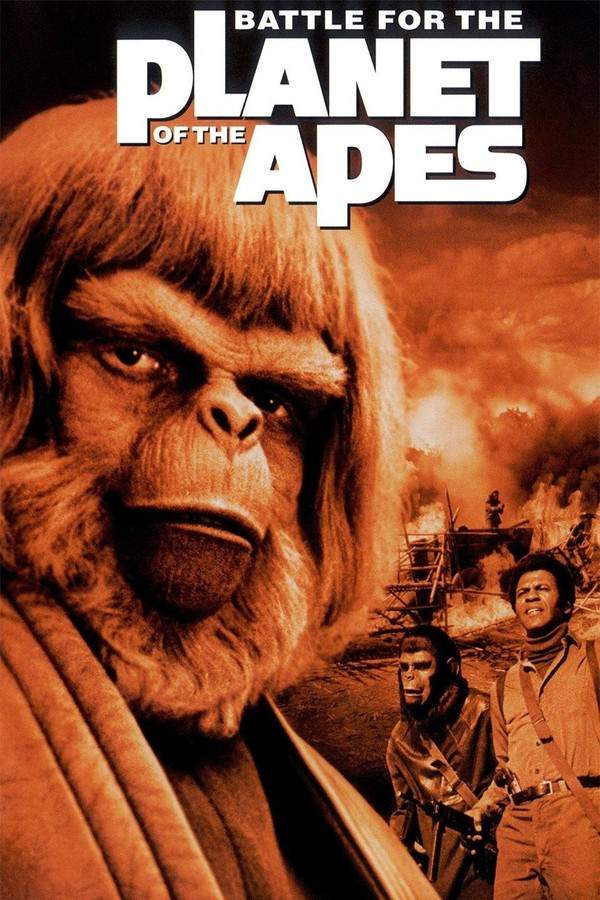
In the year 2670, a community of apes struggles to maintain peace in a devastated world. Their existence is threatened by a group of mutated humans seeking revenge. The story explores the roots of this conflict through flashbacks, revealing how the fragile alliance between apes and humans crumbled. Set against a backdrop of a grim, post-apocalyptic Earth, the narrative highlights the fight for survival and the complexities of interspecies relationships.
Find where to stream, rent, or buy Battle for the Planet of the Apes (1973) in the US with current JustWatch availability, up-to-date pricing, and platform listings for subscription, rental, and digital purchase options.
Warning: spoilers below!
Haven’t seen Battle for the Planet of the Apes yet? This summary contains major spoilers. Bookmark the page, watch the movie, and come back for the full breakdown. If you're ready, scroll on and relive the story!
Read the complete plot breakdown of Battle for the Planet of the Apes (1973), including all key story events, major twists, and the ending explained in detail. Discover what really happened, and what it all means.
As the evocative tale unfolds through the haunting narration of the orangutan Lawgiver, "North America – 2670 A.D." emerges as a compelling sequel to the apocalyptic saga. The narrative poignantly flashes back to the early 21st century, where the charismatic chimpanzee Caesar has established a society together with his wife, Lisa, and their son, Cornelius, amidst the desolation left by a devastating global nuclear conflict.
As time progresses, Caesar's dream of fostering peace between the apes and the surviving humans begins to take shape. However, the balance of this newfound harmony is threatened by the aggressive gorilla general Aldo, who is determined to imprison the humans laboring in Ape City, stoking the fires of discontent that simmer just below the surface.
The spark of chaos ignites when Aldo’s followers launch an assault on human teacher Abe, angered by his defiance against ape superiority. This violent incident prompts deep reflection within Caesar, who questions whether his own parents instilled in him the tools to build a brighter future. When his human assistant, MacDonald, discovers archived footage of Cornelius and Zira amidst the irradiated remnants of the Forbidden City, a crucial series of events is set into motion.
Accompanied by MacDonald and his orangutan advisor Virgil, Caesar courageously ventures into the perilous landscape of the Forbidden City, where they unearth the grim realities faced by radiation-scarred humans oppressed by Governor Kolp's tyranny. The footage offers pearls of wisdom shared by Caesar's parents, serving as a haunting reminder of the catastrophic destiny that looms over Earth.
This revelation triggers a frantic escape from Kolp's soldiers, as they fear a potential assault on Ape City by these warped humans. A pivotal meeting is convened by Caesar with MacDonald and a select group of humans, only to be disrupted by Aldo's malevolent scheme to orchestrate a gorilla coup.
As war edges closer between Ape City and the mutant humans led by Governor Kolp, Cornelius overhears the brewing treachery from his perch in a nearby tree. Tragically, he is left vulnerable when Aldo, wielding his sword, viciously cuts the branch Cornelius clings to, leading to devastating injuries that ultimately take his life. The heartache weighs heavily on Caesar, who grapples with the painful realization that his son's demise was sealed not by human hands, but rather through the betrayal of their own kin.
The ensuing chaos sees Kolp unleashing an all-out assault as Caesar commands a strategic retreat. In the aftermath, Kolp stands over the fallen ape leader, vowing to bring about his end. However, the apes cleverly feign defeat, executing a major counteroffensive that successfully captures most of the mutant humans. As Kolp's remaining forces attempt to flee, they are ruthlessly cut down by Aldo's aggressive warriors.
In a tense confrontation, Aldo confronts Caesar regarding the release of the captured humans and demands their slaughter. When Caesar defends the humans, Aldo threatens him, prompting Virgil to step forward with shocking revelations about Aldo's involvement in Cornelius's tragic end. This revelation ignites outrage among the apes, who are infuriated by Aldo’s betrayal of their sacred law — "ape shall never kill ape." The entire troop mobilizes against Aldo in a surge of collective fury.
The climax escalates as Caesar pursues Aldo up a towering tree, culminating in a deadly fall for the treacherous gorilla. Gaining newfound insight that apes can mirror the brutality of their former human oppressors, Caesar heeds MacDonald's entreaty for the humane treatment of humans. Together, they return their weapons to the armory while briefing Mandemas, the orangutan overseer, on the critical importance of safeguarding these tools for potential future conflicts.
In the concluding moments, the scene shifts back to the Lawgiver, who reflects on how over 600 years have joyously passed since Caesar's death. His audience comprises a hopeful assembly of young humans and apes, all longing for the day when their world will finally dispel the need for weaponry. A poignant close-up of a statue of Caesar captures a single tear falling from one eye, symbolizing the enduring legacy of this noble ape leader.
Last updated: November 19, 2024 at 16:54
Explore frequently asked questions about Battle for the Planet of the Apes (1973) with spoiler-rich answers covering the full plot summary, major story beats, character motivations, hidden details, and ending meaning. This movie summary FAQ helps explain confusing scenes, plot twists, and narrative decisions in clear, searchable detail.
Aldo murdered Cornelius because the young ape accidentally overheard Aldo plotting his coup against Caesar. When Cornelius clung to a tree branch to listen, Aldo sliced the branch with his sword, causing Cornelius to fall to his death. This eliminated a potential witness to Aldo's treason while also serving as a warning to anyone who might oppose his plans.
Aldo's ambition and opposition to peace with humans had been established earlier when he urged imprisoning human laborers and attacked teacher Abe.
After the apes counterattacked and captured most of Governor Kolp's forces, Caesar refused Aldo's demand to execute them. He chose mercy over vengeance, recognizing that apes could become as brutal as the humans they once opposed. This decision reflected Caesar's belief that peace between species was still possible despite the conflict.
Caesar had spent the entire film working toward coexistence, rejecting the violence advocated by Aldo.
Caesar journeyed to the Forbidden City after his assistant MacDonald discovered archived footage showing the radiation-ravaged remnants of the city and the oppressed humans living under Governor Kolp's rule. The footage also contained recordings from Caesar's parents, Cornelius and Zira, warning about humanity's destructive potential. Caesar went to investigate the threat these mutant humans posed to Ape City.
The footage revealed that Kolp's forces were preparing to attack Ape City, directly triggering the film's final conflict.
The war began when Caesar, MacDonald, and Virgil discovered that Governor Kolp's mutant humans were planning an assault on Ape City. This revelation came from the footage showing Kolp's forces preparing for battle. Additionally, Caesar's presence in the Forbidden City and his escape from Kolp's soldiers convinced the governor that apes were coming to attack him, prompting his preemptive strike.
Caesar's warning to the apes about Kolp's intentions was dismissed, allowing the conflict to escalate.
Aldo believed apes should dominate humans, not coexist with them. As a gorilla general, he represented the militaristic faction that viewed human survival as unnecessary. He actively worked to undermine Caesar's diplomatic efforts by inciting violence against humans and eventually staging a coup to seize power. His philosophy directly contradicted Caesar's vision of interspecies harmony.
Aldo's hostility was first shown when his followers attacked human teacher Abe for teaching apes.
The apes defeated Kolp's army by feigning defeat and retreating, which deceived the mutant humans into thinking they had won. Once Kolp's forces entered Ape City believing they had succeeded, the apes launched a major counteroffensive and captured most of the attacking force. This strategy turned the tide of the war in the apes' favor.
Caesar ordered a strategic retreat during the initial assault, setting up the deceptive counterattack.
After defeating Kolp's forces and killing Aldo, Caesar decided to lock the weapons away rather than keep them ready for future conflicts. He acted on his friend MacDonald's appeal to treat humans humanely. This symbolized Caesar's commitment to peace and his refusal to let apes become like their former human oppressors, choosing hope over perpetual warfare.
This decision directly followed Caesar's realization that apes could mirror the brutality of humans.
The footage, found by MacDonald in the Forbidden City, showed Caesar's parents Cornelius and Zira among the irradiated ruins. It contained their warnings about the catastrophic destiny awaiting Earth due to nuclear war. These recordings served as a haunting reminder of the past and reinforced the urgency of preventing further destruction.
The footage foreshadowed the ongoing consequences of nuclear conflict that still defined the world in 2670.
According to the epilogue narrated by the Lawgiver, Caesar died sometime after the conflict with Kolp's forces. Over 600 years later, his legacy endured as a symbol of hope for peaceful coexistence between apes and humans. A statue of Caesar was shown with a single tear falling from its eye, representing the lasting impact of his leadership and his dream of a world without weapons.
The film opened with the Lawgiver setting up this reflection on Caesar's legacy.
Governor Kolp launched the attack on Ape City after Caesar, MacDonald, and Virgil escaped from the Forbidden City. Kolp feared that Caesar had come to destroy him and his regime, interpreting the ape's presence as a declaration of war. This paranoia, combined with his desire to eliminate the apes before they could threaten his power, drove him to unleash his forces against Ape City.
Caesar's escape from Kolp's soldiers was witnessed by the governor himself, confirming his suspicions.
The sacred ape law stated "ape shall never kill ape." This principle was central to ape society and represented their attempt to rise above human violence. When Aldo murdered Cornelius, he violated this fundamental law, which was why the other apes reacted with such outrage when Virgil revealed Aldo's crime. The betrayal of their own kind was considered the ultimate transgression.
The law had been referenced throughout the film as a cornerstone of ape civilization.
Discover curated groups of movies connected by mood, themes, and story style. Browse collections built around emotion, atmosphere, and narrative focus to easily find films that match what you feel like watching right now.
Stories of survival in a broken world, where hope is fragile and conflict is constant.If you liked the desperate struggle for peace in a ruined world in Battle for the Planet of the Apes, explore more movies like it. This thread features similar sci-fi and action stories set in dystopian futures, focused on survival, rebuilding, and the heavy moral choices faced by communities on the brink.
The narrative typically follows a community or group of survivors as they face existential threats, often from external factions or internal betrayal. The journey is one of escalating conflict, testing alliances, and making tragic sacrifices, usually culminating in a resolution that is bittersweet, acknowledging the high cost of survival while holding onto a sliver of hope for the future.
These movies are grouped together because they share a specific setting—a bleak, post-catastrophe Earth—and a core thematic focus on the brutal realities of survival. They deliver a consistently tense, emotionally heavy experience with a steady pace that builds towards large-scale confrontations and profound losses.
Stories of leaders whose quest for peace leads to personal tragedy and a complicated legacy.For viewers who appreciated the tragic arc of Caesar in Battle for the Planet of the Apes, this section collects similar movies about leaders and peacemakers. These stories explore the heavy price of idealism, the pain of betrayal, and the bittersweet nature of building a legacy amidst conflict and loss.
The narrative follows a principled protagonist, often a father or mentor figure, who attempts to forge peace between warring factions. Their efforts are met with political intrigue, betrayal, and ultimately, a deeply personal sacrifice. The story uses these tragedies to reflect on the cyclical nature of conflict and the long-term impact of one's actions, often framed through a historical or future perspective.
These films are united by a specific character archetype—the tragic peacemaker—and a shared emotional journey. They balance high-stakes political drama with intense personal grief, resulting in a heavy emotional weight and a concluding feeling that is contemplative and bittersweet, focusing on legacy over immediate triumph.
Don't stop at just watching - explore Battle for the Planet of the Apes in full detail. From the complete plot summary and scene-by-scene timeline to character breakdowns, thematic analysis, and a deep dive into the ending - every page helps you truly understand what Battle for the Planet of the Apes is all about. Plus, discover what's next after the movie.
Track the full timeline of Battle for the Planet of the Apes with every major event arranged chronologically. Perfect for decoding non-linear storytelling, flashbacks, or parallel narratives with a clear scene-by-scene breakdown.
Discover the characters, locations, and core themes that shape Battle for the Planet of the Apes. Get insights into symbolic elements, setting significance, and deeper narrative meaning - ideal for thematic analysis and movie breakdowns.
Discover movies like Battle for the Planet of the Apes that share similar genres, themes, and storytelling elements. Whether you’re drawn to the atmosphere, character arcs, or plot structure, these curated recommendations will help you explore more films you’ll love.
Battle for the Planet of the Apes (1973) Scene-by-Scene Movie Timeline
Battle for the Planet of the Apes (1973) Movie Characters, Themes & Settings
Battle for the Planet of the Apes (1973) Spoiler-Free Summary & Key Flow
Movies Like Battle for the Planet of the Apes – Similar Titles You’ll Enjoy
War for the Planet of the Apes (2017) Full Summary & Key Details
Planet of the Apes (2001) Film Overview & Timeline
Rise of the Planet of the Apes (2011) Complete Plot Breakdown
Dawn of the Planet of the Apes (2014) Movie Recap & Themes
Conquest of the Planet of the Apes (1972) Movie Recap & Themes
Escape from the Planet of the Apes (1971) Ending Explained & Film Insights
Kingdom of the Planet of the Apes (2024) Spoiler-Packed Plot Recap
Revolt of the Empire of the Apes (2017) Movie Recap & Themes
The Forgotten City of the Planet of the Apes (1980) Plot Summary & Ending Explained
Back to the Planet of the Apes (1980) Ending Explained & Film Insights
Treachery and Greed on the Planet of the Apes (1980) Story Summary & Characters
Life, Liberty and Pursuit on the Planet of the Apes (1980) Full Summary & Key Details
Farewell to the Planet of the Apes (1980) Ending Explained & Film Insights
Invasion of the Empire of the Apes (2021) Detailed Story Recap
Revenge of the Empire of the Apes (2023) Movie Recap & Themes